Expect a mix. Hotels and shopping malls mostly have Western-style toilets. Older buildings, some public facilities and the countryside lean toward squat toilets. Paper is often absent, a hand sprayer usually is not, and a small fee is normal at staffed public toilets. Plan for those four facts and the rest of the day runs smoothly.
Public toilets in Vietnam at a glance
The quick answer: head for a shopping mall, a hotel, a café where you buy something, a museum or major sight, or an airport. Those are the reliable five. Staffed public toilets in city centres and at tourist sites usually charge a small fee of around 3,000 VND (about USD 0.10), sometimes waived.
Two toilet types coexist. Western seated toilets dominate in hotels and malls; squat toilets appear in older buildings, some public facilities and rural areas. Many toilets have a bum gun, a hand sprayer on a hose beside the bowl, which locals often use instead of paper.
Carry three things daily: pocket tissues, hand sanitiser and small notes for fees. That kit answers most situations before they become a problem.
Where to find a toilet in cities
Availability is noticeably better in Hanoi and Ho Chi Minh City than in smaller towns, where the practical answer is usually a café or a restaurant where you stop to eat. Ranked from most to least reliable, here is where to look.
Shopping malls
Usually the cleanest free option in big cities, with Western-style toilets and, in newer buildings, accessible cubicles. They are the best fallback in central districts, and staff rarely object to a passer-by using them. Use the visit to top up on tissues and water.
Hotels
Hotels generally have clean Western toilets. If you are not a guest, ask at reception politely rather than walking in unannounced, or use the facilities while buying a drink at the hotel café or bar. A polite request at a quiet moment is usually met with a yes.
Cafés and restaurants
The most widespread option in every city and town. Be realistic about standards: café and restaurant toilets vary a lot and often lack paper, soap and hot water, a recurring complaint among travellers in Hanoi. The etiquette is simple. Buy a drink, or ask permission first if you are not a customer. Many places will agree, but it is their choice.
Museums and major sights
Most major museums and tourist sites have visitor toilets, sometimes paid. Use them before leaving the site rather than counting on the street outside, especially at archaeological sites, temples and war memorials where the nearest building may be a ten-minute walk.
Petrol stations
Useful on road trips and motorbike tours. Standards are often basic, sometimes squat, and paper is rarely provided. Fill up, use the toilet, and carry your own tissues.
Convenience stores
Convenience stores rarely have customer toilets in Vietnam. Travellers arriving from Japan, where the opposite is true, are often surprised. Do not plan a stop around a convenience store; head for a mall, hotel or café instead.
Street public toilets
Staffed or coin-operated public toilets exist in city centres and parks, but they are not dense. A Tuoi Tre report from January 2020 counted about 200 public toilets for a city of nine million in Ho Chi Minh City, many below hygiene standards. Street toilets are a bonus rather than a plan.
A useful habit: when you pass a clean toilet in a mall, hotel or museum, use it even if you do not feel the need. The next one may be far away and far worse.
Paid public toilets: how they work and what they cost
The system is straightforward. An attendant sits at a booth or a small table at the entrance, you pay a small fee, and sometimes paper is handed out with the change. The typical fee is around 3,000 VND (about USD 0.10); it varies by place and is occasionally waived for a quick visit.
Carry small notes. A 500,000 VND note at a 3,000 VND toilet is a problem for everyone. If you only have large notes, buy something nearby first to break them, or use a mall or café instead.
Free and paid toilets both exist. Free toilets exist for customers in malls, cafés and hotels, and a small fee is normal at many staffed public toilets in cities and at tourist sites. The rule of thumb: expect free where you are a customer, expect a small fee where there is an attendant at the door, and keep coins and small notes either way.
Finding a toilet with maps and apps
Search "nhà vệ sinh công cộng" or "public toilet" in Google Maps or Apple Maps. Individual public toilets are listed in Vietnamese cities, including Ho Chi Minh City, and the Vietnamese term returns more results than the English one.
Dedicated tools exist too. One iPhone app lists around 100 public toilets in Ho Chi Minh City with opening hours, fees and access details. Ho Chi Minh City authorities also announced in 2016 a plan to show public toilets on the city's tourism e-map, a sign of official effort even if coverage remains patchy.
When maps show nothing nearby, fall back on the reliable five: the nearest mall, large hotel or busy café. In smaller towns, the café where you plan to eat is the toilet.
What to expect inside
Setting expectations properly removes most of the shock. Standards vary widely by location, and a clean toilet in one district says nothing about the next.
Western-style or squat toilets
Hotels and malls mostly have Western seated toilets. Squat toilets appear in older buildings, some public facilities and the countryside. Using one is not difficult once you know the sequence.
Face the wall or the door, depending on how the cubicle is built. Stand with feet on the footrests, squat down, and keep your balance. Empty your back pockets first. The classic traveller story is a phone or a pair of sunglasses slipping into a squat toilet, and it rarely ends well. Roll up trouser hems before you start, and keep your bag off the floor.
The bum gun (hand sprayer)
The bum gun is a hand sprayer on a flexible hose mounted beside the toilet. Many locals use it instead of paper, and it is often the only cleaning method provided.
Test the pressure with a short burst before aiming, because pressure varies wildly between buildings. Aim downward and from the front or the back depending on your habits, and hold the hose rather than the trigger end to avoid soaking your clothes. Pat dry with a little tissue afterwards, and put that tissue in the bin if there is one.
Toilet paper and the bin
Paper is often not provided, so carry your own every day. Where plumbing is fragile, which covers older buildings, rural places and many small cafés, put used paper in the bin next to the toilet rather than flushing it. In modern hotels and malls, follow any sign posted in the cubicle.
Never flush wet wipes or sanitary products anywhere in Vietnam. Even where the plumbing copes with paper, it does not cope with those.
Flushing, soap and drying
Some toilets have a manual flush, often a button or a lever that needs a firm push, and some have a bucket system in rural areas. Soap, hot water and paper towels are often absent. Hand sanitiser and your own tissues cover the gap, and a small towel or a spare tissue handles drying.
Toilets on the move: buses, trains, boats and stations
This is where planning pays off most, and where the difference between a comfortable journey and a miserable one is usually decided before departure.
Sleeper and long-distance buses
Some sleeper buses have a small onboard toilet. Many do not, and rely on stops at roadside rest areas instead. Ask the operator at booking whether the bus has a toilet, and use the toilet at the departure station before boarding.
Limit drinks before an overnight leg. Rest-stop toilets can be busy and basic, sometimes paid, and the stop is usually short. Keep tissues and sanitiser in your day bag rather than in the luggage hold.
Trains
Trains have onboard toilets, and standards vary between carriages and services. Bring paper and sanitiser, wear shoes you can slip on and off, and use the station toilet before boarding. On long routes, the toilet at the end of the carriage is usually busiest first thing in the morning.
Boats and cruises
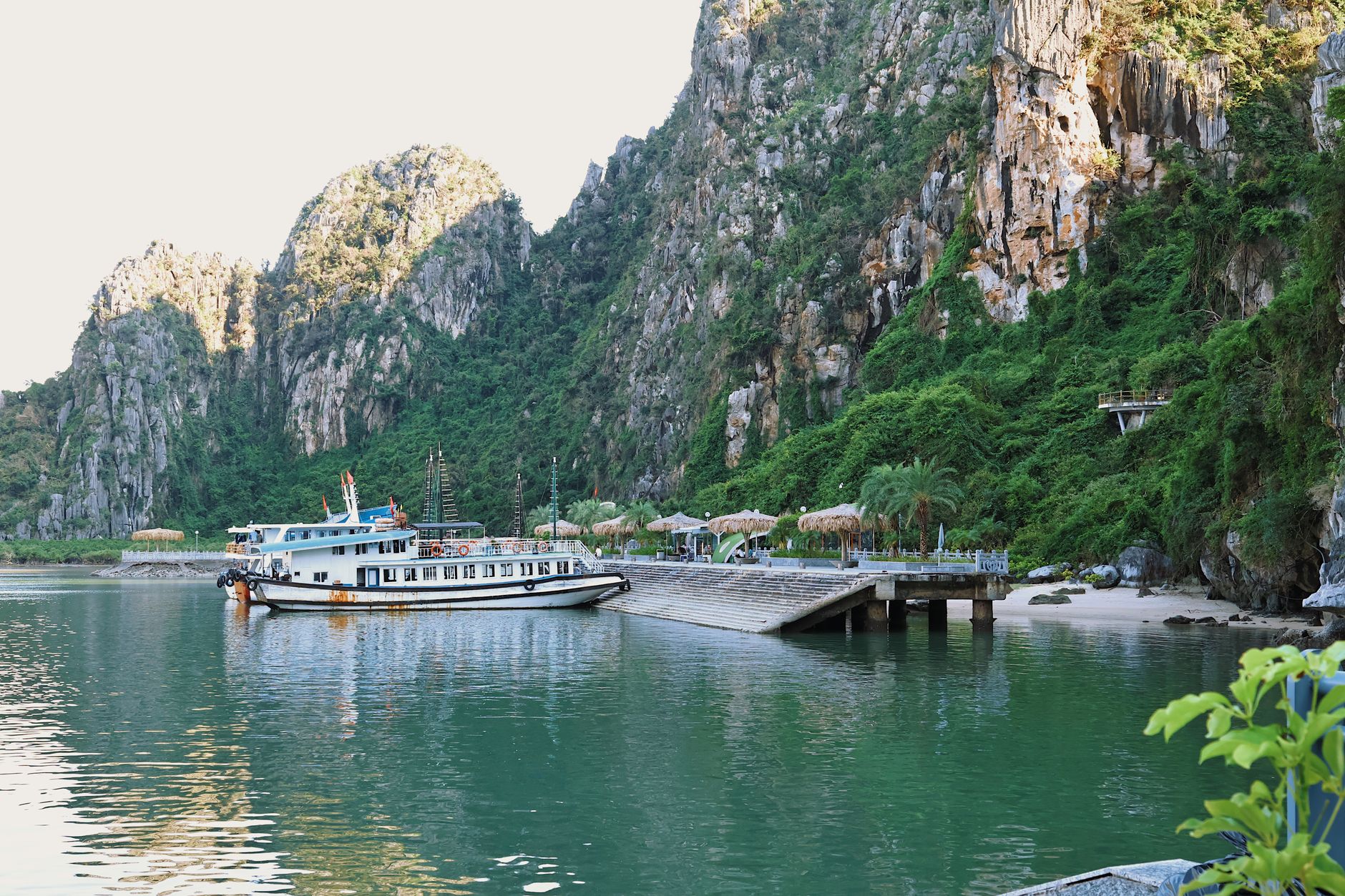
Overnight cruise boats have cabin bathrooms, often the best facilities of any transport in the country. Short ferries and small tour boats may have only a basic toilet or none at all. Go before boarding day trips, whether that means a river trip, an island hop or a boat tour of a bay.
Bus stations, train stations and airports
Airports have the most reliable facilities in Vietnam, clean and free, with accessible cubicles in the larger terminals. Bus and train stations have toilets, often paid at bus stations, and they get very busy at peak travel periods such as Tet, the lunar new year, whose next occurrence falls on 6 February 2027. Arrive early enough to queue.
Countryside, trekking and remote sights
Outside towns, availability drops sharply. The practical solution is the toilet at the restaurant, café or homestay where you stop, which is one more reason to plan the day around meals and guesthouses rather than around sights alone. Squat toilets are more common in rural areas, and paper is less likely to be provided.
On trekking or motorbike days, build the itinerary around stops where someone is expecting you: a lunch spot, a homestay, a village café. Relieving yourself in public is not acceptable behaviour in Vietnam, and planning ahead is the only answer.
Toilet etiquette and unwritten rules
The unwritten rules are mostly about courtesy, and they are easy to follow.
Ask before using a toilet if you are not a customer, or buy something small. Pay the attendant without arguing over a fee of a few thousand dong. Put paper in the bin where a bin is provided or a sign asks for it. Do not stand on Western toilet seats, which is both unpleasant for the next person and a common cause of broken seats. Leave the floor and the seat as you would want to find them. Respect queues at busy sites, and let families with small children go ahead.
If a sign in the cubicle asks for paper to go in the bin, follow it even in a modern hotel. The sign is there because the plumbing has complained before.
Women, children and travellers with reduced mobility
Women
Carry a day's supply of sanitary products, tissues and a small bag for discreet disposal, because some toilets offer only an open bin. Trousers are easier than long skirts in squat toilets, and a small mirror and wipes help in cubicles with no sink nearby. Malls and hotels offer the most privacy and cleanliness, so plan shopping and coffee stops around them.
Children
Squat toilets can be hard for small children. A foldable travel seat or a portable potty helps, and so does timing. Take children to the toilet at every mall, hotel or museum stop rather than waiting for a request. Keep wipes and spare clothes in the day bag, and treat the bum gun as a toy to be kept away from until they are old enough to understand it.
Reduced mobility
Many public toilets in Vietnam are not wheelchair accessible, and older street toilets often have a step at the entrance and a narrow door. Newer malls, airports and large hotels are the most likely places to find accessible facilities, but nothing is guaranteed. Check with hotels and transport operators before booking, ask specifically about accessible toilets on overnight trains and cruise boats, and plan each day around the anchor points you have confirmed.
Useful Vietnamese words and signs
A few words go a long way, especially because signs may not be in English.
Nhà vệ sinh means toilet, and nhà vệ sinh công cộng means public toilet. Look for nam for men and nữ for women on doors and signs; recognising those two words is the single most useful reading skill for a toilet stop.
The question to memorise is Nhà vệ sinh ở đâu?, meaning where is the toilet. Pronunciation is forgiving in practice: say "nya vay sin" for the first word and "o dow" for the question, and point at your phone screen if needed. Saving the Vietnamese words as a note on your phone works when pronunciation fails.
| Vietnamese | Pronunciation hint | English | Where you see or use it |
|---|---|---|---|
| Nhà vệ sinh | nya vay sin | Toilet | Signs, questions, map searches |
| Nhà vệ sinh công cộng | nya vay sin gong kong | Public toilet | Map searches, station signs |
| Nam | narm | Men | Toilet doors |
| Nữ | noo | Women | Toilet doors |
| Nhà vệ sinh ở đâu? | nya vay sin o dow | Where is the toilet? | Asking staff anywhere |
A toilet kit for Vietnam
The kit is small and cheap, and it removes most of the day's friction.
| Item | Why | Who needs it most |
|---|---|---|
| Pocket tissues | Paper is often missing | Everyone |
| Hand sanitiser | Soap is often missing | Everyone |
| Small notes and coins | Fees of around 3,000 VND at staffed toilets | Everyone |
| Wet wipes | Useful where there is no water | Families, long travel days |
| Small disposal bags | For used paper and sanitary products | Women, parents |
| Foldable travel seat or potty | Squat toilets are hard for small children | Families with young children |
| Vietnamese words saved on the phone | Signs may not be in English | Everyone |
Then adopt the toilet anchor strategy. Use the toilet at every hotel, mall, museum or restaurant stop, whether or not you feel the need. Use it before every bus, train or boat departure. Use it at every airport and station, even a short one. Anchoring the day around known clean toilets turns a source of anxiety into a routine, and it leaves the attention where it belongs, on the market, the temple and the view.
FAQ
Q: Does Vietnam use squat toilets? Yes, in older buildings, some public facilities and rural areas, while hotels and malls mostly have Western-style toilets. Face the wall or the door, put your feet on the footrests, empty your back pockets first, and roll up your trouser hems before you start.
Q: Do you need to bring toilet paper in Vietnam? Yes, carry tissues every day. Many café, restaurant and public toilets have no paper, and locals often use the bum gun instead. Add hand sanitiser, since soap is often missing too.
Q: Can you flush toilet paper in Vietnam? Where plumbing is fragile, which covers older buildings, small cafés and rural areas, put used paper in the bin provided. In modern hotels and malls, follow any posted sign. Never flush wet wipes or sanitary products anywhere.
Q: Are public toilets in Vietnam free? Toilets in malls, and in cafés and hotels for customers, are generally free, while many staffed public toilets charge a small fee of around 3,000 VND (about USD 0.10). Carry small notes either way.
Q: Do convenience stores in Vietnam have toilets? Rarely, unlike in Japan. Head for a mall, hotel or café instead, and buy a drink if you are using a café toilet without being a customer.
Q: Can I use a café or restaurant toilet without buying anything? Ask politely first. Buying a drink is the courteous option, and many places will agree, but it is their choice to make.
Q: Do sleeper buses in Vietnam have toilets? Some do, many do not and stop at roadside rest areas instead. Ask the operator when booking, use the station toilet before departure, and keep tissues and sanitiser in your day bag rather than in the luggage hold.
Q: Are public toilets in Vietnam wheelchair accessible? Many are not. Newer malls, airports and large hotels are the most likely places to find accessible facilities, so plan the day around them and check with hotels and transport operators in advance.

Your questions and tips
A question, an update, an experience to share? Our team reads every message before it is published.
No comments yet. Ask the first question or share a tip!