This guide covers the full length of Long Beach, from the busy northern end at Duong Dong to the quiet southern tail near An Thoi, with practical detail on transport, costs, timing and the honest limits of the place.
What Long Beach actually is
Bai Truong means "long beach" in Vietnamese, and the name is literal. The sand runs in a nearly unbroken line from the northern edge of Duong Dong town down toward the fishing port at An Thoi. In places it is wide, in others narrow, and the character changes block by block.
The northern section, inside Duong Dong, is the busy part. This is where the night market crowd spills onto the sand, where the beach bars cluster, and where you will find the highest density of hotels. The sand here is fine and pale, the water shallow for a long way out, and the whole strip faces due west. That orientation is the single most important fact about Long Beach: it is a sunset beach, not a sunrise one.
Moving south past the Duong Dong river mouth, the beach widens and the resorts get larger. This is the stretch around Ong Lang and Cua Can, where mid-range and upmarket properties sit behind rows of palm trees. The sand is cleaner here, the water clearer, and the crowds thinner.
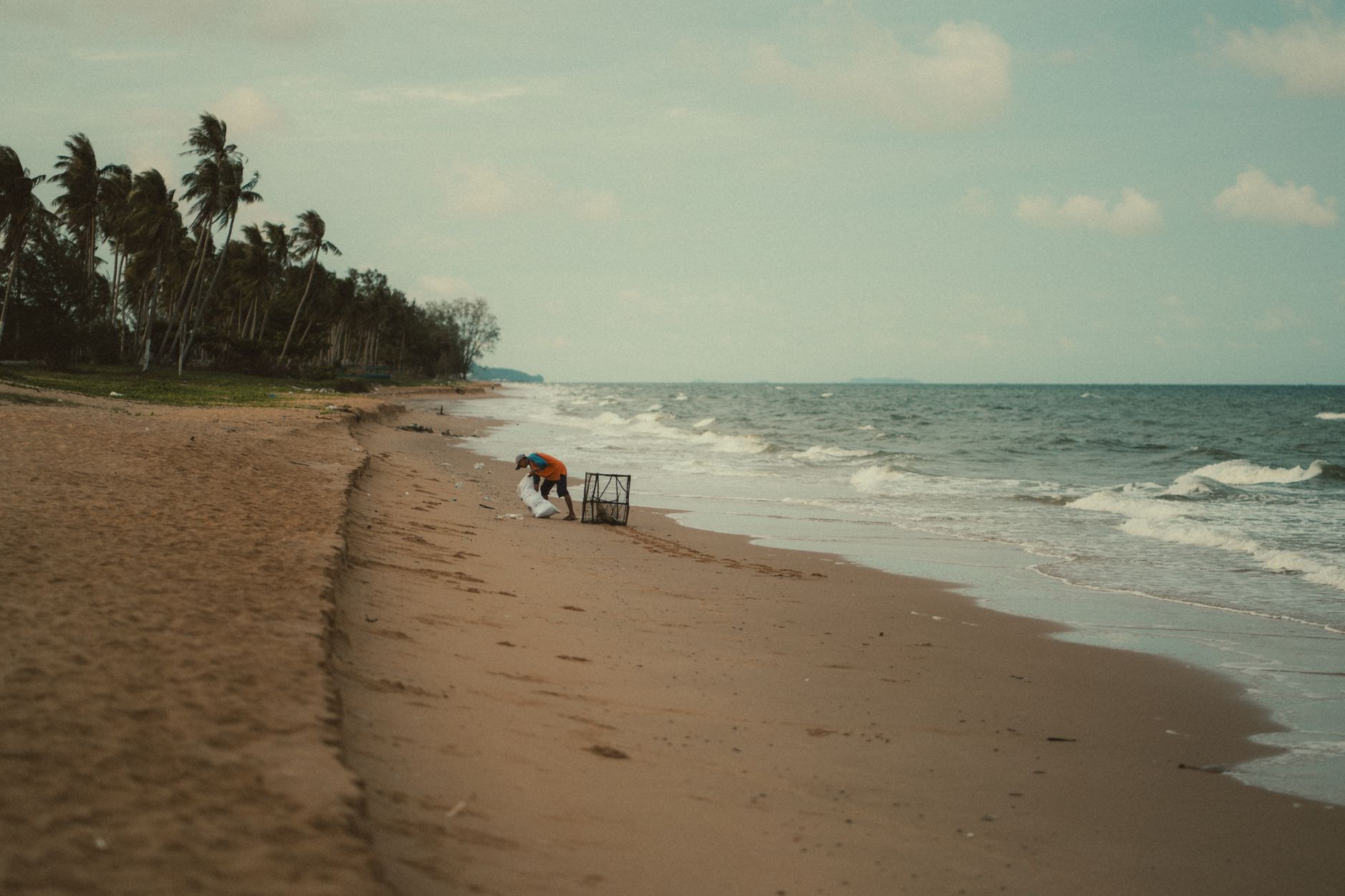
The far southern end, approaching An Thoi, is where Long Beach becomes something closer to a working coastline. Fishing boats, drying nets, and the occasional patch of debris appear. It is less photogenic but more interesting, and it is where you see what Phu Quoc looked like before the resorts.
Pro tip: the beach is public along its entire length, including in front of resorts. You can walk the sand past any hotel. You cannot use their loungers or pools, and security will politely redirect you if you try.
The story of the place
Phu Quoc was, for most of the 20th century, a quiet island of fishing families and pepper farms. Long Beach was where the boats came in and where the first guesthouses appeared in the 1990s, when Vietnam began opening to tourism. For years the island's reputation rested on fish sauce, pearls and a prison camp, not beaches.
That changed fast. Phu Quoc became a special economic zone, the airport was expanded, and a visa exemption for the island was introduced. Long Beach absorbed most of the growth. Where there were once wooden bungalows, there are now towers. The change is visible within a single kilometre: a family-run seafood restaurant with plastic chairs sits next to a glass-fronted hotel lobby.
The beach itself has not moved. The sand is the same sand. What has changed is who is standing on it, and what they expect. Long Beach is now the island's default address, and that is both its strength and its weakness.
What you see, walking north to south
Start at the northern end, near the Duong Dong night market and the bridge over the Duong Dong river. This is the most developed stretch. Beach bars with beanbag seating line the sand, and the water is calm and shallow. It is a good place for an evening drink and a swim, less good if you want solitude.
Walk south for 20 minutes and the bars thin out. The beach widens. You pass the occasional massage hut and a few vendors selling grilled squid and cold drinks. The sand here is at its best, fine and pale, and the water is clear enough for a swim in the dry season.
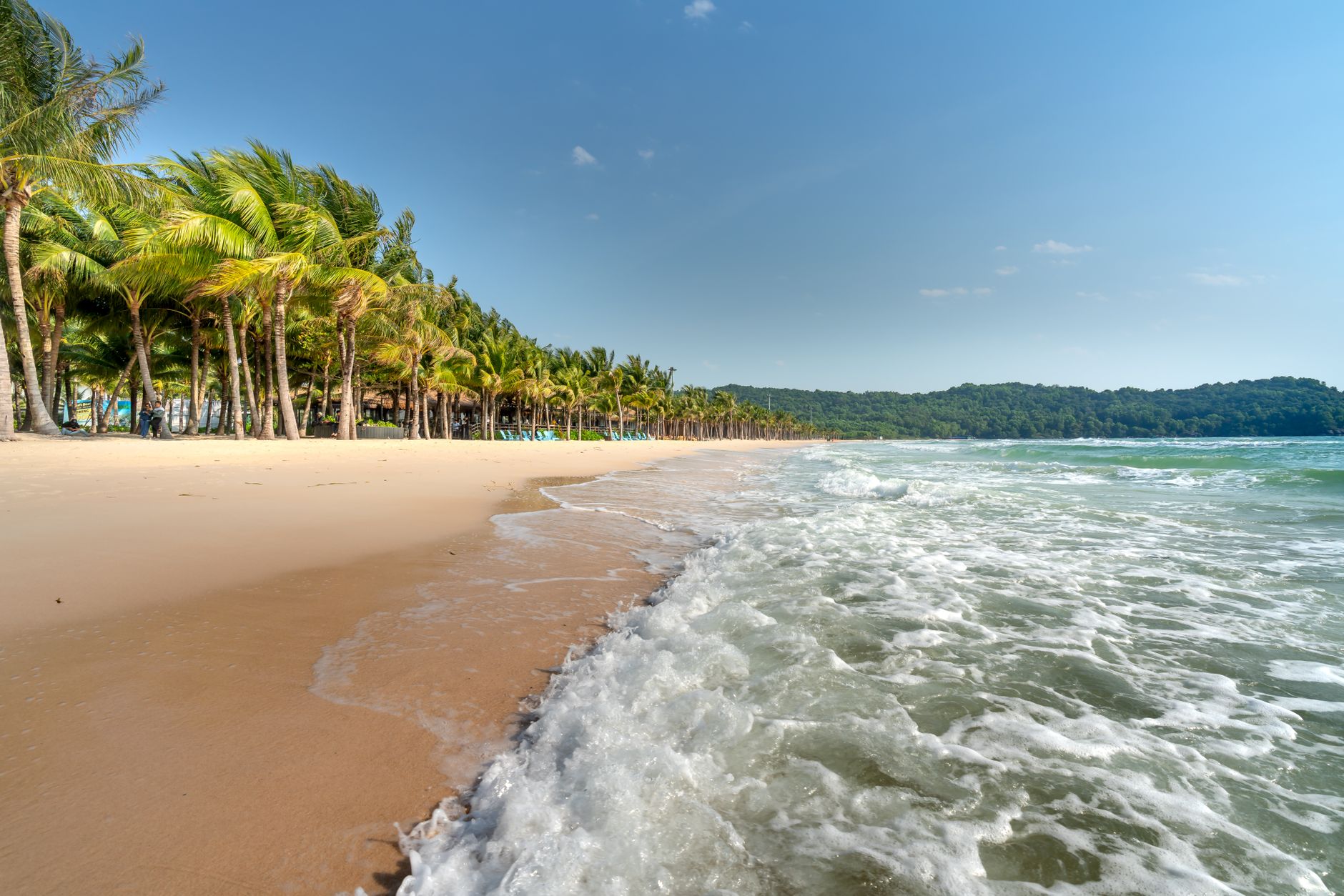
Continue south and you reach the resort belt. This is where Long Beach looks most like a postcard, with rows of palm trees leaning over the sand and a horizon unbroken by boats. The water is calm from November to April, with a gentle slope that suits weak swimmers and children.
The southern end, near An Thoi, is a different scene. Fishing boats are moored offshore, nets dry on the sand, and the smell of the sea is stronger. It is worth a look if you want to understand the island's working life, but it is not where you go to swim.
Warning: during the southwest monsoon, from roughly May to October, the sea on Long Beach can be rough. Red flags appear, and swimming is genuinely dangerous. The island's east coast beaches are calmer in those months.
Long Beach vs the rest of Phu Quoc
| Beach | Orientation | Character | Best for | Best season |
|---|---|---|---|---|
| Long Beach (Bai Truong) | West | Long, developed, sunset-facing | Sunsets, convenience, resorts | Nov to Apr |
| Sao Beach (Bai Sao) | East | White sand, busy, day-trip crowds | Photos, swimming | Nov to Apr |
| Ong Lang | West | Quieter, mid-range resorts | Couples, calm stays | Nov to Apr |
| Rach Vem | North | Fishing village, starfish | Authentic village life | Nov to Apr |
| Khem Beach | South | Upscale, quiet, near cable car | Luxury, seclusion | Nov to Apr |
The comparison matters because many travellers arrive expecting Long Beach to be the island's showpiece. It is not. Sao Beach has whiter sand. Khem Beach is quieter. Ong Lang is calmer. Long Beach wins on convenience, sunsets and the sheer number of places to eat and sleep within walking distance.
Who will love it and who will not
Long Beach suits travellers who want a base rather than a destination. If you plan to eat at the night market, rent a motorbike, take day trips to the south and north of the island, and come back to a sunset swim, Long Beach is exactly right. It is also good for families, since the water is shallow and the resorts are set up for children.
It disappoints travellers chasing a pristine, empty beach. The northern stretch is busy, the water is not always clear, and the development is dense. Anyone expecting the Maldives will be underwhelmed. Anyone expecting a functional, lively beach town with a great sunset will be pleased.
Practical information
Opening hours and entry: Long Beach has no gate, no ticket and no closing time. It is public land and open 24 hours. The only closures are temporary and weather-related, when red flags or local warnings restrict swimming.
How to get there: From Phu Quoc International Airport, the northern end of Long Beach is a 10 to 15 minute drive. A Grab car costs roughly 80,000 to 120,000 VND (about 3 to 5 USD). A metered taxi is similar. From Duong Dong town centre, most of the northern beach is walkable in 5 to 15 minutes.
Getting around: Grab works well on Phu Quoc and is the easiest way to move between sections of the beach. A Grab bike for short hops costs around 20,000 to 40,000 VND (1 to 2 USD). Renting a motorbike costs about 150,000 to 250,000 VND per day (6 to 10 USD), plus fuel. See the broader Phu Quoc things to do guide for how the island's transport fits together.
How long to allow: Half a day minimum for the beach itself. Most travellers base themselves here for three to five nights and use it as a launchpad.
Rules and etiquette: Swimwear is fine on the sand. Cover up when you leave the beach and walk into town or into a restaurant. Do not remove starfish or shells from the water. Do not leave plastic on the sand; the island's waste system struggles, and beach clean-ups are frequent.
Pro tip: the best light is in the 30 minutes before sunset. Position yourself anywhere along the central stretch, around the Ong Lang turn-off, where the palm line frames the sun and the crowds are thinner than in Duong Dong.
What to combine with a visit
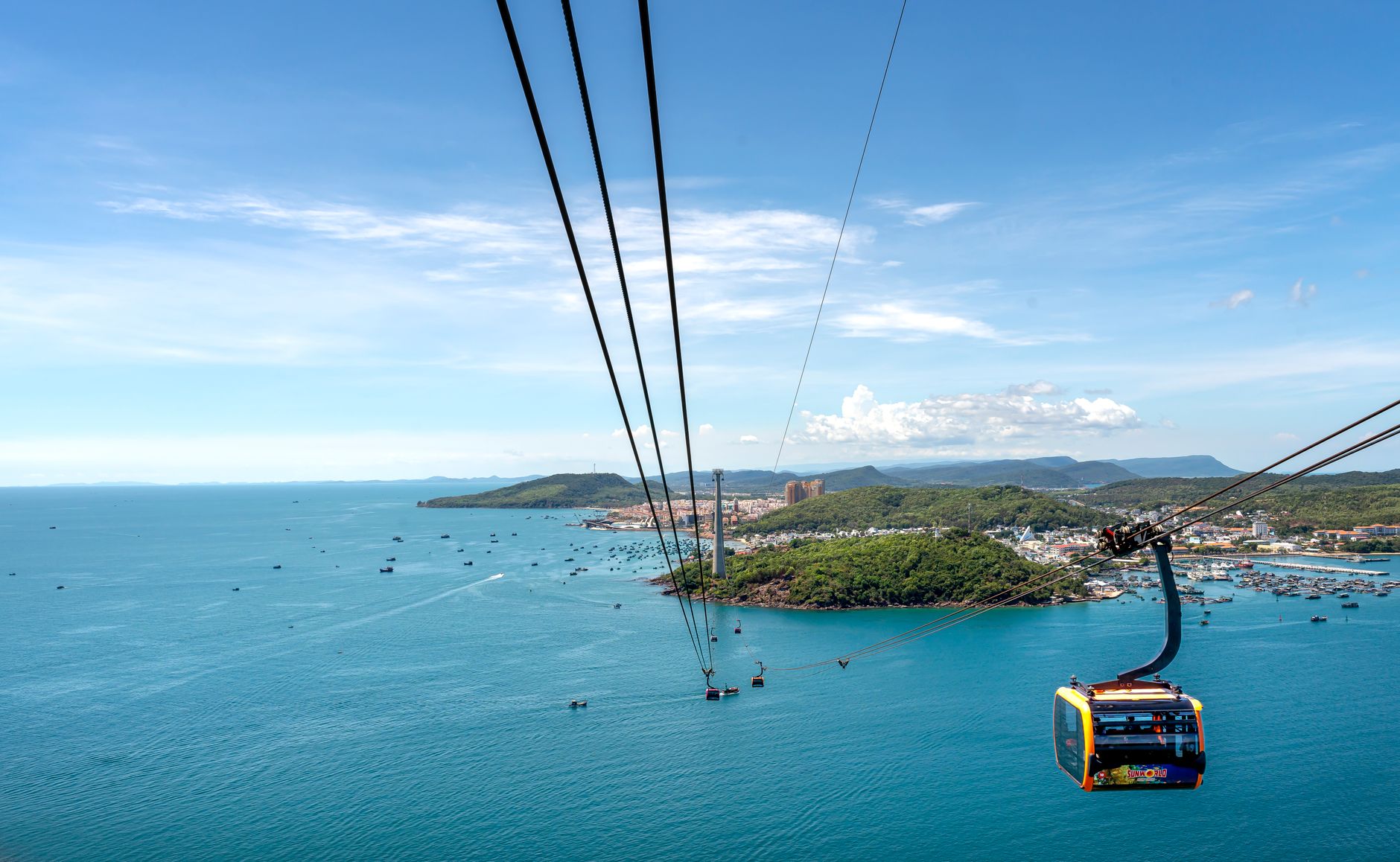
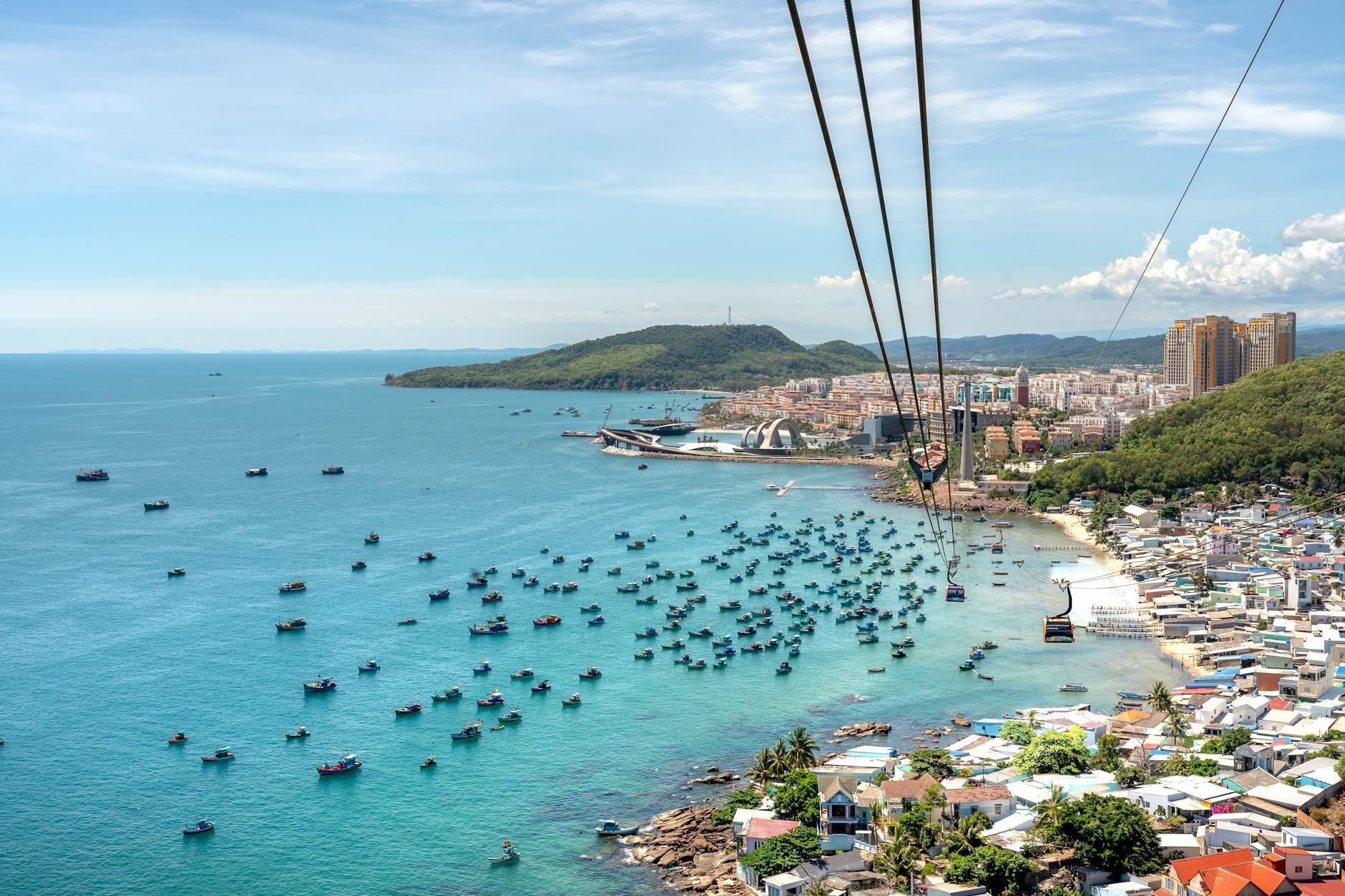
Long Beach sits in the middle of the island's main tourist infrastructure, so combining it with other sights is easy. The Duong Dong night market is a 10 minute walk from the northern end and is the best place for a cheap seafood dinner. The Phu Quoc cable car to Hon Thom departs from the south, about 30 minutes by car. Sao Beach and Khem Beach are both within a 40 minute drive.
For a longer stay, the island pairs well with the rest of southern Vietnam. If you are building a bigger route, the Phu Quoc daily budget guide breaks down what a day actually costs, and the Phu Quoc visa-free entry guide explains who can enter without a visa. For weather planning across the year, Phu Quoc: when to visit for the calmest seas is the reference to use.
FAQ
Q: Is Long Beach worth visiting? Yes, but as a base rather than a standalone attraction. Its value is convenience, sunsets and the density of restaurants and hotels along its length. If you want a single perfect beach, look at Sao or Khem instead.
Q: Is Long Beach free? Yes. There is no entrance fee, no gate and no closing time. The beach is public along its entire 20 km length, including in front of resorts.
Q: What is the best time to visit Long Beach? November to April, when the dry season brings calm seas, clear water and reliable sunsets. The southwest monsoon from May to October brings rough water and red flags on this west-facing shore.
Q: How do I get to Long Beach from the airport? The airport is 10 to 15 minutes from the northern end. A Grab car costs about 80,000 to 120,000 VND (3 to 5 USD). Metered taxis are similar. Grab bikes are cheaper for solo travellers.
Q: Can you swim at Long Beach? Yes, in the dry season. The water is shallow and calm from November to April. From May to October the sea can be rough, and swimming is not safe when red flags are up.
Q: Which part of Long Beach is best? The central stretch around Ong Lang and Cua Can has the widest sand, the cleanest water and the fewest crowds. The northern end near Duong Dong is busiest but most convenient for food and nightlife.
Q: Is Long Beach crowded? The northern end inside Duong Dong is busy, especially at sunset. Walk 20 minutes south and the crowds drop sharply. The southern stretch toward An Thoi is often nearly empty.
Your questions and tips
A question, an update, an experience to share? Our team reads every message before it is published.
No comments yet. Ask the first question or share a tip!