Phu Quoc's waters change dramatically across the year. The same beach that looks like a swimming pool in February can turn into a washing machine in August. Understanding these shifts matters more than any rainfall statistic. This guide focuses specifically on sea conditions, because that is what determines whether you actually get in the water.
The two monsoons and what they do to the sea
Phu Quoc sits at 10 degrees north latitude, which puts it squarely in the tropical monsoon belt. Unlike the rest of Vietnam, which follows a single wet-dry rhythm, the island experiences two distinct monsoon seasons. Each one pushes water from a different direction, and that changes everything.
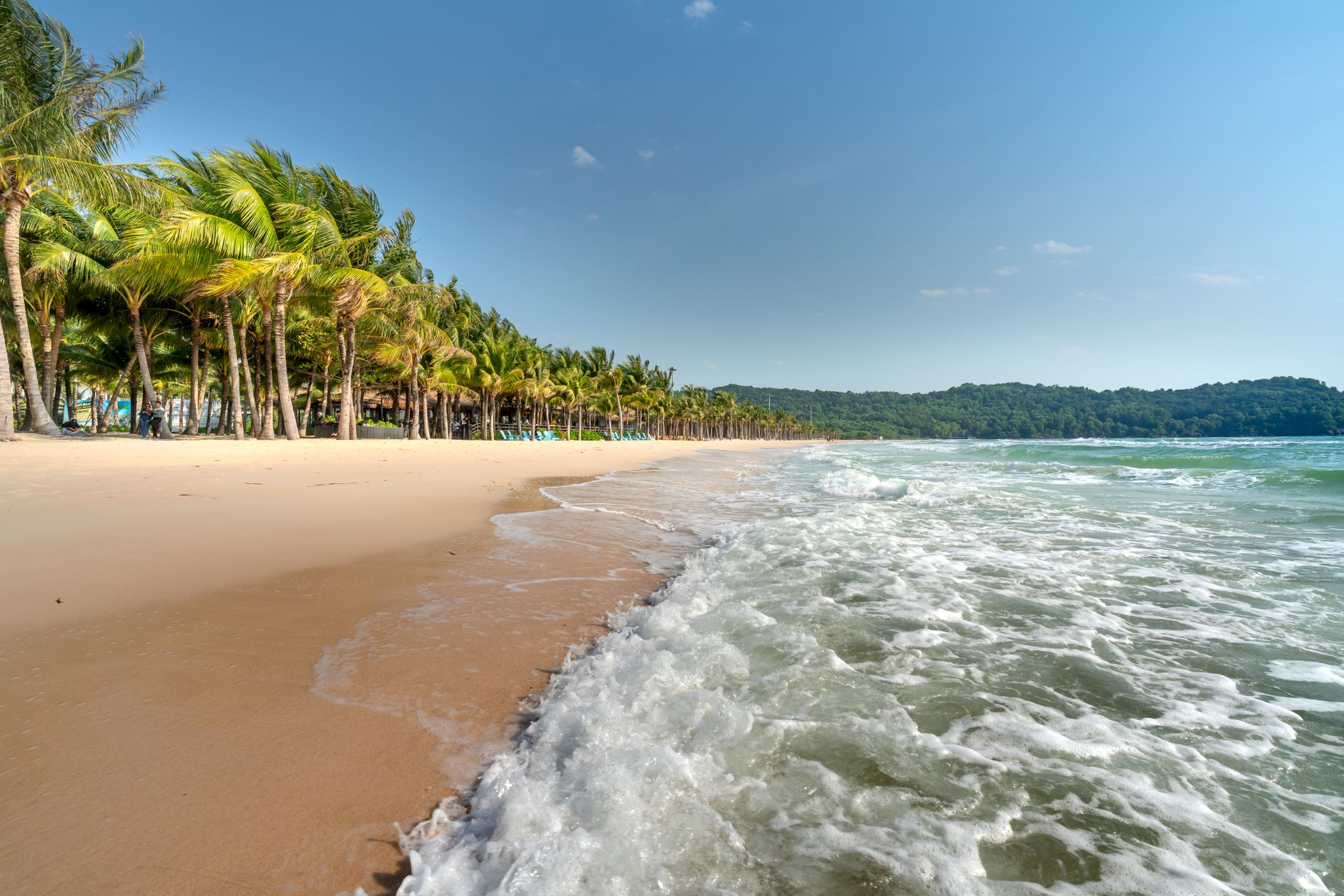
The northeast monsoon runs from November through March. This is the dry season. Winds blow from the northeast, which means they come from the mainland side. The island's west coast, where most resorts and beaches sit, faces away from these winds. The result is flat, calm water along Long Beach, Ong Lang, and Bai Thom. Swimming conditions are excellent. Visibility for snorkeling reaches its annual peak.
The southwest monsoon runs from May through September. Winds reverse direction and blow from the southwest, straight into the island's western beaches. This is when the sea gets rough. Waves build through the afternoon, rip currents form near headlands, and swimming becomes genuinely dangerous on exposed stretches. Many resorts post red flags during these months. Some beaches become unusable for days at a time.
April and October sit between the monsoons. These transition months bring variable winds and mixed conditions. April is generally calm but hot, with sea surface temperatures reaching their annual maximum. October marks the start of the rainy season proper, with heavier downpours but still manageable seas.
| Month | Monsoon | Sea condition | Swimming quality |
|---|---|---|---|
| November | Northeast (dry) | Calm, clearing | Good to excellent |
| December | Northeast (dry) | Flat | Excellent |
| January | Northeast (dry) | Flat | Excellent |
| February | Northeast (dry) | Flat | Excellent |
| March | Northeast (dry) | Calm | Excellent |
| April | Transition | Mixed, warm | Good |
| May | Southwest (wet) | Building swell | Fair |
| June | Southwest (wet) | Rough | Poor |
| July | Southwest (wet) | Rough, windy | Poor |
| August | Southwest (wet) | Rough | Poor |
| September | Southwest (wet) | Rough, rainy | Poor |
| October | Transition | Variable | Fair |
The calmest months in detail
The period from mid-November through late March offers the most reliable swimming conditions. During these months, the sea on the west coast resembles a lake more than an ocean. Waves rarely exceed half a meter. The water stays clear, with visibility of 10 to 15 meters on good days.
December and January represent the absolute peak. The northeast monsoon has fully established itself by early December, and the sea stays flat for weeks at a time. This is also the coolest period of the year, with air temperatures around 26 to 30 degrees Celsius. Sea surface temperature drops to about 27 degrees, which feels refreshing rather than cold.
February continues the pattern. Winds remain light, and the water stays clear. This month offers a sweet spot: the crowds of December and January have thinned, but the sea conditions have not yet begun to deteriorate. For travelers who want calm water without peak-season prices, February is the best choice.
March marks the beginning of the transition. The northeast monsoon weakens, and the sea surface warms. Early March still delivers flat conditions, but by late March, afternoon breezes pick up. Swimming remains fine, but the glassy perfection of January gives way to gentle chop.
Pro tip: Book the first half of March for the best balance of calm seas, warm water, and lower prices. The Christmas and Tet crowds have gone, and the southwest monsoon has not yet arrived.
Why the southwest monsoon ruins the sea
The southwest monsoon transforms Phu Quoc's beaches. From June through August, winds blow consistently from the southwest at 15 to 25 knots. These winds push open-ocean swell directly into the island's western shoreline, where nearly all the tourist infrastructure sits.
Long Beach, which stretches for 20 kilometers along the west coast, takes the full force of this swell. Waves of 1.5 to 2 meters become common. The water turns murky as sediment churns up from the seabed. Jellyfish appear more frequently during these months, adding another reason to stay out of the water.
The north and east coasts fare slightly better. Bai Thom and the northeastern beaches sit in the lee of the island's central hills and receive less direct swell. But these areas lack the resort infrastructure of the west coast. Travelers who book a standard beachfront hotel on Long Beach will find themselves staring at rough water for weeks at a time.
Snorkeling during the southwest monsoon is largely pointless. The An Thoi archipelago, which sits off the southern tip of the island, loses its visibility entirely. Tour operators still run trips, but the experience disappoints. Poor visibility, strong currents, and the constant risk of seasickness make these excursions a poor use of money.
Warning: From late June through August, lifeguards at major resorts regularly close swimming areas. Drownings occur on Phu Quoc every year, and most happen during the southwest monsoon. Do not swim at unpatrolled beaches during these months.
The reality of the rainy season
The southwest monsoon also brings rain, but the pattern is not what many travelers expect. Phu Quoc's wet season does not mean constant downpours. Instead, it means short, intense bursts of rain, often in the late afternoon or evening. Mornings frequently stay dry and sunny.
The bigger issue is the wind, not the rain. Even on days without precipitation, the southwest monsoon keeps the sea rough. Travelers who imagine they can wait out a shower and then swim will be disappointed. The wind does not stop when the rain does.
September stands out as the worst month overall. It combines peak monsoon winds with the heaviest rainfall of the year. The island receives an average of 400 to 500 millimeters of rain in September, more than double the January total. Combined with rough seas, this makes September the least appealing month for beach-focused travel.
October brings gradual improvement. Rainfall remains high, but the southwest monsoon begins to weaken. By late October, the sea starts to flatten. The island transitions into its ideal season just in time for the November high season.
Where to swim when the sea is calm
When conditions are good, not all beaches are equal. The west coast offers the most consistent swimming, but the northern and southern extremes have their own character.
Long Beach (Truong Beach) runs from Duong Dong town southward for 20 kilometers. The central stretch, near the major resorts, has gentle slopes and soft sand. Water depth increases gradually, making it ideal for children. The southern end, closer to the Phu Quoc Night Market area, has slightly steeper drop-offs but still remains safe in calm conditions.
Ong Lang Beach sits north of Duong Dong and offers a quieter alternative. The beach is narrower, but the water clarity tends to be better due to less boat traffic. Several boutique resorts line this stretch, and the swimming is excellent from December through March.
Bai Thom on the northeast coast sees almost no tourists. The water is calm during the northeast monsoon because the coast faces away from the prevailing winds. However, infrastructure is minimal, and getting there requires a scooter or taxi. For travelers who want solitude and don't mind basic conditions, this is the pick.
Sao Beach on the southeast coast gets mixed reviews. During the dry season, it is often called the most beautiful beach on the island, with powdery white sand and turquoise water. But the southeast coast faces the Gulf of Thailand directly, and it feels the southwest monsoon more acutely than the west coast. Visit Sao Beach between November and April for the postcard experience, and skip it entirely in July and August.
The An Thoi archipelago factor
The An Thoi islands, a chain of 15 small islands off Phu Quoc's southern tip, are the island's premier snorkeling destination. Boat tours from An Thoi port run daily throughout the year, but sea conditions dictate whether they are worth taking.
From December through April, the water around An Thoi is flat and clear. Snorkelers can see coral at depths of 3 to 8 meters. The best sites, including May Rut Island and Gam Ghi Island, offer healthy coral gardens and abundant reef fish. Water temperature sits around 28 degrees, making extended snorkeling sessions comfortable.
From May through September, the same sites become marginal. Visibility drops to 2 to 4 meters. Currents strengthen, making it harder to hold position over the reef. Tour boats still run, but many passengers end up seasick on the 30 to 45 minute crossing from the mainland port.
Pro tip: Book An Thoi tours for the morning, regardless of season. Afternoon winds build consistently, and morning trips have a much better chance of calm conditions. This matters most during the shoulder months of April and October.
What about the east coast?
Phu Quoc's east coast receives almost no tourist attention, and for good reason. The east side faces the mainland of Vietnam, and it lacks the sandy beaches of the west. Instead, rocky coastline and mangrove forests dominate.
During the northeast monsoon, the east coast receives the full force of the wind and swell. This makes it completely unsuitable for swimming from November through March. Ironically, the east coast becomes calmer during the summer months when the southwest monsoon pushes water away from it. But even then, the rocky shoreline offers few places to actually enter the water.
The practical takeaway: stay on the west coast for swimming. The east coast is worth exploring for its fishing villages and pepper farms, but not for beach time.
How the seasons affect other activities
Calm seas matter for more than just swimming. Boat trips to the An Thoi archipelago, squid fishing excursions, and sunset cruises all depend on water conditions. During the southwest monsoon, many operators cancel trips or reschedule them for the early morning. This adds unpredictability to the itinerary.
Kayaking and stand-up paddleboarding follow the same pattern. The west coast offers excellent conditions for both activities from December through March. During the summer, the same stretches become challenging even for experienced paddlers.
Diving, as opposed to snorkeling, operates year-round but with different expectations. The dive sites around An Thoi and the nearby islands have limited coral diversity compared to Nha Trang or Con Dao. During the dry season, conditions are good enough for beginner divers. During the wet season, only experienced divers should consider it, and even then, the visibility rarely justifies the cost.
Families with small children should treat the monsoon season as a hard constraint. Toddlers cannot swim in 2-meter waves, and the rip currents that form during the southwest monsoon are invisible to the untrained eye. The calmest months, December through February, are the only period where letting a small child play at the water's edge feels genuinely safe.
Practical planning for 2026
The 2026 calendar adds one complication: Tet, the Vietnamese Lunar New Year. In 2026, Tet falls on February 17. The holiday period brings a massive influx of domestic tourists to Phu Quoc, and prices for flights and hotels spike dramatically.
The sea during Tet is perfect. The weather is dry, the water is flat, and the island is at its most beautiful. But the beaches fill with Vietnamese families, and the atmosphere becomes more chaotic. For travelers who prioritize calm water over calm surroundings, the weeks before Tet, from late January through early February, offer the same sea conditions with fewer people.
March remains the best overall compromise. The sea stays calm through the first half of the month, and the Tet crowds have dispersed. Flight prices from Ho Chi Minh City and Hanoi drop back to normal levels. Hotels on Long Beach offer rates 30 to 40 percent below the December peak.
For travelers who can only visit during the northern hemisphere summer, the advice is blunt: choose a different destination. Phu Quoc from June through August delivers rough seas, poor snorkeling, and unpredictable weather. The beaches of central Vietnam, particularly around Quy Nhon and Mui Ne, offer better conditions during these months. Alternatively, consider Con Dao, which has a different wind pattern and remains swimmable through much of the summer.
Final word
Phu Quoc rewards travelers who time their visit correctly. The island's reputation as a beach paradise rests entirely on the dry season, when the northeast monsoon keeps the sea flat and clear. From November through March, the swimming is genuinely world-class. From May through September, the same beaches become hostile, and the island's main attraction disappears.
The sweet spot for 2026 is February through mid-March. The sea is at its calmest, the crowds have thinned after Tet, and the weather remains dry and sunny. Book early, because this window is short, and the island's best resorts fill up fast.
FAQ
Q: What is the absolute calmest month for swimming in Phu Quoc? January has the flattest seas on average. The northeast monsoon has fully established, winds are light, and the water stays glassy for weeks. December runs close behind, but January edges it out for consistency.
Q: Can you swim in Phu Quoc in July? Technically yes, but only in sheltered spots and early in the morning. The southwest monsoon creates rough conditions on the west coast, and most resorts discourage swimming. The water is also murky and jellyfish appear more frequently.
Q: Is the sea calm in Phu Quoc in April? April is a transition month. Early April usually delivers good conditions with calm mornings and light afternoon breezes. Late April sees the first signs of the southwest monsoon, with building swell and increasing cloud cover.
Q: How does Phu Quoc compare to Nha Trang for calm seas? Phu Quoc has calmer water during its dry season, especially from December to March. Nha Trang benefits from a more sheltered bay and has acceptable swimming year-round, but its water clarity does not match Phu Quoc at its best.
Q: What is the best time for snorkeling at An Thoi? December through April offers the clearest water and calmest conditions. Visibility reaches 10 to 15 meters in January and February. The southwest monsoon months of June through September should be avoided for snorkeling.
Q: Do I need to worry about jellyfish in Phu Quoc? Jellyfish appear mainly during the southwest monsoon, from June to September. During the dry season, encounters are rare. The species found near Phu Quoc cause mild stings rather than serious reactions, but children and allergic individuals should take precautions.
Q: When do the calm seas end in Phu Quoc? The northeast monsoon typically weakens in late March. By mid-April, afternoon winds become noticeable, and the sea loses its flat quality. The southwest monsoon takes full control by late May, marking the end of reliable swimming until November.