This guide covers what the beach actually offers, when to go, what it costs, and whether it deserves a place on a Phu Quoc itinerary that already includes the cable car, the night market, and the northern beaches.
What Sao Beach actually is
Bai Sao runs roughly 1.5 km along the island's southeast shore, tucked into a bay that shelters it from the southwest monsoon. That geography explains almost everything about the place. Between November and April, when the prevailing winds blow from the northeast, the bay stays glassy and swimmable. From June to September, the southwest monsoon pushes waves and debris onto the sand, and the beach can look considerably less photogenic than the postcards suggest.
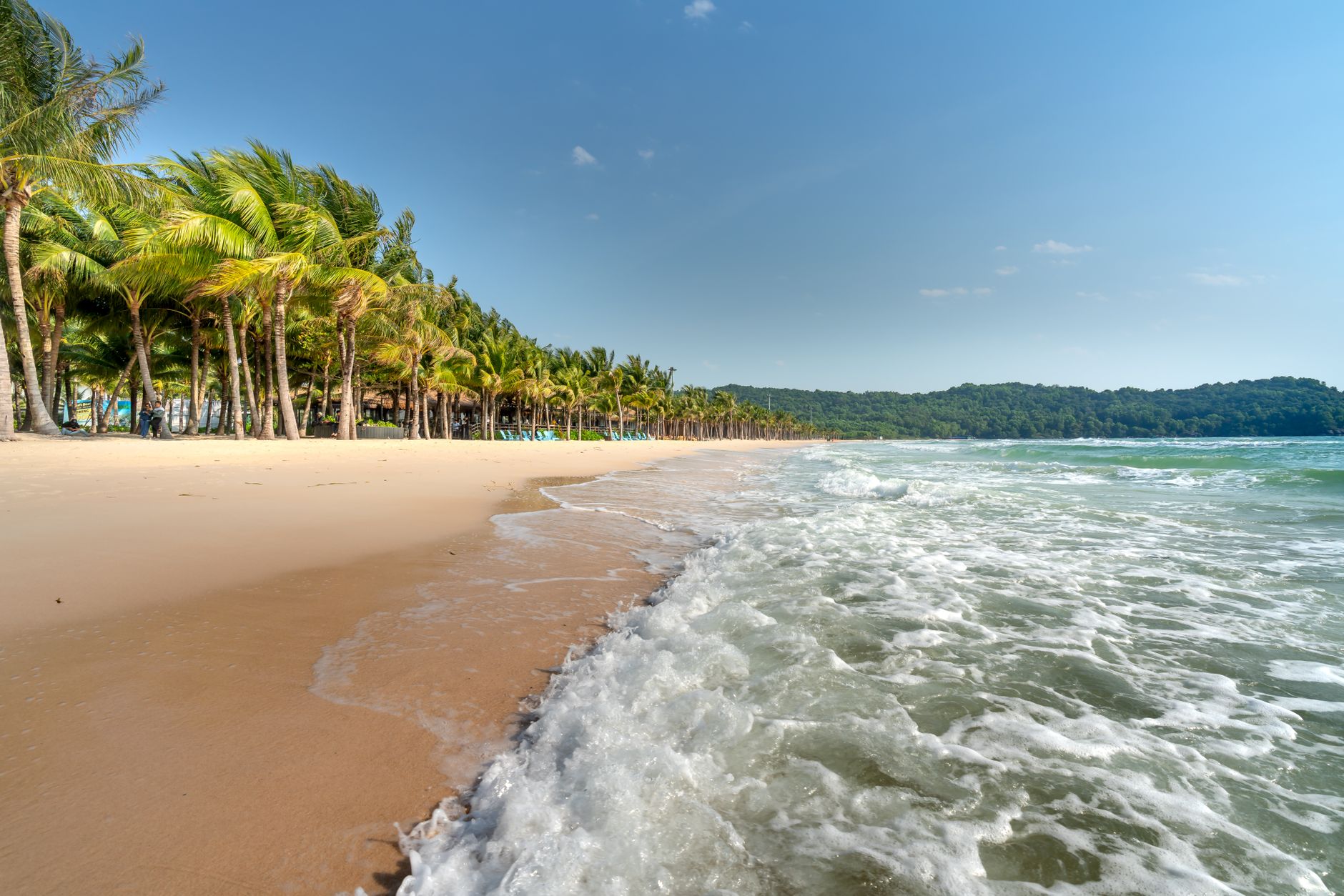
The sand itself is the draw. It is finer and whiter than most of Phu Quoc's west-coast beaches, including Long Beach and Ong Lang. The shallows extend far out, which makes the beach unusually safe for children and weak swimmers. At low tide the waterline retreats dramatically, exposing a wide flat shelf of sand.
There is no historical monument here, no legend attached to the name. "Sao" means star in Vietnamese, and the beach is said to take its name from the starfish once common in the shallows. That is the extent of the story. Sao Beach is a natural feature, not a cultural one, and the guidebook treatment it gets elsewhere tends to oversell its significance.
What you see, spot by spot, walking north to south
Arriving from the main access road, you pass through a strip of casuarina trees and a handful of low-key restaurants before the sand opens up. Most visitors stop at the first stretch they see. That is a mistake.
The northern end is where the day-trippers and tour buses unload. It has the most facilities, the most sunbeds, and the loudest music. If you want a lounger and a beer within arm's reach, this is your section.
The middle stretch is the postcard view, with the classic curve of sand and the small rocky headland at the southern tip framing the shot. It is also where the majority of drone photography happens, and where you will most often have to wait for a clear frame.
The southern end, past the headland, is quieter and often nearly empty by mid-afternoon. The sand is slightly coarser here, and there are fewer services, but the swimming is just as good.
Walk south past the main cluster of restaurants before choosing a spot. The difference in crowd density between the first 200 metres and the last 500 is substantial.
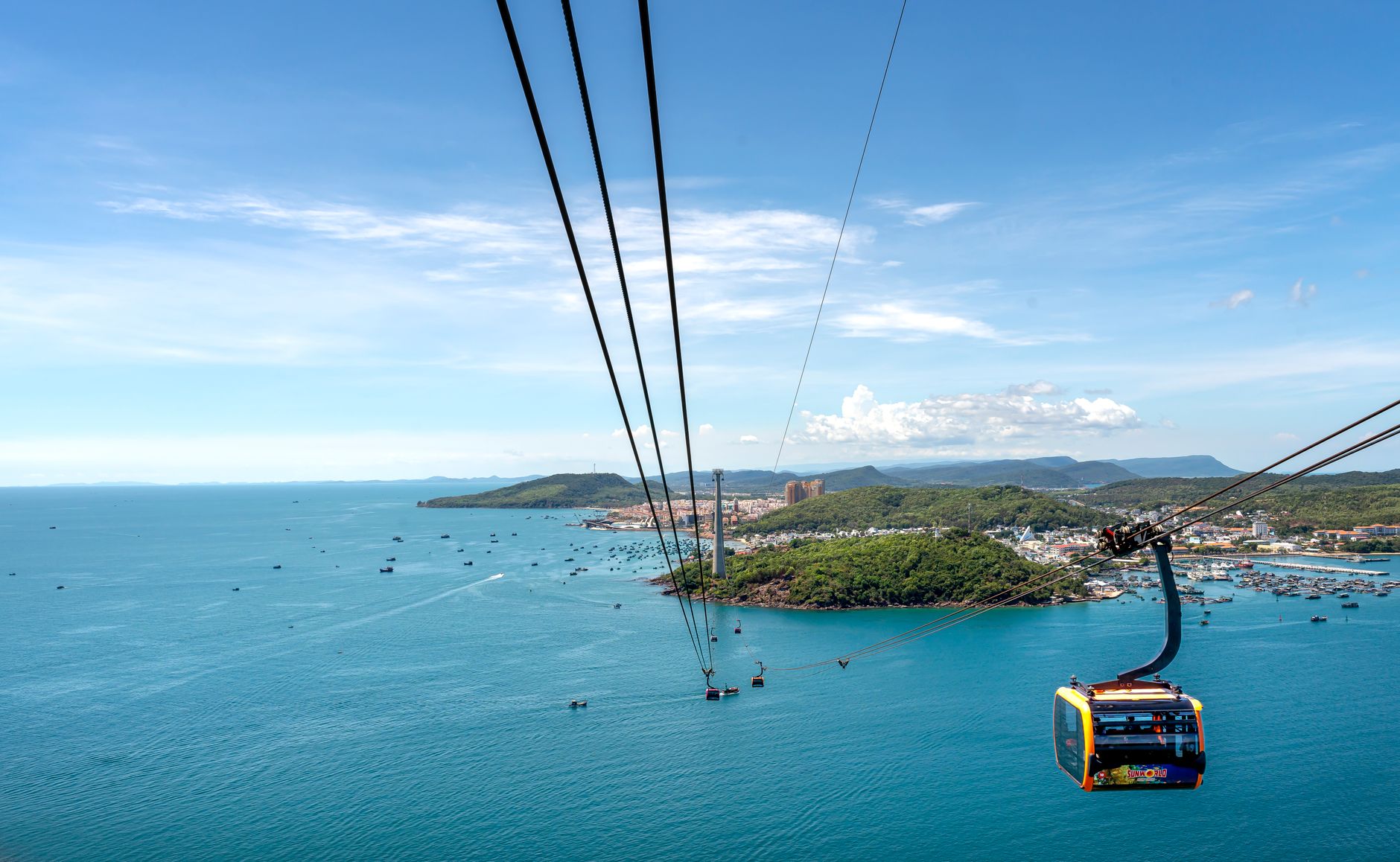
Offshore, the view takes in several small islets that belong to the An Thoi archipelago. On clear days you can see the cable car towers of the Hon Thom line crossing the water to the south, a reminder that this stretch of coast sits at the edge of one of Vietnam's largest resort developments.
Sao Beach versus Phu Quoc's other beaches
Phu Quoc has no shortage of sand. What separates Sao Beach from the alternatives is a combination of sand quality, water clarity, and access.
| Beach | Sand | Water clarity | Crowds | Best for |
|---|---|---|---|---|
| Sao Beach (Bai Sao) | Very fine, white | High in dry season | Heavy | Swimming, photography |
| Long Beach (Bai Truong) | Medium, golden | Moderate | Moderate | Sunset, hotels, dining |
| Ong Lang | Medium, golden | Moderate | Light | Quiet stays, families |
| Bai Dai (northwest) | Fine, white | High | Light to moderate | Seclusion, resorts |
| Khem Beach (Bai Khem) | Fine, white | High | Moderate | Near An Thoi, cable car |
Khem Beach, a few kilometres south, has comparable sand and water but sits next to a large resort complex and the cable car station, so it feels more managed. Ong Lang and the northern beaches are calmer but lack Sao's sheer visual drama. If you have time for only one beach day on Phu Quoc and you want the classic image, Sao is the one. If you want solitude, look elsewhere.
For a broader survey of the country's coastline, see our guide to the most beautiful beaches in Vietnam, and the quiet ones.
Practical information: hours, fees, and rules
Sao Beach has no gate, no ticket booth, and no official opening or closing time. It is public land, accessible around the clock. In practice, the restaurants and sunbed operators run from roughly 7:00 to 18:00, and the access road is unlit after dark.
Entrance fee: none, as of 2026.
Parking: motorbike parking is typically 10,000 to 20,000 VND (about $0.40 to $0.80). Car parking runs 30,000 to 50,000 VND ($1.20 to $2.00). Prices are set informally by the operators and can vary.
Sunbeds: 100,000 to 200,000 VND ($4 to $8) for the day, sometimes waived if you order food and drinks from the operator's restaurant. Confirm before sitting down.
Restrooms and showers: available at the restaurant clusters, usually 10,000 to 20,000 VND.
Rules: no official dress code, but Phu Quoc is a conservative island outside the resort strips. Swimwear is fine on the sand; cover up when walking back to the road. Drone flying is technically restricted near the cable car and An Thoi port infrastructure, so check before launching. Littering is a persistent problem and carries a fine in theory, though enforcement is rare.
The sunbed operators are not always upfront about whether the rental fee is separate from a food minimum. Ask directly: "Ghe nay bao nhieu, co can goi do khong?" (How much is this chair, do I need to order?)
Getting to Sao Beach from Duong Dong and An Thoi
Sao Beach sits on the island's southeast coast, roughly 25 km from Duong Dong town and about 12 km from An Thoi.
By rented motorbike: the most flexible option. From Duong Dong, take Tran Hung Dao south, follow the coastal road through An Thoi, then turn onto the signed access road to Bai Sao. Allow 40 to 50 minutes. Rental costs 150,000 to 250,000 VND ($6 to $10) per day. Roads are paved the whole way, though the final stretch has potholes.
By Grab or taxi: a Grab car from Duong Dong runs 250,000 to 400,000 VND ($10 to $16) each way. Taxis from Mai Linh and Vinasun charge similar or slightly more. Return transport can be difficult in the late afternoon, so arrange a pickup or keep a driver's number. See our taxi guide for Vietnam for how to avoid the fake-meter problem.
By hotel shuttle: many resorts in An Thoi and the southern peninsula run scheduled shuttles. Ask at reception.
By tour: day trips combining Sao Beach with the An Thoi cable car and Hon Thom island are widely sold in Duong Dong. They solve the transport problem but lock you into a fixed schedule, usually with only two to three hours on the sand.
Grab works reliably on Phu Quoc, but drivers are thinner in the far south. If you are relying on the app for the return leg, book it before 16:00.
When to go, and when to skip it
The dry season, November through April, is when Sao Beach looks like the photographs. December and January offer the calmest water and the clearest skies. February to April is hotter but still dry.
May is a transition month, with occasional rain and rising humidity. June through September brings the southwest monsoon, which hits this southeast-facing bay directly. The water turns murky, debris washes up, and red flags appear more often. October and early November are unpredictable.
Time of day matters more than most guides admit. Tour groups arrive between 10:00 and 14:00. If you want the beach at its best, come at 7:00 to 8:30, or after 15:30. The light for photography is best in the early morning, when the sun is behind you looking south.
Vietnamese public holidays, especially Reunification Day (30 April) and National Day (2 September), turn Sao Beach into a wall of umbrellas and speakers. Avoid those dates entirely if quiet is what you want.
For a wider view of how Phu Quoc's seasons work, see Phu Quoc: when to visit for the calmest seas.
What to combine with a Sao Beach visit
Sao Beach sits at the southern end of Phu Quoc, which makes it easy to pair with other southern attractions.
An Thoi cable car and Hon Thom: the world's longest over-sea cable car runs from An Thoi to Hon Thom island. Tickets in 2026 run about 600,000 VND ($24) for adults. The ride takes around 15 minutes each way.
An Thoi port and fishing village: a working harbour with seafood restaurants on stilts. Good for a late lunch.
Phu Quoc Prison: a preserved French and American-era prison site, about 10 km north of Sao Beach. Entry is 30,000 VND ($1.20). Sobering, and worth an hour.
Sunset Town: the Mediterranean-themed development near An Thoi, with the Kiss Bridge and nightly fireworks. Divisive, but hard to ignore.
Night market in Duong Dong: the standard evening finish, 30 to 40 minutes north by car.
For more on the island beyond the beach, see Phu Quoc things to do: beaches, cable cars and beyond the resorts.
Who will love Sao Beach, and who will not
Sao Beach rewards travellers who prioritise sand and swimming over culture and quiet. Families with young children will appreciate the shallow water. Photographers will find the light and colour hard to beat. Anyone staying in An Thoi or the southern resorts can reach it in 15 minutes.
It will disappoint travellers looking for an untouched beach. The restaurant strip is commercial, the sunbed touts are persistent, and during peak hours the northern end feels more like a resort pool deck than a wild coastline. If you have already spent time on Con Dao, or on the quieter beaches of the north, Sao may feel like a step down in atmosphere.
It is also not worth a dedicated trip from the far north of the island if you only have one beach day. In that case, Ong Lang or Bai Dai will serve you better.
The verdict
Sao Beach is worth visiting, with conditions. Go early or late. Walk south past the crowds. Do not expect solitude in high season. The sand and water justify the trip; the infrastructure around them does not. Treat it as a half-day rather than a full one, combine it with the cable car or An Thoi, and you will come away with the photographs you came for.
FAQ
Q: Is there an entrance fee for Sao Beach? No. Sao Beach is public and free to enter as of 2026. You pay only for parking, sunbeds, food, and showers, typically 150,000 to 300,000 VND ($6 to $12) for a comfortable half-day.
Q: How do I get to Sao Beach without a motorbike? Use Grab or a metered taxi from Duong Dong (250,000 to 400,000 VND each way), book a hotel shuttle, or join a southern Phu Quoc day tour. Grab is reliable going out but can be slow for the return leg in the late afternoon.
Q: Is Sao Beach good for swimming? Yes, in the dry season. The water is shallow and calm from November to April, which makes it suitable for children. From June to September the southwest monsoon brings waves and reduced clarity.
Q: What is the best time of day to visit? Before 9:00 or after 15:30. Tour groups dominate between 10:00 and 14:00, and the northern end of the beach becomes crowded. Early morning also gives the best light for photography.
Q: Can I fly a drone at Sao Beach? Drone use is restricted near the An Thoi cable car and port infrastructure. Outside those zones, casual flights are common, but rules are enforced inconsistently. Check with your hotel or a local operator before flying.
Q: Is Sao Beach better than Khem Beach? They are similar in sand and water quality. Sao is larger and more commercial; Khem is smaller and sits beside a resort and the cable car station. Sao has more space to spread out; Khem feels more managed.
Q: What should I bring? Reef-safe sunscreen, cash in small notes, a towel, and water. Card payment is unreliable at the beach restaurants. There are no ATMs at Sao Beach itself, so withdraw in Duong Dong or An Thoi first.

Your questions and tips
A question, an update, an experience to share? Our team reads every message before it is published.
No comments yet. Ask the first question or share a tip!