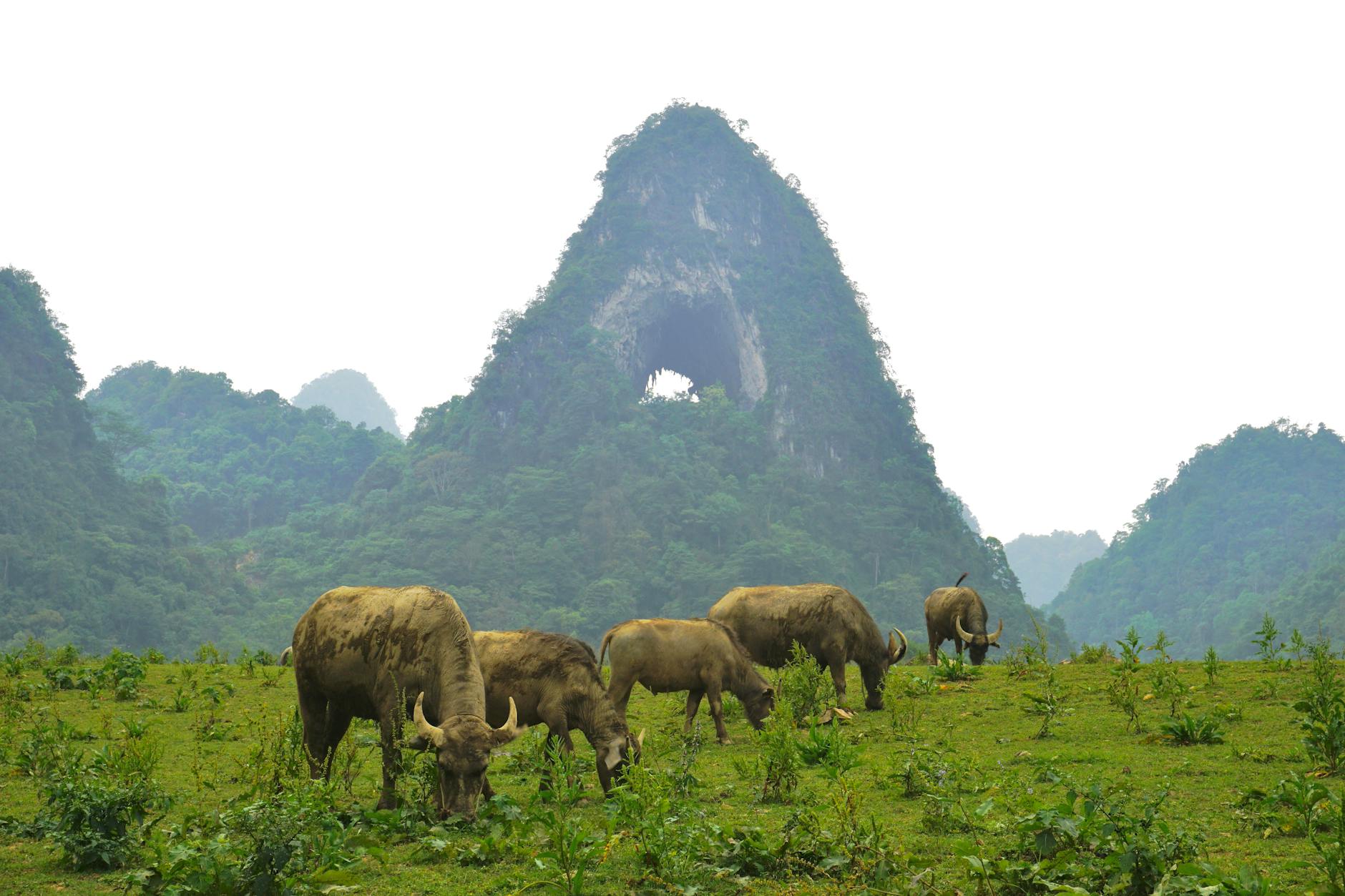
Why getting to Cao Bang is different from other northern destinations
Cao Bang sits in a far northeastern corner of Vietnam, sharing a border with China. Unlike Sapa or Ha Giang, no train lines serve the province. The road network is less developed. Direct buses are fewer. And road conditions change dramatically by season.
Understanding this upfront prevents frustration. You cannot book a last-minute bus at 10 PM and expect to arrive by morning. You cannot rely on ride-hailing apps. And you cannot treat the journey like a quick hop from Hanoi to Ninh Binh.
This remoteness is also the reason Cao Bang feels untouched. Is Cao Bang touristy? The short answer is no, but the longer answer explains why getting there is part of the reward.
Where is Cao Bang and how long does it actually take?
Cao Bang city is the provincial capital, located near the Chinese border. The geographic distance from Hanoi is roughly 280 km, but mountain roads turn that into a much longer journey.
Distance from Hanoi
The road distance is approximately 300-320 km depending on the route. Travel times vary significantly:
- By sleeper bus: 7-9 hours
- By limousine van: 6-7 hours
- By private car: 5-6 hours
- By motorbike: 6-8 hours
Distance from Ha Giang
Ha Giang city to Cao Bang city is about 180 km by road. The route includes the Khau Coc Cha Pass, one of northern Vietnam's most dramatic mountain crossings.
- By bus: 5-6 hours
- By motorbike: 5-7 hours
Distance from other northern hubs
- Sapa to Cao Bang: No direct route. Go via Hanoi (12-15 hours total) or via Ha Giang (10-12 hours)
- Ninh Binh to Cao Bang: 7-9 hours via Hanoi
- Ba Be Lake to Cao Bang: 4-5 hours by road
- Ha Long Bay to Cao Bang: 8-10 hours via Hanoi
Pro tip: Google Maps will show shorter times than reality. Add 20-30% for bus travel and 30-50% for motorbike travel during rainy season.
Hanoi to Cao Bang by bus: the most common option
The sleeper bus from Hanoi is the default choice for most travelers. It is cheap, frequent, and does not require any special planning beyond booking a seat.
Standard sleeper buses: what you actually get for 250,000-400,000 VND
Standard sleeper buses cost between 250,000 and 400,000 VND ($10-16). You get a reclining seat in a two-level cabin, air conditioning, and a bottle of water. The bus makes one or two rest stops for food and toilets.
Expect basic comfort. The seats are narrow. The roads are winding. Motion sickness is common. If you are over 180 cm tall, your legs will not fully extend.
Limousine vans: worth the premium at 400,000-600,000 VND?
Limousine vans seat 9-11 passengers in leather seats with more legroom. They cost 400,000-600,000 VND ($16-24). The journey is shorter by about an hour because the vans are faster and make fewer stops.
For couples or travelers who value comfort, the premium is worth it. For solo backpackers on a tight budget, the standard bus does the job.
Where buses depart from in Hanoi
Most buses to Cao Bang depart from:
- My Dinh Bus Station: The main northern bus terminal. Most reliable for Cao Bang routes.
- Luong Yen Bus Station: An alternative departure point with fewer options.
- Old Quarter pickup points: Many bus companies offer free pickup from hotels in the Old Quarter. Confirm this when booking.
Booking in advance vs buying at the station
Book at least one day in advance during peak season (October-April). Same-day tickets are usually available at My Dinh station, but you risk sold-out seats on weekends and holidays.
Online booking through platforms like 12Go or Baolau works well. Hotel reception can also arrange tickets, usually with a small markup.
What to expect on the road: rest stops, road quality, and potential delays
The road from Hanoi to Cao Bang is mostly paved but varies in quality. The first 150 km to Bac Kan is decent highway. The final 150 km through the mountains is narrower, with sharp curves and occasional potholes.
Expect one rest stop around Bac Kan and another near the Cao Bang city limits. Food is basic: instant noodles, rice dishes, and snacks.
Warning: Motion sickness is worse on this route than on the Hanoi-Sapa road. The curves are tighter and the road is rougher. Bring medication or ginger candy.
Night bus pros and cons for Cao Bang
Night buses to Cao Bang depart around 8-10 PM and arrive between 4-6 AM. This saves a night of accommodation but has drawbacks:
- Arriving at 4 AM with no open hotels or cafes
- Limited visibility of the scenery (which is spectacular)
- Higher risk of delays in darkness
Daytime buses are recommended for first-time visitors.
Hanoi to Cao Bang by private car or taxi
For travelers who value comfort, flexibility, or have mobility concerns, private cars offer the best experience.
Private car services: typical costs and booking channels
A private car from Hanoi to Cao Bang costs 2,500,000-4,000,000 VND ($100-160). This covers a driver, fuel, and tolls. Booking through hotel concierge or platforms like Klook is standard.
The journey takes 5-6 hours with fewer stops. The driver handles navigation and road conditions while you enjoy the scenery.
Can you use Grab or similar apps?
No. Grab does not operate on intercity routes. Does Grab work in Vietnam? Yes, but only within cities. For Cao Bang, you need a pre-arranged private transfer.
Shared private transfers vs exclusive vehicle hire
Some companies offer shared private transfers where you join other travelers in a larger vehicle. These cost 400,000-600,000 VND per person, similar to limousine vans. The difference is door-to-door service.
When a private car makes sense
- Groups of 3-5 people (cost per person becomes reasonable)
- Families with young children
- Travelers with mobility issues
- Bad weather when buses might be unreliable
- Late arrivals or early departures when buses are not running
Hanoi to Cao Bang by motorbike: the adventurous option
The motorbike route to Cao Bang is the most rewarding way to arrive. It is also the most demanding.
Route overview: National Highway 3 and alternative roads
The standard route follows National Highway 3 north through Thai Nguyen, Bac Kan, and into Cao Bang. This is the same road buses use. For experienced riders, alternative roads through Ba Be Lake offer more scenic but rougher terrain.
Key mountain passes and what to expect
The route includes several notable passes:
- Khau Coc Cha Pass: The most famous, located between Ha Giang and Cao Bang. Tight switchbacks, steep drops, and stunning views.
- Doc Cum Pass: A shorter but steep section near Cao Bang city.
- Various unnamed passes: The entire final 150 km is winding mountain road.
Recommended bike types: why a scooter is not enough
A 110cc or 125cc scooter can technically make the journey, but it will struggle on steep inclines. A 150cc or larger semi-automatic or manual bike is strongly recommended. The Honda XR150 or Yamaha Exciter are popular choices.
Pro tip: Renting a motorbike in Vietnam requires an International Driving Permit. Without one, you are driving illegally. Insurance will not cover accidents.
Safety considerations
- Weather: Rain turns roads slippery. Fog reduces visibility to meters.
- Road quality: Potholes, loose gravel, and sections under construction.
- Traffic: Trucks and buses on narrow roads require constant attention.
- Medical facilities: Limited between towns. A serious accident means hours to reach a hospital.
Time required: realistic estimates vs Google Maps
Google Maps shows 5-6 hours. Realistic time with stops for photos, rest, and food is 6-8 hours. First-time riders on unfamiliar bikes should plan for 8+ hours.
Where to rent in Hanoi and what to check before leaving
Rental shops in Hanoi's Old Quarter offer bikes for 150,000-300,000 VND ($6-12) per day. Check:
- Brake pads and brake fluid
- Tire tread and pressure
- Chain tension and lubrication
- Headlight and taillight function
- Spare key availability
For a detailed motorbike itinerary, see the Cao Bang Loop self drive guide.
Ha Giang to Cao Bang: connecting two northern highlights
Many travelers combine Ha Giang and Cao Bang into a single northern loop. The connection between them is one of Vietnam's most scenic road trips.
Direct buses from Ha Giang to Cao Bang
Direct buses run daily from Ha Giang bus station to Cao Bang. The journey takes 5-6 hours and costs 200,000-350,000 VND ($8-14). Buses depart in the morning, usually around 7-8 AM.
The motorbike route: distances, passes, and viewpoints
The motorbike route from Ha Giang to Cao Bang covers approximately 180 km. The highlight is Khau Coc Cha Pass, which offers panoramic views of the Nho Que River valley.
Allow 5-7 hours with stops. The road is paved but narrow. Trucks coming around blind corners are the main hazard.
Khau Coc Cha Pass: why this stretch deserves special attention
Khau Coc Cha is one of Vietnam's most spectacular mountain passes. The road climbs steeply through multiple switchbacks, offering views that rival anything on the Ha Giang Loop. The pass is also notoriously tight, with limited guardrails.
Combining Ha Giang Loop with Cao Bang: practical itineraries
Most travelers spend 3-4 days on the Ha Giang Loop, then continue to Cao Bang for 2-3 days. The total loop takes 5-7 days. See the Cao Bang Loop Map for detailed routing.
Sapa, Ninh Binh, and other departure points
Travelers coming from other northern destinations face a common challenge: most routes require passing through Hanoi.
Sapa to Cao Bang: no direct bus, what are the alternatives?
No direct bus connects Sapa to Cao Bang. The options are:
- Sapa to Hanoi by bus (6 hours), then Hanoi to Cao Bang (7-9 hours)
- Sapa to Ha Giang by bus (5-6 hours), then Ha Giang to Cao Bang (5-6 hours)
The second option is more efficient but requires coordinating two separate bus bookings.
Ninh Binh to Cao Bang: the Hanoi connection explained
Ninh Binh is south of Hanoi, so any route to Cao Bang goes through the capital. Take a bus or train from Ninh Binh to Hanoi (2 hours), then connect to a Cao Bang bus from My Dinh station. Total time: 9-11 hours.
Ba Be Lake to Cao Bang: a less-traveled but scenic route
Ba Be Lake is roughly halfway between Hanoi and Cao Bang. Direct buses from Ba Be to Cao Bang exist but are infrequent. The motorbike route through Ba Be National Park is spectacular but requires good navigation skills.
Ha Long Bay to Cao Bang: overnight options
Ha Long Bay to Cao Bang takes 8-10 hours via Hanoi. Most travelers spend a night in Hanoi to break up the journey. Direct buses are rare.
Getting around Cao Bang province once you arrive
Transport from Cao Bang city to the main attractions requires additional planning.
Local buses to Ban Gioc: routes, frequency, and costs
Local buses from Cao Bang city to Ban Gioc Waterfall depart from the central bus station. The journey takes 2-3 hours and costs 80,000-120,000 VND ($3-5). Buses run from early morning until mid-afternoon, with limited frequency on Sundays.
Motorbike rental in Cao Bang city
Motorbike rental in Cao Bang city costs 150,000-250,000 VND ($6-10) per day. Options are limited compared to Hanoi. Check the bike thoroughly before renting.
Hiring an easy rider: when it makes sense
Easy riders are experienced local drivers who take passengers on the back of their motorbikes. This costs 500,000-800,000 VND ($20-32) per day. It makes sense for solo travelers who want the motorbike experience without driving.
Taxis and private drivers within the province
Local taxis can be arranged through hotels. A day trip to Ban Gioc Waterfall by taxi costs 1,000,000-1,500,000 VND ($40-60). Negotiate the price before departing.
Why Grab does not work in Cao Bang
Does Grab work in Vietnam? Yes, but only in major cities. Cao Bang province has no Grab coverage. Plan accordingly.
Leaving Cao Bang: onward transport options
Returning from Cao Bang requires the same level of planning as arriving.
Buses from Cao Bang to Hanoi
Buses depart from Cao Bang bus station. Multiple companies run overnight and daytime services. Tickets cost 250,000-400,000 VND ($10-16). Book at least one day in advance.
Cao Bang to Ha Giang by bus or motorbike
Direct buses run from Cao Bang to Ha Giang. The journey takes 5-6 hours. Motorbike riders can follow the same route in reverse.
Connecting to other northern destinations
- Ba Be Lake: 4-5 hours by bus or motorbike
- Lang Son: 3-4 hours by road, then connect to Hanoi or China
- Halong Bay: 8-10 hours via Hanoi
Booking return transport: how far in advance to plan
For buses, book 1-2 days in advance during peak season. For private cars, book 2-3 days ahead. Last-minute bookings are possible but may mean limited options.
Seasonal considerations for transport
Road conditions, weather, and visibility change dramatically by season.
Dry season (October to April): best conditions, but cold
October to April offers the best road conditions. Clear skies, dry roads, and excellent visibility. Temperatures drop to 5-15°C in winter. Pack warm layers.
Rainy season (May to September): landslides, delays, and reduced visibility
May to September brings heavy rain, especially in July and August. Landslides can block roads for hours or days. Bus schedules become unreliable. Motorbike travel is risky.
Winter fog and its impact on motorbike travel
December and January bring dense fog in the mountains. Visibility can drop to 10-20 meters. Motorbike travel becomes dangerous. Buses continue running but at reduced speeds.
How weather affects bus schedules and road safety
During heavy rain, buses may delay departures or cancel entirely. Check weather forecasts before booking. For more on timing your visit, see The Best and Worst Months to Visit Vietnam.
Cost comparison: all transport options
| Transport Option | Duration | Cost (VND) | Cost (USD) | Best For |
|---|---|---|---|---|
| Standard sleeper bus (Hanoi) | 7-9 hours | 250,000-400,000 | $10-16 | Budget travelers, solo backpackers |
| Limousine van (Hanoi) | 6-7 hours | 400,000-600,000 | $16-24 | Comfort seekers, couples |
| Private car (Hanoi) | 5-6 hours | 2,500,000-4,000,000 | $100-160 | Groups of 3-5, families |
| Motorbike (Hanoi) | 6-8 hours | 150,000-300,000/day (rental) | $6-12/day | Adventure travelers |
| Direct bus (Ha Giang) | 5-6 hours | 200,000-350,000 | $8-14 | Travelers continuing from Ha Giang |
| Local bus (Cao Bang to Ban Gioc) | 2-3 hours | 80,000-120,000 | $3-5 | Day trips to the waterfall |
Safety and practical tips for reaching Cao Bang
Motion sickness on mountain roads
The winding roads to Cao Bang trigger motion sickness more than routes to Sapa. Bring medication, ginger candy, or acupressure bands. Sit near the front of the bus.
Motorbike safety: insurance, IDP requirements, and accident risks
An International Driving Permit is legally required. Without one, you are uninsured. Medical evacuation from Cao Bang to Hanoi costs thousands of dollars. Is Vietnam safe in 2026? For motorbike travel, the risks are real.
Bus safety: what to check before boarding
- Check that the bus has seatbelts (many do not)
- Verify the company reputation online
- Store valuables in a bag you keep with you
- Note the license plate and share it with someone
What to pack for the journey
- Neck pillow for bus travel
- Snacks and water (rest stop food is limited)
- Layers for temperature changes
- Motion sickness medication
- Power bank for phone charging
Language barriers at bus stations
Bus station staff rarely speak English. Have your destination written in Vietnamese. Show it to the ticket seller or driver. Use Google Translate for complex questions.
FAQ
Q: Is Cao Bang worth visiting? A: Yes, for travelers seeking dramatic mountain landscapes, the largest waterfall in Vietnam (Ban Gioc), and authentic ethnic minority culture without crowds. However, the 6-9 hour journey from Hanoi means it requires at least 3-4 days to justify the travel time.
Q: How do I get from Hanoi to Cao Bang without a motorbike? A: By sleeper bus (250,000-400,000 VND, 7-9 hours), limousine van (400,000-600,000 VND, 6-7 hours), or private car (2,500,000-4,000,000 VND, 5-6 hours). All depart from My Dinh or Luong Yen bus stations, with some offering Old Quarter pickup.
Q: Is it safe to drive a motorbike from Hanoi to Cao Bang? A: It can be safe for experienced riders with a valid International Driving Permit and a 150cc+ bike. The roads are paved but winding, with steep mountain passes and unpredictable weather. Inexperienced riders should hire an easy rider or take the bus.
Q: How long does it take to get from Ha Giang to Cao Bang? A: By direct bus, 5-6 hours. By motorbike, 5-7 hours depending on stops and road conditions. The route includes the Khau Coc Cha Pass, one of northern Vietnam's most scenic mountain roads.
Q: Can I visit Ban Gioc Waterfall as a day trip from Hanoi? A: Technically possible but not recommended. The round trip takes 14-18 hours by bus, leaving only 1-2 hours at the falls. Overnight in Cao Bang city or near Ban Gioc is strongly advised.
Q: Does Grab work in Cao Bang? A: No. Grab and similar ride-hailing apps do not operate in Cao Bang province. Travelers must rely on local taxis (booked through hotels or by phone), motorbike rentals, or pre-arranged private drivers.
Q: What is the best time of year to travel to Cao Bang by motorbike? A: October to April (dry season) offers the best road conditions and visibility. November to February can be very cold (5-15°C), while March-April provides mild temperatures and clear skies. Avoid July-September for motorbike travel due to landslide risks.
Q: Are there direct buses from Sapa to Cao Bang? A: No direct buses exist. Travelers must go via Hanoi or, less commonly, via Lao Cai and Ha Giang. The most practical route is Sapa to Hanoi (6 hours by bus), then Hanoi to Cao Bang (7-9 hours).