Ban Gioc Waterfall is one of Vietnam's most spectacular natural wonders, but getting there from Cao Bang city requires planning. This guide covers every transport option, hidden costs, road conditions, and practical tips most travel blogs leave out.
What you need to know before going
The distance from Cao Bang city to Ban Gioc Waterfall is 85 kilometers (53 miles). Travel time ranges from 2 to 4 hours depending on your chosen transport. The route follows Highway QL3 then provincial road TL206 through the Khau Coc Cha Pass.
This journey matters because Ban Gioc is Vietnam's largest waterfall and the fourth largest border waterfall in the world. The waterfall sits directly on the border with China. The road conditions are better than Ha Giang's mountain passes but worse than the flat highways of the Mekong Delta.
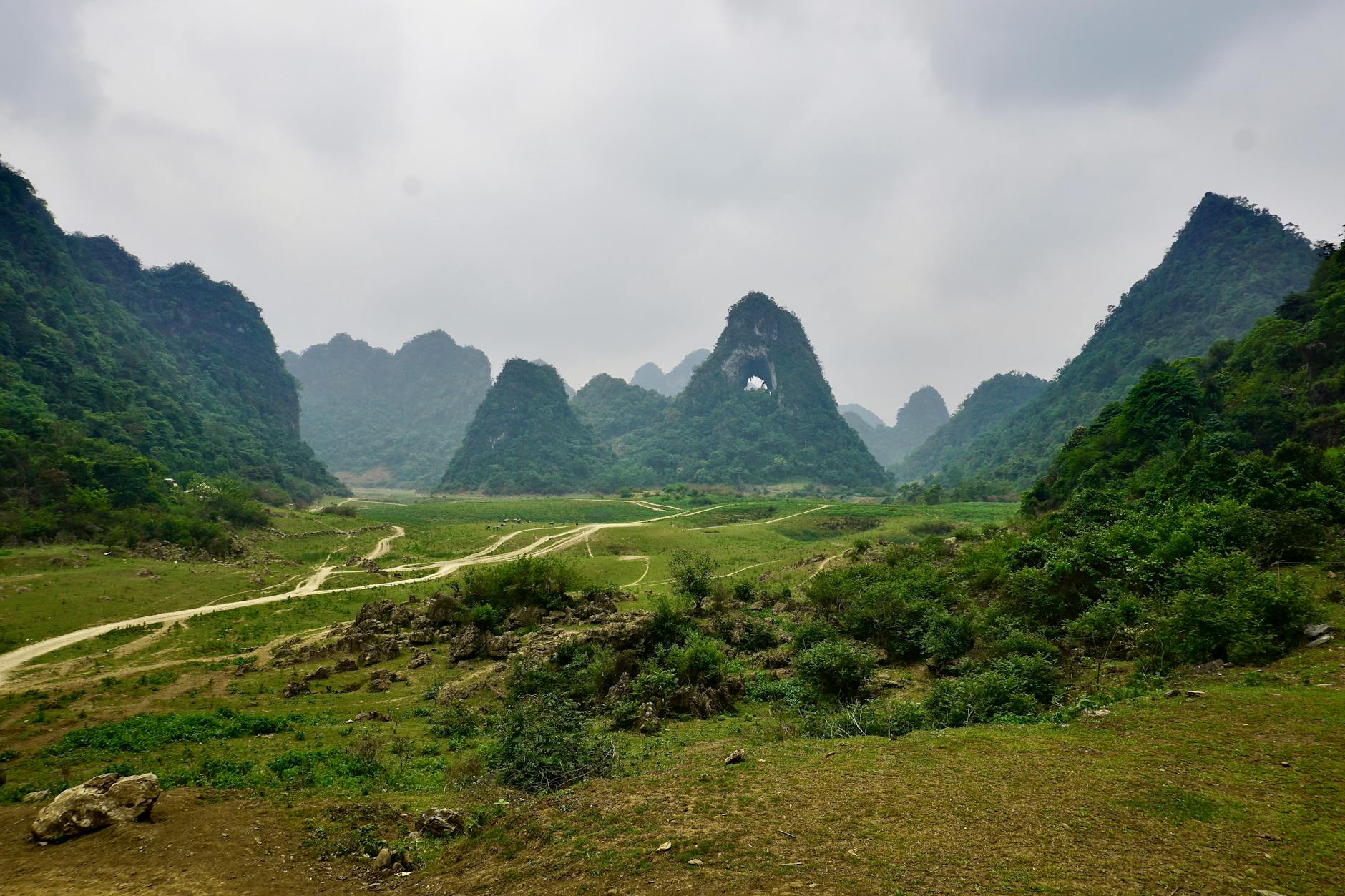
The route is different from other northern Vietnam destinations. Unlike Sapa or Ha Giang, this area sees fewer tourists. The road passes through ethnic minority villages, limestone karst formations, and rice terraces that rival those in Mai Chau & Pu Luong: Northern Vietnam's Quieter Alternative to Sapa.
Pro tip: Download offline maps before leaving Cao Bang. Mobile reception drops in several sections along the route, particularly through the mountain pass.
How to get from Cao Bang to Ban Gioc Waterfall
The table below summarizes all transport options. Choose based on your budget, time, and comfort requirements.
| Mode | Duration | Cost (VND) | Cost (USD) | Best for | Safety level |
|---|---|---|---|---|---|
| Motorbike/scooter | 2-3 hours | 100,000-150,000 (fuel) | $4-7 | Adventurous travelers, photographers | Moderate |
| Local bus | 3-4 hours | 80,000 | $3.50 | Budget travelers | High |
| Private taxi/car | 2 hours | 800,000-1,200,000 | $35-50 | Groups of 3-4, families | High |
| Organized tour | Full day | 400,000-700,000 | $17-30 | First-time visitors | High |
| Easy rider (xe om) | 2-3 hours | 400,000-600,000 | $17-26 | Solo travelers | Moderate |
By motorbike or scooter
The road from Cao Bang to Ban Gioc is well-paved but challenging. A 125cc semi-automatic or manual bike is the minimum recommended vehicle. The route includes the Khau Coc Cha Pass with steep gradients and tight curves.
Fuel costs approximately 100,000-150,000 VND ($4-7) for the round trip. Fill up at the station just outside Cao Bang city center.
What to watch for on the road:
- Livestock (water buffalo, cows, goats) crossing without warning
- Sudden fog that reduces visibility to near zero, especially from November to February
- Gravel patches on sharp turns
- Trucks and buses on narrow sections
The specific route is QL3 north from Cao Bang, then turn onto TL206 at the sign for Ban Gioc. The turn is approximately 30 kilometers from Cao Bang.
If you are planning a longer trip, read our Cao Bang Loop self drive guide for the full itinerary.
Warning: Avoid driving this route after dark. Street lighting is minimal, and livestock on the road becomes a serious hazard.
By local bus
Buses to Ban Gioc depart from Cao Bang's main bus station near the market. Approximately 10 buses run daily between 6:00 am and 3:00 pm.
The fare is 80,000 VND ($3.50 USD) per person. What to expect:
- No air conditioning on older buses
- Frequent stops to pick up locals along the route
- Potential overcrowding during weekends and holidays
- The bus drops you at the waterfall entrance, not inside the parking area
To identify the correct bus, look for signage reading "Ban Gioc" or "Trung Khanh" in Vietnamese. Ask the driver to confirm before boarding.
By private taxi or hired car
A private taxi from Cao Bang to Ban Gioc costs 800,000-1,200,000 VND ($35-50 USD) one way. Negotiate the price before departing.
This option makes sense for groups of 3-4 people. The cost per person becomes comparable to a bus ticket, and you gain flexibility to stop at viewpoints along the way.
Where to arrange: Ask your hotel or guesthouse in Cao Bang to call a reliable driver. Street taxis in Cao Bang are less common than in Hanoi or Ho Chi Minh City.
By organized tour from Cao Bang
Tours from Cao Bang to Ban Gioc typically include transport, entrance fees, and a guide. Prices range from 400,000-700,000 VND ($17-30 USD) per person.
What tours usually include:
- Pickup from your Cao Bang hotel
- Visit to Ban Gioc Waterfall
- Nguom Ngao Cave entrance
- Lunch at a local restaurant
- Return to Cao Bang by late afternoon
The trade-off is convenience versus flexibility. Tours follow a fixed schedule. You cannot stay longer at the waterfall for sunset or skip the cave if you prefer more time at the falls.
By easy rider (motorbike taxi with driver)
An easy rider is a motorbike taxi driver who takes you as a passenger. Cost is approximately 400,000-600,000 VND ($17-26 USD) per day.
The advantage: a local driver navigates the mountain roads while you enjoy the scenery. This is safer than driving yourself if you lack experience on Vietnamese mountain roads.
How to find reliable drivers: Ask at your Cao Bang accommodation. Guesthouses work with trusted drivers. Avoid drivers who approach you at the bus station.
Road conditions and safety: What no one tells you
The road from Cao Bang to Ban Gioc is well-paved but narrow in sections. The Khau Coc Cha Pass has steep drops with no guardrails in some places.
Seasonal hazards:
- Rainy season (May-September): Landslides can block sections of the road. Check conditions at your hotel before departing. Flash floods are rare but possible in low-lying areas.
- Winter (November-February): Fog is the main hazard. Visibility can drop to 20 meters in the early morning. Wait until 9:00 am or later for the fog to clear.
- Summer (June-August): Heavy rain reduces traction on the asphalt. Allow extra travel time.
Mobile reception drops completely for approximately 10 kilometers through the mountain pass. Emergency services are limited. The nearest hospital is in Trung Khanh town, 20 kilometers from the waterfall.
For a broader safety overview, read Is Vietnam Safe in 2026?
When to visit Ban Gioc Waterfall for the best experience
Seasonal breakdown
| Season | Waterfall volume | Road conditions | Crowds | Temperature |
|---|---|---|---|---|
| Dry (Oct-Apr) | Reduced until 10:30 am | Good, minimal rain | Moderate | 15-25°C |
| Rainy (May-Sep) | Maximum volume | Landslide risk | Low | 25-35°C |
| Shoulder (Oct-Nov, Mar-Apr) | Moderate | Good | Low | 18-28°C |
The best overall time is October to April. Roads are dry and safe. The trade-off is reduced waterfall volume in the early morning.
Time of day
The optimal time to visit is between 10:30 am and 1:00 pm. During the dry season (February-April), an upstream dam releases water during these hours. The waterfall volume increases dramatically.
Photography conditions are best before 10:00 am when the morning light hits the falls directly. After 1:00 pm, tour buses arrive with large groups.
Pro tip: Arrive at the waterfall by 9:30 am. Take photos in the good morning light. Stay until 10:30 am to see the dam release. Leave before 1:00 pm to avoid the afternoon crowds.
Ban Gioc Waterfall entrance fees and practical costs
| Item | Cost (VND) | Cost (USD) |
|---|---|---|
| Entrance fee | 45,000 | ~$2 |
| Boat ride to falls | 50,000 | ~$2 |
| Parking (motorbike) | 5,000-10,000 | ~$0.20-0.40 |
| Parking (car) | 20,000-30,000 | ~$0.80-1.20 |
The entrance fee covers access to the main viewing area and walking paths. The boat ride takes you close to the base of the falls. Duration is approximately 15-20 minutes.
Boat pricing is negotiable. Agree on the price before boarding. Some operators try to charge 100,000 VND or more for foreign tourists.
The horse photo opportunity near the entrance costs extra. The horses are not well-treated. Skip this.
What to do at Ban Gioc Waterfall beyond the viewpoint
The bamboo raft experience
The bamboo rafts take you across the river to the base of the falls. In the dry season, you can walk on the rocks near the waterfall. In the rainy season, the water level is higher and the raft ride is more dramatic.
Safety considerations: Life jackets are rarely provided. The rafts are stable but can be slippery when wet. Hold onto the railings.
The walking path along the falls
A maintained path runs along the Vietnamese side of the river. The path offers several viewpoints at different angles. You can walk approximately 500 meters along the riverbank.
The path ends at a fenced area marking the Chinese border. Do not cross the fence. Chinese border guards are strict.
Truc Lam Phat Tich Pagoda
The pagoda is located a short drive from the waterfall entrance. A steep walk of approximately 15 minutes takes you to the top. The view of the waterfall from above is excellent.
The parking scam: Drivers are told they must park at the bottom and walk up. This is false. Vehicles can drive all the way to the pagoda entrance. If a parking attendant tells you otherwise, insist on driving up or find another spot.
Nguom Ngao Cave (Tiger Cave)
Located near the waterfall, the cave entrance fee is 45,000 VND ($2 USD). The open section is approximately 1 kilometer long. The highlight is the lotus room at the end with interesting rock formations.
What to bring: Water and non-slip shoes. The cave floor is wet and slippery. The cave is well-lit with electric lights, but some sections have low ceilings. Watch your head.
The guide requirement claim: Some staff say a guide is mandatory. This is false. Self-guided visits are permitted for the open section. Guides are only required for the deeper, unlit sections that most visitors skip.
Where to stay near Ban Gioc Waterfall
Homestays in the stone village (Khuoi Ky)
The traditional stone houses in Khuoi Ky village have been converted to homestays. Pricing ranges from 150,000-300,000 VND ($6-13 USD) per night.
What to expect: Basic rooms with shared bathrooms, family-style meals, and genuine local hospitality. The village is 1-2 kilometers from the waterfall entrance. Walking is possible.
Homestays in Phong Nam Valley
This is the more scenic option. Rice field views, water buffalo grazing, and a quieter atmosphere. The trade-off is distance. Phong Nam Valley is 5-7 kilometers from the waterfall. You need transport to reach the falls.
Pricing is similar to the stone village. Some homestays offer bicycle rental for 50,000 VND ($2 USD) per day.
Hotels near the waterfall
Limited options exist near the entrance. Basic guesthouses with private rooms cost 300,000-500,000 VND ($13-22 USD) per night. Quality varies significantly.
Most travelers prefer staying in Cao Bang city or the stone village. The city offers better amenities and more food options.
For more accommodation advice, see our Cao Bang travel guide.
What to eat near Ban Gioc Waterfall
Restaurants near the waterfall entrance charge higher prices than elsewhere in Cao Bang. A meal costs 80,000-150,000 VND ($3.50-6.50 USD) at tourist restaurants.
Better option: Drive 5-10 minutes to local eateries serving authentic dishes. Typical meal cost is 30,000-60,000 VND ($1.30-2.60 USD).
What to order:
- Trung Khanh chestnuts: In season October-December. Roasted or boiled.
- Roasted duck with mac mat fruit: A local specialty. The mac mat fruit adds a sour flavor.
- Cao Bang rice rolls in hot broth: Different from Hanoi-style banh cuon. Served in a flavorful broth.
For more on Vietnamese food, read Beyond Pho: 15 Vietnamese Noodle Soups You've Never Heard Of.
How to combine Ban Gioc with other Cao Bang attractions
Suggested 2-day itinerary
Day 1: Cao Bang city to Ban Gioc. Visit the waterfall, Truc Lam Pagoda, and Nguom Ngao Cave. Overnight in the stone village.
Day 2: Phong Nam Valley, God's Eye (stone arch), Thang Hen Lake. Return to Cao Bang city.
The border loop option
Extend your trip to include:
- Thoong Sao Waterfall (smaller but less crowded)
- Phuc Sen blacksmith village (traditional knife making)
- Phia Thap incense village (handmade incense sticks)
This loop adds one day to your itinerary. The roads are similar in quality to the Cao Bang-Ban Gioc route.
For a complete road trip plan, read our Cao Bang Loop Map guide.
Common mistakes and scams to avoid
The parking scam at Truc Lam Pagoda: Drivers are told to park at the bottom and pay 20,000 VND. Vehicles can drive all the way to the top. Park at the pagoda entrance for free.
Overcharging on boat rides: Agree on the price before boarding. The standard rate is 50,000 VND per person. Some operators ask for 100,000 VND.
The guide requirement at Nguom Ngao Cave: Self-guided visits are permitted for the open section. You do not need a guide.
Drone confiscation risk: Drones are strictly prohibited near the border. Chinese border patrol has shot down unauthorized drones. Vietnamese authorities confiscate drones at the entrance. Do not bring one.
Counterfeit entrance tickets: Buy tickets only at the official booth at the entrance. Ignore people offering tickets outside the gate.
For more general scams, read Common Scams in Vietnam: 12 Tourist Traps to Avoid in 2026.
Is Ban Gioc worth the journey from Cao Bang?
The answer depends on your travel style.
For waterfall enthusiasts: Yes. Ban Gioc is one of the largest border waterfalls in the world. The setting against limestone karsts is unique.
For photographers: Yes, but arrive before 10:00 am for the best light. The morning mist over the rice fields along the drive is also worth photographing.
For those short on time: The round trip from Cao Bang takes approximately 4 hours driving plus 2-3 hours at the falls. A day trip is feasible but rushed. Consider staying overnight.
For those expecting Iguazu or Niagara scale: Ban Gioc is different. It is wider than it is tall. The drop is approximately 30 meters. The beauty comes from the setting, not the height.
Cao Bang itself is less touristy than Sapa or Ha Giang. For a detailed comparison, read Is Cao Bang touristy?.
FAQ
Q: Is Cao Bang worth visiting? A: Yes, especially for travelers seeking fewer crowds than Sapa or Ha Giang. Cao Bang offers comparable mountain scenery, Vietnam's largest waterfall, and authentic ethnic minority villages without the tourist infrastructure.
Q: How far is Ban Gioc Waterfall from Cao Bang city? A: Approximately 85 kilometers (53 miles) northeast of Cao Bang city. Travel time ranges from 2 hours by private car to 3-4 hours by local bus, depending on road conditions and stops.
Q: Can you visit Ban Gioc Waterfall as a day trip from Cao Bang? A: Yes, a day trip is feasible. Depart Cao Bang by 7:00-8:00 am, arrive at the falls by 10:00-11:00 am (catching the dam release), visit the pagoda and cave, and return by late afternoon. The drive is approximately 2 hours each way.
Q: What is the best time of day to visit Ban Gioc Waterfall? A: Between 10:30 am and 1:00 pm during the dry season (February-April), when the upstream dam releases water and the falls reach maximum flow. Morning light (before 10 am) offers the best photography conditions.
Q: Is it safe to drive a motorbike from Cao Bang to Ban Gioc? A: The road is well-paved but challenging: steep mountain passes, narrow sections, occasional livestock, and fog in winter. A 125cc semi-automatic or manual bike is recommended. Avoid driving after dark and during heavy rain.
Q: Can you cross into China at Ban Gioc Waterfall? A: No. The waterfall marks the border, but there is no border crossing for tourists at this location. Drones are strictly prohibited near the border, and Chinese border patrol has been known to shoot down unauthorized drones.
Q: How much does it cost to visit Ban Gioc Waterfall? A: Entrance fee is 45,000 VND ($2 USD). A boat ride costs approximately 50,000 VND ($2 USD) per person. Total costs including transport from Cao Bang range from 200,000-500,000 VND ($8-21 USD) per person for a self-guided day trip.
Q: What should I pack for a trip to Ban Gioc Waterfall? A: Water shoes or sandals with grip (slippery cave and boat surfaces), insect repellent (especially in rainy season), rain jacket (sudden mountain storms), drinking water (limited options near the falls), and offline maps downloaded (mobile reception drops in sections of the route).