How to choose a resort region in Vietnam
The single most important filter is the month of travel. Trip style comes second: pure beach, beach plus culture, island seclusion, or mountains. Get the month wrong and no amount of villa quality will fix it.
Three coasts, three calendars
Published guides often apply one "dry season November to April" rule to the whole country. That is wrong for the central coast.
- South and islands (Phu Quoc, Con Dao, Mui Ne): dry roughly November to April.
- South-central (Nha Trang, Cam Ranh, Vinh Hy Bay, Quy Nhon): dry roughly January or February to August, with heavy rain and storm risk October to December. The former Ninh Thuan area around Vinh Hy Bay is the driest part of the country.
- Central (Da Nang, Hoi An, Lang Co): best February or March to August. The wet and typhoon season runs September to December, with flooding in Hoi An usually peaking October to November. Winter seas are often rough with red flags.
As of late October 2026, the central coast beaches are a poor bet for November and December. Phu Quoc is entering its best months.
What "resort" means in Vietnam
Three types behave very differently:
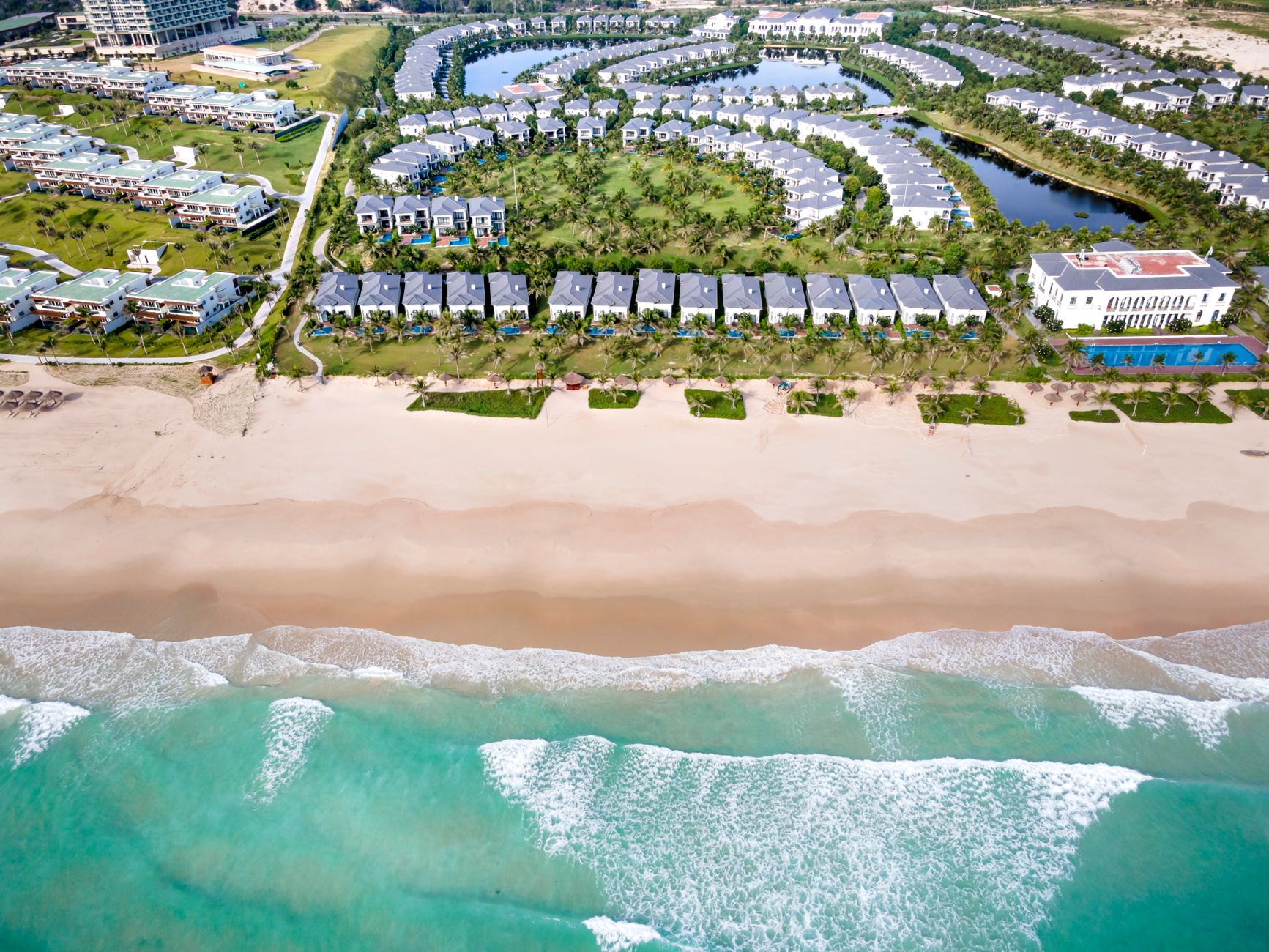
- Integrated mega-complexes with theme parks and hundreds of rooms, such as the Vinpearl and Sun Group developments on Phu Quoc, Nha Trang and Da Nang.
- International luxury villa resorts, usually with private pools and a handful of restaurants.
- Small eco or boutique retreats, often in the mountains or on a quiet cove.
Each type suits a different traveler. This guide names the type for every resort.
A note on new province names
Since 1 July 2025, Vietnam has 34 provinces after mergers. Booking platforms and maps may show either the old or new name:
- Hoi An is now part of Da Nang city.
- Phu Quoc is a special zone of An Giang.
- Con Dao belongs to Ho Chi Minh City.
- Quy Nhon is in Gia Lai.
- Mui Ne is in Lam Dong.
- Vinh Hy Bay (Amanoi) is in Khanh Hoa.
Search results can be confusing when a resort's address uses the old province. Check the resort's own site before booking.
Phu Quoc: Long Beach, the south and the north
Phu Quoc is Vietnam's largest island and its most developed resort destination. The three zones offer very different stays.
Who it suits: families, couples wanting easy logistics, and travelers flying in directly from abroad. Who it does not: anyone seeking untouched nature or a cultural program. The island is heavily built up.
Long Beach (west coast, centre)
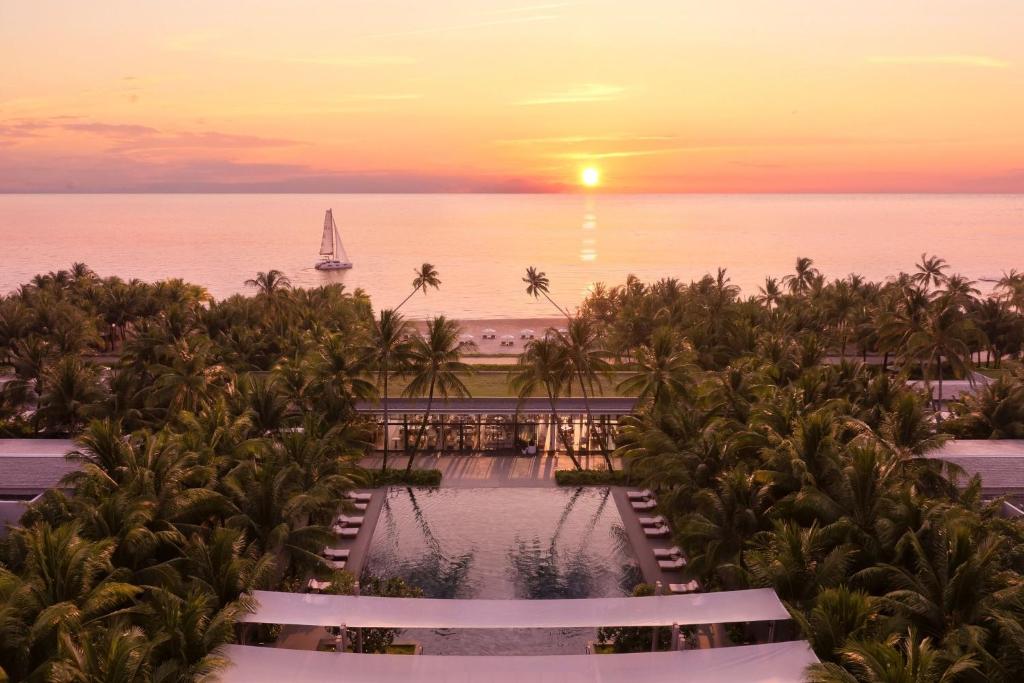
The anchor is Regent Phu Quoc, a large contemporary resort with suites and pool villas and a strong kids' club. It sits about 15 minutes from Phu Quoc International Airport (PQC), close to Duong Dong town and the night market. Sunset views are the draw.
Drawback: the beach is west-facing, so seas get rough and some stretches collect debris during the south-west monsoon, roughly June to September.
The south (Bai Khem and An Thoi)
The anchor is JW Marriott Phu Quoc Emerald Bay on Bai Khem, about 20 to 30 minutes from the airport. The Bill Bensley "university" theme is loved or disliked, and it is a strong theme rather than a neutral one.
Sheltered south-east beaches such as Bai Khem and Bai Sao are often calmer in the rainy season. Nearby are the Hon Thom cable car and Sunset Town. Drawbacks: heavy construction and day-tripper crowds around Sunset Town.
The north (Bai Dai, Ganh Dau, Ong Lang)
This zone holds integrated complexes near VinWonders and the safari park, plus quieter resorts on Ong Lang. It is about 40 to 60 minutes from the airport and works well for theme-park families. Drawbacks: limited independent dining nearby, and taxis are needed for everything.
Practical points
Foreign visitors arriving directly on an international flight can stay on Phu Quoc without a visa for up to 30 days. Leaving the island for mainland Vietnam requires a standard visa or a nationality-based exemption. Verify current rules before departure.
December to March is the best window. Prices spike over Christmas and New Year 2026-27 and Tet 2027, when Lunar New Year falls on 6 February. Vietnam is scheduled to host APEC in Phu Quoc in November 2027, so expect ongoing construction and possible security restrictions around those dates. Sandflies bite on some beaches at dusk.
| Phu Quoc zone | Time from airport | Sea in dry season | Sea in rainy season | Vibe |
|---|---|---|---|---|
| North (Bai Dai, Ong Lang) | 40-60 min | Calm on west-facing beaches | Choppy, some debris | Theme parks, quiet resorts |
| Long Beach (centre) | 15 min | Calm | Rough, debris June-Sept | Convenient, sunsets, town access |
| South (Bai Khem) | 20-30 min | Calm | Sheltered, often swimmable | Big attractions, construction |
| East coast | 30-40 min | Choppy | Calmer than west | Local, few resorts |
Nha Trang, Ninh Van Bay and Cam Ranh
Booking sites lump three very different areas under "Nha Trang". They are not the same trip.
Ninh Van Bay: boat-access seclusion
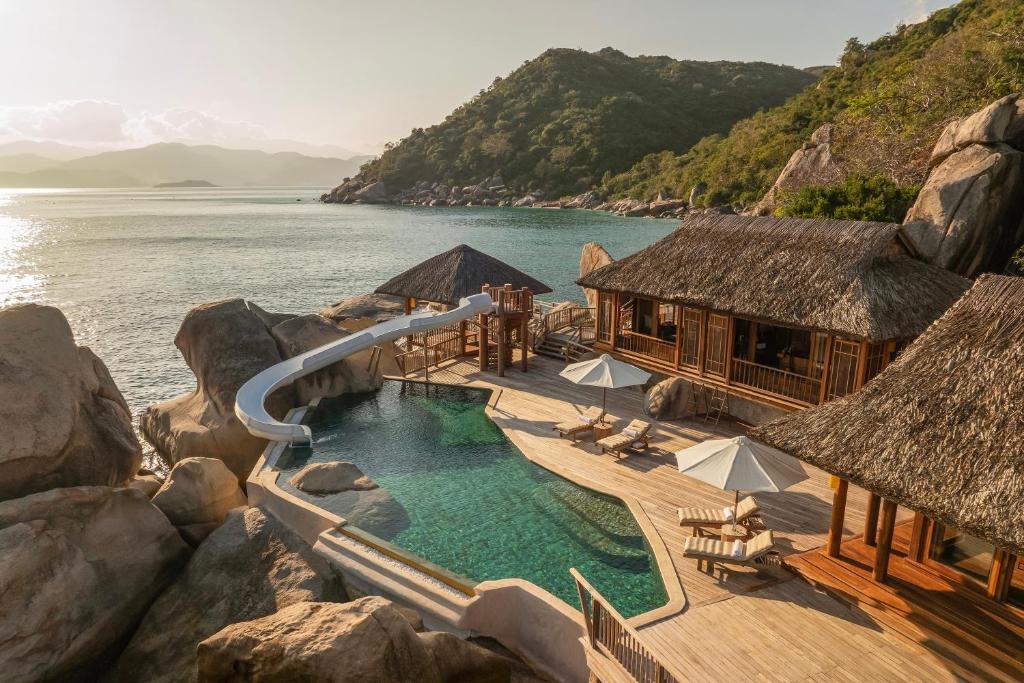
Six Senses Ninh Van Bay is the anchor, with private-pool villas set between rocks, beach and jungle. Access takes about 1 hour by road from Cam Ranh International Airport (CXR) to the resort jetty, then about 20 minutes by boat.
It suits honeymooners and anyone happy never to leave the resort. Drawbacks: all meals at resort prices, hillside villas that mean buggies and steps, and boat transfers that can be disrupted in rough weather. Budget at least three nights to justify the journey.
Cam Ranh's Bai Dai strip: easy and good value
The Anam is the anchor here, an Indochine-style resort about 10 to 15 minutes from the airport. It suits short stays, families and travelers who want low transfer stress. Drawbacks: about 40 minutes to Nha Trang city, and the strip is lined with large new developments, some still under construction.
Nha Trang city beachfront
High-rise hotels with walkable restaurants and nightlife. Busy with large tour groups, especially during Korean, Chinese and Russian holiday peaks.
Detour: Vinh Hy Bay
Amanoi, inside Nui Chua National Park, sits about 1 to 1.5 hours south of Cam Ranh. It is the region's most remote ultra-luxury option, in the driest climate in Vietnam.
Season
Roughly February to August is best. Avoid October to December: storms and serious flooding hit Khanh Hoa and neighbouring provinces in late 2025.
Da Nang and Hoi An beaches
The densest cluster of beach resorts in Vietnam. The selling point is culture within 30 minutes: Hoi An Ancient Town, the Marble Mountains and My Son.
Son Tra Peninsula
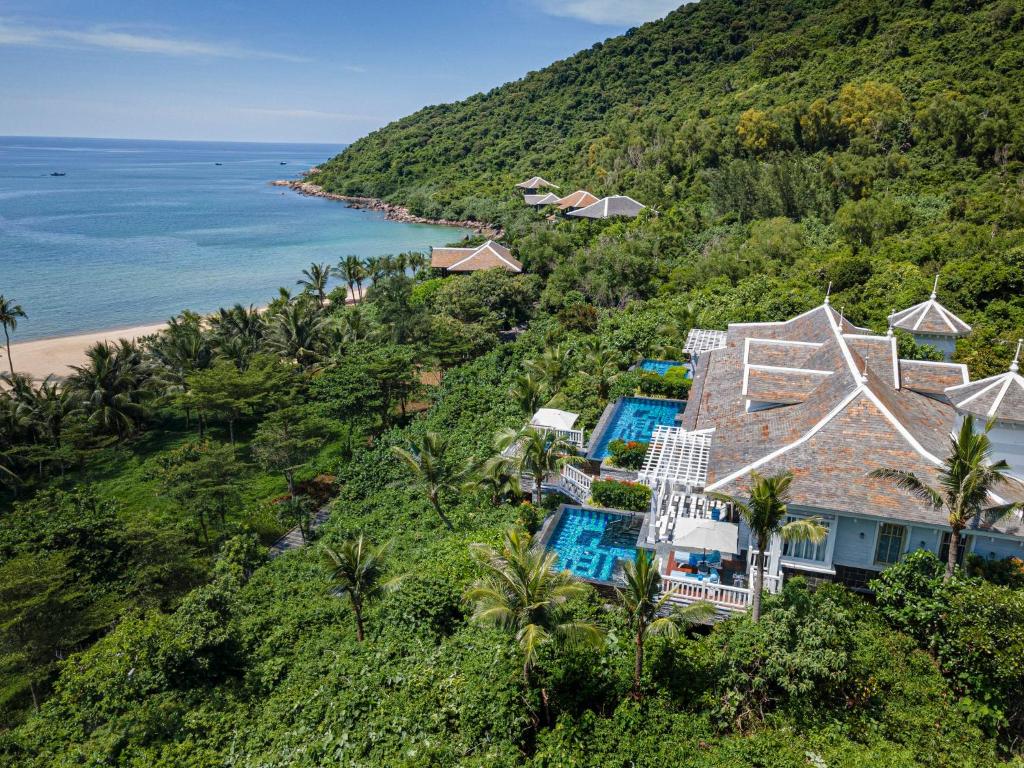
InterContinental Danang Sun Peninsula is a dramatic Bensley design on a private cove, about 25 to 30 minutes from Da Nang airport (DAD). Red-shanked douc langurs live on the peninsula.
Drawbacks: it is isolated from the city, built on a steep hillside with funicular rides and many steps, so it is a poor fit for limited mobility. Winter swell affects the cove.
Ha My and the Hoi An coast
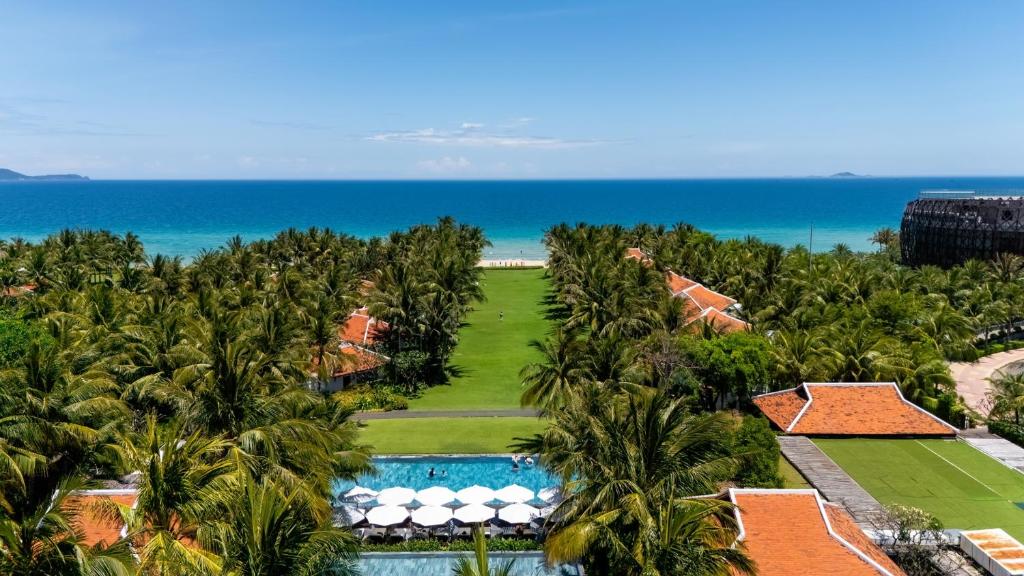
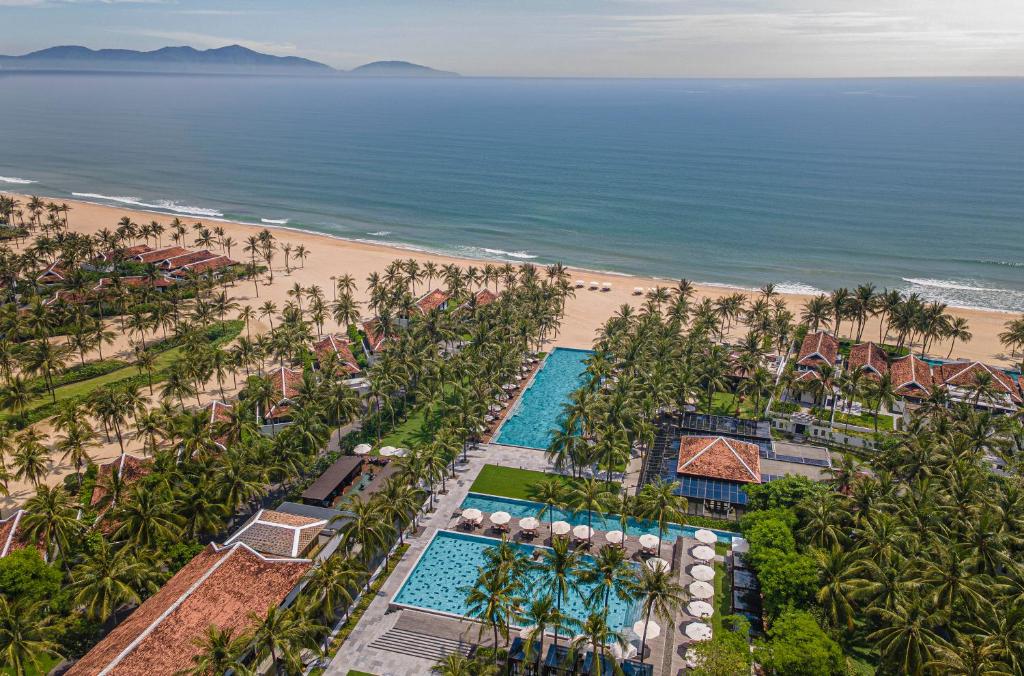
Four Seasons The Nam Hai offers spacious villas on a long beach, about 35 to 40 minutes from the airport and about 15 minutes to Hoi An. Drawbacks: rough seas roughly October to March, coastal erosion along the Hoi An shoreline (Cua Dai is the best-known example), and prices among the highest in the country.
My Khe and Non Nuoc strip
Many international-brand and mid-range resorts. Closer to city dining, but a built-up skyline.
Season and safety
Best February to August, with May to August hot. Avoid September to December for beach time. Rip currents cause drownings every year on this coast. Swim only at lifeguarded flagged zones.
Lang Co near Hue
A short section for travelers combining Hue's imperial sites with a quieter beach than Da Nang's.
Banyan Tree Lang Co gives every villa a private pool. The resort sits inside the Laguna Lang Co complex, alongside a sister resort and a Nick Faldo-designed golf course. Access is about 1 hour from Da Nang airport via the Hai Van tunnel, or about 1 hour from Hue's Phu Bai airport (HUI).
Drawbacks: the Hue area is one of the wettest parts of Vietnam, with heavy rain September to December and drizzle into early spring. Beach swimming is reliable mainly April to August, and there is little within walking distance.
Quy Nhon
The "next Nha Trang" without the crowds. It suits repeat visitors and travelers who prefer quiet over choice.
Anantara Quy Nhon Villas is a small all-pool-villa resort on a private cove south of the city, about 45 to 60 minutes from Phu Cat airport (UIH), which has mainly domestic flights from Hanoi and Ho Chi Minh City. Zannier Hotels Bai San Ho, in the former Phu Yen area, is about 1 to 1.5 hours north, a large low-density eco-resort.
Drawbacks: limited flights and few international connections, thin nightlife, and a city beachfront under development. Best roughly March to August. Wet and stormy October to December.
Mui Ne and Phan Thiet
The closest beach resort area to Ho Chi Minh City by road, and the kitesurfing capital of Vietnam. The beaches have changed, and honesty matters here.
Who it suits: kitesurfers and windsurfers (strong winds roughly November to March), weekend escapes from Saigon, and budget-to-mid-range stays.
The Dau Giay to Phan Thiet expressway cut the drive from Ho Chi Minh City to roughly 3 to 3.5 hours. The train takes about 4 hours. Established names to check include Anantara Mui Ne Resort and Victoria Phan Thiet Beach Resort.
Drawbacks: severe beach erosion in parts of Mui Ne, with sandbags and seawalls in front of some resorts. Wind sandblasts sunbathers in peak kite season, and the resort stock is older than elsewhere.
Con Dao
Vietnam's most private island option, where seclusion is the product. The former prison complex and Hang Duong cemetery draw many Vietnamese pilgrims, and visits deserve respect.
Six Senses Con Dao has pool villas on Dat Doc beach, about 10 to 15 minutes from Con Dao airport (VCS). Nearby are national park hikes, snorkelling and diving. Turtle nesting on Bay Canh island runs roughly May to October, peaking around June to September, and visits must follow national park rules.
Access is by short flights from Ho Chi Minh City of about 1 hour, and some from Can Tho. Smaller aircraft fly some routes, so check baggage limits. Weather-related cancellations are common, so build in a buffer day before an international flight home. High-speed ferries exist but can be rough. Dining and nightlife outside the resort are very limited, and both flights and rooms are expensive.
Calmest seas run roughly March to June. The north-east monsoon brings choppy water roughly December to February. This differs from Phu Quoc despite the two islands' "southern" label.
Mountain and countryside retreats: Sapa and Ninh Binh
Many itineraries pair a northern retreat with a beach finish. Is it worth staying in a resort up north? Often yes.
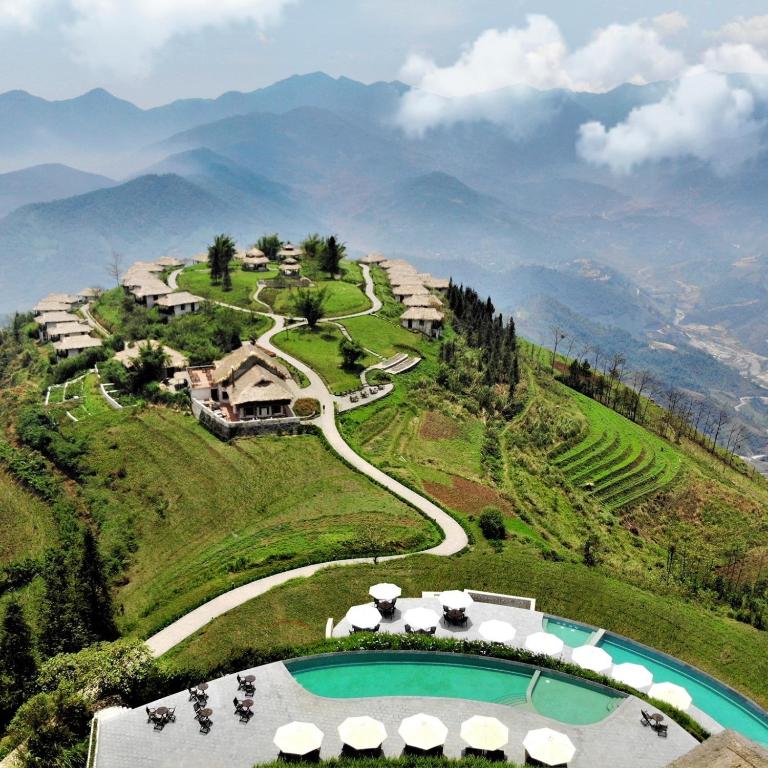
Topas Ecolodge, Sapa
Stone-and-wood bungalows on a ridge about 18 km from Sapa town, with views over Hoang Lien National Park and an infinity pool. Hanoi to Sapa by expressway takes about 5 to 6 hours by limousine bus, or take the night train to Lao Cai plus about 1 hour by road. Then about 45 minutes on a rough mountain road to the lodge.
March to May and September to November are best. Rice terraces are green June to August and golden around September to early October. December to February is cold, often foggy, with occasional frost. June to August brings landslide risk, as seen with Typhoon Yagi in 2024. Drawbacks: remoteness, the road, and cold nights in winter.
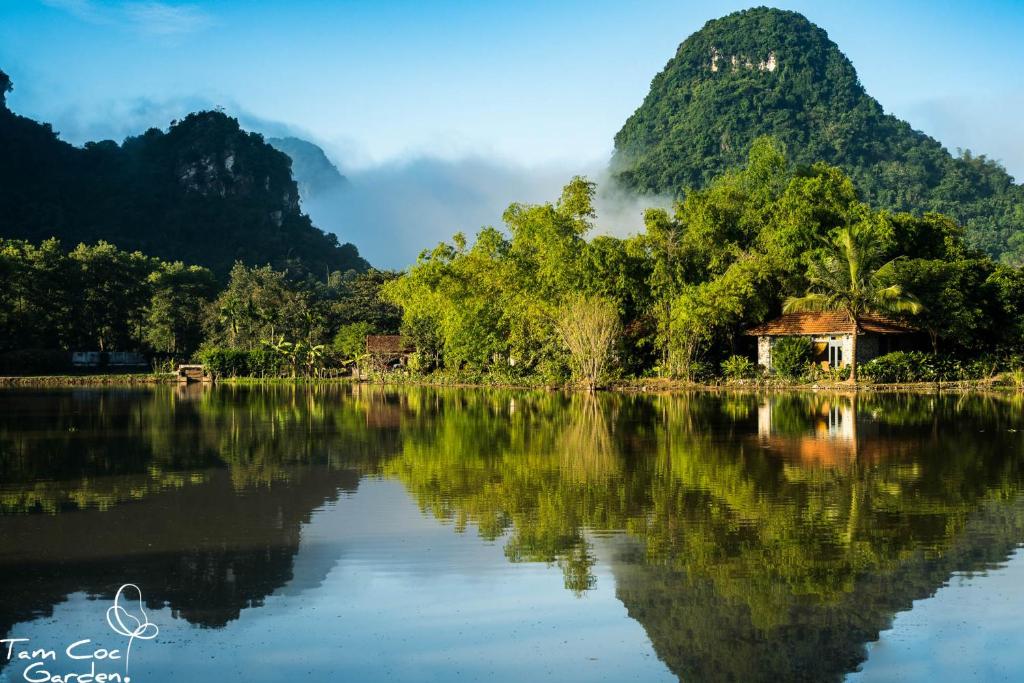
Ninh Binh countryside retreats
About 2 hours from Hanoi, with karst scenery around Trang An and Tam Coc. Names to check include Emeralda Resort Ninh Binh and Tam Coc Garden. Best roughly January to April, with golden rice around late May to early June, and again September to November. Drawbacks: hot and humid summers, mosquitoes, and heavy crowds at weekends and on Vietnamese holidays.
Mai Chau and Pu Luong
Quieter alternatives with rice-valley eco-retreats, worth two or three nights for travelers who want hiking and village walks.
Vietnam resort regions compared
| Region | Nearest airport | Transfer to anchor resort | Best months | Months to avoid | Entry band per night | Best for | Main drawback |
|---|---|---|---|---|---|---|---|
| Phu Quoc, Long Beach | PQC | 15 min | Dec-Mar | Jun-Sep (west swell) | 9.1M-23.4M VND (USD 350-900) | Families, easy logistics | Heavy development |
| Phu Quoc, south | PQC | 20-30 min | Dec-Mar | Jun-Sep | 7.8M-15.6M VND (USD 300-600) | Sheltered swimming | Construction, crowds |
| Ninh Van Bay | CXR | 1 hr road + 20 min boat | Feb-Aug | Oct-Dec | 18.2M-39M VND (USD 700-1,500) | Honeymoons, seclusion | Boat access, resort prices |
| Cam Ranh strip | CXR | 10-15 min | Feb-Aug | Oct-Dec | 3.9M-9.1M VND (USD 150-350) | Short stays, value | 40 min to city |
| Da Nang, Son Tra | DAD | 25-30 min | Feb-Aug | Sep-Dec | 10.4M-23.4M VND (USD 400-900) | Design, wildlife | Steep hillside |
| Hoi An coast | DAD | 35-40 min | Feb-Aug | Sep-Dec | 18.2M-39M VND (USD 700-1,500) | Beach plus culture | Erosion, winter seas |
| Lang Co | DAD or HUI | 1 hr | Apr-Aug | Sep-Dec | 9.1M-18.2M VND (USD 350-700) | Golf, quiet | Rain, isolation |
| Quy Nhon | UIH | 45-60 min | Mar-Aug | Oct-Dec | 7.8M-15.6M VND (USD 300-600) | Quiet, villas | Few flights |
| Mui Ne | SGN (road) | 3-3.5 hr drive | Nov-Mar | May-Sep (wind) | 1.3M-3.9M VND (USD 50-150) | Kitesurfing, weekends | Erosion, wind |
| Con Dao | VCS | 10-15 min | Mar-Jun | Dec-Feb (choppy) | 18.2M-39M VND (USD 700-1,500) | Privacy | Cost, cancellations |
| Sapa | HAN (road or rail) | 5-6 hr + 45 min | Mar-May, Sep-Nov | Jun-Aug (landslides) | 5.2M-10.4M VND (USD 200-400) | Mountains, terraces | Rough access road |
| Ninh Binh | HAN (road) | 2 hr | Jan-Apr, Sep-Nov | Jun-Aug (heat) | 1.3M-3.9M VND (USD 50-150) | Karst scenery | Weekend crowds |
Prices are indicative entry-level room or villa rates before service charge and VAT, converted at about 26,000 VND per USD in October 2026.
If you only have one week: November to March, fly into Phu Quoc. March to August, choose Da Nang or Hoi An for culture or Nha Trang for pure beach. For seclusion between March and June, Con Dao. For mountains, take Sapa in spring or autumn, then fly south for a beach finish.
Which resort region for which month
| Month | Best regions | Acceptable | Avoid | Peak-price alert |
|---|---|---|---|---|
| January | Phu Quoc, Con Dao, Mui Ne | Ninh Binh, Sapa (cold) | Da Nang, Hoi An, Nha Trang | New Year, Tet approach |
| February | Phu Quoc, Con Dao, Nha Trang | Da Nang late month | Lang Co | Tet |
| March | Phu Quoc, Con Dao, Nha Trang, Da Nang | Hoi An | Lang Co | Easter |
| April | Da Nang, Hoi An, Nha Trang, Quy Nhon | Phu Quoc | None | 30 Apr-1 May |
| May | Da Nang, Hoi An, Nha Trang, Quy Nhon | Sapa | Phu Quoc (rain builds) | Domestic summer start |
| June | Da Nang, Hoi An, Nha Trang, Quy Nhon, Con Dao | Sapa | Phu Quoc | School holidays |
| July | Da Nang, Hoi An, Nha Trang, Quy Nhon | Con Dao | Phu Quoc | School holidays |
| August | Da Nang, Hoi An, Nha Trang, Quy Nhon | Con Dao | Phu Quoc | School holidays |
| September | Phu Quoc, Mui Ne | Sapa, Ninh Binh | Da Nang, Hoi An, Nha Trang | National Day 2 Sept |
| October | Phu Quoc, Mui Ne | Sapa, Ninh Binh | Central and south-central coasts | China Golden Week 1-7 Oct |
| November | Phu Quoc, Mui Ne, Con Dao | Ninh Binh | Da Nang, Hoi An, Nha Trang, Quy Nhon | None |
| December | Phu Quoc, Mui Ne | Con Dao | Central and south-central coasts | Christmas, New Year |
Combining regions works well. Hoi An plus Phu Quoc fits February and March. Sapa plus Da Nang fits April and May. Ninh Binh plus Phu Quoc fits December.
Peak dates to plan around after today: Christmas and New Year 2026-27, Tet 2027 around 6 February, Reunification Day and Labour Day on 30 April to 1 May 2027, the school summer holidays from June to August 2027, National Day on 2 September 2027, and China's Golden Week from 1 to 7 October 2027.
Booking and safety tips before you pay
Reading the price
Many Vietnamese resorts quote "++" rates: a 5% service charge plus VAT, currently 8% under a temporary reduction from the standard 10%. Breakfast, airport transfers and boat transfers may or may not be included. Peak-date minimum stays and gala dinner surcharges are common at Christmas, New Year and Tet.
Villa or room
A private pool matters in the hot months, on honeymoons and with families. Hillside villas trade sea views for steps. Ask about accessibility before booking if anyone in the party has limited mobility.
How many nights
Give at least three nights to boat-access or remote resorts: Ninh Van Bay, Con Dao, Topas and Vinh Hy Bay. Two nights is fine near an airport, such as the Cam Ranh strip or Long Beach.
Beaches are public
Vietnamese law protects public access to beaches, so "private beach" usually means a quiet frontage rather than exclusive ownership. Confirm the wording of current regulations before relying on it.
Sea, weather and health risks
Rip currents and red flags are a real risk, especially on the central coast in winter. Typhoon season makes flexible-rate bookings worth the premium, and travel insurance should cover weather disruption. Dengue risk rises in the rainy season, and the sun is strong year-round.
Renting a motorbike without a licence recognised in Vietnam, meaning an International Driving Permit under the 1968 convention, can void your insurance. Traffic fines rose sharply in 2025 and there is zero tolerance for alcohol when driving. Resort cars and app-based rides are the safer default.
Entry rules
Vietnam's e-visa allows stays of up to 90 days. Several nationalities have visa-free stays of up to 45 days, and the list expanded in 2025. The separate Phu Quoc exemption is covered above. Check the current list and the site's visa guide before booking flights.
FAQ
Q: Where is the best place in Vietnam for a beach resort holiday? It depends on the month. Phu Quoc is the safest choice from November to March. Da Nang, Hoi An and Nha Trang are strongest from roughly February or March to August. Families do best on Phu Quoc's Long Beach or the Cam Ranh strip, couples on Ninh Van Bay or Con Dao, and culture lovers on the Hoi An coast.
Q: When is the best time to stay at a resort in Vietnam? The south and islands are dry roughly November to April, the south-central coast roughly February to August, and the central coast roughly February to August. The central and south-central coasts get heavy rain and storms roughly September or October to December. Peak dates to avoid on price are New Year, Tet around early February, and 30 April to 1 May.
Q: Should I stay in north or south Phu Quoc? The north suits theme-park families and quiet seekers who accept 40 to 60 minute transfers. Long Beach is the most convenient, 15 minutes from the airport. The south around Bai Khem has sheltered water and big new attractions, along with construction and crowds. East-coast beaches are calmer in the rainy season.
Q: Do I need a visa for Phu Quoc? Visitors arriving directly on an international flight can usually stay up to 30 days without a visa. Travelling on to mainland Vietnam requires an e-visa or a nationality-based exemption. Check official sources before departure.
Q: How much does a luxury resort in Vietnam cost per night? Entry-level rates run from about 3.9M VND (USD 150) at value-luxury resorts to over 26M VND (USD 1,000) at the most exclusive villas. Add a 5% service charge and VAT of 8% under the current temporary rate. Peak-date surcharges and minimum stays apply at Christmas, New Year and Tet.
Q: Which Vietnam resorts are best for families? Resorts with kids' clubs and easy airport access work best, such as Regent Phu Quoc, JW Marriott Phu Quoc Emerald Bay and the Da Nang and Cam Ranh beach strips. Hillside or boat-access resorts are harder with small children.
Q: Is it safe to swim at Vietnam's beaches? Generally yes in season at flagged, lifeguarded zones. Rip currents are a real risk on the central coast, in Quy Nhon and at Mui Ne, especially from October to March. Never swim on red-flag days or after drinking.
Q: Where can I go for a beach resort in Vietnam in December? Phu Quoc is the strongest option, and Mui Ne works for wind sports. Con Dao seas can be choppy. Da Nang, Hoi An, Lang Co, Nha Trang and Quy Nhon are usually wet with rough seas, so they suit spa and culture stays rather than beach days.

Your questions and tips
A question, an update, an experience to share? Our team reads every message before it is published.
No comments yet. Ask the first question or share a tip!