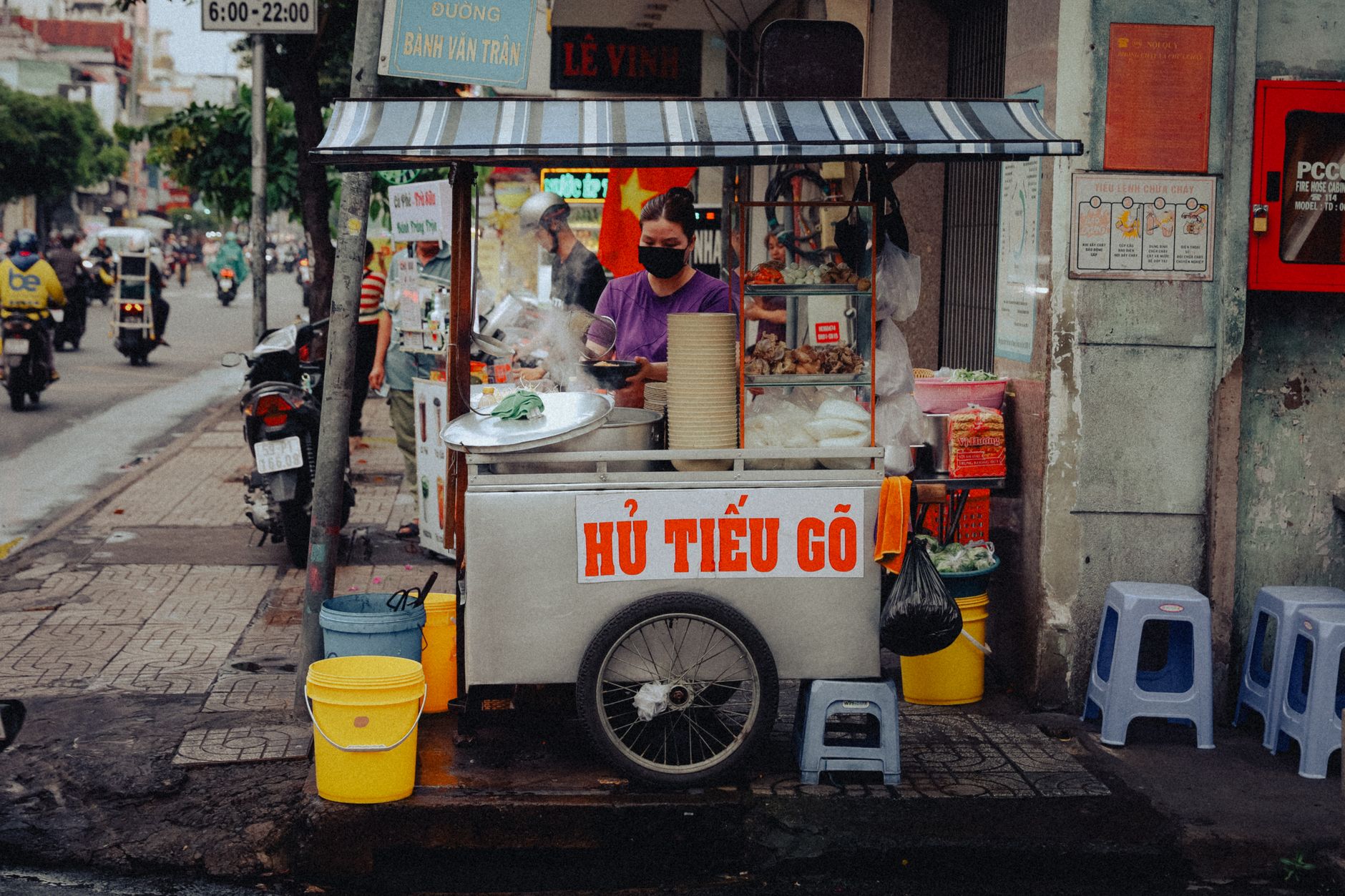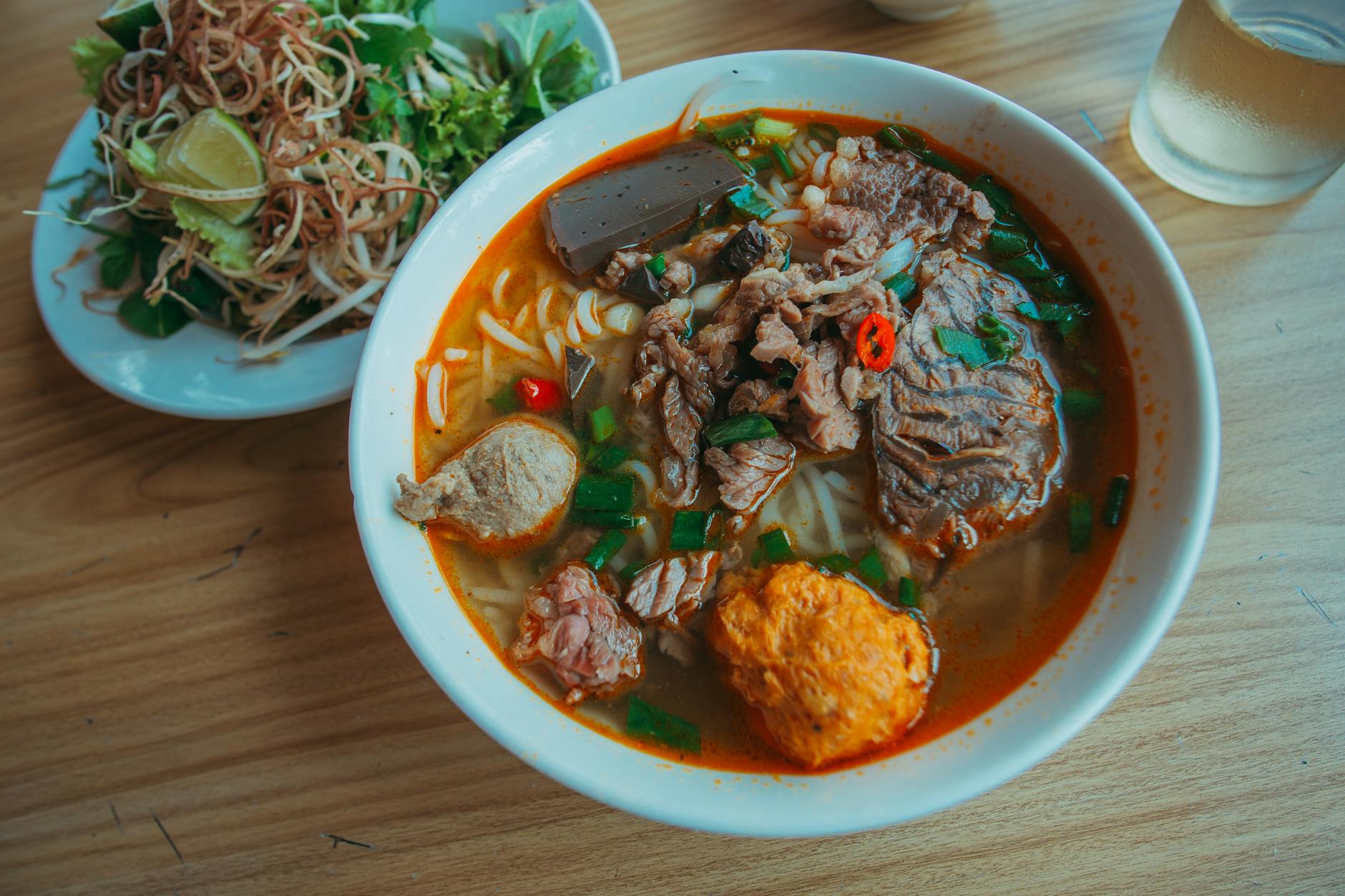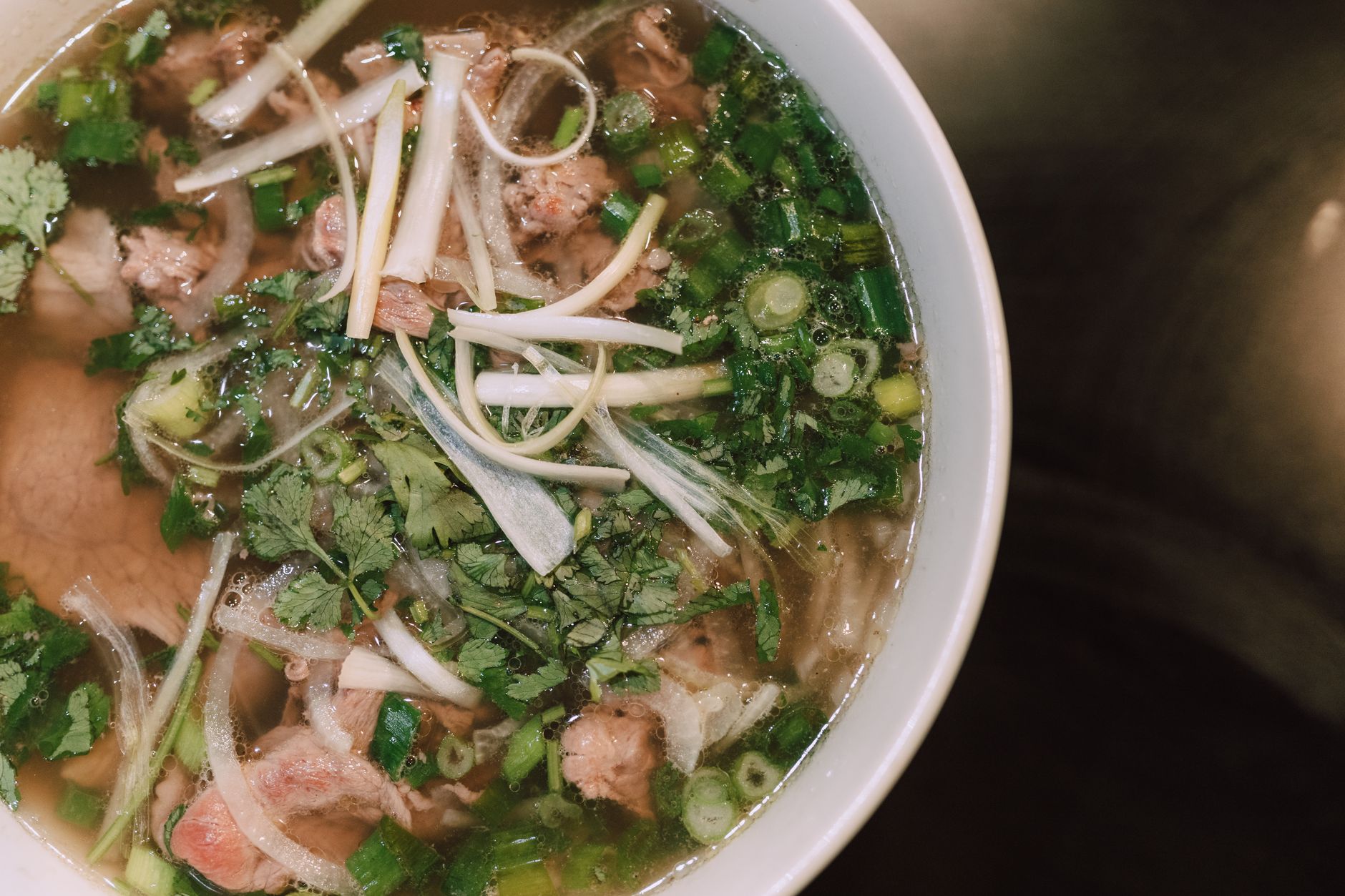
This guide explains what bánh phở is and how it is made, which dishes to order and where, how to order like a local, what to pay, and how to eat it safely.
What bánh phở actually is
Bánh phở is a flat noodle made from plain rice and water. That is the whole definition. Everything else, the width, the softness, the way it is served, depends on where in Vietnam you are standing.
The word causes trouble for visitors because "phở" in Vietnamese can mean three things: the noodle, the soup, or a whole family of dishes built on the same noodle. A menu might list phở bò, phở cuốn and phở chiên phồng side by side. Only one of them is a soup.
Ingredients: plain rice, water and sometimes starch
Makers use plain, non-glutinous rice, called gạo tẻ. Sticky rice (gạo nếp) has no place in bánh phở: it would turn the sheets gluey.
Producers favour aged rice, left to dry for months, and high-amylose varieties. IR50404, known locally as "gạo 504", comes up repeatedly in Vietnamese food writing because it gives firm sheets that hold their shape in hot broth.
Some modern and home versions add tapioca starch (bột năng) or cornstarch for extra chew. Traditional makers in Hanoi and Nam Định insist on pure rice, and you can taste the difference: a cleaner rice flavour, a softer bite.
Fresh versus dried
In Vietnam, restaurants almost always use fresh noodles, bánh phở tươi, delivered at dawn. They are soft, faintly translucent and slightly sweet, and they should be eaten the same day.
Dried noodles, bánh phở khô, belong to home pantries and export markets. This is why the phở many travelers grew up with abroad tastes different from what they meet in Hanoi: different noodle, different texture, different broth.
Names that cause confusion
- Bánh phở: the general term for the noodle.
- Bánh đa: used in parts of the north for similar flat noodles. In Hải Phòng, bánh đa đỏ is a distinct reddish noodle. Elsewhere the word can mean rice crackers.
- Hủ tiếu: a southern noodle family of Chinese-Teochew origin, often thinner, chewier and sold dried.
- Bánh ướt: uncut steamed rice sheets, eaten with toppings rather than in broth.
- Abroad: rice sticks in English, sen lek or sen yai in Thai cooking, ho fun in Cantonese.
How bánh phở is made, from rice grain to ribbon
Understanding the process explains why noodles differ so much between regions, and helps you spot a good one.
The traditional process
- Soak the rice for several hours.
- Wet-grind it into a thin batter, bột nước.
- Ladle the batter onto cloth stretched over a steaming pot (tráng bánh) and steam for about a minute.
- Lift the sheet onto bamboo racks to cool and firm.
- Fold and cut into strands, by hand or machine.
Sheet thickness and cutting width are the two variables that create the regional differences described further down.
Workshops and the Vân Cù phở village
Vân Cù and neighbouring Giao Cù, in what was Nam Định province, are widely credited as the cradle of the phở-making families who moved to Hanoi in the early 20th century. Since the July 2025 province mergers, former Nam Định is part of Ninh Bình province. Use both names when asking for directions: locals still say Nam Định.
Noodle workshops on Hanoi's outskirts and around Nam Định start between 2 and 4 am. Visits are informal and need a local contact or guide. This is not a tourist attraction with opening hours, and it should not be sold to you as one.
Making it at home
The pan-over-steam method dominates Vietnamese recipe sites: batter spread thin in an oiled pan set over boiling water, then lifted out and cut. It works. It is also slow, and it belongs in a recipe article rather than a travel guide. Eat the noodles in Vietnam instead.
Bánh phở versus other Vietnamese rice noodles
Menus in Vietnam list a dozen noodle types, and most visitors cannot tell them apart. This table is the fix.
| Name | Shape and width | Made from | Texture | Typical dishes | Region |
|---|---|---|---|---|---|
| Bánh phở | Flat, 2–10 mm wide | Plain rice, water | Soft, slightly chewy | Phở bò, phở gà, phở cuốn | Nationwide, northern origin |
| Bún | Round, thin threads | Rice | Light, springy | Bún chả, bún bò Huế, bún riêu | Nationwide |
| Hủ tiếu | Flat or round, thin | Rice, often with tapioca | Chewy, firm | Hủ tiếu Nam Vang, hủ tiếu Mỹ Tho | South |
| Bánh canh | Thick, round, short | Rice and/or tapioca | Very chewy, gelatinous | Bánh canh cua, bánh canh Trảng Bàng | South and centre |
| Mì Quảng | Flat, wide, turmeric-tinted | Rice | Firm, absorbs little broth | Mì Quảng | Central Vietnam |
| Bánh ướt | Uncut steamed sheet | Rice | Silky, delicate | Bánh ướt with chả and herbs | Nationwide |
| Bánh cuốn | Uncut sheet, rolled | Rice batter, steamed thin | Very thin, silky | Bánh cuốn with pork and mushroom | North |
Bánh cuốn and bánh ướt are cousins of bánh phở: same idea, steamed batter, different handling.
A short history of the noodle and the soup
Phở emerged in northern Vietnam, around Nam Định and Hanoi, in the early 20th century. The etymology is genuinely debated. One theory links it to the Cantonese word "fun" (粉, rice noodle). Another links it to the French pot-au-feu, which Vietnamese cooks adapted. Neither is proven, and confident claims in either direction should be treated with suspicion.
The 1954 partition brought northern cooks south, where the dish grew sweeter, larger and more heavily garnished. After 1975, the diaspora carried phở worldwide, mostly in dried form. That is why so many recipe sites abroad describe bánh phở khô rather than the fresh ribbons sold in Vietnamese markets.
In 2024, Hanoi phở was added to Vietnam's national intangible cultural heritage list. Phở Day, Ngày của Phở, falls on 12 December each year, launched by Tuổi Trẻ newspaper in 2018. The next edition is 12 December 2026, usually with events in Ho Chi Minh City and Hanoi.
Beyond the soup: dishes made with bánh phở
This is where bánh phở stops being a soup ingredient and becomes a whole menu. Each dish below is worth planning a meal around.
| Dish | What it is | Best city or area | Time of day | Price range |
|---|---|---|---|---|
| Phở bò / phở gà | Noodle soup with beef or chicken | Hanoi, Nam Định, Saigon | Breakfast, lunch | 35,000–90,000 VND ($1.35–3.50) |
| Phở tái lăn | Soup with beef seared in garlic first | Hanoi | Breakfast, lunch | 50,000–90,000 VND ($1.90–3.50) |
| Phở sốt vang | Noodle soup with wine-braised beef | Hanoi | Breakfast, lunch | 50,000–90,000 VND ($1.90–3.50) |
| Phở cuốn | Fresh rolls of noodle sheet, beef and herbs | Hanoi, Ngũ Xã | Lunch, dinner | 60,000–100,000 VND ($2.30–3.85) |
| Phở chiên phồng | Puffed fried noodle squares with saucy topping | Hanoi, Ngũ Xã | Dinner, beer snack | 80,000–150,000 VND ($3.10–5.80) |
| Phở xào / áp chảo | Stir-fried or pan-crisped noodles | Hanoi | Dinner | 50,000–90,000 VND ($1.90–3.50) |
| Phở trộn | Dressed noodles with herbs and peanuts | Nationwide | Summer lunch | 40,000–70,000 VND ($1.55–2.70) |
| Phở chua | Cold sour noodle salad with roast meat | Lạng Sơn | Lunch, afternoon | 35,000–50,000 VND ($1.35–1.90) |
| Phở khô | Dry noodles with broth on the side | Pleiku, Gia Lai | Breakfast, lunch | 40,000–60,000 VND ($1.55–2.30) |
Phở nước: the soup everyone knows
Phở bò and phở gà are the base. In Hanoi, look for phở tái lăn, where the raw beef is seared with garlic before the broth goes in, and phở sốt vang, a wine-braised beef version eaten at breakfast with bread on the side.
Phở cuốn: fresh rolls
Uncut noodle sheets wrap stir-fried beef and raw herbs, and you dip the roll in a sweet-sour fish sauce. The dish is associated with the Ngũ Xã and Trúc Bạch area of Ba Đình, Hanoi, and dates from the late 20th century. Treat any precise origin date you read online with caution.
Phở chiên phồng: puffed fried pillows
Squares of uncut noodle sheet are deep-fried until they balloon into crisp shells, then topped with beef or pork and greens in gravy. Also a Ngũ Xã specialty, and usually ordered as a shared plate rather than a solo meal.
Phở xào and phở áp chảo
Phở xào is a soft stir-fry with beef and vegetables. Phở áp chảo presses the noodles into a crisp cake in the pan and covers it with a saucy topping. Both are common in Hanoi evening eateries, and both are a good answer to a cold night when you do not want broth.
Phở trộn: dressed noodles
Noodles tossed with herbs, peanuts, fried shallots and a sweet-sour dressing. Popular in summer, when a steaming bowl loses its appeal.
Regional variants worth the detour
| Region | Noodle style | Broth or dressing | Signature garnish | Where to eat it |
|---|---|---|---|---|
| Hanoi | Wider, softer fresh ribbons | Clear, restrained beef broth | Spring onion, chili vinegar | Bát Đàn, Lò Đúc, Lý Quốc Sư |
| Nam Định | Generous, slightly firmer | Richer, more fatty, fish-sauce forward | Spring onion, pepper | Nam Định town centre |
| Ho Chi Minh City | Thinner, chewier | Sweeter broth | Bean sprouts, Thai basil, hoisin | Pasteur, Nguyễn Trãi |
| Lạng Sơn | Standard flat noodle, served cool | Sour dressing, no broth | Roast pork, duck, peanuts, fried taro | Kỳ Lừa market area |
| Cao Bằng | Standard flat noodle | Clear broth with roast duck | Mắc mật leaves | Town centre stalls |
| Gia Lai | Thin, chewy | Broth served separately | Minced pork, herbs | Pleiku centre |
Hanoi and the north
Wider, softer fresh noodles. A clear broth that tastes of beef and fish sauce, not sugar. Few herbs on the table: spring onion, sometimes coriander, chili vinegar if you want heat. Hoisin sauce is usually absent, and there is no mountain of bean sprouts.
Nam Định
Slightly richer broth and a generous hand with the noodles. Often described as fattier and more fish-sauce forward than Hanoi's version. The town markets itself as phở's birthplace, and the claim is at least partly justified.
Ho Chi Minh City and the south
Thinner, often chewier noodles and a sweeter broth. A plate of bean sprouts, Thai basil, sawtooth herb and lime arrives with the bowl, and hoisin and chili sauce sit on the table. Bowls are bigger and the beef cut options longer.
Lạng Sơn: phở chua
A cold or room-temperature dish: noodles with roast pork, roast duck, liver, peanuts, fried taro or potato, and a sour dressing. It is not a soup, and it is not served hot. Around Kỳ Lừa market is the place to try it.
Cao Bằng: phở vịt quay
Noodle soup topped with roast duck seasoned with mắc mật leaves. The herb grows in the northern mountains and gives the duck a citrusy, slightly resinous edge.
Gia Lai: phở khô, the two-bowl phở
Thin, chewy noodles served dry with minced pork in one bowl, broth in a second bowl. Gia Lai merged with Bình Định in 2025 and the provincial capital moved to Quy Nhơn, but Pleiku remains the place to eat this.
How to eat bánh phở like a local
When to go
Phở is primarily breakfast, especially in the north. Many Hanoi shops open around 6 am and close when the broth runs out, often by 10 or 11 am. Some reopen in the evening.
Saigon has far more all-day and late-night options. Phở cuốn and phở chiên phồng are lunch, dinner or beer-snack dishes, not breakfast. Hanoi winter, December to February, is peak phở weather.
Go early. A shop with no broth left at 9 am is a shop that was good.
How to order
Use this vocabulary to point and say:
| Term | Pronunciation hint | Meaning | Notes |
|---|---|---|---|
| Tái | "tie" | Rare beef | Flash-cooked by the broth |
| Chín | "chin" | Well-done beef | Safer for sensitive stomachs |
| Nạm | "nahm" | Brisket | Rich, soft |
| Gầu | "go" | Fatty flank | Very rich |
| Gân | "guhn" | Tendon | Chewy, gelatinous |
| Bò viên | "baw vee-en" | Beef balls | Springy |
| Đặc biệt | "dak bee-et" | Special, everything | Costs more |
| Nhiều bánh / ít bánh | "nyew banh" / "eet banh" | More / fewer noodles | Useful and understood |
| Không hành | "khom hanh" | No onion | For the raw onion averse |
| Thêm bánh | "tem banh" | Extra noodles | Usually charged a little |
Add-ons worth knowing: quẩy (fried dough sticks, 3,000–5,000 VND), trứng chần (poached egg yolk, 5,000–10,000 VND), and nước béo (a spoonful of fatty broth).
Condiments and etiquette
Taste the broth before adding anything. Hanoi cooks consider heavy hoisin a southern habit. Northern tables carry chili vinegar, fresh chili and garlic vinegar. Southern tables carry hoisin, a sriracha-style sauce and lime.
Chopsticks in one hand, spoon in the other. Slurping is normal. Never leave chopsticks standing upright in the bowl: it evokes funeral offerings. Pay at the end, usually at the counter. Tipping is not expected at street shops.
Where to try bánh phở
Addresses below are candidates, not guarantees. Verify hours and prices before you go, and expect famous shops to sell out early.
Hanoi
- Classic beef soup: Phở Bát Đàn (49 Bát Đàn), where you queue, carry your own bowl and pay first. Phở Thìn (13 Lò Đúc) for phở tái lăn. Phở 10 Lý Quốc Sư for a tidy, well-known bowl.
- Chicken: the phở gà shops along Phủ Doãn street.
- Phở cuốn and phở chiên phồng: the Ngũ Xã street cluster near Trúc Bạch lake.
- Night phở: the Hàng Chiếu area, for late bowls after beer.
Nam Định and Vân Cù
The town centre's phở shops combine easily with a Ninh Bình trip, roughly 90 km from Hanoi. Morning visits to the noodle-making village require local arrangements.
Ho Chi Minh City
- Phở Hòa on Pasteur street, a long-running southern-style institution.
- Phở Lệ on Nguyễn Trãi, District 5.
- Phở Dậu, in an alley off Nam Kỳ Khởi Nghĩa, for northern style in the south.
Elsewhere
- Lạng Sơn: around Kỳ Lừa market for phở chua.
- Cao Bằng: town centre stalls for phở vịt quay.
- Pleiku: phở khô shops in the centre.
- Hội An and Đà Nẵng: phở exists but is not the local specialty. Order mì Quảng or cao lầu instead.
How to choose a shop
Busy with locals at peak hour. A short menu, often just beef or just chicken. A visible broth cauldron. Noodles stored covered, not sitting in the sun.
What bánh phở costs
Prices assume roughly 26,000 VND to 1 USD. Check the rate before you travel.
| Item | Hanoi | Saigon | USD equivalent |
|---|---|---|---|
| Street bowl of phở | 35,000–50,000 VND | 40,000–60,000 VND | $1.35–2.30 |
| Famous shop bowl | 50,000–90,000 VND | 80,000–120,000 VND | $1.90–4.60 |
| Phở cuốn plate | 60,000–100,000 VND | 60,000–100,000 VND | $2.30–3.85 |
| Phở chiên phồng (shared) | 80,000–150,000 VND | 80,000–150,000 VND | $3.10–5.80 |
| Phở xào or áp chảo | 50,000–90,000 VND | 50,000–90,000 VND | $1.90–3.50 |
| Quẩy (per piece) | 3,000–5,000 VND | 3,000–5,000 VND | $0.12–0.19 |
| Fresh noodles (per kg) | 15,000–25,000 VND | 15,000–25,000 VND | $0.60–0.95 |
| Dried packet (400–500 g) | 20,000–45,000 VND | 20,000–45,000 VND | $0.75–1.75 |
"Đặc biệt" bowls cost more because they carry more meat. Prices are usually posted. Ask before ordering at unpriced stalls in tourist areas.
Food safety, allergies and dietary needs
Adulteration history and how to judge fresh noodles
Hanoi's 2007 scandal over formaldehyde used to extend noodle shelf life led to crackdowns, and occasional borax reports still appear in the Vietnamese press. The practical defence is simple: eat at busy, high-turnover shops that receive daily deliveries.
Warning signs include fresh noodles that stay perfectly soft for days, an unnaturally bright white, a rubbery snap, or a chemical smell. Good noodles smell of rice and spoil within about a day.
Raw beef, herbs and hygiene
Tái beef is only flash-cooked by the broth. Pregnant travelers and anyone with a weak immune system should order chín instead. Raw herbs are washed in tap water; most visitors are fine, but sensitive stomachs should go easy for the first few days. Ice at reputable shops is generally factory-made.
Gluten, MSG and vegetarian options
The noodles are rice-based and usually gluten-free. Hoisin sauce often contains wheat, quẩy is wheat dough, and shared woks for phở xào create cross-contact. Celiac travelers should carry a Vietnamese-language card.
MSG (bột ngọt) is common. "Không bột ngọt" may be honoured but cannot be guaranteed. Phở chay exists at Buddhist vegetarian restaurants, especially on the 1st and 15th of the lunar month. Regular phở broth is never vegetarian, and fish sauce is everywhere.
Buying bánh phở to cook or take home
Fresh noodles at markets cost roughly 15,000–25,000 VND per kg ($0.60–0.95). Buy in the morning and use them the same day; refrigeration hardens them.
Dried packets in supermarkets run 20,000–45,000 VND ($0.75–1.75) for 400–500 g. Read the label for "bánh phở khô", the width, and the rice percentage. Dried noodles travel well in checked luggage. Check your destination's import rules for processed foods, and note that seasoning packets may face stricter rules than the noodles.
FAQ
Q: What rice is bánh phở made from? Plain, non-glutinous rice (gạo tẻ), ideally aged several months so it is drier and higher in amylose. Varieties such as IR50404, called "gạo 504", are widely used because they give firm, non-sticky sheets.
Q: Is bánh phở made from sticky rice or regular rice? Regular plain rice, never sticky (glutinous) rice. The batter is steamed into thin sheets, the same principle as bánh cuốn and bánh tráng, then cut into strands.
Q: What dishes can you make with bánh phở besides phở soup? Phở cuốn (fresh rolls), phở chiên phồng (puffed fried squares), phở xào and phở áp chảo (stir-fried and pan-fried), phở trộn (dressed noodles) and Lạng Sơn's phở chua. Hanoi's Ngũ Xã cluster is the easiest place to try several at once.
Q: What is the difference between bánh phở and hủ tiếu? Both are flat rice noodles. Bánh phở is the northern-origin noodle, usually fresh, soft and wider in Hanoi. Hủ tiếu is a southern, Teochew-influenced noodle family, often thinner, chewier, sometimes containing tapioca, and frequently dried, served in pork or seafood broths.
Q: Is bánh phở gluten-free? The noodles themselves are typically just rice and water, so yes. Hoisin sauce, quẩy and shared woks can introduce wheat, so celiac travelers should ask and carry a translated card.
Q: What time of day do Vietnamese people eat phở? Mainly breakfast, especially in Hanoi, where many shops sell out by late morning. Saigon has more all-day options, and dishes like phở cuốn are eaten at lunch, dinner or with beer.
Q: How much does a bowl of phở cost in Vietnam? Around 35,000–50,000 VND ($1.35–1.90) at Hanoi street shops, 50,000–90,000 VND ($1.90–3.50) at famous Hanoi addresses, and 80,000–120,000 VND ($3.10–4.60) at well-known Saigon institutions.
Q: How can you tell if fresh phở noodles are safe? Fresh noodles should be soft, faintly translucent, smell only of rice and spoil within about a day at room temperature. Overly bright white noodles that stay pristine for days are a warning sign. Eat at busy shops with daily deliveries.