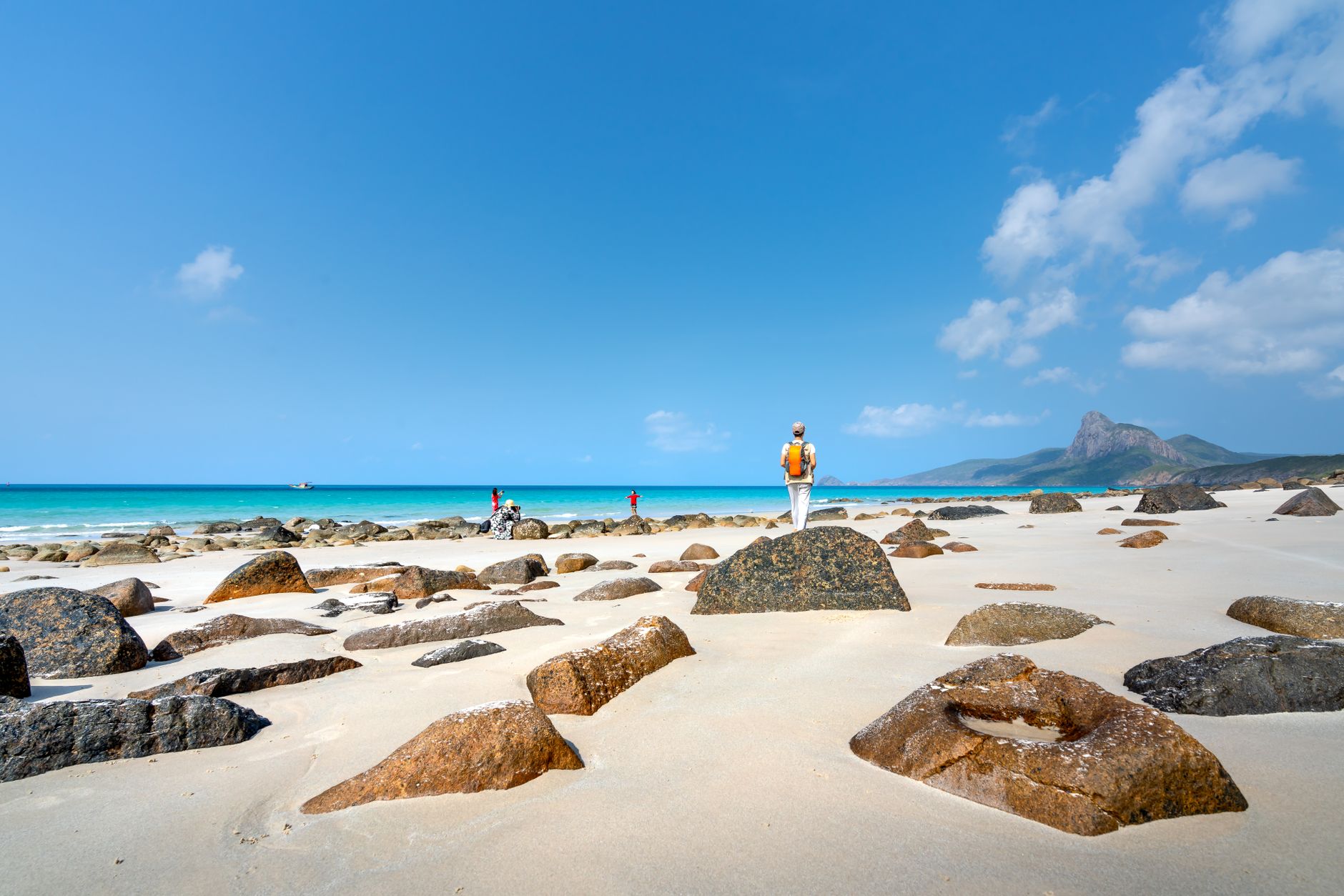
Why island hop in southern Vietnam — and why most guides get it wrong
The three archipelagos lie within 300 kilometers of each other. On a map, they look like a natural island-hopping circuit. In reality, no direct ferry or flight connects any two of them.
Every current guide implies you can hop between these islands easily. You cannot. The geography of the Gulf of Thailand, combined with shallow waters and limited infrastructure, means every island connection requires a stop on the mainland. Most itineraries force travelers back through Rach Gia, Can Tho or Ho Chi Minh City.
This article names the gap and offers honest routing workarounds. It tells you which combinations work, which ones waste money, and when you should just pick one island and stay there.
The three islands at a glance — quick comparison
| Island | Area | Development level | Best for | Worst for | Recommended stay | Dry season |
|---|---|---|---|---|---|---|
| Phu Quoc | 574 km² | High (resorts, nightlife, international airport) | Families, luxury travelers, first-timers | Budget travelers seeking solitude | 4-5 days | Nov-Apr |
| Con Dao | 76 km² | Low (protected national park, limited hotels) | Nature lovers, history buffs, divers | Party travelers, those on a tight budget | 3-4 days | Mar-Sep |
| Nam Du | 24 km² | Minimal (homestays, basic guesthouses) | Budget travelers, backpackers, solitude seekers | Anyone needing nightlife or luxury | 2-3 days | Nov-Apr |
Phu Quoc — the developed hub
Phu Quoc has an international airport with direct flights from Hanoi, Ho Chi Minh City, Bangkok and Kuala Lumpur. It offers everything from backpacker hostels to five-star resorts. The island has night markets, cable cars, water parks and hundreds of restaurants. Beaches range from crowded Sao Beach to quiet northern coves.
The trade-off is crowds. During high season (December to February), Phu Quoc feels like a small city. Prices are higher than anywhere else in the region.
Con Dao — the wild sanctuary
Con Dao is a protected archipelago. Development is strictly limited. The main town has a handful of hotels, guesthouses and restaurants. Beaches like Dam Trau and An Hai are pristine. Snorkeling and diving are excellent because the reefs have been protected for decades.
Con Dao also has a dark history. The Con Dao Prison complex was used by French colonists and later the South Vietnamese government. The museum and prison tours are sobering but essential.
The biggest drawback is access. Con Dao has an airport with flights from Ho Chi Minh City and Can Tho, but tickets are expensive. The high-speed ferry from Vung Tau takes 4-5 hours and runs only in calm weather.
Nam Du — the emerging escape
Nam Du is an archipelago of 21 islands, most uninhabited. The main island, Hon Lon, has a small fishing village, a few homestays and one ATM that frequently runs out of cash. Roads are unpaved. Electricity can be intermittent.
This is not a place for comfort. It is a place for quiet beaches, fresh seafood and island-hopping by wooden boat between empty coves. Nam Du attracts Vietnamese tourists and a trickle of backpackers. Foreign visitors are still rare.
Getting there — flights, ferries and the missing links
| Island | From | Mode | Duration | Frequency | Cost (VND/USD) | Seasonality |
|---|---|---|---|---|---|---|
| Phu Quoc | Ho Chi Minh City | Flight | 1 hour | 10+ daily | 800k-2M (USD 33-82) | Year-round |
| Phu Quoc | Rach Gia | Ferry | 2.5 hours | 4-5 daily | 200k (USD 8) | Nov-Apr only |
| Con Dao | Ho Chi Minh City | Flight | 1 hour | 3-4 daily | 1.5M-3M (USD 62-124) | Year-round |
| Con Dao | Vung Tau | Ferry | 4-5 hours | 1 daily | 400k (USD 16) | Mar-Sep only |
| Nam Du | Rach Gia | Ferry | 2.5 hours | 2-3 daily | 200k (USD 8) | Nov-Apr only |
Why no one has built an inter-island ferry — and what that means for your trip
The water between Phu Quoc and Con Dao is open sea with strong currents. Ferry operators have tried the route and abandoned it due to low demand and dangerous conditions. The distance between Nam Du and Con Dao is even greater, with no port infrastructure on either end.
This means every multi-island trip requires at least one transit through a mainland city. The shortest connection is Phu Quoc to Nam Du via Rach Gia, which takes a full day. Phu Quoc to Con Dao requires a flight to Ho Chi Minh City and another flight south, costing a minimum of 2.5 million VND (USD 103) per person in airfare alone.
How to connect two islands without backtracking
Phu Quoc + Nam Du (the most logical pair)
This is the only island-to-island combination that works without a flight. Take the morning ferry from Phu Quoc to Rach Gia (2.5 hours, 200k VND). Arrive in Rach Gia around noon. Take the afternoon ferry to Nam Du (2.5 hours, 200k VND). Total transit time: 6-7 hours including waiting. Total cost: 400k VND (USD 16) per person.
The return journey is the same in reverse. This route is feasible as a day of travel, though it eats a full day from your itinerary.
Phu Quoc + Con Dao (expensive and time-consuming)
Fly from Phu Quoc to Ho Chi Minh City (1 hour, 800k-2M VND). Overnight in Ho Chi Minh City. Fly from Ho Chi Minh City to Con Dao the next morning (1 hour, 1.5M-3M VND). Total transit time: 24 hours minimum. Total cost: 2.3M-5M VND (USD 95-205) per person.
This route costs more than flying from Ho Chi Minh City to Thailand. For most travelers, it makes more sense to visit Con Dao as a standalone trip from Ho Chi Minh City.
Con Dao + Nam Du (impractical for most travelers)
There is no direct connection. The only route is Con Dao to Ho Chi Minh City by flight, then Ho Chi Minh City to Rach Gia by bus or flight, then Rach Gia to Nam Du by ferry. This takes two full days and costs over 3 million VND (USD 124) per person. It is not recommended.
The three-island dream — is it feasible?
Technically yes, with 14 days minimum and a budget of 8-10 million VND (USD 330-412) per person just for transport. Realistically, most travelers find that visiting two islands is more rewarding than rushing through three. The Phu Quoc plus Nam Du combination gives you the most variety for the least cost and travel time.
Route option 1 — the 7-day Phu Quoc + Nam Du itinerary
This itinerary starts in Phu Quoc, takes the ferry to Nam Du, and returns via Rach Gia. It is designed for budget-conscious travelers who want both development and solitude.
Days 1-3: Phu Quoc south and east coast
Stay in Duong Dong town or along the east coast near Sao Beach. Rent a scooter (150k VND per day, USD 6). Visit Sao Beach, the Ho Quoc Pagoda, and the Phu Quoc Night Market. Take a day trip to the An Thoi Islands for snorkeling. Avoid the crowded west coast resorts unless you want luxury.
Day 4: Ferry to Nam Du (via Rach Gia)
Take the 7:30 AM ferry from Phu Quoc to Rach Gia (arrives 10:00 AM). Buy tickets for the 1:00 PM ferry to Nam Du (arrives 3:30 PM). Check into a homestay on Hon Lon. Walk to the lighthouse for sunset.
Days 5-6: Nam Du island hopping
Rent a boat for the day (1.5M-2M VND, USD 62-82, split among 4-6 people). Visit Hon Mau, Hon Ngang and Hon Hai Bo Dap. Snorkel, swim and eat seafood on deserted beaches. On day 6, explore Hon Lon by scooter. Visit the Nam Du market and the small fishing port.
Day 7: Return to Rach Gia and onward
Take the morning ferry back to Rach Gia (8:00 AM, arrives 10:30 AM). From Rach Gia, buses run to Ho Chi Minh City (6 hours, 250k VND) and Can Tho (3 hours, 120k VND).
Route option 2 — the 10-day Phu Quoc + Con Dao itinerary
This route is for travelers with more time and budget. It connects the two most famous islands via Ho Chi Minh City.
Days 1-4: Phu Quoc north and west coast
Stay in the north near Vinpearl or along Long Beach. Visit the Phu Quoc National Park, the pepper farms, and the fish sauce factories. Take a day trip to the northern beaches like Bai Dai and Bai Thom. Avoid the southern crowds.
Day 5: Flight to Ho Chi Minh City (overnight required)
Take a morning flight from Phu Quoc to Ho Chi Minh City (1 hour). Spend the afternoon in District 1. Overnight in a budget hotel or hostel.
Days 6-9: Con Dao beaches and history
Fly from Ho Chi Minh City to Con Dao in the morning. Rent a scooter (200k VND per day, USD 8). Visit Dam Trau Beach, An Hai Beach and the Con Dao Prison complex. Take a snorkeling trip to Bay Canh Island.
Day 10: Return to Ho Chi Minh City
Fly back to Ho Chi Minh City in the morning. Total transport cost: 2.5M-5M VND (USD 103-205) per person.
Route option 3 — the 5-day Nam Du solo trip (from Rach Gia)
For travelers who want only one island but the most authentic experience. This itinerary covers logistics from Rach Gia, island hopping between Nam Du's 21 islets, and return.
Day 1: Travel from Ho Chi Minh City to Rach Gia by bus (6 hours, 250k VND). Overnight in Rach Gia. Day 2: Take the morning ferry to Nam Du (8:00 AM, arrives 10:30 AM). Explore Hon Lon. Days 3-4: Rent a boat for island hopping. Visit Hon Ngang, Hon Hai Bo Dap and Hon Mau. Day 5: Ferry back to Rach Gia. Bus to Ho Chi Minh City.
Total cost: 3-4 million VND (USD 124-165) per person including transport, accommodation and food.
Which island is right for you — decision framework
Answer these questions honestly:
- Do you need nightlife and restaurants? Choose Phu Quoc.
- Do you want pristine beaches and solitude? Choose Con Dao or Nam Du.
- Is your budget under 500k VND per day? Choose Nam Du.
- Do you have less than 7 days? Choose one island only.
- Are you traveling with children? Choose Phu Quoc for infrastructure.
- Do you care about history? Choose Con Dao for the prison museum.
- Do you get seasick easily? Choose Phu Quoc or Con Dao (flights only).
When to go — seasonal realities no one mentions
| Month | Phu Quoc rain days | Con Dao rain days | Nam Du rain days | Sea conditions |
|---|---|---|---|---|
| Jan | 2 | 8 | 3 | Calm (Phu Quoc, Nam Du); rough (Con Dao) |
| Mar | 4 | 4 | 5 | Good all around |
| May | 15 | 10 | 14 | Rough (Phu Quoc, Nam Du); good (Con Dao) |
| Aug | 18 | 8 | 17 | Rough (Phu Quoc, Nam Du); good (Con Dao) |
| Oct | 16 | 18 | 15 | Rough everywhere |
| Dec | 4 | 12 | 5 | Calm (Phu Quoc, Nam Du); rough (Con Dao) |
Phu Quoc and Nam Du share a dry season from November to April. Con Dao has a different weather window from March to September. The best compromise is March to April, when both regions have acceptable conditions.
Ferry services to Phu Quoc and Nam Du are frequently cancelled from August to November. Con Dao ferries are cancelled from October to January. Travel insurance covering trip interruption is essential if traveling during these months.
Budget breakdown — what things actually cost
Phu Quoc daily budget
Budget traveler: 500k-800k VND (USD 20-33) — dorm bed, street food, scooter rental, no tours Mid-range: 1.5M-2.5M VND (USD 62-103) — private room, restaurant meals, one tour Luxury: 4M+ VND (USD 165+) — resort, fine dining, private boat trips
Con Dao daily budget
Budget traveler: 600k-1M VND (USD 25-41) — guesthouse, street food, scooter rental Mid-range: 1.5M-2M VND (USD 62-82) — hotel, restaurant meals, snorkeling trip Luxury: 3M+ VND (USD 124+) — resort, private guide, diving
Nam Du daily budget
Budget traveler: 300k-500k VND (USD 12-20) — homestay, street food, scooter rental Mid-range: 600k-1M VND (USD 25-41) — private room, seafood dinners, boat trip Luxury: Not available — no luxury accommodation exists
Hidden costs: park entry fees, environmental taxes, and overpriced transport
Phu Quoc charges an environmental fee of 30k VND (USD 1.25) at the airport and ferry terminal. Con Dao National Park charges 50k VND (USD 2) per person for entry to certain beaches. Nam Du has no entry fees.
Ferry tickets to Nam Du from Rach Gia are often sold at inflated prices to foreigners. The official price is 200k VND (USD 8). If a ticket seller quotes 300k VND or more, insist on the printed price list.
Practical tips for a smooth trip
Booking ferries in advance — when it matters and when it doesn't
For Phu Quoc to Rach Gia and Rach Gia to Nam Du, book 2-3 days ahead during high season (December to February). For Con Dao ferries, book at least one week ahead during peak season. Off-season, walk-up tickets are usually fine.
What to pack for multi-island travel
Pack light. Ferries have limited luggage space. Bring seasickness medication, reef-safe sunscreen, insect repellent, and a waterproof bag for electronics. Cash is essential on Nam Du and Con Dao. ATMs are unreliable on all three islands.
Cash vs. card — which islands still run on cash
Nam Du runs almost entirely on cash. The one ATM on Hon Lon frequently runs out. Bring enough Vietnamese dong for your entire stay. Con Dao has two ATMs but they sometimes malfunction. Phu Quoc has the best card acceptance, but smaller restaurants and homestays still prefer cash.
Health and safety — jellyfish, sea conditions, and medical facilities
Jellyfish are common around all three islands from May to September. Wear a rash guard when swimming. Sea conditions can change rapidly. Check the weather forecast before booking boat trips. Phu Quoc has a hospital and several clinics. Con Dao has a small clinic. Nam Du has a basic health center with limited supplies.
Common mistakes and how to avoid them
Overestimating what you can see in a week. Most travelers try to visit two islands in 5-6 days and end up spending half their trip in transit. Pick one island for trips under 7 days.
Underestimating transit time. A ferry ride that takes 2.5 hours on the schedule can take 4 hours in rough weather. Add buffer days to your itinerary.
Booking non-refundable transport in bad weather. Ferry cancellations are common from August to November. Book flexible tickets or travel insurance.
Assuming all islands have ATMs. Nam Du has one ATM that fails regularly. Con Dao's ATMs sometimes run out of cash on weekends. Bring cash from the mainland.
FAQ
Q: Can you take a ferry directly from Phu Quoc to Con Dao? A: No. There is no direct ferry between Phu Quoc and Con Dao. Travelers must fly from Phu Quoc to Ho Chi Minh City, then take a separate flight or ferry to Con Dao. This adds at least one overnight and significant cost.
Q: Is Nam Du worth visiting if I already have limited time? A: Yes, if you want a quieter, less developed island experience at a lower cost than Phu Quoc. No, if you need nightlife, luxury resorts, or international dining. Nam Du is best as a 3-4 day add-on to a Phu Quoc trip.
Q: What is the best time of year for island hopping in southern Vietnam? A: For Phu Quoc and Nam Du, November to April. For Con Dao, March to September. There is no single perfect window for all three. The best compromise is March-April, when both regions have acceptable conditions.
Q: How many days do I need to visit all three islands? A: At least 14 days, and the trip will involve significant backtracking through Ho Chi Minh City or Rach Gia. Most travelers find that visiting two islands is more rewarding than rushing through three.
Q: Are there ATMs on Nam Du? A: Very limited. There is one ATM on the main island (Hon Lon), but it frequently runs out of cash or malfunctions. Bring enough Vietnamese dong for your entire stay.
Q: Do I need to book ferry tickets in advance? A: For Phu Quoc to Rach Gia and Rach Gia to Nam Du, booking 2-3 days ahead is recommended during high season (December-February). For Con Dao ferries, book at least one week ahead during peak season. Off-season, walk-up tickets are usually fine.
Q: Is island hopping safe during rainy season? A: Ferry services may be cancelled at short notice during storms (typically August-November for Phu Quoc/Nam Du, October-January for Con Dao). Travel insurance covering trip interruption is strongly recommended if traveling during these months. Sea conditions can be rough even when ferries run.