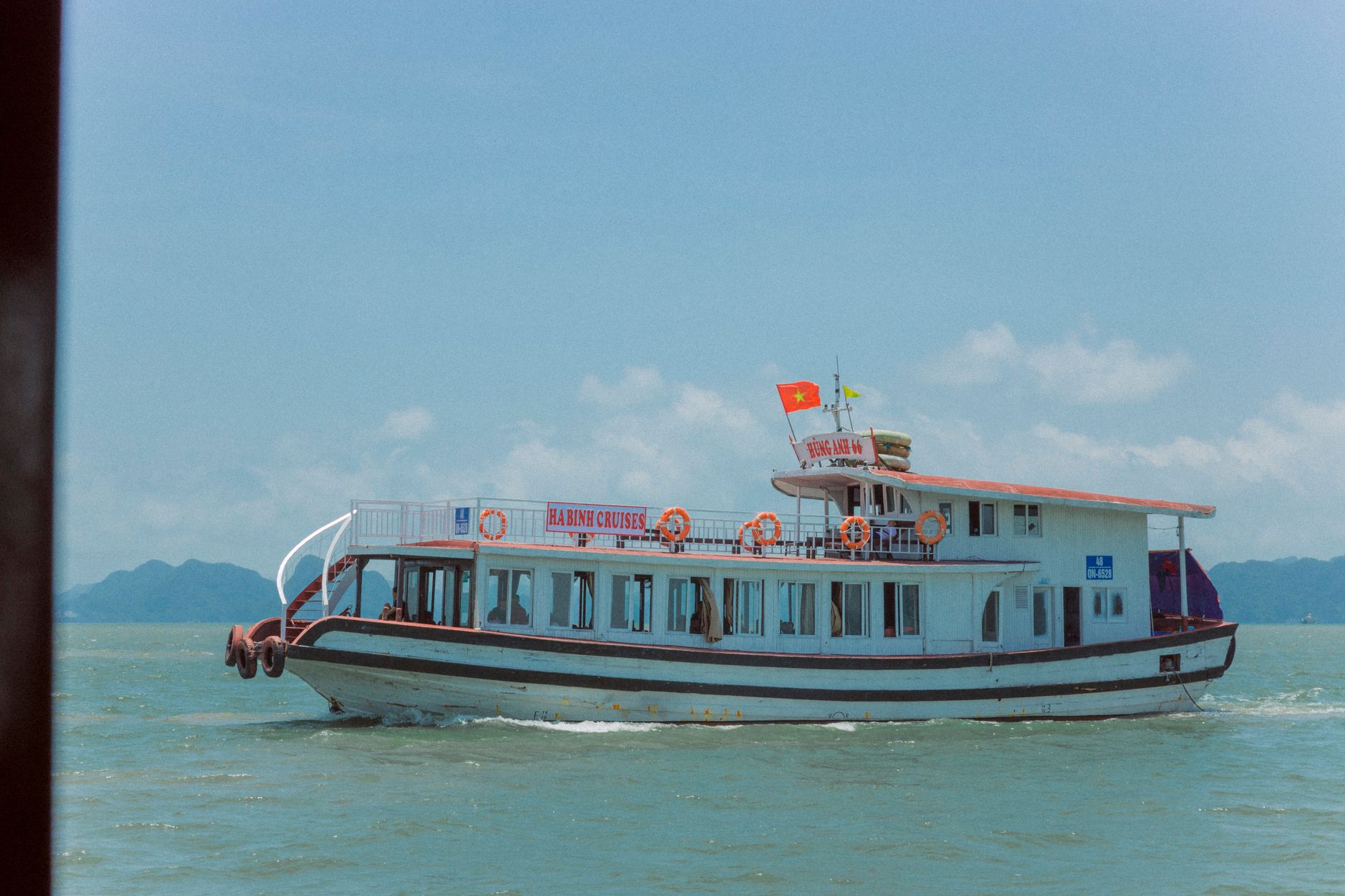
The ferry network is fragmented. Different provinces run their own routes, ticket systems vary, and onboard conditions range from basic wooden benches to air-conditioned cabins. This guide covers the routes that matter, how to book, and what to expect once you are on the water.
The main ferry routes you need to know
Cat Ba Island from Hai Phong
Cat Ba is the largest island in Ha Long Bay and the base for exploring Lan Ha Bay. The ferry connection improved dramatically in 2024 when the new Got Ferry Terminal opened in Hai Phong city.
Route: Got Ferry Terminal, Hai Phong to Cat Ba Town or Phu Long Port Duration: 45-60 minutes Cost: 250,000-300,000 VND ($10-12) for passengers, 150,000 VND ($6) for motorbikes Frequency: Every 30-60 minutes from 6:00 AM to 6:00 PM
The high-speed ferry is the standard option. It is a modern catamaran with air conditioning, comfortable seats, and a small snack counter. The crossing is smooth unless the weather is rough.
A slower car ferry also runs from Dinh Vu Port, taking about 90 minutes. This is the option for travelers bringing vehicles. The car ferry is basic but functional, with open decks and plastic chairs.
Pro tip: Buy tickets at the terminal. There is no price advantage to booking online through third-party sites, and the ticket counter takes cash or card. Arrive 30 minutes before departure during peak season (May-August) when ferries fill up.
Phu Quoc from Rach Gia or Ha Tien
Phu Quoc is Vietnam's largest island and the most developed beach destination in the country. The island has an international airport with direct flights from Hanoi, Ho Chi Minh City, and several Asian cities. But the ferry route remains popular with budget travelers and those continuing overland through the Mekong Delta.
Route 1: Rach Gia to Phu Quoc Duration: 2.5 hours by hydrofoil Cost: 340,000-380,000 VND ($14-15) Frequency: 4-6 departures daily
Route 2: Ha Tien to Phu Quoc Duration: 1.5-2 hours Cost: 280,000-320,000 VND ($11-13) Frequency: 5-7 departures daily
The Rach Gia route uses Superdong and Phu Quoc Express hydrofoils. These are high-speed vessels with air-conditioned cabins, assigned seating, and life jackets under every seat. Motion sickness is common on rough days, especially from November to February when the Gulf of Thailand gets choppy.
The Ha Tien route is shorter and cheaper. Superdong operates most departures. The terminal at Ha Tien is about 5 kilometers from the Cambodian border crossing at Ha Tien/Xa Xia, making this a convenient option for travelers coming from or going to Cambodia.
Warning: Ferry schedules change seasonally. During the dry season (November-April), expect more departures. During the rainy season, some afternoon crossings may be canceled. Check the Superdong website or ask at your hotel the day before.
Con Dao from Soc Trang
Con Dao is a remote archipelago of 16 islands, known for its national park, pristine beaches, and the infamous prison complex. The ferry connection has improved in recent years.
Route: Tran De Port, Soc Trang to Con Dao Duration: 3.5-4 hours Cost: 350,000-450,000 VND ($14-18) depending on class Frequency: 2-3 departures weekly
This is the most unreliable ferry route in Vietnam. The crossing is open ocean, and the Superdong vessel that serves this route cancels frequently due to weather. The ferry runs year-round, but from June to September, cancellations are common.
The ferry departs from Tran De Port, about 30 kilometers south of Soc Trang city. The port is new and well organized. The vessel itself is a large catamaran with air-conditioned lower decks and an open upper deck.
Pro tip: Book Con Dao ferry tickets 1-2 days in advance. The route is popular with domestic tourists, and walk-up tickets often sell out. Superdong has an official website and a Facebook page where schedules are posted weekly.
Cham Islands from Hoi An
The Cham Islands (Cu Lao Cham) are a cluster of 8 islands about 20 kilometers offshore from Hoi An. They are a UNESCO biosphere reserve and a popular day trip.
Route: Cua Dai Port, Hoi An to Bai Lang, Cham Islands Duration: 30-50 minutes Cost: 150,000-200,000 VND ($6-8) for the wooden boat, 250,000 VND ($10) for the speedboat Frequency: Multiple departures daily during dry season
The wooden boat is the budget option. It is slow, open-air, and can be uncomfortable in rough seas. The speedboat is faster and more reliable, but still wet if the waves are high.
Important: The Cham Islands ferry service runs from March to September only. From October to February, the sea is too rough and the islands are effectively closed to visitors.
Mekong Delta river boats
The Mekong Delta has no single ferry network. Instead, dozens of small ferry crossings connect the region's rivers and canals. Most are short crossings of 5-15 minutes, costing 5,000-20,000 VND ($0.20-0.80).
These ferries are essential for getting around the delta. The most used routes include:
- My Thuan ferry across the Tien River near Vinh Long
- Cao Lanh ferry across the Tien River in Dong Thap
- Vam Cong ferry across the Hau River near Can Tho
Most of these crossings are being replaced by bridges. The My Thuan 2 bridge opened in 2024, eliminating the most famous ferry crossing in the delta. But smaller ferries still operate on less traveled routes, and they remain the best way to experience river life.
For travelers, the more relevant boat trips are the tourist cruises around Can Tho and Ben Tre. These are not transport ferries but organized boat tours through the floating markets and canals. A half-day tour costs 200,000-500,000 VND ($8-20) per person depending on boat size and route.
Nha Trang to nearby islands
Nha Trang does not have a scheduled ferry service to its nearby islands. Instead, travelers book day trips through tour operators. The main destinations are Hon Mun, Hon Tam, and the fishing village of Bai Tien.
Day trip boats leave from Nha Trang port between 8:00 and 9:00 AM and return by 4:00 PM. Prices range from 300,000-600,000 VND ($12-24) per person, including lunch and snorkeling gear. The boats are basic wooden vessels with open decks and a lower cabin.
Pro tip: For a more independent option, take the local boat from Cau Da port to Hon Tam island. It leaves when full and costs about 50,000 VND ($2). The trip takes 20 minutes.
How to book ferry tickets in 2026
Booking a ferry in Vietnam is not like booking a flight. There is no central system, and each route operates differently.
At the port: The most reliable option. Ticket counters at major ports accept cash and cards. Arrive 30-45 minutes before departure. This works for Cat Ba, Phu Quoc, and short Mekong crossings.
Online via Vexere: Vexere, the Vietnamese transport booking platform, now covers most major ferry routes. The site and app are in Vietnamese and English. Tickets are priced the same as at the port, with a small booking fee of 5,000-10,000 VND ($0.20-0.40). The main advantage is that you can check schedules and availability before going to the port.
Through your hotel: Many hotels, especially on Cat Ba and Phu Quoc, sell ferry tickets at the same price as the port. They can also arrange transport from your hotel to the port. This is convenient but requires planning a day ahead.
Through tour operators: For Con Dao and Cham Islands, tour operators sell ferry tickets as part of packages. This is more expensive but includes transfers and sometimes meals.
What you need: A ticket, your passport (for identification), and cash for the port tax. Some ports charge a small departure fee of 10,000-20,000 VND ($0.40-0.80) that is not included in the ticket price.
What to expect on board
Onboard conditions vary significantly by route. Here is a realistic breakdown:
High-speed ferries (Cat Ba, Phu Quoc, Con Dao): Air-conditioned cabins with airline-style seats. Assigned seating. Small snack bars selling instant noodles, chips, and drinks. Clean toilets at the back. Life jackets under seats. These ferries are comfortable and safe.
Wooden boats (Cham Islands, local Mekong crossings): Open-air seating on wooden benches. No assigned seating. No toilets on smaller boats. Life jackets are usually available but not always easy to find. These boats are basic but functional.
Car ferries (Dinh Vu to Cat Ba): Open decks with plastic chairs. No air conditioning. Basic toilets. Snack stalls on board. These ferries are utilitarian and can be noisy when vehicles are being loaded.
Common issues:
- Motion sickness: Rough seas are common on all open-water routes. Take medication before boarding if you are prone to seasickness. Some ferries have a small pharmacy on board, but do not rely on it.
- Overcrowding: During peak season and holidays, ferries can be packed. Seats may be full, and passengers stand in the aisles. This is normal in Vietnam.
- Delays: Ferries run on schedule in good weather but can be delayed or canceled by storms. The decision to cancel is made by the port authority, not the ferry company.
- Language: Announcements are in Vietnamese. Listen for your destination name and follow other passengers when disembarking.
Pro tip: Bring earplugs. Vietnamese ferries play announcements and music at high volume. Earplugs make the crossing more bearable.
Safety considerations
Ferry safety in Vietnam has improved significantly in the past decade. The government introduced stricter regulations after several accidents in the 2010s. Major routes now use modern vessels with proper safety equipment.
Life jackets are provided on all scheduled ferries. On high-speed ferries, they are under the seats. On wooden boats, they are usually stored in a compartment at the front or back. Ask a crew member if you cannot find one.
The biggest risk is not the ferry itself but the weather. From June to November, typhoons and tropical storms hit Vietnam's coast. Ferries do not operate during typhoons, but conditions can deteriorate quickly even without a formal warning.
If the sea looks rough, reconsider your trip. Ferry operators in Vietnam will not cancel a crossing just because of high waves. The decision to cancel is based on official weather warnings, which can lag behind actual conditions.
For travelers with mobility issues, ferry boarding can be challenging. High-speed ferries dock at floating pontoons that move with the tide. The gangway between the pontoon and the ferry can be steep. Crew members are usually helpful but do not expect the level of assistance you would find at an airport. Read more about accessibility in Vietnam in our guide to traveling with disabilities.
Seasonal considerations and weather
Vietnam's ferry network is seasonal. The best time to travel by ferry depends on the region:
North Vietnam (Cat Ba, Ha Long Bay): Best from October to April. The summer months (June-September) bring storms and rough seas. January and February can be cold and misty but are generally calm.
Central Vietnam (Cham Islands): Best from March to September. The service stops entirely from October to February.
South Vietnam (Phu Quoc, Con Dao): Best from November to April. The dry season brings calm seas and clear skies. The rainy season (May-October) means rougher seas and more cancellations, especially for Con Dao.
Typhoon season: The official typhoon season runs from June to November, with the highest risk in central Vietnam from September to November. Typhoons can disrupt ferry services for days at a time. Check weather forecasts before booking any ferry trip during these months.
Pro tip: Build flexibility into your itinerary. If you are taking a ferry to Cat Ba or Phu Quoc, plan at least one buffer day before your onward flight or train. Ferry cancellations can strand travelers for 24-48 hours.
Comparing ferry vs flight vs bus
| Route | Ferry time | Ferry cost | Flight time | Flight cost | Bus time | Bus cost |
|---|---|---|---|---|---|---|
| Hai Phong to Cat Ba | 45-60 min | 250,000-300,000 VND ($10-12) | No airport on Cat Ba | N/A | 2.5-3 hrs + ferry | 200,000-350,000 VND ($8-14) |
| Rach Gia to Phu Quoc | 2.5 hrs | 340,000-380,000 VND ($14-15) | 50 min | 800,000-1,500,000 VND ($32-60) | 8-10 hrs + ferry | 400,000-600,000 VND ($16-24) |
| Ho Chi Minh City to Con Dao | 4 hrs + 3 hr bus | 350,000-450,000 VND ($14-18) + bus | 1 hr | 1,200,000-2,500,000 VND ($48-100) | 12+ hrs | 500,000-700,000 VND ($20-28) |
| Hoi An to Cham Islands | 30-50 min | 150,000-250,000 VND ($6-10) | No airport | N/A | N/A | N/A |
The ferry is almost always the cheapest option. It is also the only option for Cat Ba and Cham Islands. For Phu Quoc and Con Dao, the ferry makes sense if you are already in the Mekong Delta and have time to spare. If you are traveling from Hanoi or Ho Chi Minh City with limited time, the flight is worth the extra cost.
Practical tips for a smooth ferry trip
Arrive early. Vietnamese ferries leave on time, and they do not wait for late passengers. The check-in process is quick, but the walk from the ticket counter to the boarding gate can take 10-15 minutes at larger ports.
Pack light. Onboard storage is limited. Large suitcases may need to be left in a designated area, which can be inconvenient. A backpack is easier to manage.
Bring water and snacks. High-speed ferries have snack bars, but they charge tourist prices. A bottle of water and some crackers will save you money.
Store valuables on your person. Theft is rare on Vietnamese ferries, but it happens. Keep your phone, wallet, and passport in a zipped bag.
Use the toilet before boarding. Toilets on ferries are functional but not pleasant. The facilities at the port are usually cleaner.
Sit on the lower deck if you get seasick. The lower deck has less motion. On high-speed ferries, the lower cabin is also where the air conditioning is strongest.
Check the return schedule. Many routes have fewer afternoon departures. If you are doing a day trip, confirm the last ferry back before you arrive.
FAQ
Q: Can I bring a motorbike on a ferry in Vietnam? A: Yes. Most car ferries and some high-speed ferries carry motorbikes. The cost is 150,000-200,000 VND ($6-8) on top of the passenger fare. The motorbike is loaded by crew members, and you will need to walk onto the ferry separately. This service is available on the Cat Ba, Phu Quoc, and Con Dao routes.
Q: Do I need to book ferry tickets in advance? A: For most routes, no. Walk-up tickets are available at the port. The exceptions are Con Dao and Cham Islands, where advance booking is recommended, and peak holiday periods (Tet, National Day, summer weekends) when ferries sell out.
Q: What happens if my ferry is canceled due to weather? A: You get a full refund or a ticket for the next available departure. The refund is processed at the ticket counter, and you will need to present your original ticket and identification. There is no compensation for missed connections or hotel nights.
Q: Are Vietnamese ferries safe? A: Major ferry routes use modern vessels with proper safety equipment. The main risk is weather-related, not mechanical. Ferries operate in conditions that would ground many Western operators, so use your judgment if the sea looks rough.
Q: Can I take a ferry from Vietnam to Cambodia? A: No scheduled ferry service operates between Vietnam and Cambodia. The only water crossing is the speedboat from Chau Doc, Vietnam to Phnom Penh, Cambodia. This is a tourist service operated by companies like Victoria and Hang Chau. The trip takes 4-5 hours and costs 800,000-1,000,000 VND ($32-40). It is a scenic but slow way to cross the border.
Q: How early should I arrive at the ferry port? A: Arrive 30-45 minutes before departure. This gives you time to buy a ticket, pass through the security check, and find your boarding gate. During peak season, arrive 60 minutes early.
Q: Are there ferries to Ha Long Bay? A: No. Ha Long Bay is accessed by road from Hanoi. The cruise boats that tour the bay depart from Tuan Chau Island or Ha Long City. If you want to explore the bay without a cruise, take the ferry to Cat Ba and book a day trip from there. This is often cheaper and less crowded than the tours from Ha Long City.