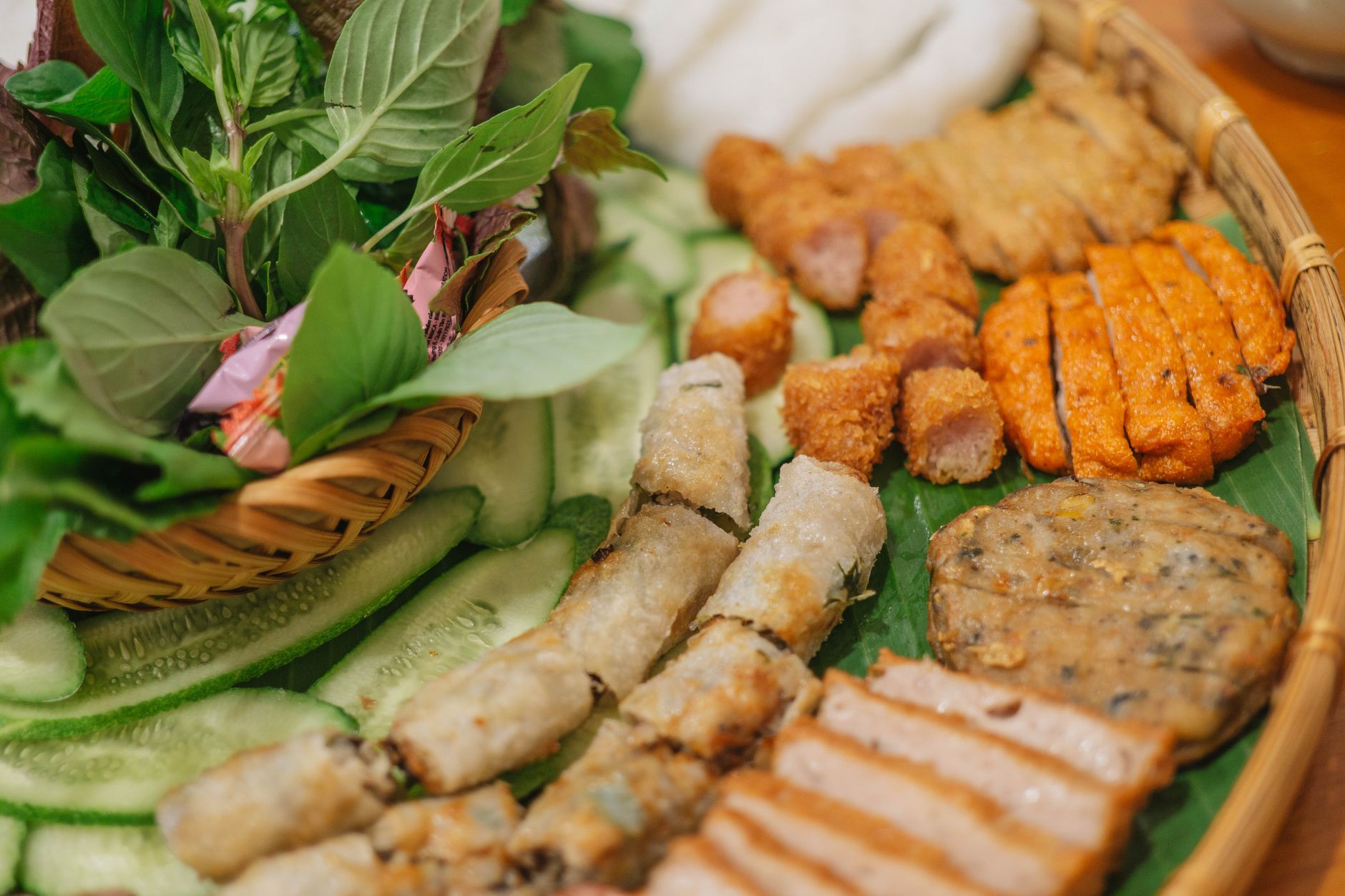
What makes Vietnamese restaurant ordering different from Western dining
Vietnamese dining culture operates on a different rhythm than Western restaurants. Understanding this prevents awkward moments.
Servers in Vietnam do not visit your table repeatedly. They take your order, deliver the food, and leave you alone until you call them. This is not rudeness. It is respect for your privacy while eating.
Self-service is common. At street stalls, you may need to grab your own chopsticks, napkins, and dipping sauce from a communal counter. At com binh dan eateries, you often walk up to the display counter, point at the dishes you want, and carry your tray to a table.
Payment happens at the table or at the counter. Servers do not bring a check folder and wait for your credit card. You signal when you are finished, say the bill phrase, and pay directly.
The biggest difference: calling for attention is expected. A quiet raised hand with a polite "Em oi" or "Anh oi" is standard. Waiting silently for a server to approach will result in a long wait.
Understanding the three types of Vietnamese eateries you will encounter
Not all restaurants work the same way. The type of eatery determines the ordering flow, payment method, and price range.
Street stalls (quan via he): These are sidewalk operations with small plastic stools and low tables. The menu is often handwritten on a board or not displayed at all. You order directly with the cook, pay immediately after eating, and share tables with strangers. English is rarely spoken. Prices are the lowest in Vietnam.
Casual rice-and-greens spots (com binh dan): These are lunchtime institutions serving set meals. You walk to the counter, point at the protein and vegetables you want, and receive a tray with rice, soup, and your chosen dishes. Pay before or after eating depending on the establishment. These are the most authentic and cheapest sit-down meals.
Sit-down restaurants (nha hang): These range from mid-range to upscale. They have printed menus, sometimes with English translations and pictures. Servers are more accustomed to foreign customers. Credit cards are accepted more often. Prices are higher but still reasonable by Western standards.
| Restaurant type | Ordering flow | Payment method | Price range per dish | English likelihood |
|---|---|---|---|---|
| Street stall | Call server or order with cook | Cash only | 15,000-50,000 VND ($0.60-$2.00) | Very low |
| Com binh dan | Point at display counter | Cash only | 25,000-45,000 VND ($1.00-$1.80) | Low |
| Sit-down restaurant | Call server, read menu | Cash or card | 60,000-150,000 VND ($2.40-$6.00) | Moderate to high |
Pro tip: Start with a com binh dan for your first local meal. The visual ordering system removes language barriers, and the low prices mean mistakes cost almost nothing.
How to read a Vietnamese menu (even when there are no pictures)
The biggest practical barrier travelers face is the menu. Vietnamese menus follow a predictable structure once you know what to look for.
Menus are organized by dish category. Look for these heading words:
- Phở — noodle soup section
- Cơm — rice dishes
- Bún — vermicelli noodles
- Mì or Mỳ — wheat noodles
- Đồ uống — drinks
- Món khai vị — appetizers
- Món chính — main courses
The dish name follows a pattern: main ingredient + cooking method + sometimes a regional name. For example, Phở bò breaks down as phở (noodle soup) + bò (beef). Cơm gà breaks down as cơm (rice) + gà (chicken).
Common ingredient keywords to recognize:
- Thịt — meat (general)
- Bò — beef
- Gà — chicken
- Heo or Lợn — pork
- Tôm — shrimp
- Cá — fish
- Rau — vegetables
- Trứng — egg
The price column is usually on the right side. Vietnamese uses commas as decimal separators and periods as thousand separators. A price written as "45.000" means 45,000 VND, not 45 dollars.
| Vietnamese term | English translation | Dish type | Region used |
|---|---|---|---|
| Phở | Noodle soup | Soup | Nationwide |
| Bún | Vermicelli noodles | Noodle | Nationwide |
| Cơm tấm | Broken rice | Rice dish | Southern |
| Bánh mì | Bread/sandwich | Sandwich | Nationwide |
| Bánh xèo | Sizzling pancake | Pancake | Central/Southern |
| Cao lầu | Thick noodle dish | Noodle | Hoi An only |
Warning: Some menus list prices "per portion" (suất) or "per bowl" (tô). A few dishes are priced by weight, especially seafood. When in doubt, ask "Bao nhiêu?" (how much) before ordering.
The ten phrases that cover 90 percent of restaurant situations
This is not a vocabulary dump. These ten phrases handle almost every situation in a Vietnamese restaurant. Each includes the Vietnamese script, a pronunciation guide using English approximations, and the exact situation where it applies.
| Situation | Vietnamese | Pronunciation | When to use |
|---|---|---|---|
| Getting attention | Em ơi / Anh ơi | Em oy / Ang oy | To call any server |
| Ordering | Cho tôi... | Jaw toy... | Before naming the dish |
| One bowl of beef pho | Cho tôi một tô phở bò | Jaw toy moat toe fuh baw | Ordering the classic |
| Not spicy | Không cay | Kohm kai | When you want no chili |
| Vegetarian | Tôi ăn chay | Toy an chai | For vegetarian food |
| No ice | Không đá | Kohm dah | For drinks |
| Delicious | Ngon quá | Ngon wah | To compliment the cook |
| The bill please | Cho tôi tính tiền | Jaw toy ding dee-en | When ready to pay |
| How much? | Bao nhiêu? | Bow nyew? | To check the price |
| Thank you | Cảm ơn | Gam un | After payment or service |
The most useful phrase is Cho tôi (give me). Follow it with the number, the classifier, and the dish name. Example: Cho tôi hai tô phở bò means "Give me two bowls of beef pho."
Pro tip: Pronounce the tones approximately. Vietnamese is a tonal language, but locals appreciate any attempt. A flat, neutral pronunciation of phở as "fuh" is understood everywhere.
Vietnamese pronouns and how to address restaurant staff correctly
Age-based pronouns matter in Vietnam. Using the wrong pronoun feels disrespectful, like addressing an elder as "kid."
The five most common pronouns for restaurant situations:
- Em — for servers who look younger than you
- Anh — for male servers who look older than you
- Chị — for female servers who look older than you
- Cô — for older women (roughly grandmother age)
- Chú — for older men (roughly grandfather age)
Add the calling particle ơi after the pronoun. Em ơi means "Hey, younger person" and is the most common way to call a server.
Simple decision tree: if the server looks younger, use em. If they look older, use anh or chị. If they look much older, use cô or chú. When unsure, em ơi is safe for most servers under 40.
Measure words (classifiers) and how to use them when ordering
Vietnamese requires classifiers between numbers and nouns. You cannot say "one bowl" as một bát. You must say một tô or một bát depending on the region.
The six essential classifiers for dining:
- Tô — bowl (used in Southern Vietnam)
- Bát — bowl (used in Northern Vietnam)
- Đĩa — plate
- Ly — glass
- Chai — bottle
- Lon — can
- Phần — portion
The pattern is always: number + classifier + dish name.
Examples:
- Một tô phở — one bowl of pho
- Hai đĩa cơm tấm — two plates of broken rice
- Ba ly cà phê sữa đá — three glasses of iced milk coffee
- Một phần bún chả — one portion of bun cha
Pro tip: When ordering multiple items, say them in sequence. "Cho tôi một tô phở bò và một ly cà phê sữa đá" means "Give me one bowl of beef pho and one glass of iced milk coffee."
Portion sizes and what a plate of rice should cost
Honest pricing expectations prevent overpaying. Vietnamese portions are generous by global standards.
A bowl of pho is roughly the size of a large American soup bowl. It will fill most adults. A plate of cơm tấm (broken rice with grilled pork) covers a standard dinner plate with rice, meat, shredded pork skin, and a fried egg.
Typical portion sizes and 2026 price ranges:
| Dish | Typical size | Fills how many people | Street stall price | Com binh dan price | Restaurant price |
|---|---|---|---|---|---|
| Phở bò | Large bowl | 1 adult | 30,000-50,000 VND ($1.20-$2.00) | N/A | 60,000-90,000 VND ($2.40-$3.60) |
| Cơm tấm | Full plate | 1 adult | N/A | 25,000-40,000 VND ($1.00-$1.60) | 50,000-80,000 VND ($2.00-$3.20) |
| Bún chả | Portion with herbs | 1 adult | 30,000-50,000 VND ($1.20-$2.00) | N/A | 60,000-100,000 VND ($2.40-$4.00) |
| Bánh mì | One baguette | 1 adult | 15,000-30,000 VND ($0.60-$1.20) | N/A | 35,000-50,000 VND ($1.40-$2.00) |
| Cơm bình dân | Tray with sides | 1 adult | N/A | 25,000-45,000 VND ($1.00-$1.80) | N/A |
Warning: If a street stall charges 80,000 VND for a bowl of pho, you are in a tourist trap. Walk away. The real price is half that.
How to customize your order (spice, meat, dietary needs)
Vietnamese cooks accommodate modifications but need clear instructions. Use these phrases:
- Không cay — not spicy (no chili at all)
- Ít cay — less spicy
- Không thịt — no meat
- Tôi ăn chay — I eat vegetarian
- Tôi ăn chay hoàn toàn — I eat fully vegetarian (no fish sauce)
- Không hành — no onions
- Không ngò — no cilantro
- Thêm rau — extra vegetables
- Không bột ngọt — no MSG
The important warning: Ăn chay (vegetarian) may still include fish sauce unless you specify ăn chay hoàn toàn (fully vegetarian). Vietnamese vegetarian cooking often uses fish sauce for flavor. If you are vegan or strictly vegetarian, you must say không nước mắm (no fish sauce).
For spice levels, understand that Vietnamese "spicy" is milder than Thai or Korean spice. Không cay means no chili at all. Ít cay means a small amount. If you want genuinely spicy, say cay nhiều (a lot of spice).
How to ask for the bill and handle payment
The moment many travelers stumble. Here is how to handle it.
Three ways to ask for the bill:
- Tính tiền — "Calculate money" (casual, common)
- Cho tôi tính tiền — "Give me the bill" (polite)
- Cho tôi hóa đơn — "Give me the invoice" (formal, for receipts)
To check the total, say Bao nhiêu? (How much?). The server will either tell you the amount or point at the bill.
Payment scenarios:
- Cash: Most common in local eateries. Have small bills. 20,000 and 50,000 VND notes are ideal. Large 500,000 VND notes are hard to break at street stalls.
- Card: Accepted in sit-down restaurants and some com binh dan in tourist areas. Always ask "Có chấp nhận thẻ không?" (Do you accept cards?) before ordering.
- Tipping: Not expected. In local eateries, rounding up the bill or leaving small change is appreciated but not required. In upscale restaurants, a 5-10 percent tip is becoming more common but never mandatory.
If the total seems wrong, say Tính lại giúp tôi (Please recalculate). Mistakes are rare but happen, especially with tourists.
Pro tip: At street stalls, place your money on the table after eating. The server will collect it. Do not wave money in the air. This is considered rude.
What the server might ask you (and how to respond)
Travelers often freeze when spoken to. Here are five common server questions with appropriate responses.
| Question in Vietnamese | Pronunciation | Meaning | Best response |
|---|---|---|---|
| Mấy người? | May ngoo-ee? | How many people? | Say the number: "Một" (one), "Hai" (two) |
| Uống gì? | Uong zee? | What drink? | Name the drink or say "Không uống" (no drink) |
| Cay không? | Kai kohm? | Spicy or not? | "Không cay" (not spicy) or "Cay" (spicy) |
| Ăn thêm gì nữa không? | An them zee nua kohm? | Anything else? | "Thôi, đủ rồi" (That's enough) or name another dish |
| Tiền mặt hay thẻ? | Dee-en mat hai teh? | Cash or card? | "Tiền mặt" (cash) or "Thẻ" (card) |
The most common question you will hear is "Mấy người?" when you walk in. Hold up the correct number of fingers and say "Hai" (two) or "Ba" (three). The server will guide you to a table.
Common mistakes travelers make when ordering (and how to avoid them)
Real-world pitfalls based on traveler reports.
Ordering too much food. Vietnamese portions are generous. One bowl of pho or one plate of rice is enough for most adults. Two dishes per person is excessive unless you are sharing family-style.
Assuming "no spicy" means no chili at all. Không cay should mean no chili, but some cooks add a small amount for flavor. If you have zero tolerance, emphasize "Không cay, hoàn toàn không cay" (not spicy, completely not spicy).
Using the wrong pronoun for older servers. Calling an older woman em feels disrespectful. Use chị or cô based on her age. When in doubt, default to chị for women and anh for men.
Forgetting to specify không đá for drinks. Iced drinks in Vietnam come with a glass full of ice. If you want no ice, say "Không đá" before ordering. Otherwise, your drink will be 70 percent ice.
Not checking the price before ordering special items. Seafood, crab, and certain regional specialties may be priced by weight or market price. Always ask "Bao nhiêu?" before ordering these items.
Regional differences in menu terms and dining customs
Northern, central, and southern Vietnam use different words for the same dishes and have different dining rhythms.
| Term | Hanoi (North) | Hue (Central) | Ho Chi Minh City (South) |
|---|---|---|---|
| Bowl | Bát | Bát | Tô |
| Noodles | Mì | Mỳ | Mì |
| Iced coffee | Cà phê sữa đá | Cà phê sữa đá | Cà phê sữa đá (same) |
| Pork | Thịt lợn | Thịt heo | Thịt heo |
| Beef noodle soup | Phở bò | Bún bò Huế | Phở bò |
| Spicy | Cay | Cay (spicier) | Cay (milder) |
The central region, especially Hue, prefers spicier food. Bún bò Huế is significantly spicier than northern phở. If you order bún bò Huế and say không cay, the cook may look confused. Specify rất ít cay (very little spice) instead.
Northern dining is more formal. Southern dining is more relaxed. In Hanoi, wait for the host to begin eating before starting. In Ho Chi Minh City, digging in immediately is acceptable.
Pro tip: When traveling between regions, learn the local word for bowl. Ordering một bát in Saigon will get you a confused look. Say một tô instead.
FAQ
Q: How to order the bill in Vietnamese? A: Say "Tính tiền" (pronounced "ding dee-en") or the more polite "Cho tôi tính tiền" (pronounced "jaw toy ding dee-en"). In casual eateries, simply catching the server's eye and saying "Tính tiền ơi" works.
Q: What are common Vietnamese phrases for ordering food? A: The most useful phrase is "Cho tôi" (give me) followed by the dish. For example, "Cho tôi một tô phở bò" means "Give me one bowl of beef pho." Other essential phrases include "không cay" (not spicy), "ăn chay" (vegetarian), and "tính tiền" (the bill).
Q: What should I order at a Vietnamese restaurant for the first time? A: Start with phở bò (beef noodle soup) for a safe introduction, or cơm tấm (broken rice with grilled pork) for a filling rice dish. Both are widely available, relatively mild, and give a good sense of Vietnamese flavors.
Q: What do Vietnamese say before a meal? A: There is no standard "bon appetit" phrase in Vietnamese. However, diners often say "Mời anh/chị ăn" (please eat) to invite others to start. As a guest, waiting for the host or eldest person to begin eating is polite.
Q: How much should I tip at a Vietnamese restaurant? A: Tipping is not traditionally expected in Vietnam. In local eateries and street stalls, rounding up the bill or leaving small change is appreciated but not required. In upscale restaurants, a 5-10 percent tip is becoming more common but never mandatory.
Q: Is it rude to call a server in Vietnam? A: No. Calling "Em ơi" or "Anh ơi" with a raised hand is standard practice. Vietnamese dining culture expects diners to signal when ready to order, need something, or want the bill. Waiting quietly for a server to approach may result in a long wait.
Q: Can I use English to order in Vietnamese restaurants? A: In tourist areas and upscale restaurants, English is often understood. In local eateries and street stalls, English is rarely spoken. Learning even a few Vietnamese phrases significantly improves the experience and often leads to friendlier service.
Q: What does "com binh dan" mean? A: "Com binh dan" translates to "civilian rice" or "people's rice." It refers to casual, affordable eateries serving set meals with rice, meat or fish, vegetables, and soup. These are the cheapest and most authentic dining options in Vietnam, typically costing 25,000-45,000 VND per plate.