What is bánh tét?
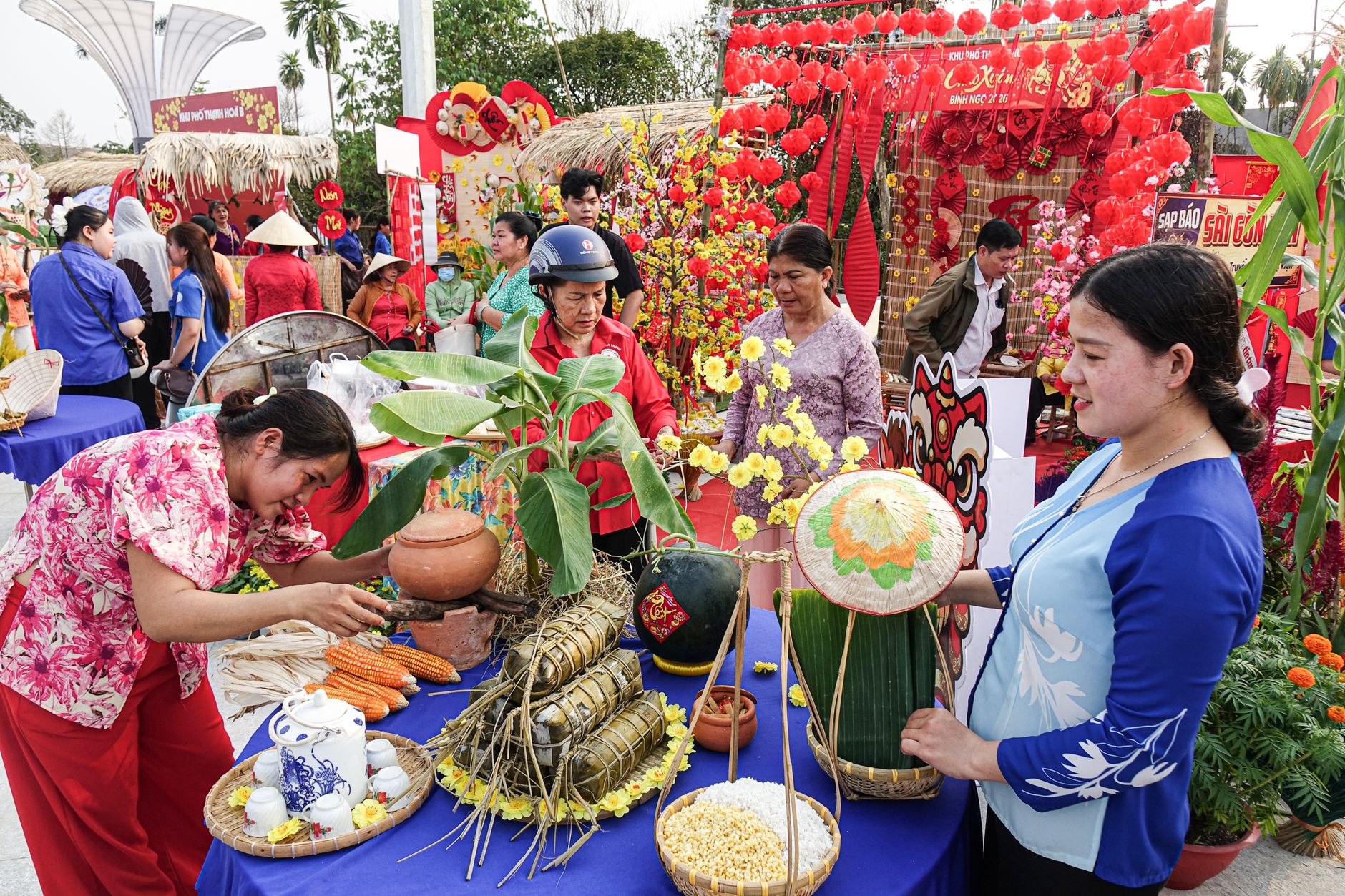
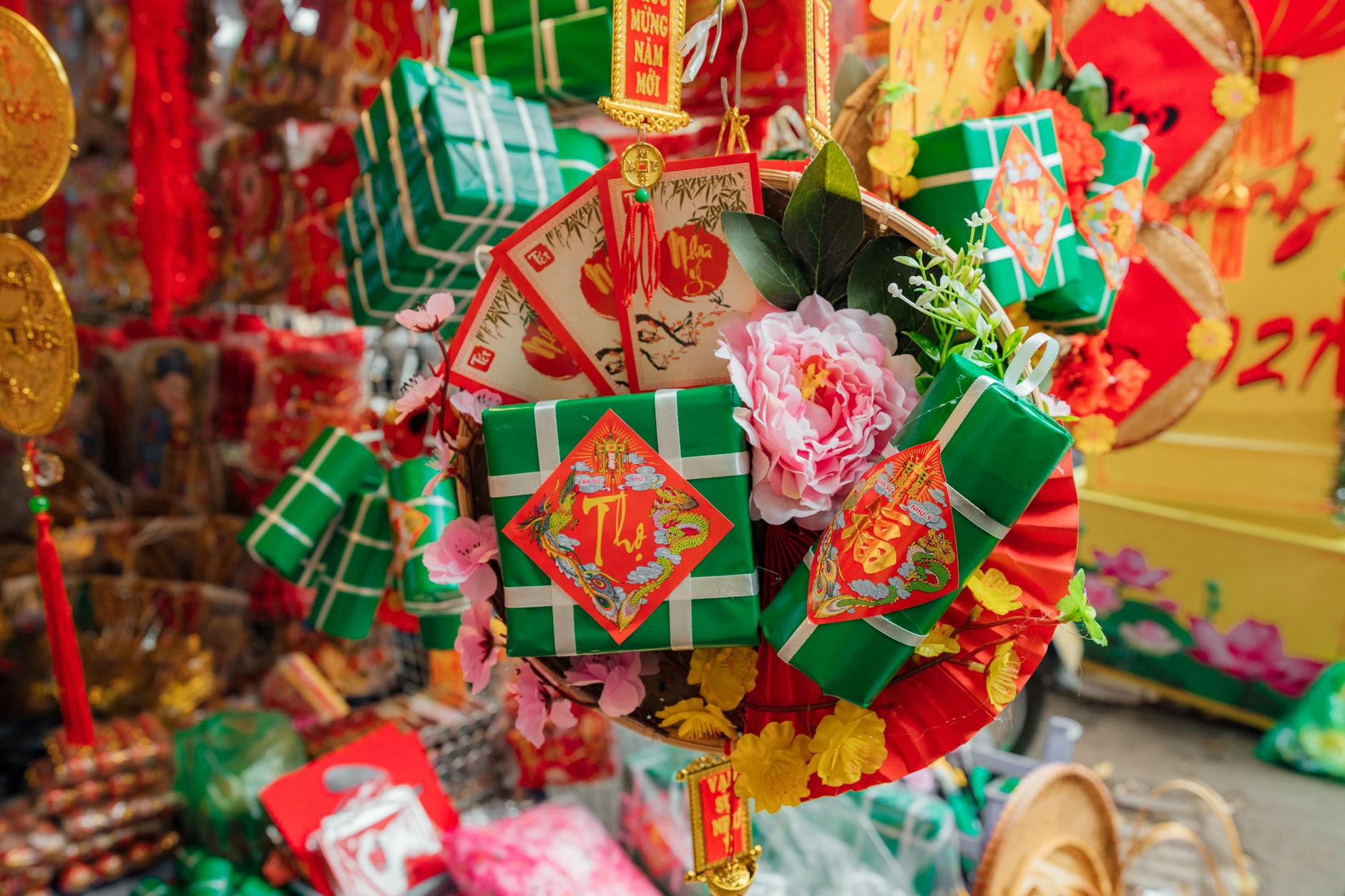
Bánh tét is a cylindrical cake of glutinous rice wrapped in banana leaf and tied tightly with bamboo strips or string. Inside, a classic savory version holds a layer of peeled mung bean and a strip of fatty pork belly, seasoned with salt, pepper and sometimes shallot.
The name points to how it is eaten. "Tét" relates to slicing or splitting, and the cake is cut into rounds rather than wedges. In some regions it is also called bánh đòn, meaning "log cake," a reference to its shape.
Sizes vary by maker and occasion. Most cakes run roughly 20 to 40 cm long and weigh between 0.5 and 2 kg, with Tết versions on the larger end and small gift packs much lighter.
The taste is dense and chewy, mildly salty from the rice, creamy from the bean layer and rich from the pork fat that melts into both during the long boil. It belongs to southern and central Vietnam, where it appears on ancestor altars, at family gatherings and at market stalls.
Bánh tét vs bánh chưng: the real differences
Both cakes use the same three core ingredients: glutinous rice, mung bean and pork. The difference is shape, leaf, region and ritual. This is the question most travelers ask first, and the answer is more than "same thing, different shape."
| Feature | Bánh tét | Bánh chưng |
|---|---|---|
| Shape | Cylinder or log | Square |
| Wrapping leaf | Banana leaf | Lá dong |
| Region | South and center | North |
| Typical boiling time | 5 to 8 hours | 8 to 12 hours |
| How it is cut | String or knife, into rounds | Knife, into squares |
| Typical fillings | Pork and mung bean, banana, black bean, colored rice | Pork and mung bean, sometimes with pepper |
| Color and aroma | Pale green from banana leaf, faint leaf scent | Deeper green, stronger leaf aroma |
The practical result is that bánh tét slices into neat rounds, which makes it easier to serve a crowd, while bánh chưng cuts into squares that hold their shape on a plate.
Look-alikes that get confused
Markets sell several leaf-wrapped cakes that look similar at a glance. Bánh ú is a small triangular bundle, often sweet. Bánh ít is a smaller sticky rice cake, sometimes with a savory filling. Bánh giò is a pork and wood-ear mushroom roll wrapped in banana leaf, but it is made with rice flour, not glutinous rice, and it is steamed rather than boiled. If the stall label is unclear, ask what is inside before buying.
Why the south wraps cylinders: origin, history and meaning
There is no single documented origin for the cylindrical shape. Anyone who tells you otherwise is repeating a story, not a fact.
Practical explanations
Banana leaves grow everywhere in the Mekong Delta, so they were the obvious wrapper. A cylinder is also easier to wrap by hand than a square, easier to tie, easier to carry in a basket or on a motorbike, and easier to slice in a hot climate where you want to serve a piece quickly and move on.
Folk theories and legends
Two stories circulate. One ties the shape to the southward settlement of Vietnamese people, the Nam tiến, and the adaptation of a northern cake to southern materials. The other links both cakes to the Lang Liêu legend, in which a prince wins the throne by offering rice cakes to his father. Treat both as tradition and folklore, not verified history.
Cultural role
Bánh tét sits on the ancestor altar during Tết. Families wrap and boil it the night before, and the "pot of bánh tét" simmering for hours is a memory many southerners describe when asked about the holiday. It also appears at death anniversaries and at Khmer festivals in the delta, where a similar cylindrical cake is part of the celebration.
Types of bánh tét and regional variants
The classic savory version is only the starting point. Southern stalls sell a range of fillings, and the differences matter when you are choosing what to buy.
| Variant | Filling or color source | Region or context | Taste notes |
|---|---|---|---|
| Classic savory | Pork belly and mung bean | Everywhere in the south | Salty, rich, dense |
| Bánh tét chuối | Banana, often with coconut milk and black bean | South, common at Tết | Sweet, soft, aromatic |
| Colored rice | Nếp cẩm (purple) or lá cẩm, rau ngót or pandan (green) | South and center | Same filling, faint vegetal note |
| Black bean | Black beans instead of mung bean | South | Earthier, less creamy |
| Chay (vegetarian) | Mung bean or black bean, no pork | Temples and vegetarian shops | Lighter, less fatty |
| Modern fillings | Salted duck egg yolk, Chinese sausage, dried shrimp | Urban shops, gift sets | Richer, saltier, pricier |
| Trà Cuôn style | Pork and mung bean, longer and thinner | Trà Vinh, Mekong Delta | Firmer, more peppery |
Trà Cuôn
Trà Cuôn is a locality in Trà Vinh province in the Mekong Delta, known for a style that spread through bus drivers and travelers who carried it up and down the country. Since the 2025 provincial merger, Trà Vinh has been folded into Vĩnh Long province, so expect to see both names on signs and packaging.
Central Vietnam and the Khmer cylindrical cake
Central Vietnam has its own versions, generally smaller and firmer. In the Mekong Delta, Khmer communities make a cylindrical sticky rice cake that is close in technique but different in name and festival context. Verify the current Khmer name and the exact festival before you repeat it as fact.
How bánh tét is eaten
This is the part English coverage skips. Here is how to actually eat the thing.
Cutting and peeling
The traditional method uses the bamboo strip that ties the cake. Peel the banana leaf back partway, loop the strip around the exposed end of the cake, then pull it tight to slice off a round. Repeat down the length. A sharp knife works just as well and is easier for a first-timer. Cut rounds about 1 to 1.5 cm thick.
What it is served with
At a southern Tết table, bánh tét sits next to pickled shallots (củ kiệu), pickled vegetables, braised pork with eggs and bitter melon soup. Chả lụa (Vietnamese ham) is common too, and some families dip the cake in sugar or eat it with a sprinkle of salt and pepper.
Fried bánh tét
Pan-fry slices in a little oil until the outside is crisp and the inside is soft. This is a standard breakfast or snack, and it is the best way to use up leftovers. Sweet banana versions fry well too, and turn almost caramelized at the edges.
What to expect as a first-timer
One thick slice is a meal on its own. The cake is heavy: rice, bean and pork belly together make it filling, and the fat content is high. Start with one slice and see how you feel. If you are counting calories, treat it as a full meal rather than a side.
If you buy bánh tét from a stall and plan to eat it later, ask them not to seal it in a plastic bag. Trapped moisture and heat are what turn it sour.
When to try bánh tét: Tết and the rest of the year
When Tết falls
Tết follows the lunar calendar and lands between late January and mid-February. The next dates are 6 February 2027, then 26 January 2028. Wrapping and boiling happen in the days before, and many shops close for several days afterward. Street stalls selling bánh tét pop up in southern cities in the weeks before the holiday.
Year-round availability
Markets, supermarkets and roadside stops sell bánh tét all year in the south, because it keeps reasonably well and travels well. In the north, availability is thinner and the cake is treated as a specialty or a Tết import.
Other occasions
Beyond Tết, bánh tét appears at death anniversaries (giỗ) and at Khmer festivals in the delta. The exact festival calendar varies by community, so check locally if you want to see it made.
Where to try bánh tét in Vietnam
No named businesses here, just the situations where you will find a good one.
Southern cities
Traditional markets are the best bet. Look for stalls with a stack of green cylinders and a queue of locals. During Tết, pop-up stalls appear on sidewalks and in supermarket car parks. Supermarket chains carry vacuum-packed versions that travel well but taste flatter.
Mekong Delta towns, including Trà Vinh
Bus stops and roadside sellers in the delta are where the regional styles live. Village makers sell from their homes, and if you are visiting a family during Tết, you will almost certainly be offered a slice. Accept it. It is the point of the visit.
Central Vietnam
Local variations exist, generally smaller and firmer. Ask at markets in Hue and Da Nang, and confirm what is inside before buying.
Hanoi and the north
Availability is limited. Bánh chưng dominates, so bánh tét is a specialty item. You will find it in southern-style shops and in some supermarkets, but the choice is thin.
Cooking-class option
Mekong Delta homestays and cooking classes sometimes include a wrapping demonstration. This is a good way to see the technique, and it is usually part of a broader market-and-cook session.
How much does bánh tét cost in 2026?
Prices are estimates, since they shift with the Tết surge and location. The conversion used here is about 26,000 VND per USD.
| Type or size | Price in VND | Price in USD | Notes |
|---|---|---|---|
| Small, plain, market stall | 60,000 to 90,000 | $2.30 to $3.50 | Simple pork and bean, no extras |
| Standard, 1 kg | 100,000 to 150,000 | $3.80 to $5.80 | Most common size |
| Large, Tết size | 180,000 to 250,000 | $6.90 to $9.60 | Often 1.5 to 2 kg |
| Sweet banana | 70,000 to 120,000 | $2.70 to $4.60 | Depends on size and coconut milk |
| Modern fillings | 150,000 to 300,000 | $5.80 to $11.50 | Egg yolk, sausage, gift packaging |
| Fried slice, street portion | 15,000 to 30,000 | $0.60 to $1.20 | Breakfast or snack |
What drives the price
Size and weight matter most. Filling comes next: salted egg yolk and sausage push the price up fast. Location matters too, since tourist areas charge more than local markets. And Tết adds a surge, sometimes 20 to 40 percent, as demand spikes and labor gets scarce.
How to choose and order a good bánh tét
Quality signs
A good cake is firm and tightly wrapped, with an intact leaf and no wet spots. It should smell faintly of banana leaf and rice, not sour or sharp. The cut face should show an even bean layer and clean rice, with no slime and no mold. If the leaf is torn or the string is loose, skip it.
Ordering phrases
| English | Vietnamese | Rough pronunciation |
|---|---|---|
| One bánh tét, please | Một bánh tét | moht banh tet |
| Is it vegetarian? | Có chay không? | koh chai khom |
| Is it sweet or savory? | Ngọt hay mặn? | ngot hai man |
| Fried, please | Chiên | chien |
| How much? | Bao nhiêu tiền? | bao nhieu tien |
Gift buying
For a gift, buy a vacuum-packed or smaller cake. It travels better, holds its shape and does not leak onto your clothes. If you are flying, check the customs rules first.
Food safety, dietary notes and taking bánh tét home
Spoilage and storage
This is a cooked rice product in a hot, humid climate, so it spoils fast. At room temperature, keep it in a dry, airy spot for 2 to 3 days and never seal it in plastic. In the fridge, it keeps about 15 days. Traditional claims of longer storage should be treated with caution. Discard it if it smells sour or looks slimy or moldy.
Health and diet
Bánh tét is high in carbohydrates and fat, which matters if you are diabetic or watching your cholesterol. It contains pork and often salted egg, so it is not halal and not vegetarian unless labeled chay. If you need to avoid pork fat, confirm with the seller before buying.
Customs and carrying it home
Pork products are restricted or banned by countries including Australia, New Zealand, the US and EU member states. Banana leaf can also trigger plant-health rules. Check your destination's biosecurity site before you pack one, and declare it if you are unsure. For general rules on what you can bring in and out, see our guide to airport arrival in Vietnam.
Making bánh tét at home: soaking, wrapping and boiling times
This is a condensed reference, not a full recipe. Recipes are everywhere; the timing is what most people get wrong.
Core quantities for one cake
About 400 g glutinous rice, 200 g peeled mung beans, 100 g pork belly, with salt, pepper and seasoning. Salt the drained rice and beans lightly before wrapping so the cake seasons through.
Soaking times
Rice about 8 hours or overnight. Mung beans about 4 hours. Rinse both well before using.
Wrapping and boiling
Overlap blanched banana leaves, roll tightly, and tie with bamboo strip or string. Submerge fully in water and boil for 6 to 8 hours, or 5 to 6 hours for smaller batches. Top up with hot water, never cold, or the rice will turn out undercooked.
Why sources disagree and common mistakes
Recipes give different times because cake size, pot size and heat source all vary. The common mistakes are undercooked rice (sượng), loose wrapping that lets water in, and cold water refills that stall the cooking. If in doubt, boil longer.
FAQ
Q: What is the difference between bánh chưng and bánh tét? A: Bánh chưng is square, wrapped in lá dong leaves and associated with the north. Bánh tét is cylindrical, wrapped in banana leaves and associated with the south and center. Fillings are similar, but bánh tét is sliced with string and often has sweet or colored variants.
Q: How long should glutinous rice be soaked for bánh tét? A: Most sources say about 8 hours or overnight for the rice and about 4 hours for peeled mung beans. Boiling times vary by cake size, usually 5 to 8 hours.
Q: Which province is Trà Cuôn bánh tét from? A: Trà Cuôn is a locality in Trà Vinh province in the Mekong Delta. Since the 2025 provincial merger, Trà Vinh is part of Vĩnh Long province, so both names appear.
Q: Why does the south wrap bánh tét in a cylinder? A: There is no single documented answer. Banana leaves are plentiful in the south, and a cylinder is easy to wrap, carry and slice in a hot climate. Settlement legends exist, but they are tradition rather than verified history.
Q: How do you eat bánh tét? A: Peel the banana leaf, slice with a knife or the string method, and eat the slices plain or with pickled shallots and braised pork. It can also be pan-fried for a crisp outside.
Q: How long does bánh tét keep? A: About 2 to 3 days in a dry, airy spot without plastic, and around 15 days in the fridge. Discard it if it smells sour or looks slimy or moldy.
Q: Is there a vegetarian bánh tét? A: Yes. Ask for "bánh tét chay" (mung bean or black bean) or the sweet banana version. Confirm that no pork fat or salted egg is used.
Q: Can bánh tét be taken home on a flight? A: Pork-filled versions are often restricted or banned by customs in countries such as Australia, New Zealand, the US and the EU. Banana leaf can also trigger plant-health rules, so check your destination's rules and declare the item.
Your questions and tips
A question, an update, an experience to share? Our team reads every message before it is published.
No comments yet. Ask the first question or share a tip!