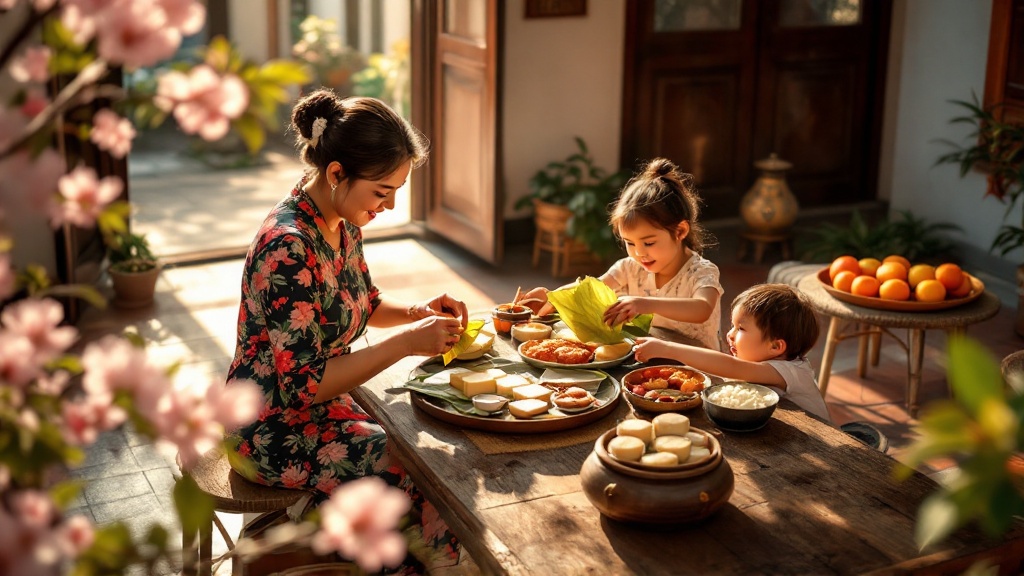
But here is what most guides get wrong: Tet food is not uniform across Vietnam. What a family serves in Hanoi looks very different from what appears on a table in Ho Chi Minh City. The dishes change by region, by family tradition, and increasingly by generation.
This guide covers what you will actually encounter during Tet, what each dish means, and how to navigate eating during the holiday as a traveler. No fluff, no romanticizing. Just practical information.
What is Tet and why does food matter so much?
Tet Nguyen Dan is the Vietnamese Lunar New Year. It typically falls between late January and mid-February. In 2026, Tet runs from February 17 to February 20, though preparations start a week earlier and the holiday atmosphere lingers for several days after.
The holiday divides into three phases. Tat nien is the preparation period before New Year's Eve. Giao thua is the transition at midnight. Tan nien is the first days of the new year. During all three phases, food plays a specific role.
Families prepare massive quantities of food before Tet because cooking stops during the holiday itself. The tradition comes from the belief that using fire and knives during the first days of the new year brings bad luck. So everything must be cooked in advance and designed to keep at room temperature for days.
This practical need shaped the entire Tet menu. Dishes like banh chung, thit kho, and pickled vegetables were developed precisely because they last without refrigeration. What started as necessity became tradition.
Traveler warning: Most Vietnamese restaurants and street food stalls close for at least 3-5 days during Tet. Plan accordingly. Hotels and tourist-area restaurants may remain open but with limited menus and higher prices.
The five essential dishes you will see everywhere
Some dishes appear on nearly every Tet table across Vietnam, regardless of region. These are the foods that define the holiday.
Banh chung and banh tet: the foundation of Tet
Banh chung is a square sticky rice cake from Northern Vietnam. Banh tet is its cylindrical counterpart from the South and Central regions. Both are made from glutinous rice, mung beans, and pork belly, wrapped in banana leaves, and boiled for 6-8 hours.
The square shape of banh chung represents the Earth. The cylindrical shape of banh tet represents continuity and the wrapping of generations. Both carry deep symbolic weight.
You can eat banh chung several ways. Cold, sliced directly from the cake. Fried until crispy on the outside. Or warmed and served with sugar. It keeps for up to a week at room temperature, which is why families make so much of it.
Pro tip: If you find banh chung fried in a restaurant during Tet, order it immediately. The crispy exterior with the soft sticky rice interior is the best way to eat this dish.
Thit kho trung: caramelized pork belly with eggs
Pork belly braised in coconut water with hard-boiled eggs. This is the signature Tet dish of Southern and Central Vietnam. The eggs symbolize fertility and renewal. The golden-brown caramel color represents wealth and prosperity.
The dish keeps exceptionally well. Families cook large pots of it before Tet and eat it over several days, often at room temperature. The fat from the pork belly congeals slightly as it cools, which helps preserve it.
Boiled chicken (ga luoc)
A whole chicken boiled with ginger, served with salt, lime, and pepper. Roosters are preferred over hens for ancestral offerings. The chicken symbolizes new beginnings and is central to the ancestral altar offerings that every family performs during Tet.
Before you eat the chicken, you will likely see it on the family altar. It sits there as an offering to ancestors. After the offering period ends, the chicken is carved and served.
What to expect: If invited to a Vietnamese home during Tet, the boiled chicken will almost certainly be served. Eat some. Refusing it can be seen as rejecting good luck.
Gio lua and gio thu: Vietnamese pork rolls
Gio lua (also called cha lua) is a silky pork sausage. Gio thu (also called gio xao) is pork head cheese with wood ear mushrooms. Both are wrapped in banana leaves and steamed.
These are eaten cold, sliced thin, often with pickled vegetables. They keep well and are available year-round, but they become especially important during Tet when families prepare them in large quantities.
Mut Tet: candied fruits and seeds
Mut Tet refers to the colorful candied fruits and seeds served in decorative trays with tea. You will find candied coconut, ginger, lotus seeds, carrots, and watermelon seeds. The tray represents hospitality and wishes for a sweet year ahead.
Every home you visit during Tet will offer you mut Tet with tea. Accept it. It is a gesture of welcome and good fortune.
Regional differences: what changes from North to South
The five dishes above appear everywhere, but each region adds its own specialties. Understanding these differences helps you know what to expect depending on where you are traveling.
Northern Vietnam: heartier, colder-weather dishes
Northern Tet meals feature dishes designed for cooler weather. Thit dong is jellied pork made by boiling pig parts with mushrooms and carrots until the natural gelatin sets the mixture into a solid block. It is sliced and served cold.
Canh mang kho is dried bamboo shoot soup, a Northern specialty that takes hours to prepare. The bamboo shoots are soaked, boiled, and then simmered with pork bones. Dua hanh are pickled shallots that cut through the richness of the other dishes.
Northern Tet food tends to be less sweet than Southern versions. The flavors are simpler and more direct.
Central Vietnam: spicy, seafood-heavy, and elaborate
Central Vietnam, particularly around Hue, has an imperial culinary heritage that shows in its Tet food. Tom chua is pickled shrimp with a sour and spicy kick. Nem chua is fermented pork roll wrapped in leaves, eaten raw. Ba chi ngam mam is pork belly marinated in fish sauce.
Seafood features more prominently in Central Tet meals than in the North or South. The region's bold flavors reflect its history as the seat of the Nguyen emperors, whose court demanded elaborate and complex dishes.
Southern Vietnam: sweeter, coconut-based, and abundant
Southern Tet tables are generous and sweet. Canh kho qua is stuffed bitter melon soup, where the bitter melon is filled with ground pork and simmered in broth. The name "kho qua" sounds like "may hardships pass," making it a verbal wish for good fortune.
Thit kho tau is the Southern version of braised pork, cooked in coconut water until tender and sweet. Cu kieu are pickled leeks, similar to Northern pickled shallots but with a milder flavor.
Southern dishes use coconut water and coconut milk more than other regions. The portions are larger and the flavors sweeter.
Tet dishes by region
| Dish | Region | Key ingredients | Symbolism | When eaten |
|---|---|---|---|---|
| Banh chung | North | Glutinous rice, mung beans, pork | Earth, stability | Throughout Tet |
| Banh tet | South/Central | Glutinous rice, mung beans, pork | Continuity, family | Throughout Tet |
| Thit kho trung | South/Central | Pork belly, eggs, coconut water | Fertility, wealth | Main meals |
| Thit dong | North | Pork, mushrooms, carrots | Preservation, cold weather | Cold appetizer |
| Canh mang kho | North | Dried bamboo shoots, pork bones | Abundance | Soup course |
| Tom chua | Central | Shrimp, fermented rice | Bold flavors | Appetizer |
| Canh kho qua | South | Bitter melon, pork | Hardships passing | Soup course |
The five-fruit tray: what it is and why it matters
The mam ngu qua is a tray of five fruits placed on ancestral altars. The number five represents the five elements of Vietnamese cosmology: metal, wood, water, fire, and earth.
The fruit selection varies by region. Northern trays typically include bananas, pomelo, persimmons, kumquats, and Buddha's hand citron. Southern trays favor coconut, papaya, mango, pineapple, and custard apple.
Southern fruits are chosen for wordplay. Coconut sounds like "sufficient." Papaya sounds like "abundance." Mango sounds like "what you buy." Pineapple sounds like "prosperity." Custard apple sounds like "request." Together, the tray spells out a wish for prosperity and abundance.
What to do: If you visit a Vietnamese home during Tet, the five-fruit tray will be on the altar. Do not touch it. It is an offering, not a snack.
Lucky and unlucky foods: what to eat and what to avoid
Certain foods carry specific meanings during Tet. Some attract good fortune. Others should be avoided.
Lucky foods to seek out
Xoi gac is red sticky rice made with gac fruit, which gives it a bright red color. Red symbolizes luck and prosperity. Spring rolls (nem ran in the North, cha gio in the South) are golden and cylindrical, representing wealth. Whole fish represents abundance. Sticky rice dishes in general are lucky because the stickiness metaphorically "holds" good fortune.
Foods to avoid
Squid and duck are avoided in Northern Vietnam during Tet. Squid because it swims backward, which suggests regression. Duck because its name in Vietnamese sounds negative. Shrimp is avoided in some Southern regions for the same backward-swimming reason.
Bitter or sour foods are avoided on New Year's Day itself. The first meal of the new year should be sweet or savory, not bitter.
Note for travelers: These taboos are less strict for foreign visitors. But showing awareness of them demonstrates respect for the culture.
What travelers need to know about eating during Tet
This is the practical section that most guides skip. Here is what it is actually like to find food during Tet as a traveler.
Restaurants and street food availability
Most restaurants close for at least 3-5 days during Tet. Street food stalls largely disappear. Hotels and tourist-area restaurants may remain open but with limited menus and higher prices. Expect prices to be 20-30% higher than usual.
Hotels often offer Tet set menus for guests. These are your most reliable option. If you are staying in a hotel, ask about their Tet dining arrangements before you arrive.
Visiting Vietnamese homes during Tet
If invited to a Vietnamese home during Tet, you are expected to eat. Refusing food can be seen as rejecting good luck. Try everything that is offered. Compliment the food. Bring a small gift: fruit, candied treats, or tea.
Do not refuse the first offer of food or drink. The host will offer multiple times. Accept the first offer graciously.
Gift warning: Do not give sharp objects, clocks, or anything in sets of four. The number four sounds like the word for death in Vietnamese.
What to order if you find an open restaurant
If you find a restaurant open during Tet, expect Tet-specific dishes. Banh chung, thit kho, and pickled vegetables are the most likely options. Noodle soups like bun thang may also appear, made from leftover boiled chicken.
How Tet food is prepared: the family ritual
The preparation of Tet food is a communal activity that happens in the days before Tet. Making banh chung is a multi-generational event. Grandparents, parents, and children gather to wrap the cakes, tie them with bamboo strings, and cook them overnight in large pots.
This preparation is as important as the eating. It is when families bond, stories are shared, and traditions are passed down. If you arrive in Vietnam during the week before Tet, you might see families preparing these foods in their homes or even in public spaces.
The symbolism behind Tet foods: more than just flavor
Every Tet dish carries meaning. Square and round shapes represent earth and sky, yin and yang. The color red appears in xoi gac, mut do, and other dishes to attract luck. Whole animals like chicken and fish represent completeness and family unity. Sticky rice symbolizes cohesion and togetherness. Pickled vegetables represent the transition from old to new. Sweet foods attract good spirits and symbolize a sweet year ahead.
Understanding this symbolism transforms the experience of eating Tet food from simple consumption into cultural appreciation.
Modern Tet: how younger generations are changing the menu
Younger Vietnamese families are introducing new dishes to Tet celebrations while keeping traditional staples. Store-bought banh chung is replacing homemade versions in many urban households. Hot pot (lau) has become increasingly popular as a Tet meal, especially in Southern Vietnam.
Fusion dishes appear on some tables, blending Vietnamese traditions with international influences. But the core symbolic dishes remain essential. Even the most modern family will still serve banh chung, boiled chicken, and mut Tet.
Tet drinks: what to sip during the holiday
Green tea (tra) is the traditional Tet drink, served with mut Tet to guests. Sticky rice wine (ruou nep) is a homemade alcoholic drink that appears on many tables. Beer (bia) has become increasingly popular, especially among younger generations.
If you visit a Vietnamese home during Tet, you will likely be offered tea first, then something stronger. Accept both graciously.
FAQ
Q: What do Vietnamese eat during Tet? A: Vietnamese eat a range of symbolic dishes during Tet, including banh chung (square sticky rice cake), thit kho trung (caramelized pork with eggs), boiled chicken, pork rolls, pickled vegetables, and candied fruits. The specific dishes vary by region, with Northern, Central, and Southern Vietnam each having distinct traditions.
Q: What is the lucky food for Vietnamese New Year? A: Red sticky rice (xoi gac) is considered especially lucky because its red color symbolizes good fortune. Other lucky foods include spring rolls for their golden color representing wealth, whole fish for abundance, and sticky rice dishes for their ability to metaphorically "hold" good luck.
Q: What are the 5 fruits in Tet? A: The five-fruit tray (mam ngu qua) varies by region. In Northern Vietnam, common fruits include bananas, pomelo, persimmons, kumquats, and Buddha's hand citron. In Southern Vietnam, the tray often includes coconut, papaya, mango, pineapple, and custard apple, chosen for wordplay on positive wishes.
Q: What three foods are you supposed to eat on New Year's day? A: There is no strict rule of three specific foods, but most Vietnamese families include banh chung (or banh tet), boiled chicken, and a braised pork dish on New Year's Day. These three represent earth, new beginnings, and prosperity respectively.
Q: Is it safe to eat street food during Tet? A: Most street food stalls close during Tet, so finding street food can be difficult. If stalls are open, the same food safety standards apply as any other time of year. However, prices may be higher and selection more limited.
Q: Can I find vegetarian Tet food in Vietnam? A: Vegetarian options are limited during Tet, as most traditional dishes center on pork and chicken. Some Buddhist families prepare vegetarian versions of Tet dishes, and larger cities may have vegetarian restaurants open. Travelers with dietary restrictions should plan ahead and consider hotel restaurants.
Q: What should I bring if invited to a Vietnamese home during Tet? A: Appropriate gifts include a box of candied fruits (mut Tet), fresh fruit, tea, or wine. Avoid giving sharp objects, clocks, or anything in sets of four. Red envelopes with money (li xi) are given to children and unmarried adults.