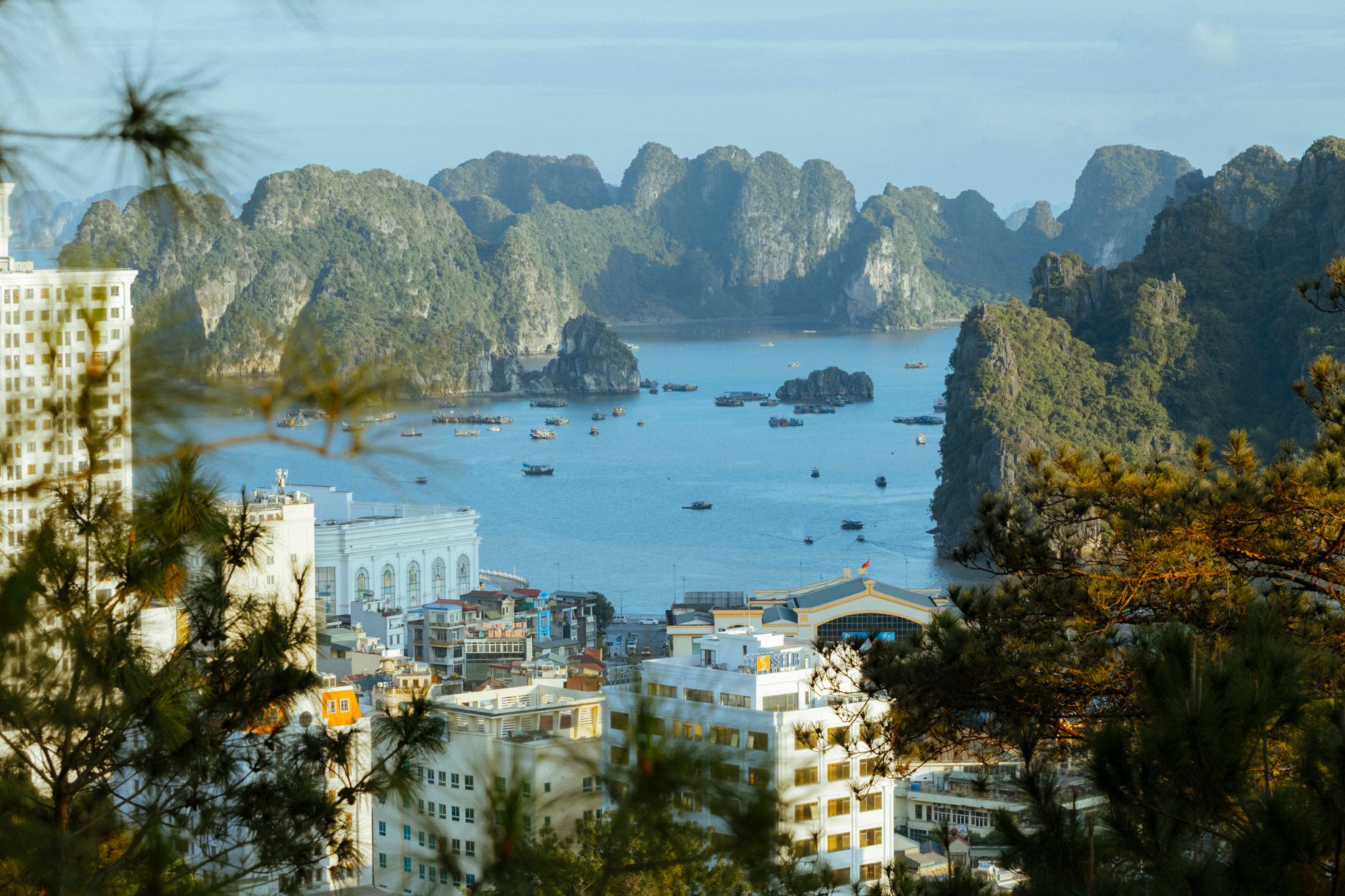
Halong Bay is one of the most beautiful places on earth. It is also one of the most crowded. Most travel guides tell you when to go. This one tells you when to stay away, why, and what to do if your dates are fixed.
What this guide covers and who it is for
This is not a "best time to visit" list. It is a practical guide to avoiding the worst experiences in Halong Bay. The advice targets independent travelers, couples, families, and photographers who value peace over checking boxes.
If you want to see the famous karsts without sharing your view with hundreds of other boats, read on. If you have fixed dates and need to know what you are getting into, this guide will help you prepare.
The three problems that ruin a Halong Bay trip
Three overlapping factors turn a dream trip into a disappointment: crowds, weather, and junk boat traffic.
Crowds mean long queues at caves, packed viewpoints, and noisy boats. Weather means rain that cancels excursions, fog that hides the karsts, and storms that ground vessels. Junk boat traffic means the bay becomes a parking lot of vessels jostling for position at popular stops.
Most advice covers one of these problems. The real trap is when two or three combine. July, for example, brings peak crowds, peak rain, and peak boat congestion simultaneously. Understanding how these factors interact is the key to planning a good trip.
When crowds peak: the calendar of chaos
Crowds in Halong Bay follow a predictable pattern. The worst periods are:
- Tet (Lunar New Year): Late January or early February. The entire country travels. Halong Bay fills with domestic tourists. Everything is booked months in advance.
- Vietnamese summer holidays: June through August. Schools close. Families flock to the bay. Weekends are especially bad.
- Chinese Golden Week: First week of October. Chinese tourists arrive in large numbers. Boat traffic spikes.
- Christmas and New Year: December 20 to January 5. International tourists combine with domestic visitors.
- Reunification Day (April 30) and Labor Day (May 1): A long weekend that triggers a domestic travel surge.
Pro tip: Even during these periods, weekday visits are significantly quieter than weekends. If you must travel during a holiday, book a Monday through Wednesday cruise.
The worst months for weather: rain, fog, and storms
Halong Bay's weather is not terrible year-round. But certain months are genuinely problematic.
January to March: Fog season. Visibility drops to near zero on many days. The karsts disappear into a grey wall. Photographers will be disappointed. Temperatures range from 15°C to 22°C (59°F to 72°F), too cool for swimming.
June to September: Rainy season. Monthly rainfall averages 200-300mm (8-12 inches). July and August are the wettest. Afternoon thunderstorms are common. Humidity sits at 80-85%.
July to September: Typhoon season. Northern Vietnam gets hit by 2-4 typhoons annually. These can force cruise cancellations and port closures. August has the highest risk.
October and November: Transition months. Weather improves significantly. Rain decreases. Visibility returns. These are the best months for clear skies.
April, May, September, October, November: The sweet spot. These months balance good weather with manageable crowds.
Pro tip: Check the Vietnam National Hydro-Meteorological Service website before booking. Live webcams in Halong City show real-time conditions.
Junk boat traffic: when the bay becomes a parking lot
On peak days, over 500 vessels operate in Halong Bay. Hundreds concentrate in the central zone around Sung Sot Cave, Titop Island, and Luon Cave.
The "boat jam" phenomenon is real. During holidays, boats queue for 30-45 minutes to dock at popular stops. The experience resembles a parking lot more than a natural wonder.
The worst times for boat traffic:
- Weekends year-round
- Public holidays
- Peak season afternoons (12:00 PM to 3:00 PM)
- Any day during Tet and Golden Week
The difference between zones:
- Central Halong Bay: Most congested. Hundreds of day boats and overnight cruises compete for space.
- Bai Tu Long Bay: Quieter. Fewer operators. Similar scenery.
- Lan Ha Bay: Least crowded. Accessible from Cat Ba Island. Fewer restrictions on routes.
Pro tip: Book a cruise that operates in Bai Tu Long Bay or Lan Ha Bay. You will see the same limestone karsts with 80% fewer boats.
The worst time of day: why afternoon is a mistake
Crowds in Halong Bay are not constant throughout the day. They follow a predictable rhythm.
8:00 AM to 10:00 AM: Quiet. Overnight cruises are finishing breakfast. Day boats have not yet arrived.
10:00 AM to 12:00 PM: Crowds build. Day boats from Hanoi arrive. Popular stops get busy.
12:00 PM to 3:00 PM: Peak congestion. This is when the bay is most crowded. Day trippers pack into caves and viewpoints. Boat traffic is heaviest.
3:00 PM to 5:00 PM: Day boats depart. Crowds thin. Late afternoon light improves.
5:00 PM to 7:00 PM: Quiet. Overnight cruises have the bay mostly to themselves. Sunset views are excellent.
If you are on a day trip, you will experience the worst hours. If you are on an overnight cruise, you can avoid the midday chaos by scheduling cave visits for early morning or late afternoon.
The worst cruise type: day trips and their hidden costs
Day trips from Hanoi are the most popular option. They are also the worst for crowding.
Day trip realities:
- 4 hours of driving each way from Hanoi
- 4-5 hours on the bay, mostly during peak congestion
- Rushed itineraries: 30 minutes at each stop
- Lunch served on a crowded boat
- No sunset, no sunrise, no quiet moments
Overnight cruise benefits:
- Access to the bay during quiet hours
- Slower pace at each stop
- Sunset and sunrise views
- Kayaking and swimming when fewer boats are around
- Better food and service
Comparison table: Day trip vs. overnight cruise
| Feature | Day trip | Overnight cruise |
|---|---|---|
| Crowd exposure | Peak hours only | Quiet morning and evening |
| Itinerary flexibility | Fixed and rushed | Adjustable |
| Cost per person | 800,000-1,500,000 VND ($33-62) | 2,500,000-6,000,000 VND ($103-247) |
| Best for | Budget travelers with limited time | Travelers who value experience over cost |
| Sunset/sunrise | No | Yes |
Pro tip: If you only have one day, skip the day trip to Halong Bay. Instead, visit Ninh Binh, which offers similar scenery without the boat traffic. Read Why Ninh Binh Crushes Halong Bay for a Truly Quiet Escape for details.
The worst routes: where everyone goes
Certain routes in Halong Bay are chronically overcrowded. Knowing which areas to avoid helps you plan a better trip.
Most congested areas:
- Sung Sot Cave (Surprise Cave): The most visited cave. Queues can exceed 45 minutes during peak season.
- Titop Island: Famous for its viewpoint. The climb is short, but the trail gets packed.
- Luon Cave: A small cave accessed by kayak or bamboo boat. Bottlenecks are common.
- Central Halong Bay: The area around these three stops sees the heaviest boat traffic.
Quieter alternatives:
- Bai Tu Long Bay: Same geology, fewer boats. Cruises from Hon Gai port access this area.
- Lan Ha Bay: Connected to Halong Bay but less regulated. Accessible from Cat Ba Island. Read our Lan Ha Bay Cruise from Cat Ba guide for details.
- Cat Ba Island: Use this as your base for exploring Lan Ha Bay. See Cat Ba Island: Your Unpolished Base for Ha Long Bay Without the Crowds for practical advice.
Route comparison table:
| Route | Crowd level | Scenery quality | Accessibility | Recommended for |
|---|---|---|---|---|
| Central Halong Bay | Very high | Excellent | Easy from Halong City | First-timers who accept crowds |
| Bai Tu Long Bay | Low | Excellent | Moderate from Halong City | Travelers seeking quiet |
| Lan Ha Bay | Low | Very good | Moderate from Cat Ba | Independent travelers |
The worst holidays: specific dates to avoid in 2026
Here are the exact dates for 2026 holidays that will cause severe crowding in Halong Bay.
| Holiday | Exact dates 2026 | Impact level | Booking advice |
|---|---|---|---|
| Tet (Lunar New Year) | February 17-23 | Extreme | Book 3 months ahead or avoid |
| Hung Kings Festival | April 25-26 | High | Expect sold-out cruises |
| Reunification Day | April 30 | Very high | Combine with Labor Day rush |
| Labor Day | May 1 | Very high | Long weekend crowds |
| National Day | September 2 | High | Domestic travel peak |
| Chinese Golden Week | October 1-7 | Very high | Chinese tourist surge |
| Christmas | December 24-25 | High | International peak |
| New Year | December 31-January 2 | High | Combined domestic and international |
During these periods, prices increase 30-50%. Availability drops sharply. If you must travel on these dates, book at least three months in advance.
Pro tip: Tet is particularly problematic. Many businesses close for the holiday. Restaurants, shops, and some cruise operators shut down. Read Tet in Vietnam: The Closure Trap That Ruins Tourist Trips for a full explanation.
The worst weather scenarios: when to cancel or reschedule
Some weather conditions genuinely warrant changing your plans.
Typhoon warnings: If a typhoon is forecast for northern Vietnam, do not book a cruise. Operators will cancel trips. You will get a refund or reschedule, but you will lose time. July through September carry the highest risk. Read Is it safe to travel to Vietnam during typhoon season? for detailed advice.
Dense fog with zero visibility: January through March bring fog that reduces visibility to under 100 meters. You will not see the karsts. If your main goal is photography or sightseeing, reschedule.
Extreme heat waves: June and July can bring temperatures above 38°C (100°F) with high humidity. On-boat air conditioning helps, but cave visits become uncomfortable.
What to do if conditions are bad:
- Book cruises with flexible cancellation policies (24-48 hours notice)
- Purchase travel insurance that covers weather-related cancellations
- Check the forecast 3-5 days before departure
- Have a backup plan: Ninh Binh, Mai Chau, or Phong Nha
Pro tip: Most reputable cruise operators offer free rescheduling if weather forces cancellation. Ask about this policy before booking.
The hidden cost of peak season: prices and availability
Peak season pricing in Halong Bay is aggressive. Here is what to expect.
Low season (May, June, September, November):
- 2-day/1-night cruise: 2,500,000-4,000,000 VND ($103-165) per person
- 3-day/2-night cruise: 4,500,000-7,000,000 VND ($185-288) per person
Peak season (Tet, Golden Week, Christmas/New Year):
- 2-day/1-night cruise: 4,000,000-6,500,000 VND ($165-268) per person
- 3-day/2-night cruise: 7,000,000-11,000,000 VND ($288-453) per person
The price difference is 30-50%. You pay more for less: crowded boats, rushed itineraries, and stressed staff.
Booking windows:
- Low season: 2-4 weeks ahead is usually fine
- Shoulder season: 4-6 weeks ahead
- Peak season: 3 months ahead minimum
Pro tip: Budget travelers often end up paying more during peak season because they book late and accept overpriced last-minute options. Plan ahead or travel off-peak.
How to check conditions before you go: tools and signals
Before booking, check these resources:
- Vietnam National Hydro-Meteorological Service: Official weather forecasts and warnings
- Live webcams in Halong City: Show real-time visibility and boat traffic
- TripAdvisor forums: Recent reviews mention current conditions
- Cruise operator websites: Many post weather updates
What to ask cruise operators:
- "How many boats operate on your route?"
- "What is your cancellation policy for bad weather?"
- "Do you offer rescheduling without penalty?"
- "What alternative routes do you use if central Halong Bay is crowded?"
Pro tip: Operators that are transparent about boat traffic and weather are more likely to provide a good experience. Avoid companies that dodge these questions.
The honest verdict: should you skip Halong Bay entirely?
For some travelers, at some times, Halong Bay is not worth the trip.
Skip Halong Bay if:
- You have only one day and want a peaceful experience
- You are traveling during Tet or Golden Week
- Your main goal is photography and you need clear skies
- You dislike crowds and queuing
Better alternatives:
- Ninh Binh: Similar karst scenery on rivers. Fewer tourists. Read Why Ninh Binh Crushes Halong Bay for a Truly Quiet Escape.
- Bai Tu Long Bay: Same geology as Halong Bay. 80% fewer boats.
- Lan Ha Bay: Accessible from Cat Ba Island. Quieter routes. See Lan Ha Bay Cruise from Cat Ba.
- Cat Ba Island: A base for exploring Lan Ha Bay without the crowds. Read Cat Ba Island Accommodation: The Complete Guide for 2026.
- Phong Nha: Cave systems that rival Halong Bay's scenery. Read Is Phong Nha worth visiting in 2026?.
Halong Bay is beautiful. But beauty does not guarantee a good experience. The right timing, the right route, and the right expectations make the difference between a trip you treasure and one you regret.
FAQ
Q: When to avoid Halong Bay?
A: The worst periods are Tet (February 17-23 in 2026), Vietnamese summer holidays (June-August), Chinese Golden Week (October 1-7), and Christmas/New Year. July and August combine peak crowds with peak rain and storm risk.
Q: Which Halong Bay is less crowded?
A: Bai Tu Long Bay and Lan Ha Bay are significantly less crowded than central Halong Bay. Both offer similar limestone scenery with a fraction of the boat traffic. Lan Ha Bay is accessible from Cat Ba Island.
Q: What is the best month to go to Halong Bay?
A: April, May, September, October, and November offer the best balance of good weather and manageable crowds. These months avoid the worst rain, fog, and holiday rushes.
Q: Is it always overcast in Halong Bay?
A: No. Overcast conditions are common from January to March (fog season) and during the rainy season (June-September). April, May, October, and November offer the clearest skies on average.
Q: Can cruises be canceled due to weather?
A: Yes. Typhoons and strong storms between July and September can force cancellations. Operators typically offer rescheduling or refunds. Travel insurance is recommended during these months.
Q: Are weekends worse than weekdays in Halong Bay?
A: Yes. Weekend crowds are noticeably larger, especially during summer months when domestic tourists arrive. Weekday cruises offer quieter experiences and sometimes lower prices.
Q: How many boats are on the bay at peak times?
A: On peak days, over 500 vessels operate in Halong Bay, with hundreds concentrated in the central zone. During holidays, boat traffic at popular stops can create visible congestion.
Q: Is Halong Bay worth visiting in July?
A: Only for travelers who prioritize warm swimming water and don't mind rain, humidity, and crowds. July combines the worst weather risks with peak domestic tourism. Alternatives like Lan Ha Bay are less affected.