This article is general travel information, not medical advice. Diagnosis and treatment choices belong to a licensed doctor or dentist who has examined you.
What people travel to Vietnam for
Foreigners plan non-emergency care in Vietnam for a fairly narrow set of reasons. The list below describes what is available at licensed facilities, not what is better or worse than at home.
Dental work
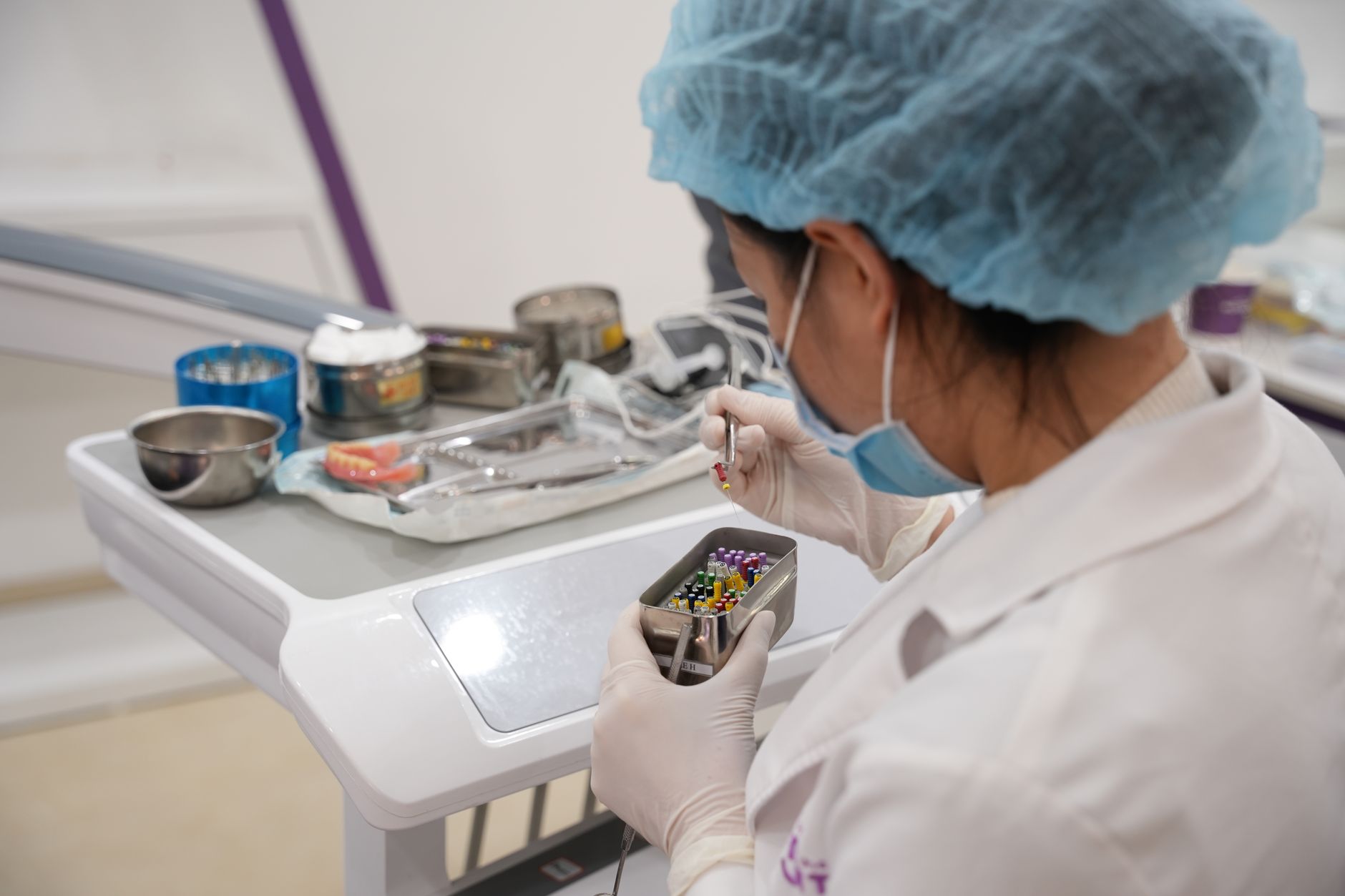
Dental care is one of the most common reasons for a treatment trip to Vietnam, from single crowns to full implant cases. Implants, crowns, timelines and costs are covered in the site's dental treatment guide, so this article does not repeat them.
For clinics checked against embassy lists and licence registers, see our pages on dentists in Ho Chi Minh City and dentists in Hanoi.
Health check-up packages
Many international hospitals sell fixed check-up packages, from basic blood tests to extended programmes with imaging and specialist reviews. Four practical points decide whether a package suits you: the fasting instructions, how long results take, whether a doctor reviews the results with you in person and in your language, and whether you leave with a written report plus digital copies.
More tests are not automatically better. An abnormal finding may need follow-up that you should plan for at home, and it is worth asking in advance what happens if something unexpected shows up.
Some Hanoi and Ho Chi Minh City hospitals publish their check-up packages and prices on their own websites. Prices change, so ask for a written quote. Where a facility publishes no price, ask the hospital for its current price list.
Eye care
Consultations, laser vision correction and cataract surgery are all available in the big cities. Not everyone is suitable for laser correction, and suitability is decided only after a full eye assessment by the treating ophthalmologist. Before booking, ask how many follow-up visits are expected before you leave, when flying is allowed, and who will check your eyes once you are home.
Orthopaedics and other specialist consultations
Second opinions, imaging and specialist consultations in orthopaedics, cardiology, gastroenterology and similar fields are a common reason for a shorter trip. For any surgery, ask about expected time in hospital, rehabilitation, blood clot risk on long flights, and the date the doctor will clear you to fly. Major surgery can turn a two-week trip into a much longer stay, which is why the visa section below matters.
Fertility services
Assisted reproduction services exist in Vietnam. Access, consent and legal rules are set by Vietnamese law, and parentage and citizenship rules in your home country also apply. Confirm both before starting.
Where to go: Ho Chi Minh City, Hanoi and the coast
Facilities with international patient services are concentrated in Ho Chi Minh City and Hanoi. Da Nang has a smaller number. Nha Trang and Phu Quoc have a few hospitals with services for foreigners, but these are mostly oriented towards visitors' urgent needs rather than complex planned care.
The practical consequence: someone planning treatment while based in a beach town will often need to travel to a big city for specialist care or follow-up. Apply the licence check below to any facility you find in a coastal destination.
International hospitals and clinics by city
Listing is not a ranking or endorsement. Names appear alphabetically within each city. Confirm languages, international desk services and referral arrangements directly with the facility.
Hanoi
Family Medical Practice Hanoi, Hanoi French Hospital, Hong Ngoc General Hospital, Raffles Medical Hanoi, Vinmec Times City International Hospital.
Ho Chi Minh City
American International Hospital (AIH), Centre Medical International (CMI), City International Hospital (CIH), Family Medical Practice, FV Hospital, Raffles Medical Ho Chi Minh City, Vinmec Central Park International Hospital.
Da Nang
Family Medical Practice Da Nang, Vinmec Da Nang International Hospital.
Hospital or outpatient clinic: why the difference matters
Some names on the list describe themselves as medical practices or clinics. Outpatient facilities typically handle consultations, check-ups and minor procedures, and refer patients elsewhere for surgery and admission. If you are planning anything requiring a general anaesthetic or an overnight stay, ask any clinic which hospital it refers to, then check that hospital as well.
| Name | City | Type as stated on official site | What to confirm directly |
|---|---|---|---|
| Family Medical Practice Hanoi | Hanoi | Medical practice | Languages, international desk, referral hospital |
| Hanoi French Hospital | Hanoi | Hospital | Languages, packages, licensed scope |
| Hong Ngoc General Hospital | Hanoi | General hospital | International desk, packages, licensed scope |
| Raffles Medical Hanoi | Hanoi | Medical practice | Languages, referral hospital, packages |
| Vinmec Times City International Hospital | Hanoi | International hospital | Languages, packages, licensed scope |
| American International Hospital (AIH) | Ho Chi Minh City | Hospital | Languages, packages, licensed scope |
| Centre Medical International (CMI) | Ho Chi Minh City | Medical practice | Languages, referral hospital, packages |
| City International Hospital (CIH) | Ho Chi Minh City | Hospital | Languages, packages, licensed scope |
| Family Medical Practice | Ho Chi Minh City | Medical practice | Languages, referral hospital, packages |
| FV Hospital | Ho Chi Minh City | Hospital | Languages, packages, licensed scope |
| Raffles Medical Ho Chi Minh City | Ho Chi Minh City | Medical practice | Languages, referral hospital, packages |
| Vinmec Central Park International Hospital | Ho Chi Minh City | International hospital | Languages, packages, licensed scope |
| Family Medical Practice Da Nang | Da Nang | Medical practice | Languages, referral hospital, packages |
| Vinmec Da Nang International Hospital | Da Nang | International hospital | Languages, packages, licensed scope |
Accreditation: what JCI means and how to check it yourself
Joint Commission International (JCI) is a US-based organisation that accredits healthcare facilities against international standards. Three limits matter. Accreditation applies to a specific facility and programme, for example a hospital or an outpatient programme. It is time-limited and renewed by survey. It does not certify individual doctors, and it does not guarantee any individual outcome.
To check, use the JCI public directory of accredited organisations: search by country, confirm the exact facility name and address match, then confirm the accreditation type and current status. A sister facility in the same group is not automatically covered.
Do not assume a hospital holds JCI accreditation because a booking platform or an article says so. Confirm the current status in the JCI directory yourself.
Vietnam's Ministry of Health also applies national hospital quality criteria, a set of 83 criteria used in domestic quality assessment. National licensing is mandatory; international accreditation is voluntary. A licence is the minimum, and accreditation is additional evidence.
How to check a facility's licence
This check applies to any planned procedure in Vietnam, including procedures this article does not cover.
1. Operating licence. Every hospital and clinic must hold an operating licence for medical examination and treatment. Depending on the facility, it is issued by the Ministry of Health or by the provincial or city Department of Health (Sở Y tế). Ask for the full legal name and licence number. Check that the services you want fall within the licensed scope, and check whether the relevant Department of Health publishes a list of licensed facilities on its official website.
2. Practitioner licence. Under the Law on Medical Examination and Treatment 2023, in force since 1 January 2024, doctors must hold a valid practising licence. Ask for the treating doctor's full name, licence number and specialty. Confirm that this named doctor will actually perform or lead your treatment.
3. Red flags.
- The facility cannot or will not give its licence number.
- The doctor cannot be named in advance.
- The procedure is offered in a spa, beauty salon or hotel room.
- You are pressured to pay a deposit quickly.
- Payment is requested to a personal bank account.
- All communication happens only through messaging apps.
- Results are "guaranteed".
- There is no written consent form in a language you understand.
- There is no clear plan for complications or emergencies.
- The price is far below what other licensed facilities quote for the same thing.
Language and international patient desks
An international patient department typically coordinates appointments, quotes, interpreters, billing and paperwork. Ask in writing whether a medically trained interpreter is present for consultations and for consent, not only at reception; whether consent forms, discharge summaries and invoices are available in English or French; and whether language support exists at night and at weekends on the ward.
English is not guaranteed at every point, such as pharmacies, night shifts or follow-up clinics. Some facilities advertise French-language services, but confirm this on the facility's own site before relying on it.
Visas for a treatment trip
Vietnam has no separate visa category for a normal short treatment visit. Most visitors use the e-visa or, where eligible, a visa exemption.
The e-visa
The e-visa is valid for up to 90 days in total, single or multiple entry. Apply only on the official portal, evisa.gov.vn, and beware of look-alike websites and third-party "visa services". Details must match your passport exactly. Check the official fee and processing time on the portal at the time you apply, since both change.
A multiple-entry e-visa can suit staged treatment, for example a first visit and a later review, but the 90 days run continuously from your first entry and are not reset by leaving and re-entering, so you must exit by the visa's expiry date.
Visa exemptions
Some nationalities can enter without a visa for a limited stay, up to 45 days for certain countries. Check your own government's travel advice and the official portal. Treatment plus recovery plus follow-up can exceed an exemption period, in which case an e-visa is the safer starting point.
| Option | Maximum stay | Entries | Where to apply or check | When it fits a treatment trip |
|---|---|---|---|---|
| E-visa, single entry | Up to 90 days | One | evisa.gov.vn | One procedure with follow-up inside the window |
| E-visa, multiple entry | Up to 90 days in total | Several | evisa.gov.vn | Staged treatment or a review trip |
| Visa exemption, where eligible | Up to 45 days for certain nationalities | Usually one | Official portal and your government's travel advice | Short consultations only |
When treatment runs longer than your visa
A stay beyond your permitted period requires a new visa or an extension through official immigration channels. Do not assume an extension will be granted. Ask the hospital in advance whether it can provide supporting documents. Overstaying causes problems at exit. Build buffer days into the visa length from the start.
Insurance: what travel cover does not pay for
General travel cover is explained in the site's travel insurance guide, so this section covers only the gaps that matter for planned care.
What standard travel insurance excludes
Standard travel insurance excludes planned or elective treatment. It usually also excludes complications arising from elective care, and often any condition linked to the reason for travel. Read the exclusions in your own policy wording and ask the insurer in writing.
Direct billing
Some international hospitals have direct billing arrangements with certain insurers. These apply to covered emergencies, not planned treatment. Ask the hospital and the insurer about direct billing for emergencies only, and expect to pay for planned care yourself.
Complications and home cover
Specialist medical-complications insurance exists in some markets; ask an insurer directly. If you hold health insurance at home, ask whether follow-up care for treatment received abroad is covered.
| Situation | Standard travel insurance usually | What to do |
|---|---|---|
| Planned treatment | Excluded | Budget to pay the facility directly |
| Complication of elective care | Usually excluded | Ask the insurer in writing before booking |
| Unrelated emergency during the trip | Covered, subject to policy terms | Ask about direct billing at the hospital |
| Follow-up at home | Depends on your home health cover | Check with your home insurer before travel |
Payment, quotes and deposits
Get a written, itemised quote before any deposit. It should name the treating doctor and cover consultations and tests, procedure and facility fees, implants or devices by brand, expected hospital stay, medicines, follow-up visits, exclusions, and the policy on complications and cancellation.
Prices are set in VND. Card payments may carry bank fees, and some hospitals require a deposit at admission, so ask about refund terms. Pay only the facility itself, to its official account or at its cashier. Never pay an individual or an intermediary. Keep itemised invoices and receipts, which you will need for any claim at home.
Compare the full trip, including flights, accommodation for recovery days, a companion, lost income and a possible repeat trip, not just the procedure price. Any price quoted in this article comes only from a facility's own published list, dated. Otherwise, ask the hospital for its current price list.
Medical records: what to bring and what to take home
Before travel, gather recent test results, imaging files and specialist letters, a list of current medicines by generic name, and your allergies and previous surgeries. Translate records into English if they are in another language, and send them ahead so the treating doctor can review them before you fly.
Before leaving Vietnam, collect a discharge summary in English or French, copies of imaging on a USB drive or via download, implant or device details including brand and model, pathology results or arrangements to receive them later, a medicines list using generic names, and the treating doctor's contact details for your home doctor. Carrying medicines home or into Vietnam should follow the original packaging and prescription rules of the countries concerned.
| Document | Bring to Vietnam | Take home | Format |
|---|---|---|---|
| Recent test results | Yes | No | Paper and digital, translated |
| Imaging files | Yes | Yes | USB or download |
| Medicines list | Yes | Yes | Generic names |
| Discharge summary | No | Yes | English or French |
| Implant or device details | No | Yes | Brand, model, lot number |
| Pathology results | No | Yes | Paper and digital |
Follow-up at home and continuity of care
Before booking, talk to your home doctor or dentist. Some decline to manage complications of treatment done elsewhere, and you should know this before you pay a deposit. Agree who removes stitches, reviews results, adjusts medicines and handles rehabilitation.
Ask the treating doctor how many days to stay near the facility and when a fit-to-fly letter can be issued. Long-haul flights after surgery carry a blood clot risk, and the doctor sets the timing. After you return, ask what symptoms should prompt urgent care at home and how to reach the treating team remotely.
If something goes wrong
The Law on Medical Examination and Treatment 2023 provides a framework for handling medical incidents and compensation. A dispute would normally be handled in Vietnam, in Vietnamese and under Vietnamese procedure, which can be slow and difficult from abroad. This is general information, not legal advice. Keep all documents, consent forms and correspondence. For urgent situations during the trip, see the site's guide to medical emergencies in Vietnam's big cities; the emergency number is 115.
How to plan the trip step by step
Two to three months before. Talk to your home doctor. Shortlist licensed facilities, run the licence check, and check the JCI directory if accreditation matters to you. Request written quotes directly from the facilities and ask whether a remote pre-consultation is offered.
Six to four weeks before. Confirm the treatment plan and named doctor in writing. Check visa length against the full timeline. Read insurance exclusions. Book flexible or refundable flights and accommodation near the facility.
Two weeks before. Apply for the e-visa on evisa.gov.vn, ideally earlier. Prepare records and a medicines list. Plan a companion if needed.
In Vietnam. Attend all follow-up visits, collect your records, and get fit-to-fly clearance before departing.
Public holidays. Avoid scheduling planned treatment around Tet, when many staff are on leave and administration slows. The next Tet falls on 6 February 2027, and the official holiday spans several days around that date as set by the government each year. Other national holidays to plan around include 30 April, 1 May and 2 September.
Recovery and sightseeing. Recovery is not a holiday. Plan sightseeing only after the doctor confirms it is appropriate. Heat, long transfers and swimming may be restricted after some procedures.
FAQ
Q: What is one of the biggest mistakes people make when planning treatment in Vietnam? A: Paying a deposit before checking the facility's operating licence, the treating doctor's practising licence and an itemised written quote. Another common mistake is booking a visa or flights too tight for follow-up visits and fit-to-fly clearance.
Q: Does travel insurance cover planned treatment in Vietnam? A: Standard travel insurance excludes planned and elective treatment, and usually excludes complications arising from it. Direct billing arrangements at international hospitals apply to covered emergencies, so check your policy wording and ask the insurer in writing.
Q: Is there a medical visa for Vietnam? A: There is no separate visa for a normal short treatment visit. Most visitors use the e-visa, up to 90 days in total, single or multiple entry, applied for only at evisa.gov.vn, or a visa exemption if eligible. A longer stay needs a new visa or an official extension, which should never be assumed.
Q: How can I tell whether a hospital is JCI accredited? A: Search the Joint Commission International public directory yourself and confirm the exact facility name, address, programme type and current status. Accreditation is time-limited and applies to a facility, not to individual doctors.
Q: What are the healthcare options for tourists in Vietnam? A: Private international hospitals and clinics in the big cities handle most visitor needs; see the site's hospitals and clinics guide and the medical emergencies guide, where the emergency number is 115.
Q: Which country is number one in medical tourism? A: There is no official global ranking, and published sources disagree depending on what they measure. For an individual patient, the facility, the treating doctor, the licence and the aftercare plan matter more than any country comparison.
Q: Should I book through a medical tourism agency? A: This guide does not recommend agencies, brokers or facilitators. Many work on commission, which affects which facilities they suggest. Contacting a licensed facility's international patient department directly gives you the quote, the consent documents and the payment relationship in your own name.
Sources
- Official websites of each hospital or clinic named above, for any service, language or price claim
- Vietnam Ministry of Health: moh.gov.vn
- Official e-visa portal: evisa.gov.vn
- UK FCDO travel advice for Vietnam: gov.uk
- Australian Smartraveller, Vietnam page: smartraveller.gov.au
- French diplomatie.gouv.fr, Conseils aux voyageurs, Vietnam
- Joint Commission International public directory of accredited organisations

Your questions and tips
A question, an update, an experience to share? Our team reads every message before it is published.
No comments yet. Ask the first question or share a tip!