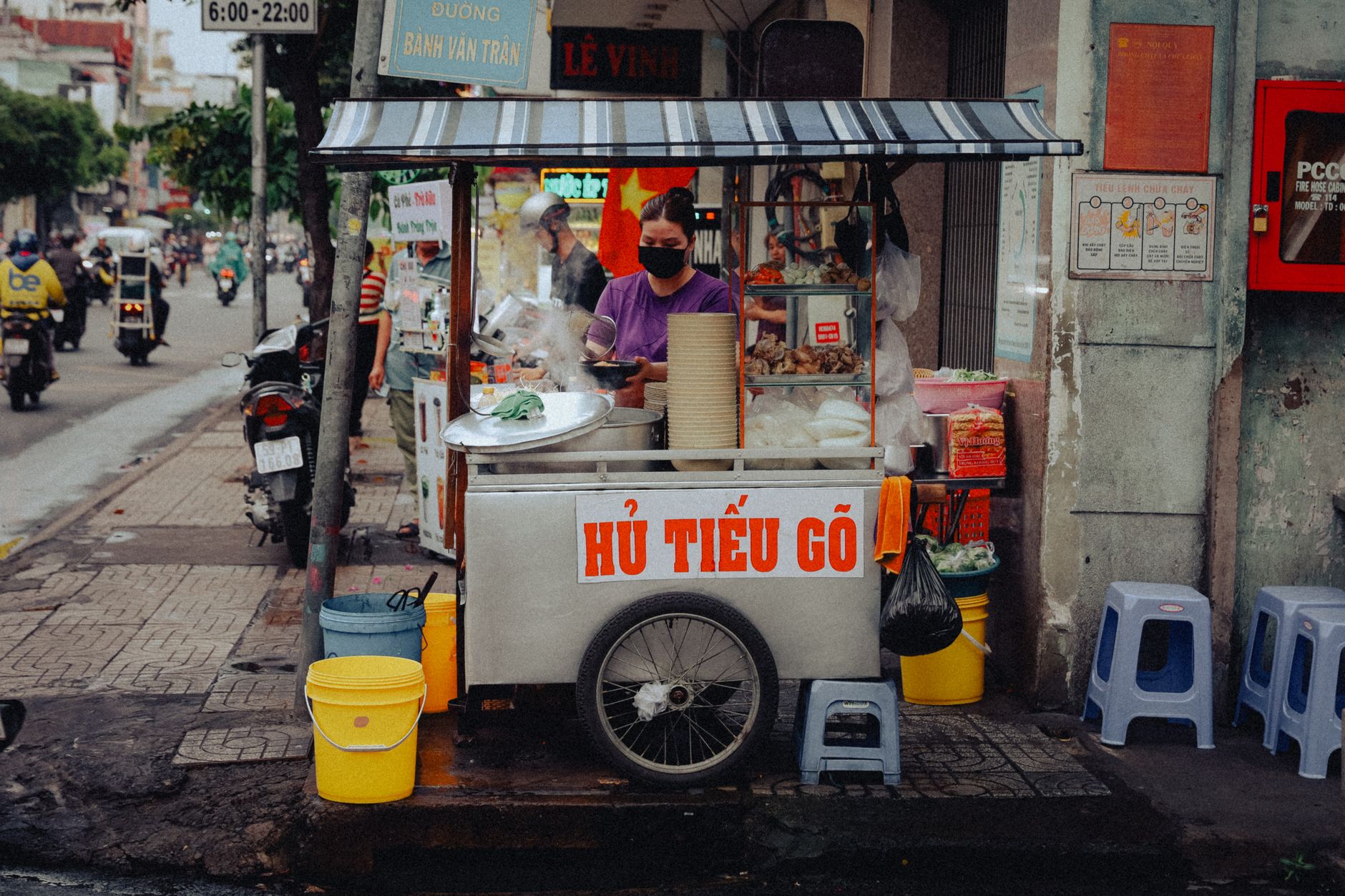
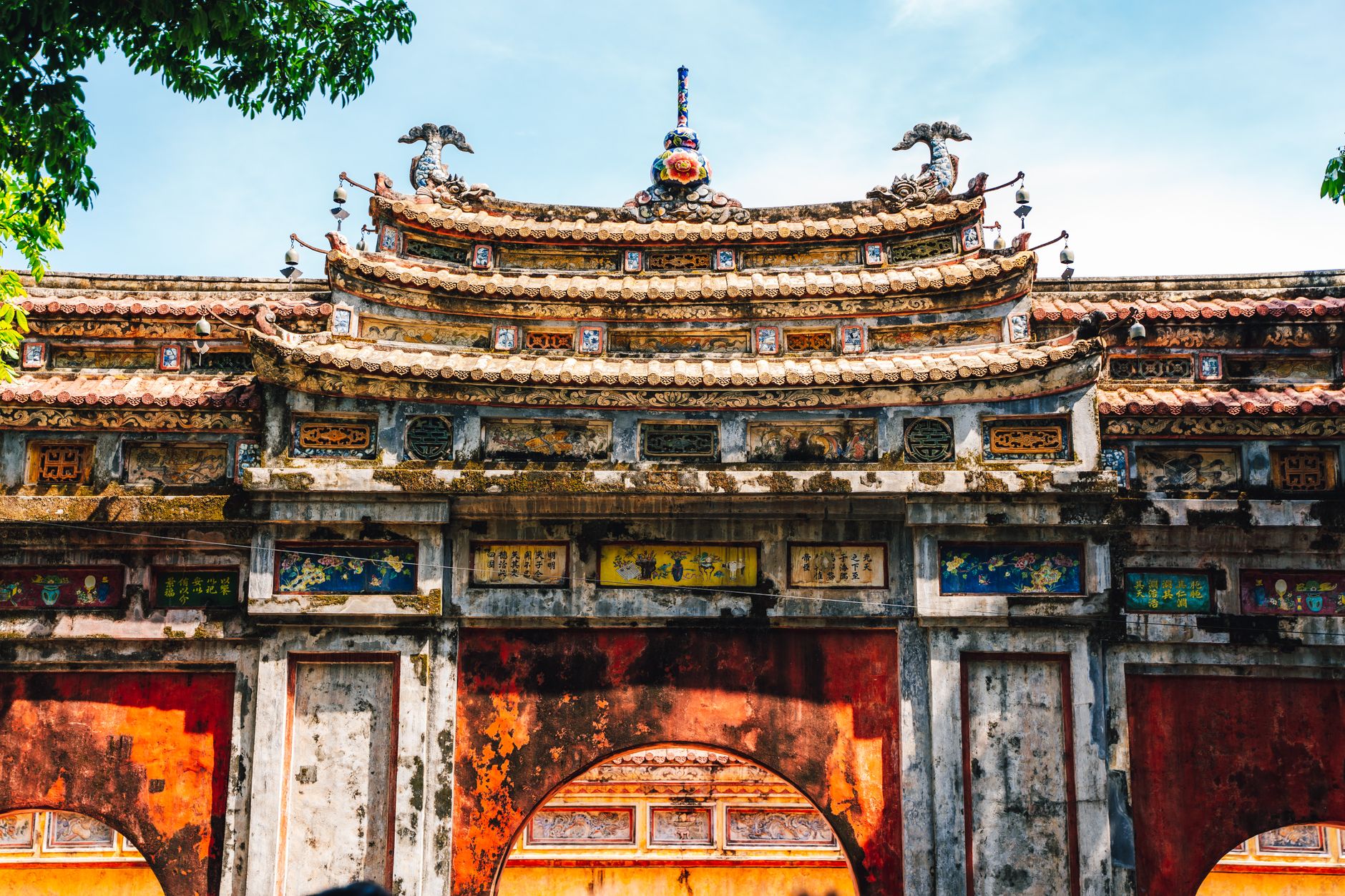
The city rewards a slower pace. The tombs require transport, the weather can turn hot and humid, and the food deserves more than a quick bowl of noodles between monuments. This guide covers the essential things to do in Hue, how to organize them efficiently, and what to skip if time is short.
The Imperial Citadel: start here
The Citadel is the reason most people come to Hue. It is a walled complex of palaces, temples, gates and gardens that served as the political and ceremonial heart of the Nguyen dynasty. The scale is enormous, roughly 520 hectares inside the outer walls, though much of the interior was destroyed during the Tet Offensive in 1968 and subsequent conflicts. What remains has been partially restored, and the site was designated a UNESCO World Heritage area in 1993.
Enter through the Ngo Mon Gate, the main southern entrance with its distinctive five-tiered pavilion. The gate leads to the Thai Hoa Palace, the throne hall where emperors held court. Restoration work has been ongoing for years, and some buildings are covered in scaffolding. Check the current state before visiting if the palace interiors matter to you.
Allow three to four hours for a proper visit. The Forbidden Purple City, the inner sanctum reserved for the emperor and his family, is mostly ruins now, but the foundations and a few restored structures give a sense of the original layout. The nine urns in front of The Mieu temple are original and worth a close look. Each urn is over two meters tall and decorated with carved landscapes and symbols.
Hire a guide at the entrance or download a self-guided audio tour in advance. The site has limited English signage, and the history is layered. Without context, the ruins can blur into a series of similar-looking gates and courtyards.
Entry fee: 200,000 VND ($8) for adults, 40,000 VND ($1.60) for children under 1.2 meters.
Pro tip: Arrive at 8:00 AM when the gates open. The complex gets crowded with tour groups from mid-morning, and the heat inside the walled courtyards builds quickly.
The royal tombs: three worth your time
The Nguyen emperors built elaborate mausoleums for themselves during their lifetimes, each reflecting the personality and tastes of its occupant. Seven tombs survive in the hills south of the Perfume River. Three stand out for their architecture, setting and state of preservation.
Tu Duc Tomb
Emperor Tu Duc ruled from 1847 to 1883 and designed his tomb as a poetic retreat. The complex includes lakes, pavilions and a theater, and it feels more like a landscaped garden than a burial site. Tu Duc was known for his literary tastes and his melancholy; his tomb reflects both. The emperor's actual grave is hidden somewhere within the compound, a detail that adds to the atmosphere.
Entry fee: 150,000 VND ($6)
Khai Dinh Tomb
This is the most visually striking tomb and the most compact. Emperor Khai Dinh, who reigned from 1916 to 1925, blended traditional Vietnamese elements with French and Gothic influences. The result is a dark, ornate structure with ceramic and glass mosaics covering nearly every surface. The climb up the steps to the main hall is steep but short. The throne room inside is the most decorated space of any tomb in Hue.
Entry fee: 150,000 VND ($6)
Minh Mang Tomb
Emperor Minh Mang's tomb is the most symmetrical and the most traditional. He ruled from 1820 to 1841 and was known for his Confucian values and opposition to Western influence. The tomb complex follows a strict north-south axis with lakes, bridges and courtyards in perfect balance. It is also the most spread out of the three, so expect a fair amount of walking.
Entry fee: 150,000 VND ($6)
How to visit the tombs
The tombs lie roughly 8 to 15 kilometers from the city center, spread along the south bank of the river. A private car with driver costs around 800,000 to 1,000,000 VND ($31 to $39) for a half-day circuit covering all three. Motorbike rental runs 150,000 VND ($6) per day, and the roads are manageable for confident riders. Cyclo tours exist but are slow and hot; not recommended in summer.
A combined ticket for the Citadel, three tombs and two other sites costs 530,000 VND ($21) and saves money if you plan to visit all of them. Buy it at the Citadel ticket office or at any participating site.
Warning: The tombs are spread out and the walking is significant. In hot months, start with Khai Dinh (shortest visit) at 8:00 AM, then Tu Duc, then Minh Mang before noon. Carry water and wear a hat.
Thien Mu Pagoda: the iconic riverside landmark
The seven-story Phuoc Duyen Tower at Thien Mu Pagoda is the most photographed structure in Hue. The pagoda sits on a hill above the Perfume River, about 4 kilometers southwest of the Citadel. It dates from 1601 and remains an active Buddhist monastery.
The site is free to enter. The main hall contains a large bronze Buddha and intricate wooden carvings. Behind the hall, a vintage Austin car is parked under a shelter. This was the vehicle that carried Thich Quang Duc to Saigon in 1963, where he set himself on fire to protest the South Vietnamese government's treatment of Buddhists. The car is a sobering piece of modern history.
Combine Thien Mu with the tombs if you have your own transport. It is on the way back from Minh Mang Tomb to the city center. Allow 45 minutes for a proper visit.
The Perfume River: dragon boats, sunset cruises and the night market
The river that splits Hue is the city's natural spine. Its name comes from the scent of flowers that supposedly drifts into the water from upstream orchards, though the reality is more subtle. The practical use of the river is transport and leisure.
Dragon boats line the south bank near the Truong Tien Bridge. A standard cruise takes you upstream to Thien Mu Pagoda, lasting one to two hours, and costs around 200,000 VND ($8) per person for a shared boat. Private boats run 500,000 to 800,000 VND ($20 to $31) depending on route and duration. Sunset cruises are the most popular option, and the light on the river at that hour justifies the price.
The night market on the north bank near the Citadel runs from around 6:00 PM to 10:00 PM. It is small by Vietnamese standards, maybe 100 stalls, and focuses on street food, clothing and souvenirs. The food section along the riverfront is the main draw. Try banh khoai, a crispy Hue-style pancake filled with shrimp and pork, and nem lui, grilled pork skewers wrapped in rice paper with fresh herbs.
Hue food: what to eat and where
Hue was the imperial capital, and its cuisine reflects that history. Royal dishes were elaborate and small, designed to showcase technique and presentation. The street food scene today is more accessible but still distinct from other Vietnamese cities.
Bun bo Hue is the city's signature dish. This spicy beef noodle soup uses lemongrass, fermented shrimp paste and chili oil for a broth that is deeper and more complex than pho. The best bowls are found at small family shops in the morning. Look for shops that are busy with locals and close by early afternoon.
Banh beo are small steamed rice cakes topped with dried shrimp, crispy shallots and scallion oil. They are served in tiny ceramic dishes, usually six to ten per order. Eat them with nuoc mam cham, the fish sauce dipping sauce that accompanies most central Vietnamese food.
Com hen is a working-class dish of rice with baby basket clams, herbs, peanuts and a spicy broth poured over the top. It is cheap, filling and deeply local. Most tourists miss it because it lacks the visual appeal of other dishes.
Where to go:
- Quan Bun Bo Hue Hong Mai, 112 Dinh Tien Hoang: solid bun bo Hue, open from early morning
- Hanh Restaurant, 11 Pho Duc Chinh: banh beo, banh nam and other Hue specialties in a clean, tourist-friendly setting
- Com Hen Hoa, 47 Nguyen Chi Thanh: com hen and other local rice dishes, cheap and authentic
- Madam Thu, 34 Vo Thi Sau: a long-running restaurant serving Hue classics with English menus
Food tour option: Several operators run evening food walks through the backstreets. Expect to pay 600,000 to 900,000 VND ($23 to $35) for a 3-4 hour tour with 8-10 tastings. This is a good way to try multiple dishes without navigating the language barrier. The translation apps guide helps if you prefer to explore solo.
Practical planning: getting around, tickets and timing
How many days do you need?
Two full days is the right amount for most travelers. Day one covers the Citadel and Thien Mu Pagoda. Day two handles the tombs and the river. Three days allows for a DMZ tour or a slower pace with more food exploration. One day is possible but rushed, and you will miss something.
Getting to Hue
Hue has an airport with daily flights from Hanoi and Ho Chi Minh City, but most travelers arrive overland. The train from Da Nang takes 2.5 to 3 hours and costs 100,000 to 250,000 VND ($4 to $10) depending on class. The scenery along the Hai Van Pass is worth the trip. Buses run frequently and take 2 to 3 hours. See getting to Da Nang for the full airport and transport breakdown.
Getting around Hue
The city center is walkable, but the tombs require wheels. Options:
| Transport | Cost | Best for |
|---|---|---|
| Motorbike rental | 150,000 VND/day ($6) | Independent travelers, tombs circuit |
| Grab (ride-hailing) | 30,000-80,000 VND per trip ($1.20-$3) | Short hops, no rental commitment |
| Private car with driver | 800,000-1,200,000 VND/day ($31-$47) | Groups, hot weather, DMZ tours |
| Cyclo | 100,000-200,000 VND per hour ($4-$8) | Slow sightseeing, short distances |
Grab operates in Hue and is reliable for point-to-point trips. The driving in Vietnam guide covers the legal requirements if you plan to rent a motorbike.
Weather and best time to visit
Hue has a tropical monsoon climate with two distinct seasons. The dry season runs from March to August, with temperatures from 25°C to 39°C. The rainy season peaks from September to November, when flooding can disrupt travel. February to April is the sweet spot: warm but not scorching, with lower humidity and less rain.
The heat and hydration guide has practical advice for the hotter months. The Hoi An vs Hue comparison helps decide how to split time between the two cities.
Where to stay
The south bank near the Truong Tien Bridge is the most convenient base. It puts you close to restaurants, the night market and boat departure points. The north bank near the Citadel is quieter and more atmospheric but less practical for food and services.
Budget options run 200,000 to 400,000 VND ($8 to $16) per night for private rooms in guesthouses. Mid-range hotels cost 600,000 to 1,200,000 VND ($23 to $47). The hostels in Vietnam guide covers the budget end, and the senior travelers guide has advice for those who prefer comfort over cost.
Day trips from Hue
The DMZ
The Demilitarized Zone, the buffer between North and South Vietnam during the war, lies 60 to 100 kilometers north of Hue. Full-day tours visit the Vinh Moc Tunnels, the Khe Sanh Combat Base and the Hien Luong Bridge over the Ben Hai River. These sites are heavy with war history and require a long day on the road. Tours cost 500,000 to 800,000 VND ($20 to $31) including transport and guide. The DMZ tour guide explains what the tours actually cover.
Thuy Tien Lake abandoned water park
The abandoned water park at Thuy Tien Lake sits about 12 kilometers from the city center. The main attraction is a dragon-shaped building with a flooded interior, now partially overgrown. It is not officially open to the public, but locals will guide you through for a small fee. The atmosphere is eerie and photogenic. Go early to avoid security checks and bring mosquito repellent. The inside look at Thuy Tien has more context.
Lang Co Beach
Lang Co Bay sits halfway between Hue and Da Nang, about 50 kilometers south of Hue. The beach is long, sandy and relatively undeveloped compared to Da Nang's shores. It works as a half-day trip with lunch at one of the seafood restaurants along the main road. The hidden beaches guide includes Lang Co and other options in the region.
Budget breakdown for Hue
Daily costs for a mid-range traveler:
| Item | Cost (VND) | Cost (USD) |
|---|---|---|
| Accommodation | 600,000 | $23 |
| Food (3 meals + drinks) | 300,000 | $12 |
| Entry fees (Citadel + 1 tomb) | 350,000 | $14 |
| Transport (Grab + local bus) | 150,000 | $6 |
| Contingency | 100,000 | $4 |
| Total | 1,500,000 | $59 |
Budget travelers can cut accommodation to 250,000 VND ($10) and skip the tombs in favor of free sites like Thien Mu Pagoda, bringing the daily total to around 600,000 VND ($23). The backpacker budget guide has wider Vietnam context.
FAQ
Q: How many days should I spend in Hue? Two full days covers the Citadel, Thien Mu Pagoda and the main tombs. Three days allows for a DMZ tour or a relaxed food-focused itinerary. One day is possible but requires early starts and tight scheduling.
Q: Is Hue worth visiting if I only have limited time in central Vietnam? Yes, if history and culture matter to you. The Citadel and tombs are unlike anything else in Vietnam. If your priority is beaches and nightlife, skip Hue and stay in Da Nang or Hoi An instead.
Q: Can I visit the tombs without a tour? Yes. Rent a motorbike or hire a car with driver for the day. The tombs are well-signposted and entry tickets are bought at each site. A self-guided visit is straightforward and cheaper than a tour.
Q: What is the best time of year to visit Hue? February to April offers the most comfortable weather with temperatures below 30°C and limited rain. September to November brings heavy rain and flooding risk. June to August is hot and humid but workable with early starts.
Q: How do I get from Hoi An to Hue? The most scenic option is the train from Da Nang, which takes 2.5 to 3 hours. Buses from Hoi An to Hue take 3.5 to 4 hours and cost 150,000 to 250,000 VND ($6 to $10). Private cars cost around 1,500,000 VND ($59) and take 3 hours.
Q: What should I wear at the Citadel and pagodas? Cover shoulders and knees at religious sites like Thien Mu Pagoda. The Citadel is a historical monument, so standard tourist clothing is fine, but modest dress is respectful. The dress code guide has full details.
Q: Is Hue safe for solo travelers? Yes. Hue is a compact city with low crime rates. The main concerns are traffic and heat. Use Grab for night transport and carry water during the day. The solo female travelers guide has specific advice for women.