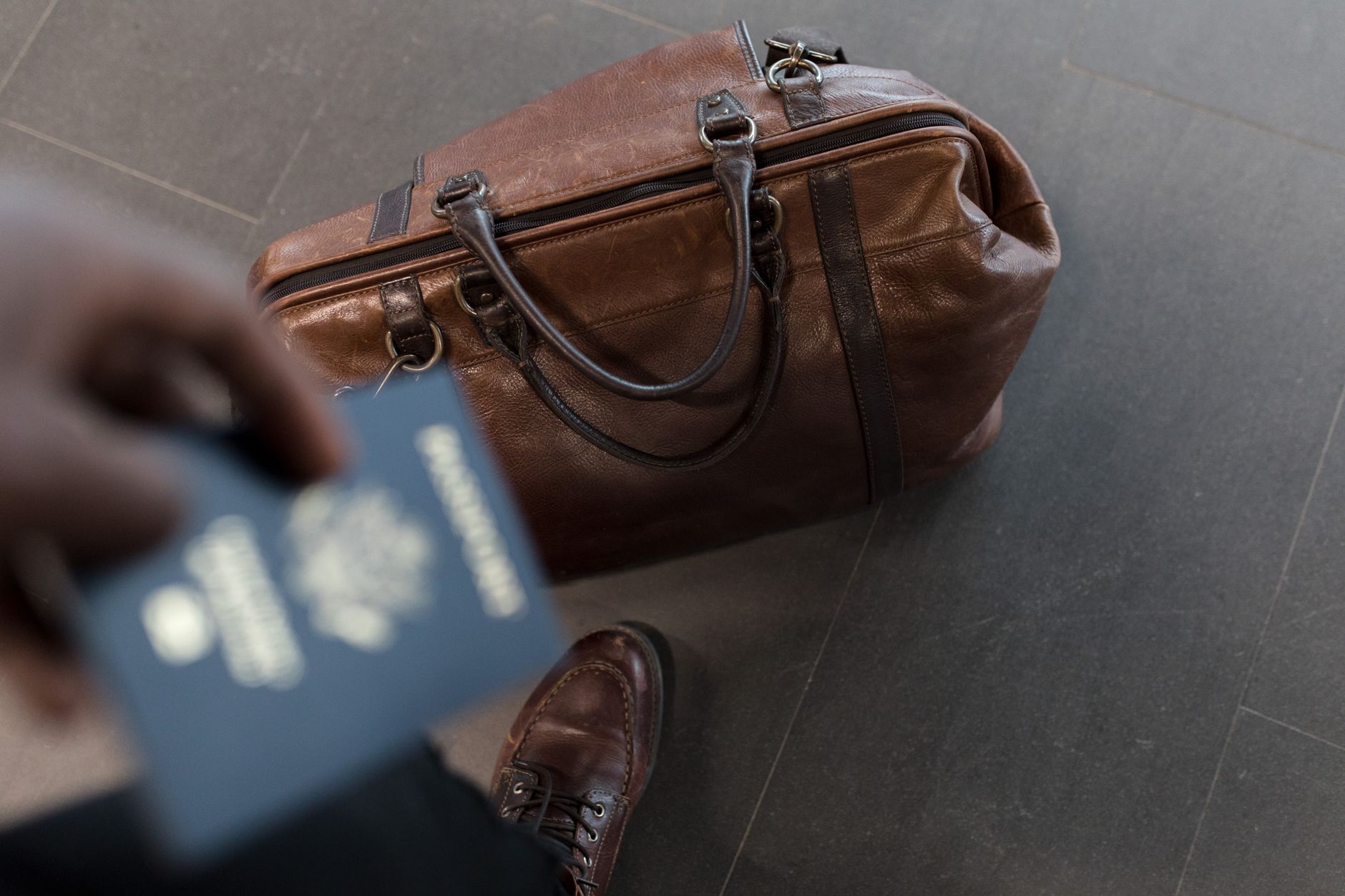
The key point comes first: there is no online extension for individual travellers. An extension of stay, or a new visa issued inside Vietnam, is always requested at the Immigration Department by a sponsor in Vietnam, such as a company, a school, a licensed tour operator or a family member. Travellers without a sponsor plan their next stay as a new trip, with a new e-visa applied for before they travel.
Practical tip: a long stay deserves travel insurance that covers its full length. Heymondo applies an automatic 5% discount through the partner link, no code needed.
What your current entry allows
Start by checking the stamp in your passport or your e-visa approval. The length of stay and the options to extend it depend on how you entered.
| How you entered | Length of stay | Can the stay be extended inside Vietnam? | Official basis |
|---|---|---|---|
| E-visa, single or multiple entry | Up to 90 days | Only through a sponsor in Vietnam, at the Immigration Department | Law 23/2023/QH15 |
| Unilateral visa exemption (24 European and Asian countries) | 45 days | Only through a sponsor, who requests a visa or an extension | Resolutions 44/NQ-CP and 229/NQ-CP |
| Bilateral visa exemption (ASEAN, Chile, Panama and others) | 14 to 90 days depending on the agreement | Only through a sponsor | Agreements listed by the Ministry of Foreign Affairs |
| Phu Quoc visa-free entry | 30 days, on the island only | Travel elsewhere in Vietnam needs a visa requested by a sponsor | Resolution 80/NQ-CP |
| Sponsored visa (business, work, study, family) | Set by the visa category | Yes, at the sponsor's request | Law 47/2014/QH13, amended |
The e-visa fee is US$25 for a single entry and US$50 for multiple entries, paid online on the official portal. Processing takes about 3 working days. The full list of visa-free nationalities, with their durations, is on the Vietnam visa hub and in the guide to Vietnam visa exemptions.
Option 1: an extension of stay through a sponsor
Vietnam's law on the entry, exit, transit and residence of foreigners (Law 47/2014/QH13, amended by Law 51/2019/QH14 and Law 23/2023/QH15) places extensions in the hands of the sponsor. The agency, organisation or individual that invites or guarantees the visitor files the request with the Immigration Department of the Ministry of Public Security, or with the immigration office of the provincial police where the rules allow it.
In practice, the process works like this:
- The sponsor fills in form NA5, the official request for a visa or an extension of temporary stay, and signs it.
- The sponsor submits the form with the visitor's passport and the documents that prove the purpose of the stay (labour contract, enrolment letter, proof of family relationship, company registration).
- The Immigration Department examines the file. The usual processing time is about 5 working days.
- The visitor pays the official stamping fee set by the Ministry of Finance, around US$10 for an extension of stay in the current schedule.
- The passport comes back with the new stamp, showing the authorised end date.
A licensed travel company can act as sponsor for a tourist stay. Ask for an official receipt and keep a copy of the request. Any service that promises an extension without naming a sponsor, or without going through the Immigration Department, is not an official route.
Start early. File the request at least 10 working days before your authorised stay ends, so that processing time and public holidays such as Tet do not push you past the end date.
The Immigration Department decides each request on its merits and may refuse it. The official channels to check requirements are the Immigration Department website (xuatnhapcanh.gov.vn) and the counters of its offices in Hanoi, Da Nang and Ho Chi Minh City.
Option 2: a new e-visa for your next trip
For travellers without a sponsor, the official way to spend more time in Vietnam is to plan a new trip. The e-visa is applied for online, before travelling, on the official portal evisa.gov.vn (the mirror thithucdientu.gov.vn is also official). It is open to all nationalities since 15 August 2023 and valid at 83 international entry points: 17 airports, 27 land border gates and 39 seaports.
Good practice for a new application:
- Apply at least a week before the planned arrival date, to allow for the 3 working days of processing and any request for corrections.
- Use only the official portal. Many look-alike sites charge several times the official fee; the guide to legitimate Vietnam visa websites explains how to recognise them.
- Choose a passport that remains valid at least 30 days after the end of the visa.
- Choose multiple entry (US$50) if the trip includes side trips to neighbouring countries.
The step-by-step e-visa guide walks through the form, the photo and the most common reasons for rejection.
Option 3: a visa that matches a longer stay
When the reason for staying is work, business, study or family, a tourist entry is the wrong tool. Vietnamese law provides a visa category for each purpose, always with a sponsor, and most of them can lead to a temporary residence card.
| Visa category | Purpose | Who sponsors |
|---|---|---|
| DN1, DN2 (business) | Working with a Vietnamese company, offering services, setting up a commercial presence | The Vietnamese company or organisation |
| LĐ1, LĐ2 (work) | Paid employment, with a work permit or a certified exemption | The employer in Vietnam |
| ĐT1 to ĐT4 (investor) | Investing in a Vietnamese company, by size of capital contributed | The company invested in |
| DH (study) | Studying or doing an internship | The school or training institution |
| TT (family) | Spouses and children of foreigners holding certain visas, and foreign relatives of Vietnamese citizens | The family member in Vietnam |
| Temporary residence card | Long stays for holders of the categories above, valid for several years depending on the category | The same sponsor |
Working on a tourist e-visa or a visa exemption is not permitted. A remote worker who plans to base themselves in Vietnam for months should discuss the right category with a future sponsor before travelling. The guide for digital nomads in Vietnam covers coworking spaces and cities, and the visa hub lists the long-stay categories.
People of Vietnamese origin, and the foreign spouses and children of Vietnamese citizens, can also apply for a visa exemption certificate. It is valid for up to 5 years, allows stays of up to 6 months per entry and costs US$10.
Visa exemption: durations to know
Visa-free entry is generous but fixed. Its length depends on the passport, and a stay longer than the exemption needs a visa from the start.
- 45 days, any purpose: Germany, France, Italy, Spain, United Kingdom (British citizens), Russia, Japan, South Korea, Denmark, Sweden, Norway and Finland (Resolution 44/NQ-CP, until 14 March 2028).
- 45 days, tourism only: Belgium, Bulgaria, Croatia, Czech Republic, Hungary, Luxembourg, Netherlands, Poland, Romania, Slovakia, Slovenia and Switzerland (Resolution 229/NQ-CP, until 14 August 2028).
- 90 days: Chile and Panama (bilateral agreements).
- 30 days: Cambodia, Indonesia, Laos, Malaysia, Myanmar, Thailand, Singapore, Kyrgyzstan, Mongolia, Kazakhstan and Belarus.
- 21 days: the Philippines. 14 days: Brunei.
- 30 days on Phu Quoc for all nationalities, under the island's special rules (see the Phu Quoc visa-free guide).
Visa-free entry requires a passport valid for at least 6 months. If the trip is planned to last longer than the exemption, apply for an e-visa of up to 90 days instead: it is simpler than any change of status once in the country.
Staying past the authorised date: the official penalties
Staying beyond the date stamped in the passport is an administrative offence. Since 15 December 2025, fines are set by Government Decree 282/2025/ND-CP, which replaced Decree 144/2021/ND-CP. According to Decree 282/2025, as reported by the Vietnamese press, they rise with the length of the overstay: from 500,000 VND for a few days to several tens of millions of VND for an overstay of a year or more.
Deportation can be added to the fine, and a past overstay can weigh on future visa applications. The fine is set and collected by the immigration authorities, with an official receipt. If a stay is about to run over because of illness, a cancelled flight or another emergency, contact the Immigration Department or the local police immigration office before the end date: they are the only bodies that can authorise a longer stay.
A checklist for a smooth long stay
Note your end date. The authorised date is the one stamped at entry, not the date you planned to leave. Set a reminder two weeks before it.
Register your address. Hotels and guesthouses declare foreign guests to the police. In a private rental, the host must make the temporary residence declaration; ask them to confirm it.
Keep copies. Store a scan of the passport photo page, the entry stamp and the e-visa approval, separate from the originals.
Check passport validity. A visa or an extension must end at least 30 days before the passport expires. Renew the passport at your embassy first if needed.
Plan around holidays. Government offices close during Tet and other public holidays. The guide to travelling during Tet lists what closes and for how long.
FAQ
Q: Can I extend my e-visa online? No. There is no online extension for individual travellers. An extension of stay is requested at the Immigration Department by a sponsor in Vietnam, with form NA5.
Q: Who can act as my sponsor? An agency, organisation or individual in Vietnam linked to the purpose of your stay: your employer, your school, a Vietnamese company you work with, a licensed travel company for a tourist stay, or a family member who is a Vietnamese citizen or resident.
Q: How much does an official extension cost? The stamping fee is set by the Ministry of Finance, around US$10 for an extension of stay in the current schedule. A sponsor or travel company may charge for its own service on top; ask for an official receipt for the government fee.
Q: I entered visa-free. Can I stay longer than my exemption? Only if a sponsor requests a visa or an extension for you at the Immigration Department. Otherwise, plan the length of the trip within the exemption, or apply for an e-visa of up to 90 days before you travel.
Q: What happens if I stay one day too long? An overstay is an administrative offence. According to Decree 282/2025/ND-CP, as reported by the Vietnamese press, fines start at 500,000 VND for a few days and reach several tens of millions of VND for the longest overstays, and deportation is possible.
Q: Which visa suits a stay of several months for work? A work visa (LĐ1 or LĐ2) sponsored by your employer, usually followed by a temporary residence card. Working on a tourist e-visa or a visa exemption is not allowed.
Q: Where can I check the rules myself? On the official e-visa portal evisa.gov.vn, on the Immigration Department website xuatnhapcanh.gov.vn, and in the texts of Law 47/2014/QH13 as amended by Laws 51/2019/QH14 and 23/2023/QH15.
Official sources
- Law 47/2014/QH13 on the entry, exit, transit and residence of foreigners in Vietnam, amended by Law 51/2019/QH14 and Law 23/2023/QH15 (90-day e-visa for all nationalities, 45-day unilateral exemption).
- Government Resolutions 44/NQ-CP of 7 March 2025 and 229/NQ-CP of 8 August 2025 (45-day exemptions), and 80/NQ-CP (Phu Quoc).
- Government Decree 282/2025/ND-CP, in force since 15 December 2025 (administrative penalties, including overstays).
- Official e-visa portal of the Immigration Department: evisa.gov.vn. Immigration Department website: xuatnhapcanh.gov.vn.


Your questions and tips
A question, an update, an experience to share? Our team reads every message before it is published.
No comments yet. Ask the first question or share a tip!