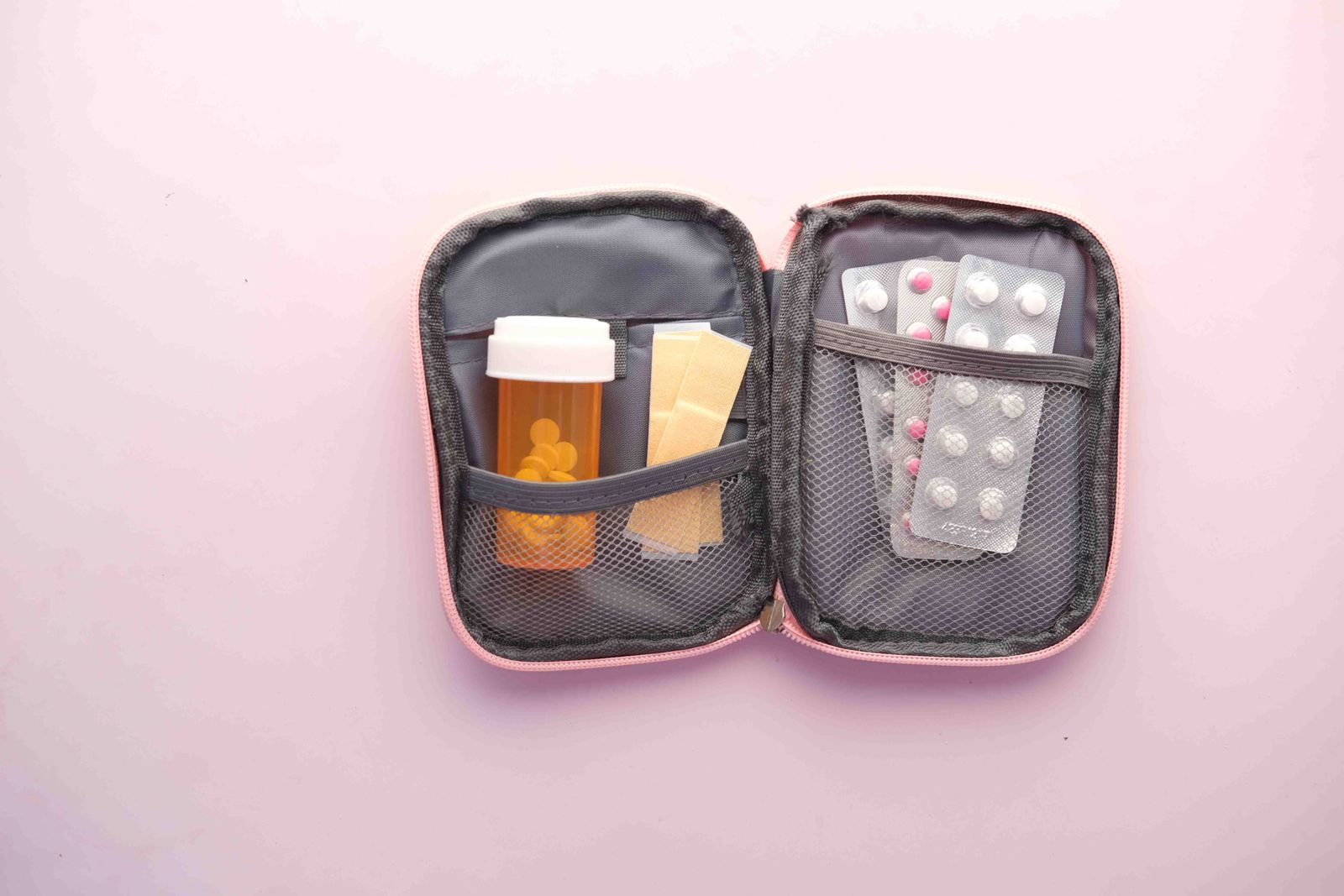
The rules come from Decree 163/2025/ND-CP, Article 60, in force since 1 July 2025. It replaced Decree 54/2017/ND-CP, which a large number of English-language pages still quote. If a website tells you about a "30-day supply for all medicines" or a "pre-arrival permit from the Drug Administration of Vietnam", it is working from repealed or inaccurate rules. This guide works from the decree and from the controlled-medicine lists in Circular 18/2026/TT-BYT, in force since 16 July 2026.
The short answer: 7, 10 or 30 days depending on the category
Vietnamese law sorts medicines into categories, and each category has its own allowance for travellers entering the country. The quantity is measured against the dosage written on your prescription, not against the number of boxes in your bag.
| Category (Vietnamese term) | Examples | Maximum without a permit | What you need |
|---|---|---|---|
| Narcotic medicines (thuốc gây nghiện) | codeine, tramadol, oxycodone, morphine, methadone | 7 days of treatment | Prescription, declaration at customs |
| Psychotropic medicines (thuốc hướng thần) | alprazolam, diazepam, zolpidem, methylphenidate | 10 days of treatment | Prescription, declaration at customs |
| Precursor medicines (thuốc tiền chất) | pseudoephedrine, ephedrine | 10 days of treatment | Prescription, declaration at customs |
| Other prescription medicines | antidepressants, zopiclone, pregabalin, blood pressure drugs | 30 days, or up to 200 US dollars in value | Prescription recommended |
| Cannabis and THC products | medical cannabis, CBD oil containing THC | Banned | Do not bring |
The allowance covers medicines carried by a person entering Vietnam, or shipped in their own luggage under a bill of lading, for the treatment of that person only. Each traveller carries their own medicines with their own prescription. A couple cannot pool a single prescription between two bags.
For "other medicines", the rule gives you a choice: either no more than 30 days of use per the prescription dosage, or a total customs value of up to 200 US dollars per import, with a maximum of 3 imports per year. Patients with a disease on Vietnam's list of serious illnesses get a higher ceiling: up to 10,000,000 VND (about 380 US dollars) per import, 4 times per year.
Is your medicine a "psychotropic" under Vietnamese law?
The everyday word "psychotropic" covers any drug that acts on the mind. Vietnam's legal list is much narrower. What matters is the active ingredient, the INN or generic name printed on the box, not the brand name. Check the generic name first, then compare it with the lists of Circular 18/2026/TT-BYT: 42 narcotic substances in Appendix I, 72 psychotropic substances in Appendix II, 8 precursors in Appendix III.
| Medicine (brand examples) | Vietnamese category | Limit without a permit |
|---|---|---|
| Alprazolam (Xanax), bromazepam (Lexomil, Lexotan), diazepam (Valium) | Psychotropic | 10 days |
| Clonazepam (Rivotril, Klonopin), lorazepam (Ativan, Temesta), oxazepam (Seresta) | Psychotropic | 10 days |
| Zolpidem (Stilnox, Ambien) | Psychotropic | 10 days |
| Methylphenidate (Ritalin, Concerta), lisdexamfetamine (Vyvanse, Elvanse) | Psychotropic | 10 days |
| Buprenorphine (Subutex), phenobarbital, ketamine, midazolam | Psychotropic | 10 days |
| Codeine, dihydrocodeine, tramadol, morphine, oxycodone | Narcotic | 7 days |
| Hydromorphone, methadone, fentanyl, pethidine | Narcotic | 7 days |
| Pseudoephedrine, ephedrine, ergotamine | Precursor | 10 days |
| Zopiclone (Imovane), pregabalin (Lyrica), gabapentin | Not listed | 30 days or 200 US dollars |
| Sertraline, escitalopram, fluoxetine, quetiapine, lithium | Not listed | 30 days or 200 US dollars |
| Hydroxyzine (Atarax), modafinil, atomoxetine, melatonin | Not listed | 30 days or 200 US dollars |
| Adderall, dexamfetamine | Restricted narcotic substance (Decree 28/2026/ND-CP, list IIB) | No clear traveller rule: see below |
| Medical cannabis, CBD oil with THC | Absolutely prohibited (list I) | Do not bring |
One nuance worth knowing. Vietnamese law treats low-dose combination products as a separate category. Codeine up to 100 mg per unit combined with other ingredients, tramadol up to 37.5 mg per unit, pseudoephedrine up to 120 mg per unit: these are not "narcotic medicines" in the legal sense. In practice the box still says codeine or tramadol, so carry the prescription and keep the quantity modest.
Antidepressants, zopiclone and pregabalin: not on the lists
This is the good news for many readers. Sertraline, escitalopram, fluoxetine and the other common antidepressants do not appear on any of Vietnam's three controlled lists. Neither do zopiclone, pregabalin, gabapentin, quetiapine, lithium, hydroxyzine or melatonin. They fall under the "other medicines" rule: up to 30 days of treatment, or a customs value of up to 200 US dollars, without a permit. Carry the prescription anyway. It costs nothing and settles any discussion at the airport.
Before you fly: the documents and packing checklist
- Prescription with all the required details: patient's full name and age, medicine name, strength or concentration and volume, quantity or number of days, dosage, doctor's full name and signature, and the address of the hospital or clinic where the doctor practises.
- Ask the doctor to write your age or date of birth, the generic name rather than only the brand, and an explicit daily dose. "Up to 3 tablets per day" gives you 30 tablets for a psychotropic; "1 tablet per day" gives you 10.
- English translation of the prescription, ideally with a short doctor's letter in English stating the generic name, dose, duration and personal use. The letter is recommended, not a legal requirement.
- Original packaging with a clear label showing the medicine name, active ingredient, strength and expiry date.
- Quantity no higher than the limit for your category, and no higher than the prescription covers.
- Medicines in the cabin bag, together with the documents. Checked luggage gets lost; your treatment should not.
- The rules of your transit countries. If you change planes in another country, that country's rules also apply to what you carry.
Ask the doctor to write the daily dose as a number, not as "as needed". The customs calculation depends entirely on that figure.
Leaving France with a "stupéfiant"
French readers have an extra step. The ANSM, the French medicines agency, issues transport certificates for "stupéfiants" and "assimilés stupéfiants" for countries outside the Schengen area when the destination country requires one. The ANSM names methylphenidate, morphine, oxycodone, methadone, high-dose buprenorphine, fentanyl and hydromorphone among the medicines for which a certificate is often required. Apply at least 10 days before departure through the ANSM online form with the scanned secure prescription. The ANSM also advises carrying the original prescription with an English translation.
Vietnam has not provided its rules to the International Narcotics Control Board, so the INCB travellers' page lists "Information not yet provided by country" for Vietnam. Rely on Decree 163/2025/ND-CP and on the Vietnamese embassy in your country. Readers from other countries should check their own medicines agency's rules for leaving with controlled medicines.
At the airport in Vietnam: declare, never hide
The arrival sequence is simple. Immigration first, then baggage reclaim, then customs. Customs has two channels: green for nothing to declare, red for goods to declare. Controlled medicines go through the red channel. Tell the officer you have medicine to declare, show the medicines and the prescription, and state the quantity. Officers may ask you to fill in a written declaration with the name and quantity of each medicine.
Two phrases that help at the counter:
"Tôi có thuốc cần khai báo." (I have medicine to declare.)
"Đây là thuốc điều trị cho bản thân tôi, có đơn thuốc của bác sĩ." (This is medicine for my own treatment, with a doctor's prescription.)
Undeclared or excess controlled medicines can be seized. Several of these molecules are also narcotic substances under Vietnam's drug-control law, one of the strictest in the world, so the stakes are higher than a routine customs query. The guide to Vietnam's drug laws and penalties explains how that law works in practice. The arrival, immigration and customs guide walks through the airport step by step if you want the full picture before landing.
Staying longer than 10 days: three options
A two-week holiday on a psychotropic medicine does not fit inside the 10-day allowance. Three routes exist, and they are not equally reliable.
Option 1: an import permit before you travel
The permit is issued by the Provincial People's Committee of the province where you clear immigration, for example Hanoi for Noi Bai airport, Ho Chi Minh City for Tan Son Nhat, Da Nang for Da Nang airport. It can also come from the province where you live or are legally registered as a temporary resident.
The file is submitted in person, by post or online. It contains application form No. 27 from Appendix III of Decree 163/2025/ND-CP, plus a certified copy of the prescription or outpatient treatment record, or a copy signed by the applicant with the original shown at submission. Documents not in Vietnamese or English need a translation into Vietnamese or English with the translator's signature certified, under Article 61 of the decree. A French prescription therefore needs a certified translation. The decision comes within 7 working days of receipt if the file is complete. If changes are requested, the applicant has 3 months to send them. The applicant is responsible for the origin and quality of the medicine.
Be honest with yourself about the practical side. The forms and procedures are in Vietnamese, and a Vietnamese-speaking contact, whether a hotel, an employer, an agency or a clinic, makes the process far easier. Start weeks before departure, not days.
Option 2: declare the full quantity and let customs decide
The Embassy of Vietnam in Australia states that a traveller who needs more than 7 days of a narcotic or 10 days of a psychotropic or precursor can declare the medicines at the customs of the arrival airport with their itinerary and proof of medical necessity from their doctor, and "customs will decide whether to let you bring them in or not". This is not a guarantee. Treat it as a gamble: the excess can be refused.
Option 3: bring 10 days and see a doctor in Vietnam
The same embassy suggests contacting a hospital in Vietnam before the trip to find out whether it can supply the medicine. Availability of specific molecules and brands varies, so contact international hospitals and clinics in Hanoi, Ho Chi Minh City or Da Nang directly and ask about your molecule. Psychotropics are prescription-only in Vietnam, so do not rely on buying them over the counter at a pharmacy. The pharmacies guide explains what you can and cannot buy without a prescription.
| Option | Paperwork | Time needed | Certainty | Best for |
|---|---|---|---|---|
| Import permit | Form 27, prescription copy, certified translation | 7 working days after a complete file, plus preparation | High if the file is complete | Stays of several weeks or months |
| Declare the full quantity | Prescription, itinerary, doctor's proof of necessity | None before travel | Low: customs decides on the spot | A few extra days, accepting the risk |
| Buy in Vietnam | None before travel | A clinic visit after arrival | Medium: depends on local supply | Flexible travellers with a common molecule |
Special cases: ADHD medication, opioid substitution, cannabis
ADHD treatment splits into two groups. Methylphenidate (Ritalin, Concerta) and lisdexamfetamine (Vyvanse, Elvanse) are on Vietnam's psychotropic list, so 10 days is allowed with a prescription and a declaration. Amphetamine-based medicines are the problem. Neither amphetamine nor dexamfetamine appears on Vietnam's list of psychotropic medicines, but both are restricted narcotic substances under Decree 28/2026/ND-CP, list IIB, in force since 19 January 2026. No rule clearly covers a traveller carrying them. Do not travel with Adderall or dexamfetamine without an import permit or written confirmation from the Vietnamese authorities, and ask your doctor well before departure whether methylphenidate or lisdexamfetamine could be used for the trip.
Opioid substitution follows the categories. Methadone is a narcotic medicine, so 7 days. Buprenorphine is a psychotropic medicine, so 10 days. A longer trip needs the permit route. From France, also ask the ANSM whether a transport certificate applies.
Cannabis is a hard no. The cannabis plant and cannabis preparations containing THC sit on list I of Decree 28/2026/ND-CP: absolutely prohibited, including medical cannabis and CBD oils that contain THC. A prescription from your home country changes nothing.
Travelling with children works the same way, with one addition: the child's medicines need the child's own prescription, in the child's name, with the same details required of an adult prescription.
FAQ
Q: Can I bring Xanax (alprazolam) to Vietnam?
Yes, up to 10 days of treatment per the dosage on your prescription, declared at customs with the prescription in your name. A prescription for "1 tablet per day" allows 10 tablets. More than that needs an import permit from the provincial People's Committee, arranged before arrival.
Q: Do antidepressants count as psychotropic medicines in Vietnam?
Most do not. Sertraline, escitalopram and fluoxetine are not on Vietnam's narcotic, psychotropic or precursor lists, so they fall under the "other medicines" rule: up to 30 days of treatment, or a customs value of up to 200 US dollars, without a permit. Carry the prescription anyway.
Q: Can I bring Adderall to Vietnam?
Do not travel with it without an import permit or written confirmation from the Vietnamese authorities. Amphetamine and dexamfetamine are not on the psychotropic list but are restricted narcotic substances under Decree 28/2026/ND-CP, and no rule clearly covers a traveller carrying them. Ask your doctor well before departure whether methylphenidate or lisdexamfetamine, both on Vietnam's list, could be used instead.
Q: Does my prescription need to be in English or Vietnamese?
Customs officers need to understand it, so carry an English translation. For an import permit file, a translation into Vietnamese or English with a certified translator's signature is mandatory under Article 61 of Decree 163/2025/ND-CP. A French prescription therefore needs a certified translation.
Q: What happens if I arrive with more than 10 days of medication?
You can declare the full quantity at customs with your itinerary and proof of medical necessity, and customs will decide whether to let you bring it in. That is a gamble, not a guarantee, and the excess can be refused or seized. The safe route is an import permit issued before arrival.
Q: Is CBD oil allowed in Vietnam?
Not if it contains THC. The cannabis plant and THC-containing preparations are on list I of Decree 28/2026/ND-CP, absolutely prohibited, and a foreign prescription does not change that. Many CBD oils contain traces of THC, so the safest choice is to leave them at home.
Sources
- Decree 163/2025/ND-CP (Vietnamese)
- Circular 18/2026/TT-BYT, controlled medicine lists (Vietnamese)
- Embassy of Vietnam in Australia: bringing medicines into Vietnam (Vietnamese)
- ANSM: travelling with your medicines (French)
- INCB: country regulations for travellers
Rules checked on 30 September 2026. Regulations change: confirm with the Vietnamese embassy in your country before travelling.