This guide breaks down the practical differences between District 1 and the surrounding areas, with real prices and honest assessments of what each district offers. No hype, just the facts that matter when booking a bed.
The case for District 1: convenience has a price
District 1 is the historic core of Saigon. The Notre-Dame Cathedral, Central Post Office, Ben Thanh Market, and the walking street around Nguyen Hue are all here. Most of the city's top museums, including the War Remnants Museum, sit within its boundaries or on its edge.
Staying here means walking to most sights. That is a genuine advantage in a city where traffic can turn a 2-kilometer Grab ride into a 30-minute ordeal during rush hour. The backpacker area around Pham Ngu Lao and Bui Vien operates 24 hours with street food, bars, and budget hostels. The area around Nguyen Hue and Dong Khoi holds the luxury hotels: the Caravelle, the Rex, the Majestic, and the Park Hyatt.
The downsides are real. Hotel prices in District 1 run 30-50% higher than equivalent rooms in neighboring districts. Street noise is constant, especially around Bui Vien where partying continues until 4 AM. And the food scene, while dense, trends toward tourist-oriented versions of Vietnamese classics.
A standard double room in a mid-range hotel in District 1 costs 1,200,000-2,000,000 VND ($48-80) per night. Hostel dorms run 150,000-300,000 VND ($6-12) per bed. Luxury properties start around 3,500,000 VND ($140).
Pro tip: The Bui Vien backpacker area is loud until dawn. If you want District 1's location without the noise, book north of Le Loi Boulevard or near the Saigon River.
District 3: the smart compromise
District 3 wraps around the western edge of District 1. The famous pink Tan Dinh Church sits here, along with some of the city's best coffee shops and a food scene that locals actually use.
The walk into District 1 takes 10-20 minutes depending on where you stay. A Grab bike costs 20,000-30,000 VND ($1-1.20). The trade-off is simple: you give up immediate proximity to the main sights and gain quieter streets, better prices, and more authentic dining.
Hotel rates in District 3 run 800,000-1,500,000 VND ($32-60) for comparable rooms to District 1's 1,200,000-2,000,000 VND ($48-80). Street food is cheaper too. A bowl of hu tieu or bun bo Hue costs 40,000-60,000 VND ($1.60-2.40) versus 60,000-90,000 VND ($2.40-3.60) in tourist-heavy District 1.
The coffee culture in District 3 is the best in the city. Locals pack the sidewalks around the markets each morning, and specialty roasters have opened several standout shops. This is where Saigon's real daily life happens, not the curated version in District 1.
District 4: cheap eats and fast access
District 4 is a peninsula across the Ben Nghe Channel, directly south of District 1. The two districts connect via several bridges, and a Grab bike from District 4's center to Ben Thanh Market takes about 10 minutes.
This is the city's most underrated food district. District 4 is famous for seafood, com tam (broken rice), and banh xeo. The streets around Vinh Khanh and Doan Nhu Hai are packed with local eateries serving food that rarely appears in tourist guidebooks. Prices run 30-40% below District 1.
Accommodation is limited but growing. Most options are small guesthouses and budget hotels, with rooms from 400,000-900,000 VND ($16-36) per night. The district is residential and working-class, so expect motorbike noise and narrow streets. This is not the place for luxury seekers, but it works brilliantly for budget travelers who want to eat well and sleep cheap.
Warning: District 4 has a reputation for pickpocketing on crowded streets, especially around the markets. Keep phones and wallets secured, same as anywhere in Saigon.
District 5 and Chinatown: the cultural alternative
District 5, known as Cho Lon, is Saigon's Chinatown. The area sits about 4 kilometers west of District 1, a 15-20 minute Grab ride that costs 50,000-80,000 VND ($2-3.20).
This is the most culturally distinct part of the city. Cantonese and Teochew Chinese communities have lived here for centuries. The Binh Tay Market is the largest wholesale market in the city, and the surrounding streets are packed with traditional medicine shops, incense stores, and temples that see few tourists.
Hotels in District 5 are older and cheaper. Expect to pay 500,000-1,000,000 VND ($20-40) for a decent room. The food is exceptional, particularly the dim sum and Cantonese-style barbecue. Several excellent Chinese restaurants have been operating for decades.
The trade-off is distance. You cannot walk to District 1 from here, and the area has fewer Western-style amenities. This district suits travelers who have visited Saigon before or who want a deeper cultural experience over convenience.
Binh Thanh and Phu Nhuan: the mid-range sweet spot
Binh Thanh sits northeast of District 1, across the Thi Nghe Channel. Phu Nhuan lies further north, bordering the airport road. Both districts offer mid-range hotels and serviced apartments at prices well below District 1.
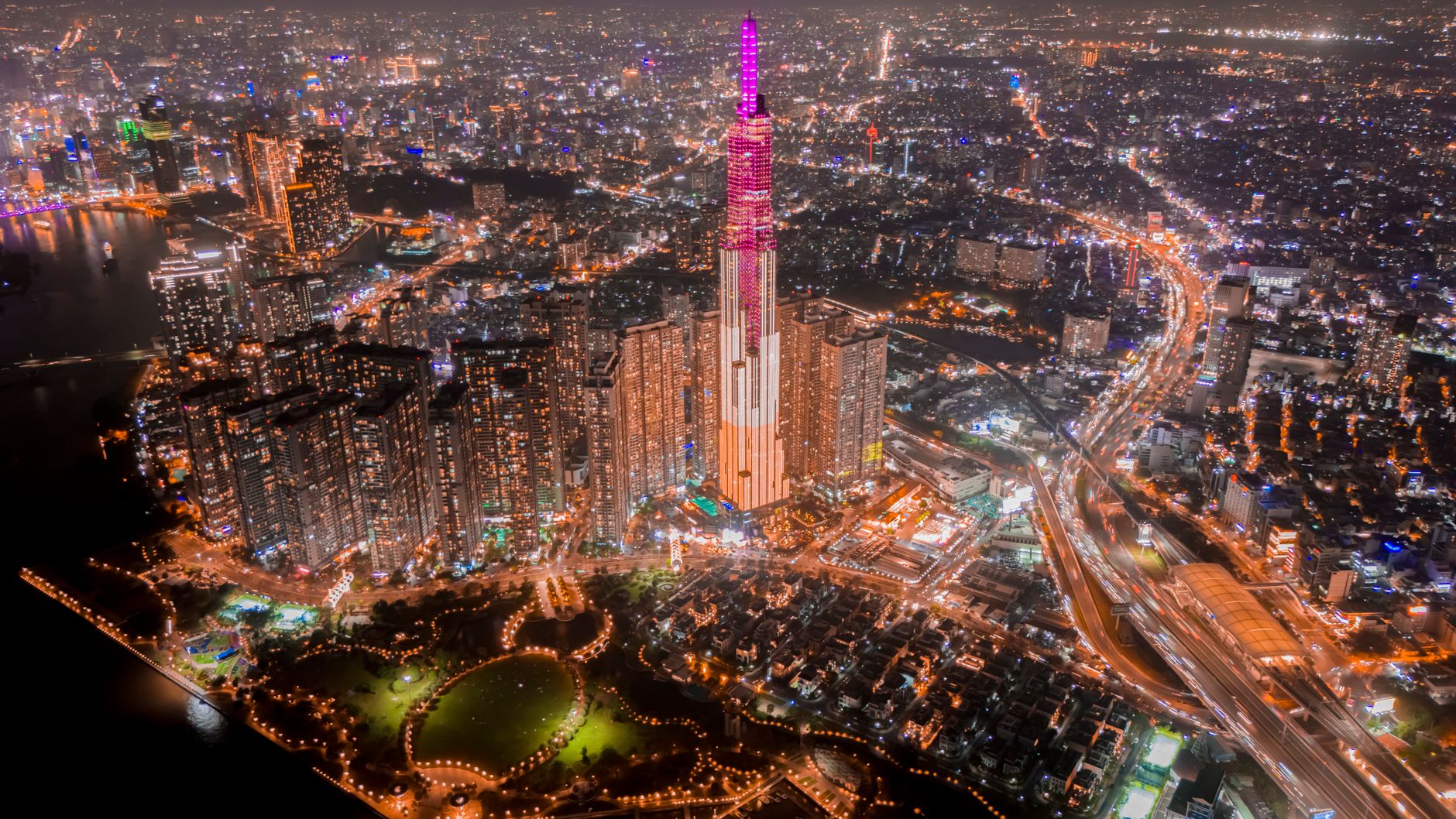
The Landmark 81 tower, Vietnam's tallest building, anchors the Binh Thanh waterfront. The area around the Vinhomes Central Park development has modern apartments, shopping malls, and a riverside promenade. Older parts of Binh Thanh retain a local market scene with excellent street food.
Phu Nhuan is quieter and more residential. It has good access to the airport, with the domestic terminal about 10 minutes away by car. The district has several parks and a growing cafe scene.
Hotel prices run 700,000-1,400,000 VND ($28-56) for quality rooms. Grab rides into District 1 cost 40,000-70,000 VND ($1.60-2.80) and take 15-25 minutes depending on traffic.
District 2 and Thao Dien: the expat enclave
District 2, specifically the Thao Dien neighborhood, sits across the Saigon River. This is where the expat community lives, and it shows. The area is full of international restaurants, craft beer bars, boutique gyms, and Western-style cafes.
The vibe is completely different from the rest of the city. Streets are wider, sidewalks are walkable, and the pace is slower. Families with young children often prefer this area for its safety and amenities.
The downside is distance from the historic center. A Grab car to District 1 costs 80,000-120,000 VND ($3.20-4.80) and takes 20-30 minutes, longer with bridge traffic. Hotel prices are comparable to District 1, with mid-range rooms from 1,000,000-2,000,000 VND ($40-80).
This district suits longer stays, digital nomads, and travelers who prioritize comfort and Western amenities over sightseeing proximity.
Comparison table: district quick reference
| District | Walk to D1 sights | Grab to D1 | Mid-range hotel/night | Street food bowl | Best for |
|---|---|---|---|---|---|
| District 1 | Yes | Not needed | 1,200,000-2,000,000 VND ($48-80) | 60,000-90,000 VND ($2.40-3.60) | First-time visitors, sightseeing |
| District 3 | 10-20 min | 20,000-30,000 VND ($1-1.20) | 800,000-1,500,000 VND ($32-60) | 40,000-60,000 VND ($1.60-2.40) | Food lovers, coffee drinkers |
| District 4 | No | 20,000-30,000 VND ($1-1.20) | 400,000-900,000 VND ($16-36) | 35,000-55,000 VND ($1.40-2.20) | Budget travelers, foodies |
| District 5 | No | 50,000-80,000 VND ($2-3.20) | 500,000-1,000,000 VND ($20-40) | 35,000-60,000 VND ($1.40-2.40) | Culture seekers, return visitors |
| Binh Thanh/Phu Nhuan | No | 40,000-70,000 VND ($1.60-2.80) | 700,000-1,400,000 VND ($28-56) | 40,000-60,000 VND ($1.60-2.40) | Mid-range value, longer stays |
| District 2/Thao Dien | No | 80,000-120,000 VND ($3.20-4.80) | 1,000,000-2,000,000 VND ($40-80) | 60,000-100,000 VND ($2.40-4) | Expats, families, digital nomads |
How to choose based on your trip
First-time visitor with 2-3 days in the city? Stay in District 1. The convenience of walking to the main sights outweighs the higher prices. Book north of Bui Vien if you want sleep.
Returning visitor or here for the food? District 3 or District 4. Both offer better eating at lower prices, with quick access to District 1 when needed.
Business trip or short layover? Phu Nhuan near the airport. The savings on transport and the reduced traffic stress make it the practical choice.
Staying a week or more? District 2 or Binh Thanh. The slower pace and apartment-style accommodations work better for longer stays. A serviced apartment in these areas often costs less than a hotel room in District 1.
Traveling with young children? District 2 has the most family-friendly infrastructure. Wide sidewalks, international restaurants, and parks make daily life easier. Check the guide to traveling Vietnam with babies and toddlers for more specific advice.
Getting around from any district
Grab is the default transport app in Ho Chi Minh City. It works reliably across all districts, including the airport pickup zone. A 4-seat car from District 1 to the airport costs 120,000-180,000 VND ($4.80-7.20). A motorbike taxi runs 60,000-90,000 VND ($2.40-3.60). See the Grab vs cash taxis at Tan Son Nhat guide for airport specifics.
The Saigon Metro Line 1 opened in late 2024, connecting Ben Thanh in District 1 to Suoi Tien in the northeast. It passes through Binh Thanh and near Phu Nhuan. The metro is clean, air-conditioned, and costs 6,000-20,000 VND ($0.24-0.80) per ride. It is useful for reaching the eastern parts of the city but does not serve District 3, 4, or 5 directly. Read the Saigon Metro Line 1 one year on analysis for practical details.
Walking is only practical within District 1 and parts of District 3. The heat and traffic make long walks unpleasant elsewhere. Use Grab bikes for short hops and cars for longer trips or when carrying luggage.
Practical notes for booking
Prices spike dramatically during Tet (Vietnamese New Year) and national holidays. See the public holidays and closures guide for exact dates. Book at least 2-3 weeks ahead for these periods.
Most hotels in Ho Chi Minh City include breakfast in the room rate. This is worth checking when comparing prices, since a decent breakfast buffet adds 150,000-250,000 VND ($6-10) per person if bought separately.
Air conditioning is non-negotiable. The city runs hot and humid year-round, with average highs of 30-35°C (86-95°F). Check that the AC unit is in good working order before committing to a room. The heat, sun and hydration guide has more on managing the climate.
The dry season from December to April is the best time to visit. The rainy season from May to November brings daily afternoon downpours, though mornings are usually clear. January is particularly pleasant, with lower humidity and cooler evenings. See the Vietnam in January guide for specifics.
FAQ
Q: Is it safe to stay outside District 1? Yes. All districts in Ho Chi Minh City are generally safe for travelers. The main risks are the same everywhere: motorbike snatching, pickpocketing in crowded markets, and traffic accidents. Choose a hotel with good reviews and stay alert on the streets.
Q: How much should I budget for accommodation in Ho Chi Minh City? Budget travelers can find hostel beds from 150,000 VND ($6) and basic private rooms from 400,000 VND ($16). Mid-range hotels run 800,000-1,500,000 VND ($32-60). Luxury properties start around 3,500,000 VND ($140) per night.
Q: Which district has the best street food? District 4 is the strongest overall for authentic, cheap street food. District 3 has better cafes and a strong local restaurant scene. District 5 excels at Chinese-Vietnamese food, especially dim sum and barbecue. District 1 has the most variety but at tourist prices.
Q: Can I walk from District 3 or District 4 to District 1? District 3 is walkable, with the journey taking 10-20 minutes depending on the starting point. District 4 requires crossing bridges and is less pedestrian-friendly. A Grab bike is the practical option.
Q: What is the best district for a first visit to Ho Chi Minh City? District 1, specifically the area between Ben Thanh Market and the Saigon River. This puts the main sights within walking distance and provides the easiest base for day trips to the Cu Chi Tunnels or the Mekong Delta.
Q: Is it better to stay near the airport or in the city center? For a short layover, stay near the airport in Phu Nhuan or Tan Binh. For any actual sightseeing, stay in the center. The airport is 30-45 minutes from District 1 in normal traffic, and the trip costs 120,000-180,000 VND ($4.80-7.20) by Grab.
Q: Are hotels cheaper in Ho Chi Minh City than in Hanoi? Generally, yes. Ho Chi Minh City has more hotel supply, which keeps prices competitive. The difference is most noticeable in the mid-range segment, where Saigon rooms run 10-20% cheaper than equivalent Hanoi properties.