Sa Đéc at a glance: what it is and whether it is worth a stop
Sa Đéc is a low-key, authentic riverside city of roughly 200,000 people on the Tiền River branch of the Mekong. It is not a checklist destination. There is no single monument that justifies the trip on its own. What justifies it is a working flower industry, a literary house, a busy river market and a pace of life that has not been arranged for visitors.
Three different things share the name, and many guides rarely separate them:
- Sa Đéc city is the modern city in Đồng Tháp province.
- Sa Đéc province was a historical entity that existed from 1900 to 1976, the French "Sadec", now absorbed into Đồng Tháp.
- Sa Đéc flower village is a cluster of farming hamlets around Tân Quy Đông and Tân Khánh Đông.
One administrative note matters for navigation. In 2025 Đồng Tháp merged with Tiền Giang, and wards were consolidated across the province. Old ward names such as An Hòa, Phường 1 and Phường 2 may no longer appear on maps, signs or booking addresses. If a hotel confirms an address that your map app cannot find, that is usually why.
Before you book anything, confirm the current ward name with the property directly. Post-2025 administrative changes have left a lot of outdated addresses online.
Quick verdict by traveller type
- Photographers and flower lovers: worth an overnight. Sunrise at the farms is the reason to stay.
- Literature and film fans: worth a half day. The Huỳnh Thủy Lê house is small but genuinely tied to Duras.
- Food travellers: worth a stop for hủ tiếu, nem Lai Vung and crab hotpot, though Cần Thơ has more depth.
- First-time Mekong visitors with two or three days total: prioritise Cần Thơ or Bến Tre instead. Sa Đéc works better as a second or third Delta trip.
Name and origin
The name probably comes from the Khmer Phsar Dek, meaning "iron market", though historians including Sơn Nam doubted that etymology. What is not in doubt is the town's commercial role. Sa Đéc was one of southern Vietnam's busiest trading markets under the Nguyễn lords and later under the French. In the 1920s, a Chinese-run quay ran about 2 km along the river, according to the Bernanoise account of the period.
How to get to Sa Đéc
Sa Đéc has no railway and no airport. Every route in is by road, which is why the logistics below matter more here than for most Delta towns.
| Origin | Mode | Distance | Duration | Approx. cost | Best for |
|---|---|---|---|---|---|
| Ho Chi Minh City | Private car or taxi | 140-150 km | 3-3.5 h | 1,500,000-2,200,000 VND ($58-85) | Groups, luggage, door to door |
| Ho Chi Minh City | Intercity bus | 140-150 km | 3.5-4.5 h | 150,000-250,000 VND ($6-10) | Budget, solo travellers |
| Cần Thơ | Bus, taxi or Grab | 45-55 km | 1-1.5 h | 60,000-120,000 VND ($2.30-4.60) bus | Coming from the nearest airport |
| Vĩnh Long | Bus or taxi | 25 km | 40-60 min | 40,000-80,000 VND ($1.50-3) bus | Combining with islands |
| Cao Lãnh | Bus or taxi | 25 km | 40-50 min | 40,000-80,000 VND ($1.50-3) bus | Xẻo Quýt, Nguyễn Sinh Sắc tomb |
From Ho Chi Minh City
Three options, in order of comfort:
Private car or taxi. The fastest and most predictable. The route runs via the Trung Lương-Mỹ Thuận expressway. Expect 3 to 3.5 hours outside peak traffic. Friday afternoons and the days before Tet can add an hour or more.
Intercity bus. Buses leave from Miền Tây bus station in Ho Chi Minh City. Some run direct to Sa Đéc, others drop at Vĩnh Long with a local connection onward. This is the cheapest option and perfectly workable, but you will need to arrange the last 25 km yourself.
Motorbike. Doable and popular with experienced riders, but be honest about the conditions. Highway traffic is dense, trucks overtake aggressively, and riding after dark on the expressway approaches is genuinely dangerous. This is not a route for a first motorbike trip in Vietnam.
The Mỹ Thuận 2 bridge and the expressway extensions toward Cao Lãnh and Cần Thơ have been under construction or newly opened in recent years. Check the current status before you plan timings, because a completed section can cut 30 to 45 minutes off the Saigon run.
From Cần Thơ, Vĩnh Long, Cao Lãnh and Châu Đốc
All of these are short hops. Cần Thơ International Airport is the nearest airport to Sa Đéc, at 45 to 55 km, which makes it the logical arrival point for fly-in visitors. Buses run frequently between Delta cities, and taxis or ride-hailing apps work for the shorter legs. Grab availability in Sa Đéc itself is thinner than in Cần Thơ, so do not assume a car will always be two minutes away.
The Vàm Cống and Cao Lãnh bridges ended the old ferry crossings on these routes, which is why the timings above are now stable rather than weather-dependent.
Getting around once there
- Walking works for the centre, the market and the riverside.
- Motorbike taxi or Grab for the flower village, roughly 20,000 to 50,000 VND ($0.80 to $1.90) per short trip.
- Bicycle is the best way around the flower hamlets. Several homestays rent them, often free for guests.
- Local boat or xuồng for the canals, arranged through homestays or at the river. Agree the price first.
English is limited outside hotels and homestays. A translation app is more useful here than in Cần Thơ.
Where to go: the main sights, ranked by value
| Sight | Area | Time needed | Fee | Best time | Worth it? |
|---|---|---|---|---|---|
| Huỳnh Thủy Lê house | Town centre | 30-45 min | Small fee, verify locally | Morning | Yes, for the story |
| Flower village | Tân Quy Đông, Tân Khánh Đông | 2-3 h | Varies by garden, about 100,000 VND ($4) at one | Sunrise or late afternoon | Yes, the main reason to come |
| Kiến An Cung | Town centre | 20-30 min | Free or donation | Morning | Yes, if you like temple architecture |
| Other pagodas | Town and outskirts | 30-60 min | Free | Morning | Optional |
| Market and riverside | Town centre | 45-60 min | Free | Early morning | Yes, for real life |
| Town park | Town centre | 30 min | Free | Evening | Optional, an evening stroll only |
Huỳnh Thủy Lê ancient house
Built in 1895, this house is tied to Marguerite Duras's novel The Lover, which won the Prix Goncourt in 1984 and became a Jean-Jacques Annaud film in 1992. Duras's mother ran a school in Sa Đéc in the late 1920s, and the Mekong ferry crossing sits at the centre of the story.
The house is Sino-French in style, with the interior largely preserved. Allow 30 to 45 minutes. Be clear about what you are seeing: the character of the Chinese lover is linked to Huỳnh Thủy Lê, but the details of the relationship come from Duras's own accounts rather than from documents. Treat it as literary history, not verified biography. The film was not shot here.
Verify the current opening hours and entry fee before you go. They change, and the house is small enough that a closed door wastes a trip across town.
Sa Đéc flower village (Tân Quy Đông and Tân Khánh Đông)
This is the reason most people come. Roughly 2,000 farming households grow ornamentals on elevated beds above a canal network, a technique that lets them water from below and move plants by boat. The village supplies the Mekong Delta and Ho Chi Minh City, especially in the run-up to Tet.
There is a real difference between the commercial farms and the gardens set up for visitors. Tư Tôn rose garden and similar operations charge entry, and one published listing shows about 100,000 VND (about $4) including a tram ride. Fees vary by garden, so ask before you walk in.
On a non-Tet day you will see planting, pruning and loading, not a wall of colour. That is the honest version, and it is still worth seeing. Etiquette matters: do not pick flowers, do not step into the beds, and ask before photographing workers.
Kiến An Cung and Chinese heritage
This Fujian-built temple dates to the 19th century and reflects the Chinese merchant community that shaped Sa Đéc's trading past. The architecture and the altars tell you more about the town's commercial history than any museum here. Twenty to thirty minutes is enough.
Other pagodas
Kim Huê pagoda, Phước Kiến and Hương pagoda are all visitable, as is the historic Nha Mân area mentioned in 1920s sources. Standard temple rules apply: cover shoulders and knees, remove shoes where indicated, and keep your voice down. Mornings are cooler and less crowded.
Sa Đéc market, riverside and town park
The market and the quay are where the city actually lives. Go early. The town park, with its 13.5 m Hồ Chí Minh statue, LED heart installations at Gate A and evening street food, appears in some guides as a highlight. It is not one. It is a pleasant evening walk if you are already staying overnight, and nothing more.
Nearby add-ons
- Vĩnh Long islands, about 25 km. Worth it if you want a boat and orchard day.
- Cao Lãnh, 25 km. Xẻo Quýt forest, the Nguyễn Sinh Sắc tomb and the Đồng Tháp museum. Worth a half day.
- Lai Vung, roughly 20 km. Tangerines and nem. Worth it in season, or for the food alone.
- Đình Yên mat-making village. Worth it if you want craft rather than scenery.
- Tràm Chim National Park, about 69 km. Worth it for birding in the dry season, not in the flood months.
What to eat in Sa Đéc
The local food is more distinctive than the sights, and many guides list it without detail.
| Dish | What it is | Where to find it | Price range |
|---|---|---|---|
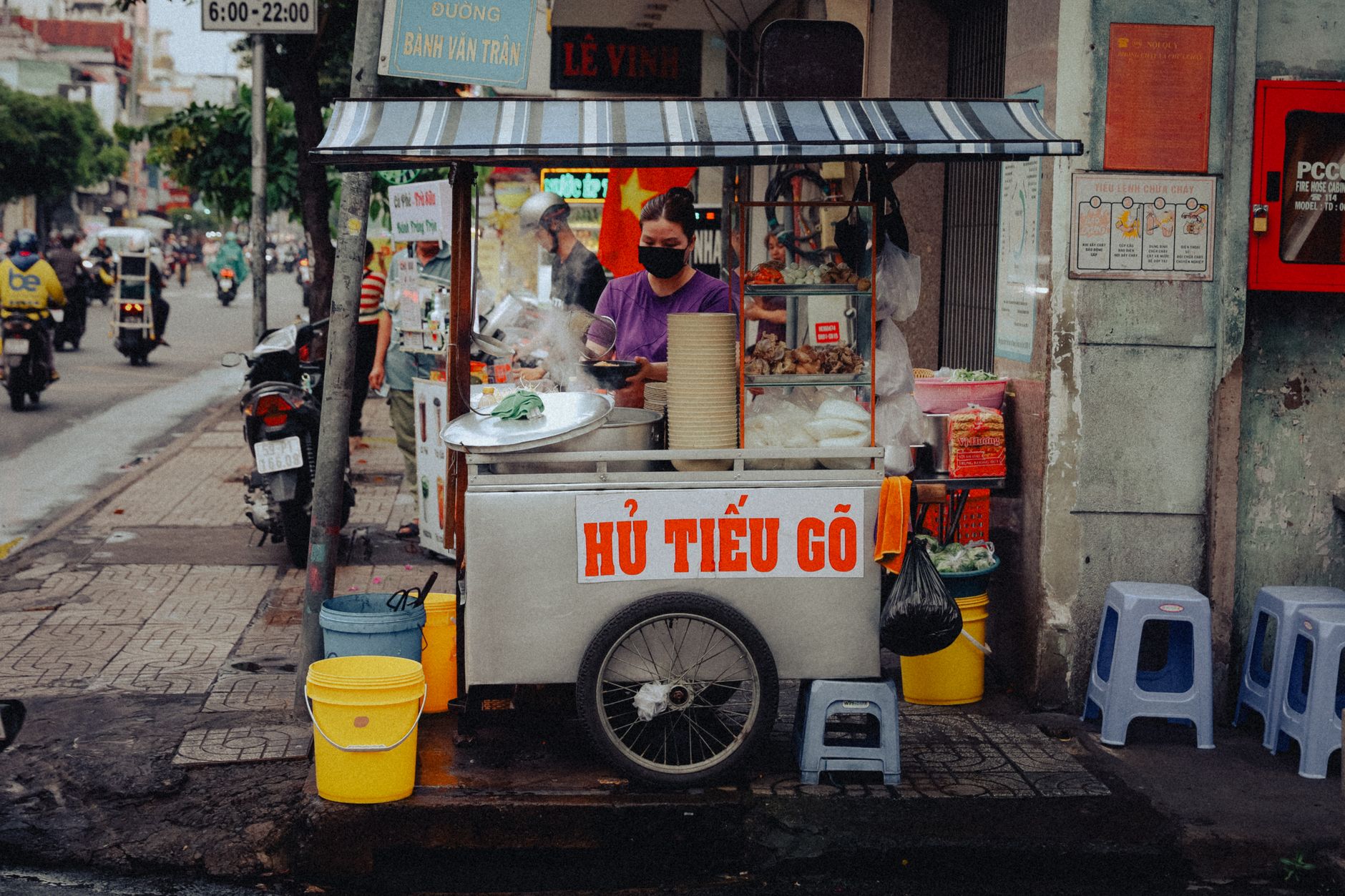
| Hủ tiếu Sa Đéc | Thin rice noodles, often dry or with broth | Town centre noodle shops, morning | 35,000-60,000 VND ($1.40-2.30) |
| Nem Lai Vung | Fermented pork rolls, tangy and firm | Markets, Lai Vung, town shops | 40,000-80,000 VND ($1.50-3) |
| Lẩu cua | Crab hotpot with river vegetables | Evening restaurants | 200,000-350,000 VND ($8-13) for two |
| Bánh phồng tôm | Sa Giang shrimp chips, a local brand since the 1960s | Shops and markets | 20,000-60,000 VND ($0.80-2.30) |
| Lai Vung mandarins | Pink mandarins, seasonal | Markets, around the lead-up to Tet | Seasonal |
| Bánh xèo and river fish | Delta standards, done well locally | Markets and family restaurants | 30,000-70,000 VND ($1.20-2.70) |
Hủ tiếu Sa Đéc comes with a story: the town's noodle-making families have supplied the Delta for generations, and the noodle is thinner and more delicate than the Phnom Penh style served elsewhere.
Typical prices and where locals eat
A bowl of noodles runs about 35,000 to 60,000 VND ($1.40 to $2.30). A rice plate with meat is similar. A crab hotpot for two lands around 200,000 to 350,000 VND ($8 to $13).
Rather than name a single best restaurant, look for the busy stalls near the market and along the main streets at breakfast and dinner. High turnover is the best food safety signal. Stick to bottled water, be cautious with ice from street carts, and eat where the locals are queueing.
When to go: seasons, flower calendar and Tet
| Period | What happens | Crowds | Prices | Recommendation |
|---|---|---|---|---|
| December to January | Flower sales build, farms at their best | Rising | Normal to high | Best window overall |
| Last 10 days before Tet | Peak flower trade, festival and flower street | Very high | Highest | Go for the spectacle, accept the crush |
| Tet itself | Many shops closed 3 to 5 days | Mixed | High | Avoid unless you have confirmed bookings |
| February to April | Dry, hot, flowers still growing | Low | Low | Good for walking and boats |
| May to November | Rainy season, green landscape | Low | Lowest | Fine, plan around afternoon downpours |
| September to November | Flood season, water in lower fields | Low | Low | Some road disruption, check routes |
Weather and seasons
The dry season runs December to April, with temperatures around 26 to 35°C. This is the most comfortable time for walking, cycling and boat trips. The rainy season runs May to November, with daily downpours that usually pass within an hour or two. The landscape is greener and prices are lower. The flood season, roughly September to November, puts water in the lower fields and can disrupt some roads.
Flower season and Tet
Flower sales start building in December. The peak is the final weeks before Tet, especially the last 10 days. The next Tet falls on 6 February 2027, and the following one on 26 January 2028. The city typically organises a flower festival and a flower street in the weeks before Tet, with dates announced annually.
The Tet trade-off
Tet brings crowds, higher prices and scooter traffic jams, and homestays book out weeks ahead. Many shops close for three to five days during Tet itself, while the farms are busiest just before it. If you want the flowers without the crush, aim for mid-January or a weekday in the run-up.
Where to stay
Accommodation is limited. Sa Đéc has a handful of city hotels, a few homestays in the flower village, and little at the luxury level.
| Base | Accommodation range | Sights nearby | Pros and cons |
|---|---|---|---|
| Sa Đéc | 300,000-1,200,000 VND ($12-46) | Flower village, Lover's house, market | Quiet, authentic, few options |
| Vĩnh Long | 400,000-1,500,000 VND ($15-58) | Islands, orchards, floating market access | More choice, 25 km from Sa Đéc |
| Cần Thơ | 400,000-3,000,000 VND ($15-115) | Floating market, food scene, airport | Best infrastructure, 45-55 km away |
| Cao Lãnh | 350,000-1,000,000 VND ($13-38) | Xẻo Quýt, tombs, museum | Good for Đồng Tháp sites, less charm |
Stay in Sa Đéc or base elsewhere?
Cần Thơ has far more hotels and food choices, and the airport. Sa Đéc suits a slow overnight in a flower-village homestay, where you get sunrise access to the farms before the day trippers arrive. Vĩnh Long is a reasonable middle ground if you want islands and Sa Đéc in one trip.
Accommodation types and price bands
- Budget hotels: roughly 300,000 to 500,000 VND ($12 to $19).
- Mid-range: roughly 600,000 to 1,200,000 VND ($23 to $46).
- Flower-village homestays: basic comfort, mosquitoes, and the best access to the farms at dawn. Bring repellent.
Verify these bands against current listings before publishing, and confirm the ward name with the property, since 2025 consolidation changed many addresses.
How long to stay and sample itineraries
Half day (stop on the Saigon to Cần Thơ route)
Flower village in the morning, Huỳnh Thủy Lê house, hủ tiếu lunch, then onward. Total cost with transport, entry and food: roughly 400,000 to 700,000 VND ($15 to $27) per person, excluding the long-distance leg.
One day with an overnight
Add Kiến An Cung, the market and riverside in the afternoon, the town park in the evening, then sunrise at the farms the next morning. Budget roughly 900,000 to 1,500,000 VND ($35 to $58) including a mid-range room.
Two days
Add Lai Vung, Cao Lãnh and a canal trip, or the Vĩnh Long islands. This is the plan for anyone who wants the Delta at a slower pace rather than a checklist.
Budget: what a trip to Sa Đéc costs
| Style | Accommodation | Food | Transport | Entry fees | Total per day |
|---|---|---|---|---|---|
| Shoestring | 300,000 VND ($12) | 150,000 VND ($6) | 100,000 VND ($4) | 100,000 VND ($4) | 650,000 VND ($25) |
| Mid-range | 800,000 VND ($31) | 350,000 VND ($13) | 250,000 VND ($10) | 150,000 VND ($6) | 1,550,000 VND ($60) |
| Comfortable | 1,500,000 VND ($58) | 600,000 VND ($23) | 500,000 VND ($19) | 200,000 VND ($8) | 2,800,000 VND ($108) |
Carry cash. Small vendors and market stalls do not take cards, and ATM availability in town is limited compared with Cần Thơ.
Practical tips, safety and responsible travel
- Traffic: motorbike density is high, pillion helmets are common but not universal, and highways are dangerous after dark. Avoid night riding.
- Health: dengue is a real risk. Use repellent, especially at dawn and dusk. Tap water is not drinkable.
- Water safety: insist on life jackets on boats, particularly in flood season when currents are stronger.
- Scams: low overall, but agree prices before boat or motorbike taxi rides and check for Tet surcharges.
- Language: limited English. A translation app helps.
- Responsible travel: no sweets or money for children, ask before photographing farmers, and stay out of the flower beds.
- Connectivity: mobile signal and Wi-Fi are generally good, including in most homestays.
Sa Đéc in the wider Mekong Delta route
Sa Đéc fits neatly into a three to five day Delta loop: Saigon, Mỹ Tho or Bến Tre, Vĩnh Long, Sa Đéc, Cần Thơ, Châu Đốc. Placed between Vĩnh Long and Cần Thơ, it breaks a long drive and gives you a flower village morning that no other stop on the route offers.
For the surrounding legs, see our guides to the Mekong Delta, Cần Thơ, Vĩnh Long, Châu Đốc and Bến Tre, plus our Ho Chi Minh City to Mekong transport page and our Tet in Vietnam explainer for timing the flower season.
FAQ
Q: Is Sa Đéc worth visiting? Yes for flowers, local life and the Lover's house, especially on a Saigon to Cần Thơ route. It is not a standalone highlight, and one day is enough for most travellers.
Q: How far is Sa Đéc from Ho Chi Minh City? About 140 to 150 km, roughly 3 to 3.5 hours by car or bus via the Trung Lương-Mỹ Thuận expressway. There is no train or airport service.
Q: What is Sa Đéc famous for? Its flower village, which supplies the Mekong Delta and Saigon with ornamentals, and Marguerite Duras's The Lover. It is also known for hủ tiếu noodles, nem Lai Vung and Sa Giang shrimp chips.
Q: When is the best time to visit the Sa Đéc flower village? December to January is best, with the peak just before Tet (6 February 2027). Flowers grow all year, and the dry season from December to April is the most comfortable.
Q: Can Sa Đéc be done as a day trip? Yes, from Cần Thơ or Vĩnh Long easily, and from Saigon with an early start. An overnight allows sunrise at the farms and the evening town.
Q: Who was the lover in Marguerite Duras's novel, and can the house be visited? The character is linked to Huỳnh Thủy Lê, whose family house from 1895 is open to visitors. Details of the relationship come from Duras's own accounts, not documents, so treat the story as literary history.
Q: Is Sa Đéc safe for tourists? Generally yes, with low crime. The main risks are traffic, mosquitoes and unsafe boats, so wear life jackets and use repellent.
Q: Where should I stay, Sa Đéc or Cần Thơ? Cần Thơ has far more hotels and food choices. Sa Đéc suits a slow overnight in a flower-village homestay.