At a glance Vietnamese name: Hang Luồn ("the cave you thread through") Location: northeast side of Bồ Hòn Island, central Ha Long Bay, Quang Ninh province Official route: the Ha Long Bay Management Department's Route 2, with Sung Sot Cave and Ti Top Island Distance from ports: about 11 to 12 km from Ha Long International Passenger Port (Bai Chay), about 13 to 14 km from Tuan Chau International Marina Access: kayak or rowed bamboo boat only. You cannot walk in. Typical stop: 30 to 45 minutes Fees: bay sightseeing fee plus an optional boat or kayak charge Main variables: tide height, weather closures, crowd timing
Where Luon Cave is and how it fits into a Ha Long Bay trip
Bo Hon Island sits in the core zone of the heritage area, and the cave lies on the island's northeast flank. You cannot simply "go to Luon Cave." You board a boat on a route that includes it.
Several sights share the same island or its immediate neighbours: Sung Sot Cave, Trinh Nu Cave and Bo Nau Cave. Ti Top Island is a short sail away. The management board organises visits into numbered routes, and Luon belongs to Route 2. Route numbers and their contents have been revised several times, so check that your written itinerary names "Hang Luồn," not just "Route 2."
Three places this is not. Luon is regularly confused with the Bright and Dark Cave (Hang Sáng Tối) in Lan Ha Bay, with Ba Ham Lake, also in Lan Ha, and with the "kayaking near a fishing village" stops in Bai Tu Long Bay. Cruises sold as "Lan Ha" or "Bai Tu Long" do not visit Luon.
A note on addresses. Since the July 2025 reform abolished district-level units in Vietnam, official addresses read as a ward plus "Quang Ninh province." "Ha Long" remains the everyday name used on tickets and signs, and it is what you will see at the port.
The story of the place: geology, names and legends
How the sea carved a tunnel through Bo Hon Island
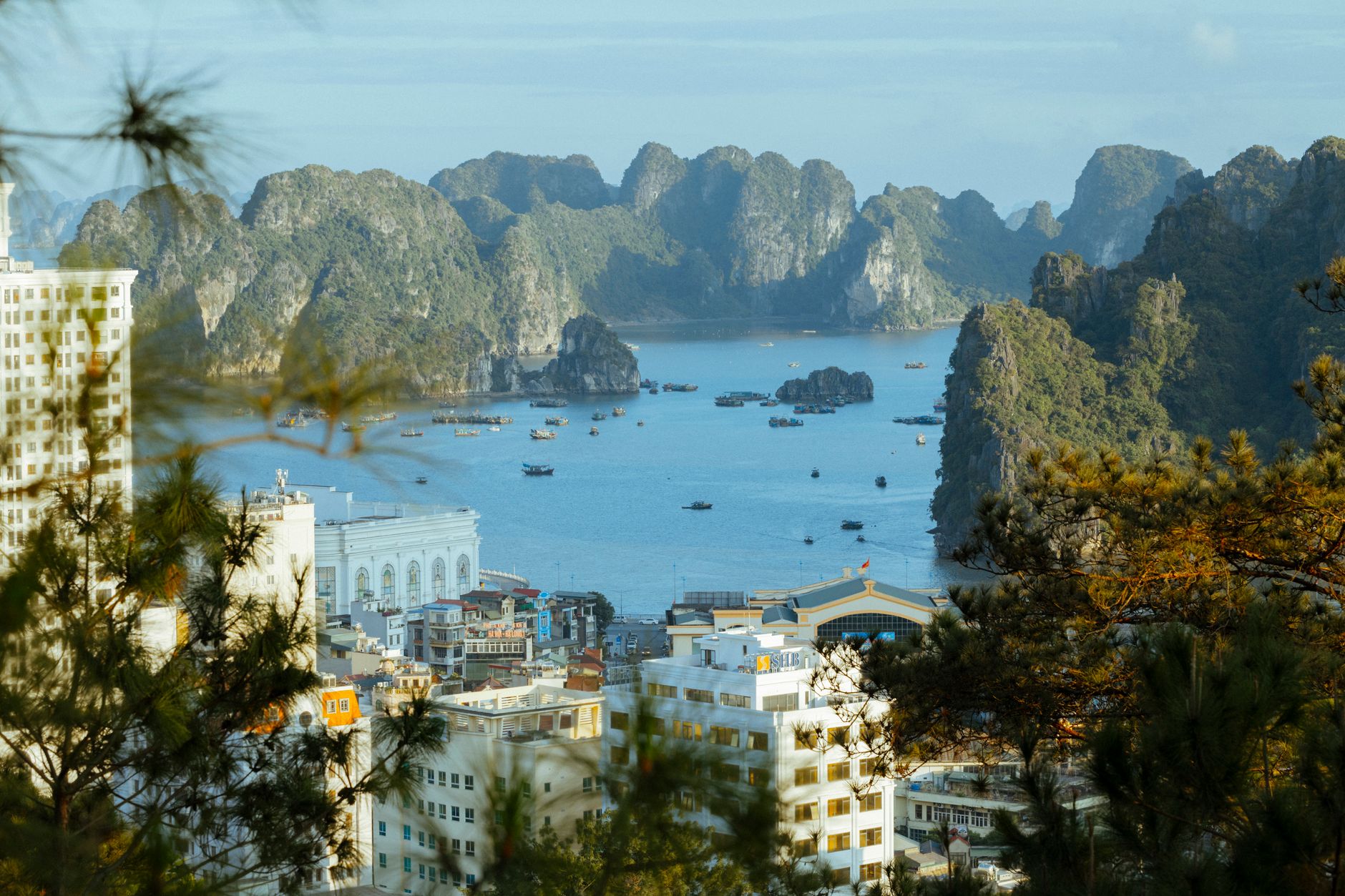
The bay is a drowned limestone karst landscape, made of fengcong and fenglin towers that flooded when sea levels rose after the last glacial period. Luon is a sea-level passage. Wave action and the dissolution of limestone at the tide line cut a notch, and the notch eventually opened into a through-tunnel linking the open bay to an enclosed lagoon.
The feature most visitors miss is the horizontal tidal notch itself, a groove cut into the cliff base all around the lagoon. It is visible evidence of the same process that made the tunnel, and you can see it from kayak height if you look at the rock rather than the water.
Vietnamese karst vocabulary distinguishes an áng (a lake enclosed by rock, connected to the sea through caves or fissures) from a tùng (a wider enclosed basin). Local sources describe Luon's lagoon with these terms; treat them as the local vocabulary rather than a strict scientific classification.
What "Luồn" and "Bồ Hòn" mean
Luồn means to slip or thread through, which describes exactly what visitors do. Bồ Hòn is the soapberry tree (Sapindus), whose fruit was traditionally used as soap. The Trinh Nu (Virgin) Cave legend belongs to the same island: a girl turned to stone while waiting for her fisherman lover. That story belongs to the island, not to Luon itself. Local accounts also say fishermen used enclosed lagoons like this one as storm shelters. Treat that as oral tradition.
Key dates for Ha Long Bay and why they matter here
1962 brought national scenic site listing, commonly cited. UNESCO inscribed the bay for aesthetic value in 1994, then again for geological value in 2000. Special National Monument status followed in 2009, again commonly cited. In September 2023 the property was extended to become "Ha Long Bay - Cat Ba Archipelago." In 2014 most floating-village families were resettled to the mainland, which is why today's lagoon is purely a tourist and nature site. In September 2024 Typhoon Yagi hit Quang Ninh hard and suspended all boat tourism for a period.
Published figures disagree, and why that matters
Some guides give the tunnel as about 60 m long and 4 m wide, with a ceiling of 2.5 to 4 m depending on the tide. Others give different lengths, and official material is not consistent. Treat these as "most often published" figures. Clearance changes daily with the tide, and that variability matters far more to a visitor than the exact length.
What you see and feel, in visiting order
Arriving at the pontoon
The day boat or cruise moors at a floating platform outside the cliff. Life jackets are handed out, and kayaks and bamboo boats queue here. Engines idle, crew call out, and everyone shuffles into a jacket that rarely fits properly. The contrast with what lies beyond the arch is the point.
The arch and the tunnel
The low opening sits at water level. Paddlers duck, especially at high tide, as water drips from small stalactites on the ceiling. Light falls away for a few strokes and then returns. Two-way traffic of kayaks and bamboo boats squeezes through at the same time, so keep your paddle in close and your hands inside the boat.
Tip: at high tide the ceiling comes down to head height. Lean forward, keep the paddle low across the deck, and let the boat in front clear the arch before you follow.
The lagoon
Still, green water enclosed by sheer, forested cliffs. The echo shifts and engine noise disappears. Birdsong and cicadas fill the silence in the warm months. Paddle to the far end and along the right or left edges, away from the cluster that forms just inside the entrance. Small dead-end side recesses open in the rock, and some guides lead kayakers into them. Only one or two boats fit at a time.
The cliffs and the monkeys
The animals are rhesus macaques (Macaca mulatta). Local material often calls them "golden" or "yellow" monkeys. Sightings are possible, not guaranteed, and mornings and quiet moments improve the odds. Look at the vegetation clinging to vertical limestone while you wait.
The return and the view back
Exiting gives the best framing of the arch, with open bay and karst towers beyond. This is the photo most people actually want, and it is why the last two minutes of the paddle matter more than the middle twenty.
Kayak or bamboo boat: which way to go through
| Option | Effort | Who it suits | Freedom in the lagoon | Usual cost | Gets you wet? |
|---|---|---|---|---|---|
| Kayak (usually double) | Moderate; basic paddling and some upper-body work | First-timers, couples, families with older children | Full, within the marked area | Included on many cruises, or a paid add-on on day boats | Yes, lightly |
| Bamboo boat (rowed) | None | Older travellers, young children, non-swimmers | Limited; boats tend to circle the centre | Last published at 50,000 VND (about USD 2) per person | Rarely |
Many overnight cruises include kayaks. Budget day tours often sell either option as a paid add-on, so ask the price and how payment works (cash VND) before boarding. Neither option runs in storms or strong wind.
Tides, seasons and the best hour to visit
How the tide changes the tunnel
Ha Long Bay has a mainly diurnal tide, with one high and one low on most days. Spring-tide range near Hon Gai and Hon Dau can reach roughly 3.5 to 4 m. At high water the ceiling is close and you must crouch. At extreme highs, staff may hold boats until the level drops. Vietnam's national hydro-meteorological tide tables for Hon Gai give the day's timings, but tour operators, not visitors, decide the timing on the day.
Month by month
| Period | Weather | Storm risk | Crowd level | Verdict |
|---|---|---|---|---|
| October to November | Clearest and calmest window | Low | Moderate | Best all-round |
| December to February | Cool, roughly 15 to 20°C, drizzle and mist | Low | Low to moderate | Atmospheric but chilly when wet |
| March to May | Warming, sea fog early in the season | Low | Rising | Good light, growing crowds |
| June to September | Hot and humid | Highest, peaking July to September | Domestic high season | Check forecasts; sailings can be banned |
Sailing bans are issued by the port authority when strong winds or storms are forecast. Since this is written in late October 2026, November and December 2026 are a good window for anyone planning soon.
Beating the crowds
The daily peak runs roughly 14:30 to 16:30, when day boats from Bai Chay and Tuan Chau finish Sung Sot and arrive together. Overnight cruises that run Luon early in the morning, or late on the first afternoon after the day boats leave, offer a calmer lagoon. Ask about stop order before booking, not after.
Domestic peaks fall on weekends, the June to August school holidays and public holidays. The next ones after today are 1 January 2027, Tet around 6 February 2027 with the week around it, Hung Kings' Commemoration in mid-April 2027, 30 April and 1 May 2027, and 2 September 2027.
Luon Cave compared with nearby water caves
| Place | Bay | Access type | Passage length (as published) | Crowd level | Best for |
|---|---|---|---|---|---|
| Luon Cave | Ha Long | Kayak or bamboo boat through a tidal tunnel | About 60 m | High mid-afternoon | Easy hands-on paddle on a day trip |
| Sung Sot Cave | Ha Long | Walk-through with stairs, no paddling | Not a water passage | High | Big chambers and viewpoints |
| Bright and Dark Cave | Lan Ha | Kayak through a long bright passage | Often cited at about 100 m | Moderate | A longer paddle; the dark section has been reported closed for safety |
| Ba Ham Lake | Lan Ha | Kayak through three linked basins | Not consistently published | Low | Quiet water and fewer boats |
| Vung Vieng | Bai Tu Long | Rowed boat or kayak around a village site | Not a cave passage | Moderate | Village life rather than rock |
Luon's real advantage is easy access from Bai Chay on a single day trip. Its weakness is the crowding.
Who will love it, who may be disappointed, and the honest verdict
Who will love it. First-time kayakers. Travellers on a one-day Ha Long visit who want one hands-on moment. Families using the bamboo boat. Photographers who time the light at the arch.
Who may be disappointed. Experienced sea kayakers, because the paddle is short and supervised. Anyone expecting solitude in mid-afternoon high season. Anyone sensitive to floating litter or noise, both of which some visitors report on busy days.
Verdict. Worth it as part of a Route 2 day you would take anyway. Not worth choosing a whole cruise for unless the itinerary guarantees a quiet slot. For more serious paddling, Lan Ha Bay is the better base.
Tickets, fees and opening hours
There are two separate charges. First, the Ha Long Bay sightseeing fee, sold for the route at the port ticket office or included in a tour price. Second, the Luon boat or kayak charge.
| Item | Price VND | Approx. USD / EUR | Included in tours? | Changes often? |
|---|---|---|---|---|
| Bay sightseeing fee, Routes 1 and 2 (last published) | 290,000 per adult per visit | About USD 11 / EUR 10 | Often included | Yes |
| Bamboo boat at Luon (last published) | 50,000 per person | About USD 2 | Sometimes | Yes |
| Kayak at Luon | Varies by operator | Varies | Yes on many cruises | Yes |
Reduced or free entry for children by height is sometimes offered; confirm at the counter. Day boats operate in daylight only. The management board sets departure windows from the ports, and kayak and bamboo-boat services stop well before dusk. There is no night access. Weather-related sailing bans can cancel the stop at short notice, and refund terms depend on the operator.
Warning: these figures change often. Treat them as the last known values, dated October 2026, and confirm on the day at the ticket office or with your operator.
How to get there
From Hanoi to Ha Long
The expressway via Hai Phong runs about 170 km and takes around 2.5 hours. Buses leave My Dinh or Gia Lam bus stations for Bai Chay and cost about 150,000 to 300,000 VND (USD 6 to 12). Limousine vans with hotel pick-up run about 250,000 to 400,000 VND. Organised day trips include the transfer.
From Bai Chay or Hon Gai to the ports
Ha Long International Passenger Port sits on Ha Long Road in Bai Chay, a short walk or a cheap Grab ride from the Bai Chay hotel strip. Tuan Chau International Marina is on Tuan Chau Island via the causeway, about 8 to 10 km from Bai Chay, with a Grab car or taxi at roughly 120,000 to 180,000 VND (USD 5 to 7). From Hon Gai, cross Bai Chay Bridge first.
| Leg | Mode | Duration | Approx. fare | Notes |
|---|---|---|---|---|
| Hanoi to Bai Chay | Bus | About 2.5 to 3 h | 150,000 to 300,000 VND (USD 6 to 12) | From My Dinh or Gia Lam |
| Hanoi to Bai Chay | Limousine van | About 2.5 h | 250,000 to 400,000 VND (USD 10 to 15) | Hotel pick-up |
| Bai Chay to Tuan Chau Marina | Grab or taxi | 15 to 20 min | 120,000 to 180,000 VND (USD 5 to 7) | Via the causeway |
| Port to Luon Cave | Day boat or cruise | 30 to 45 min sailing | Included in tour | Route 2 |
Boat options to Luon
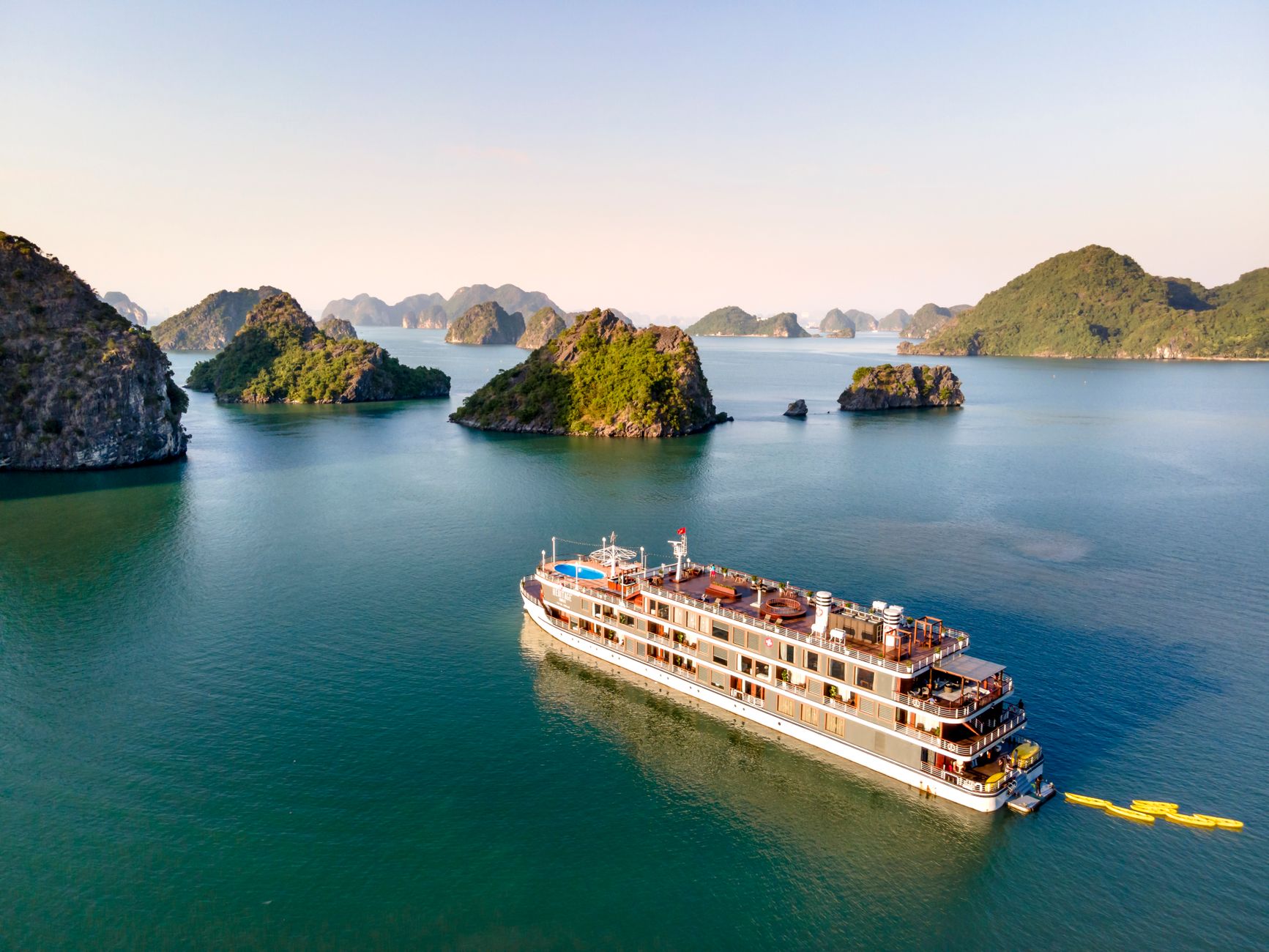
Join a Route 2 day boat, charter a whole boat for a group at the port ticket office, or book an overnight cruise whose written itinerary names Luon.
Safety, rules and etiquette
Life jackets are mandatory. Children ride in a double kayak with an adult, and minimum ages vary by operator. Macaques can bite or snatch, so do not feed or approach them. Vietnam has rabies, and any bite or scratch needs prompt medical care and post-exposure treatment; ask your operator for the nearest hospital in Ha Long before you go out.
Other hazards include jellyfish in the warm months, heat and sunburn on open water, and congestion in the arch. Littering, touching or breaking formations, and swimming outside designated spots such as Ti Top beach are prohibited. Flying drones requires authorisation in Vietnam. There is no dress code: quick-dry clothes, water shoes, a hat and a dry bag for your phone are enough. Photography is allowed, and a phone lanyard is worth the small cost, because dropped phones in the lagoon are rarely recovered.
What to combine with Luon Cave
Sung Sot Cave is on the same island, minutes away by boat, with steep steps at the entrance. Ti Top Island offers a viewpoint climb of about 400 steps plus a swimming beach. Trinh Nu Cave and Bo Nau Cave sit on Bo Hon Island if the route allows. Back on land, the Quang Ninh Museum in Hon Gai, Bai Chay beach and the Sun World Ha Long cable car fill an afternoon.
A day trip sequence: Sung Sot in the morning, Luon by kayak before the 14:30 rush, Ti Top for a late swim. An overnight sequence: Luon at first light on day two, Sung Sot after breakfast, Ti Top before lunch, then the sail back.
FAQ
Q: Can you visit Luon Cave without a tour? Yes, but only by boat. You can buy the Route 2 sightseeing fee and a seat or a charter at Ha Long International Passenger Port or Tuan Chau. There is no land access and no independent kayak launch.
Q: Is kayaking at Luon Cave included in the ticket? The bay sightseeing fee covers the route, not the kayak or bamboo boat. Many cruises include kayaks, while day boats often charge separately. The bamboo boat was last published at 50,000 VND (about USD 2) per person, and that figure changes.
Q: Do you have to duck under the arch? Often yes, especially at high tide, when clearance drops noticeably. At extreme highs, staff may make boats wait. Children and tall paddlers should lean forward and keep their paddles in.
Q: Is it safe for children and non-swimmers? Life jackets are mandatory and the water inside is sheltered. Non-swimmers and young children are better off in the bamboo boat or in a double kayak with an adult. The main real risk is the monkeys, not the water.
Q: Will I see monkeys? Possibly, but sightings are not guaranteed. Rhesus macaques live on the cliffs. Never feed them, and treat any bite as a medical matter because of rabies.
Q: How long does the visit take? Usually 30 to 45 minutes on the water within a Route 2 day of 4 to 6 hours from the port. Overnight cruises may allow longer.
Q: Is Luon Cave the same as the Bright and Dark Cave? No. The Bright and Dark Cave is in Lan Ha Bay near Cat Ba. Luon is on Bo Hon Island in Ha Long Bay, so check which bay your cruise actually sails.
Q: Can the visit be cancelled because of weather? Yes. The port authority suspends sailings when storms or strong winds are forecast, most often from July to September. Check the operator's refund terms before paying.
Your questions and tips
A question, an update, an experience to share? Our team reads every message before it is published.
No comments yet. Ask the first question or share a tip!