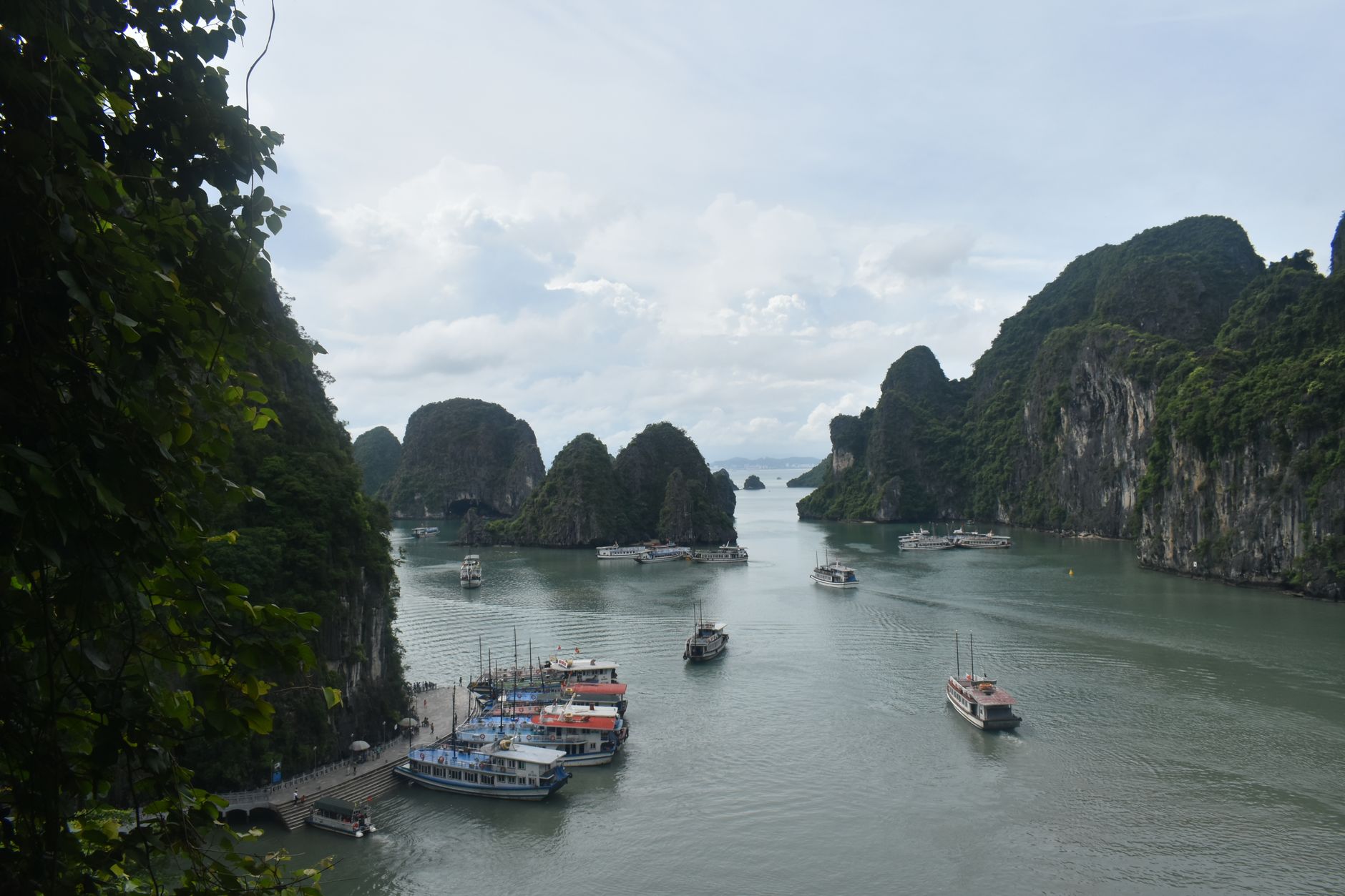
But the bay is bigger than the standard route. The 1,600 islands and islets of Ha Long Bay and its neighbor Lan Ha Bay hold beaches, fishing villages, climbing routes, and quiet lagoons that most cruise itineraries skip. The gap between what exists and what visitors actually see is wide.
This guide covers what to do in Ha Long Bay beyond the standard cruise deck experience, with practical details on costs, timing, and how to reach the places that matter.
The reality check: why the standard cruise feels rushed
Most day cruises from Tuan Chau Island follow a similar pattern. Pickup at 8:00, on board by 9:30, lunch by 11:00, Sung Sot Cave at noon, kayaking at 14:00, Ti Top Island at 15:00, return by 17:00. The stops are timed to keep boats moving through the bay's designated corridors.
The problem is not the locations. Sung Sot Cave is genuinely impressive, with two large chambers filled with stalactites. Ti Top Island has a viewpoint that rewards a 400-step climb with a panorama of the bay. The issue is the crowd. Dozens of boats dock at the same piers at the same time. The cave walkway becomes a queue. The beach at Ti Top feels like a public pool in August.
The fix is simple: choose a route that goes further south into Lan Ha Bay, or book a cruise that starts from Cat Ba Island instead of Tuan Chau. The water is cleaner, the karsts are just as dramatic, and the boat traffic is a fraction of what you will find in the core of Ha Long Bay.
Kayaking through the quiet corners
Kayaking is the single best way to experience the bay up close. From a kayak, the scale of the karsts becomes real. The water laps against limestone cliffs that rise 100 meters or more. Floating villages appear around corners. Monkeys watch from the treeline.
Most cruises include a short kayak session, usually 30 to 45 minutes in a designated area near Luon Cave or Ba Hang fishing village. That is enough for a taste, but not for the full experience.
For a longer paddle, head to Lan Ha Bay. The area around Cai Beo fishing village offers protected waters, hidden lagoons, and beaches that are only reachable by kayak. A half-day rental from Cat Ba Town costs around 200,000 to 300,000 VND ($8 to $12) per kayak. Several operators in Cat Ba Town offer self-guided kayak tours with a map and a pickup time. The paddling is easy, the water is calm, and the scenery changes around every headland.
Pro tip: Go kayaking in the early morning, before the cruise boats arrive. The bay is still, the light is soft, and the floating villages are waking up. By 10:00, the water fills with boats.
Rock climbing on limestone karsts
Ha Long Bay is one of Southeast Asia's premier rock climbing destinations. The karsts are made of solid limestone, and the climbing is world-class. The routes range from beginner-friendly slabs to overhanging walls that challenge experienced climbers.
Most climbing happens in Lan Ha Bay, where the rock is less weathered and the approach by boat is short. The main climbing areas are around Butterfly Island, Dark and Bright Cave, and the cliffs near Cai Beo. Routes are bolted, and local guides know the rock well.
A half-day climbing trip from Cat Ba Town costs 1,200,000 to 1,800,000 VND ($48 to $72) per person, including transport, gear, and a guide. Full-day trips with lunch run 2,000,000 to 2,500,000 VND ($80 to $100). No experience is needed for beginner routes. The guides set up top ropes and teach basic technique on the wall.
For those who want to try climbing without committing to a full day, some Cat Ba operators offer a "climbing intro" that combines a short climb with kayaking and a beach stop. It is a good way to test the waters.
Note: Climbing is seasonal. The best conditions run from October to April, when the rock is dry and the temperatures are cooler. Summer climbing is possible but sweaty, and afternoon thunderstorms can cut sessions short.
The floating villages: a look at bay life
The floating villages of Ha Long Bay have existed for centuries. Fishing families built houses on rafts, anchored in sheltered coves, and lived off the sea. Today, most of the original villages have been relocated to shore as part of government resettlement programs. But a few remain, and they offer a glimpse into a way of life that is disappearing.
Cua Van is the most visited floating village. It sits in a protected cove on the eastern edge of the bay, and it is often included in longer cruise itineraries. The village has a small school, a community hall, and around 40 floating houses. Visitors arrive by small boat, wander the wooden walkways, and learn about the daily rhythm of fishing, net repair, and aquaculture.
Vung Vieng, further north, is quieter. Fewer boats stop here, and the village feels more authentic. The houses are older, the residents are more reserved, and the surrounding karsts are some of the most dramatic in the bay.
Both villages are best visited as part of a cruise that includes them in the route. A dedicated boat trip from Tuan Chau to Cua Van costs around 1,500,000 VND ($60) per person for a half day, including a local guide.
Warning: Some "floating village" tours are actually visits to pearl farms or commercial seafood platforms. Ask specifically for Cua Van or Vung Vieng. Those are the real communities.
Ti Top Island: worth the climb
Ti Top Island is the most visited island in Ha Long Bay, and for good reason. The viewpoint at the top offers a 360-degree panorama of the bay that is genuinely stunning. The climb takes 15 to 20 minutes, and the steps are well maintained. The beach below is small but clean, with calm water for swimming.
The catch is the crowd. Ti Top is on almost every cruise route, and the pier can have a queue of boats waiting to dock. The climb itself is a conga line of sweaty tourists during peak hours.
The solution is to visit Ti Top at the start of the day, before the main fleet arrives. Some overnight cruises anchor near the island and offer a sunrise visit. The light at that hour is better for photography, and the viewpoint is nearly empty.
If Ti Top is too crowded, skip it and head to Soi Sim Island instead. Soi Sim has a similar viewpoint, a quieter beach, and far fewer visitors. It is not as dramatic as Ti Top, but the experience is more pleasant.
Beaches that are actually worth swimming at
The water in Ha Long Bay is not always inviting. The bay is busy with boat traffic, and sediment from the many rivers that feed it keeps the water murky. Swimming directly off a cruise boat is possible, but it is not the highlight of the trip.
For a proper swim, head to Lan Ha Bay. The water there is clearer, the beaches are sandier, and the crowds are thinner. Three beaches stand out:
Ba Trai Dao (Three Peaches Island) is the most accessible. It has a long stretch of sand, shallow water, and a few basic food stalls. It is popular with day boats from Cat Ba, but it rarely feels overcrowded.
Van Bo Beach is quieter. It sits on the southern edge of Lan Ha Bay, and it is a regular stop on Cat Ba-based kayak tours. The beach is backed by jungle, and the water is clean enough to see your feet at waist depth.
Nam Cat Island has a small resort, but the beach is open to day visitors. The sand is finer than at Ba Trai Dao, and the swimming is excellent. The resort charges a small fee for day use, usually 100,000 VND ($4), which includes access to showers and loungers.
Pro tip: Pack reef shoes. The sand at many Lan Ha Bay beaches gives way to sharp rocks and coral fragments in the shallows. Reef shoes cost 100,000 to 200,000 VND ($4 to $8) in Cat Ba Town and save a lot of pain.
Overnight cruises: which ones are worth the money
An overnight cruise is the classic Ha Long Bay experience. You sleep on the water, wake up to the karsts, and visit the bay at its quietest hours. The quality of the experience depends almost entirely on the boat and the route.
The cheapest overnight cruises start around 2,500,000 VND ($100) per person, including meals, activities, and cabin accommodation. These are older boats with basic cabins, shared bathrooms on some vessels, and a fixed itinerary that follows the standard route. They are fine for budget travelers who want the experience without the frills.
Mid-range cruises run 3,500,000 to 6,000,000 VND ($140 to $240) per person. These boats have en-suite cabins, better food, and more varied itineraries. Some include tai chi sessions on the sundeck at sunrise, cooking demonstrations, and squid fishing at night. The best mid-range boats operate in Lan Ha Bay, where the routes are less crowded.
Luxury cruises start at 8,000,000 VND ($320) per person and go up from there. These are the boats with private balconies, jacuzzis on the deck, and five-course dinners. The service is excellent, but the experience is fundamentally the same as a mid-range cruise. The extra money buys comfort, not access.
One thing to check before booking: the cruise route. Many boats advertise "Ha Long Bay" but actually sail in Lan Ha Bay or Bai Tu Long Bay. That is not a scam. Those areas are part of the same karst seascape, and they are often better. But the price should reflect the route. A Lan Ha Bay cruise should cost less than a Ha Long Bay cruise, since the former is closer to Cat Ba and uses less fuel.
Warning: Read recent reviews before booking any overnight cruise. The industry has a wide quality range, and a boat that was excellent in 2023 may have deteriorated by 2026. Look for reviews that mention the food, the cabin conditions, and the guide's English.
Bai Tu Long Bay: the quieter neighbor
Bai Tu Long Bay sits northeast of Ha Long Bay, sharing the same karst geology but with a fraction of the visitors. The bay is part of the same UNESCO designation, but it is less developed, less crowded, and in many ways more beautiful.
The main access point is Van Don, about 40 kilometers northeast of Ha Long City. From Van Don, boats run to Quan Lan Island, a long, flat island with empty beaches and a laid-back atmosphere. Quan Lan has a few guesthouses and homestays, but no large resorts. The island is best explored by bicycle or motorbike, and the beaches are clean enough to rival anything in Lan Ha Bay.
A day trip from Van Don to Quan Lan costs around 1,000,000 VND ($40) per person for the boat ride. Overnight stays are cheap, with guesthouse rooms starting at 300,000 VND ($12) per night.
Bai Tu Long Bay is also the base for several high-end cruise operators that offer multi-day itineraries through the less-visited corners of the seascape. These cruises are more expensive than standard Ha Long Bay options, but they offer genuine solitude and a deeper connection to the landscape.
Cat Ba Island: the practical base
Cat Ba Island is the largest island in the bay and the best base for exploring beyond the standard cruise route. The island has a national park, hiking trails, beaches, and a lively town with a good range of accommodation and restaurants.
The island is accessible by ferry from Tuan Chau or by high-speed boat from Ha Long City. The high-speed boat takes about 45 minutes and costs 200,000 VND ($8) per person. The ferry is slower but cheaper, at 100,000 VND ($4).
Cat Ba Town is the main settlement. It has a harbor lined with restaurants, a night market, and a range of hotels from budget hostels to mid-range resorts. The town is not beautiful, but it is functional and friendly.
The national park is the island's main inland attraction. A network of trails leads through jungle-covered hills to viewpoints that look out over the bay. The most popular hike is the trek to Ngu Lam Peak, which takes about three hours round trip and rewards with a panoramic view of the island's southern coast. The park entrance fee is 80,000 VND ($3.20).
For those who want to combine Ha Long Bay with hiking and wildlife, Cat Ba is the answer. The island offers a diversity of experiences that the mainland cannot match.
Pro tip: If you are traveling from Hanoi, consider going directly to Cat Ba instead of Ha Long City. The island has its own transport links, and you avoid the hassle of transferring from Ha Long City to the ferry terminal. A direct bus from Hanoi to Cat Ba takes about four hours and costs 350,000 to 450,000 VND ($14 to $18).
Practical information for 2026
Getting there: Ha Long Bay is about 170 kilometers east of Hanoi. The most common route is by bus or private car, taking 2.5 to 3.5 hours depending on traffic. A new expressway has shortened the journey, but weekend traffic can still add an hour. For details on all transport options, see the guide to getting to Ha Long Bay from Hanoi.
Entry fees: Ha Long Bay has an entry fee of 290,000 VND ($12) per person for a day visit. This is usually included in cruise prices, but check before booking. Lan Ha Bay does not have an entry fee, which is one reason Cat Ba-based cruises are cheaper.
Weather: The best months are October to April, when temperatures range from 15°C to 25°C and rainfall is low. Summer months (June to August) are hot and humid, with afternoon thunderstorms and occasional typhoons. January can be misty and cool, which actually makes for atmospheric photos of the karsts emerging from the fog.
Budget: A budget traveler can see Ha Long Bay for around 1,500,000 VND ($60) per day, including a day cruise, basic accommodation, and meals. A mid-range traveler should budget 3,000,000 to 5,000,000 VND ($120 to $200) per day for an overnight cruise and nicer hotels. High-end travelers can easily spend 10,000,000 VND ($400) per day on luxury cruises and resorts.
Connectivity: Mobile coverage is good across the bay, and most cruise boats have wifi. It is slow, but it works for messaging and basic browsing. For a reliable connection onshore, grab a local SIM card or eSIM before leaving Hanoi.
Comparison: day cruise vs overnight cruise vs Cat Ba base
| Factor | Day cruise from Tuan Chau | Overnight cruise | Cat Ba Island base |
|---|---|---|---|
| Duration | 8 hours | 2 days, 1 night | 2 to 4 days |
| Cost per person | 800,000 to 1,500,000 VND ($32 to $60) | 2,500,000 to 8,000,000 VND ($100 to $320) | 1,500,000 to 3,000,000 VND ($60 to $120) per day |
| Crowds | High | Moderate | Low |
| Swimming | Limited | Good | Excellent |
| Kayaking | 30 to 45 minutes | 1 to 2 hours | Unlimited |
| Flexibility | None (fixed route) | Low (fixed route) | High (self-guided) |
| Best for | First-timers with limited time | Couples and special occasions | Independent travelers and families |
FAQ
Q: Is Ha Long Bay worth visiting in 2026? Yes, but manage expectations. The bay is genuinely spectacular, and the karst landscape is unlike anything else in Vietnam. The standard cruise experience is crowded and rushed, but the bay itself delivers. The key is choosing the right route and timing. A visit during the shoulder season (October to November or March to April) on a weekday will feel completely different from a summer weekend.
Q: How many days should I spend in Ha Long Bay? Two days and one night is the sweet spot for most travelers. It allows time for an overnight cruise, a full day of activities, and a relaxed transfer back to Hanoi. A day trip is possible but rushed. Three days or more is best for those who want to add Cat Ba Island, hiking, or rock climbing to the itinerary.
Q: What is the difference between Ha Long Bay and Lan Ha Bay? Ha Long Bay is the larger, more famous area, and it has the UNESCO designation. Lan Ha Bay is the southern extension, bordering Cat Ba Island. The landscapes are similar, but Lan Ha Bay has cleaner water, fewer boats, and more beaches. Many cruises that advertise "Ha Long Bay" actually operate in Lan Ha Bay.
Q: Can I visit Ha Long Bay without a cruise? Yes, but it is not practical. The bay is a seascape, and the only way to see it is from the water. You can rent a private boat from Tuan Chau or Cat Ba Town for 2,000,000 to 4,000,000 VND ($80 to $160) for a few hours, but the cost per person is usually higher than a group cruise. The cruise is the most efficient option.
Q: Is the water in Ha Long Bay clean enough for swimming? It depends on the location. The water near the main cruise routes is murky and not appealing for swimming. The water in Lan Ha Bay and Bai Tu Long Bay is cleaner and clearer. Always check with your tour operator about swimming stops. If swimming is a priority, choose a cruise that operates in Lan Ha Bay.
Q: What should I pack for a Ha Long Bay cruise? Pack light: swimwear, a light jacket for the evening, sunscreen, insect repellent, and a hat. A dry bag is useful for kayaking. Most cruise boats provide towels and basic toiletries. Bring cash in Vietnamese dong for tips and any onboard purchases. Card payments are accepted on most mid-range and luxury boats, but budget boats are cash only.
Q: Is it better to book a cruise in advance or on arrival? In 2026, booking in advance is the safer option, especially during peak season (November to April). The best boats sell out weeks ahead. Booking on arrival in Ha Long City or Cat Ba Town can yield last-minute discounts, but the quality is unpredictable. Use a reputable booking platform or ask your hotel for recommendations.