What you need to know before going
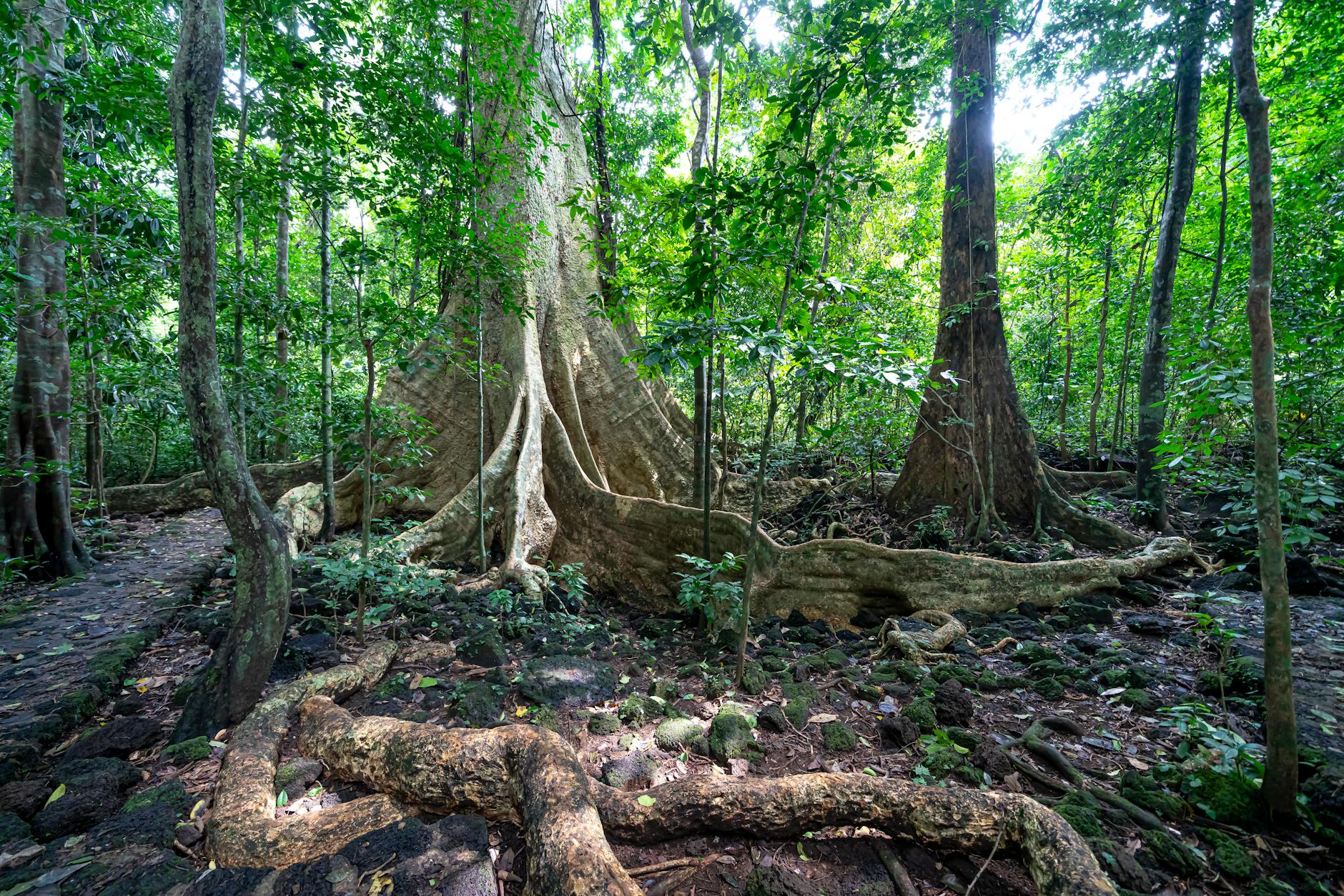
Cat Ba National Park sits in the northern half of Cat Ba Island, about 15 kilometers from Cat Ba Town. It covers approximately 15,200 hectares of tropical forest, limestone karst, and coastal mangrove. The park was designated a UNESCO Biosphere Reserve in 2004, which means it protects both the ecosystem and the local communities living within its buffer zones.
Two villages sit inside the park boundary: Viet Hai and Xuan Dam. These are not tourist attractions in the theme park sense. They are working fishing and farming communities where people live without constant electricity in some cases. The park serves as their backyard, not a museum.
Some travelers worry about construction in Cat Ba Town affecting park access. It does not. The road to the park (Route 356) is fully paved and clear. The construction you see in town relates to new hotels and a marina, not the park itself.
How to get to Cat Ba National Park
The park entrance is on Route 356, about 6 kilometers north of Cat Ba Town. Getting there requires your own transport.
Motorbike: The best option. It takes 15-20 minutes from Cat Ba Town. The road is paved with some curves but nothing difficult. Parking at the entrance costs 10,000-20,000 VND. If you need a bike, check our guide on motorbike rental Dalat for general rental tips, though rental options on Cat Ba are similar.
Taxi: A one-way trip costs 200,000-300,000 VND ($8-$12). Negotiate the price before getting in. There are no taxis waiting at the park entrance to take you back, so arrange a pickup time with your driver or use Grab if available. Read our guide on whether Grab works on Cat Ba Island for current details.
Bicycle: Possible but challenging. The route has steep hills, especially the last 2 kilometers. Expect 45-60 minutes each way. Do this only if you are fit and start early.
Public bus: None. Do not plan on it.
The entrance coordinates are 20.7974° N, 107.0026° E. The entrance arch is hard to miss. It is a large stone gateway on the left side of the road.
Park fees and opening hours
Entry costs 80,000 VND per person (approximately $3.30 USD) as of 2026. This covers all trails and Trung Trang Cave. Parking for motorbikes costs an additional 10,000-20,000 VND.
The park is open daily from 7:00 AM to 5:00 PM. The ticket booth closes at 4:00 PM. Arrive before 8:00 AM for the best wildlife spotting and to beat the afternoon heat and crowds.
Pro tip: Bring cash. The entrance gate does not accept credit cards or mobile payments. There is no ATM at the park. The nearest ATM is in Cat Ba Town.
Trail guide: Which hike is right for you
Four main trails exist inside the park. Each offers a different experience. None are truly easy in the "stroll through a garden" sense. Vietnam's humidity makes every hike feel harder than the distance suggests.
| Trail | Distance | Time | Elevation Gain | Difficulty | Best For |
|---|---|---|---|---|---|
| Ngu Lam Peak | 2.5 km one way | 45-60 min up | 200 meters | Moderate | Photographers, limited time, first-timers |
| Viet Hai Village | 6 km one way | 2-2.5 hours | 80 meters | Easy to moderate | Cultural immersion, birdwatchers, full-day adventure |
| Kim Giao Forest | 2.5 km loop | 1-1.5 hours | 30 meters | Easy | Families, plant lovers, rainy day backup |
| Frog Lake | 9 km one way | 4-5 hours | 350 meters | Hard | Experienced hikers, solitude seekers |
Ngu Lam Peak Trail (2.5 km one way, 45-60 minutes up)
The most popular hike. The path is paved with concrete steps through dense jungle. The final 100 meters involve rock scrambling over limestone boulders. At the top, a 360-degree viewpoint looks over the island's jagged karst peaks and the bay beyond.
Arrive before 9:00 AM to have the summit mostly to yourself. By 10:00 AM, tour groups arrive and the platform gets crowded. The total round trip takes 2-3 hours depending on how long you stay at the top.
What to watch for: Slippery limestone on the descent, especially after rain. The steps are uneven. Wear shoes with good grip.
Viet Hai Village Trail (6 km one way, 2-2.5 hours)
This trail cuts through primary forest on relatively flat terrain. It ends at Viet Hai, a remote fishing village accessible only by foot or boat. The village has a small pier, a few homestays, and a basic restaurant.
You have two return options. Walk back the same 6 kilometers, or negotiate with local fishermen for a boat ride back to the main road or Cat Ba Town. Expect to pay 50,000-100,000 VND per person for the boat. The boat takes about 30 minutes and offers a different perspective of the park's coastline.
What to watch for: Bird activity is high here. Bring binoculars if you have them. The trail is well-marked but can get muddy after rain.
Kim Giao Forest Trail (2.5 km loop, 1-1.5 hours)
An elevated boardwalk through a grove of ancient kim giao trees. This conifer species is endemic to the region and was once used to make chopsticks for Vietnamese royalty. The trail has minimal elevation gain and is partially covered by canopy.
This is the best option for families with children or anyone who wants a short nature walk without breaking a sweat. It also works as a rainy day backup since the trees provide some cover.
What to watch for: The boardwalk gets slippery when wet. Watch your step. Leeches are less common here than on other trails but still possible.
Frog Lake Trail (9 km one way, 4-5 hours)
The park's most challenging route. It leads to a remote lake surrounded by limestone cliffs where you can swim. The trail is unmarked in sections, and mobile reception is nonexistent.
Park rules require a guide for this trail. Do not attempt it alone. The rangers at the entrance will check and may refuse entry without a guide. Guides can be arranged at the park entrance or through homestays in Viet Hai. Expect to pay 500,000-800,000 VND for a guide for the day.
What to watch for: This is the best trail for wildlife, including potential langur sightings. But it is also the most physically demanding. Bring extra water and food. There are no facilities along the route.
Trung Trang Cave: What to expect
The cave sits within the park boundary, about 1 kilometer from the entrance. Entry is included in the park fee. The cave runs 300 meters into the limestone karst with well-lit pathways and steel handrails.
Inside you will find stalactites, stalagmites, and cathedral-like chambers. The cave stays cool year-round, which makes it a pleasant break from the humidity. It takes 20-30 minutes to walk through.
Warning: The floor is slippery when wet. Closed-toe shoes are mandatory. Sandals are a bad idea.
The cave is not as impressive as the caves in Phong Nha, but it is worth a quick stop. For comparison, read our guide on which cave is best to visit in Phong Nha.
Wildlife: The Cat Ba langur and what else to look for
The Cat Ba langur (Trachypithecus poliocephalus) is the park's most famous resident. It is also one of the rarest primates on Earth. Fewer than 70 individuals remain in the wild. They live only on Cat Ba Island.
Realistic sighting probability: Low. Most visitors do not see them. If you want to try, arrive at dawn and head toward the Frog Lake area or the eastern cliffs near the coast. A guide who knows their locations increases your chances significantly.
Other wildlife you are more likely to see:
- Macaques: Common near the park entrance and along the Viet Hai trail. Do not feed them. They bite.
- Civets: Nocturnal and rarely seen.
- Pangolins: Extremely rare. You will almost certainly not see one.
- Birds: Over 100 species including the red-vented barbet, crested serpent eagle, and racket-tailed drongo. Birdwatchers should focus on the Viet Hai trail.
Ethical wildlife viewing rules: Stay at least 10 meters away. Do not feed any animals. Keep your voice down. Do not use flash photography. The langurs are critically endangered. One careless interaction can stress them significantly.
For a broader look at health risks related to wildlife and insects, read our guide on mosquitoes, dengue and malaria in Vietnam.
Practical hiking tips for Cat Ba National Park
The park's tropical climate dictates everything. High humidity is constant year-round. Afternoon rain is common from May to September. Trails get muddy, leeches appear, and viewpoints can cloud over.
Packing checklist:
| Item | Why It Matters | Buy on Cat Ba? |
|---|---|---|
| 1.5-2 liters water | Humidity causes faster fluid loss than heat | Yes, at entrance gate shop |
| Insect repellent (DEET-based) | Leeches and mosquitoes | Yes, in Cat Ba Town |
| Sturdy shoes with grip | Slippery limestone and mud | No, bring from home |
| Rain jacket | Afternoon downpours are sudden | Yes, but quality is low |
| Snacks | No food options inside park | Yes, at entrance |
| Whistle | Emergency signal, no phone reception | Yes, in Cat Ba Town |
| Dry bag | Protects electronics from humidity | Yes, in Cat Ba Town |
What NOT to bring: Single-use plastics (the park discourages them), Bluetooth speakers (disturbs wildlife), pets (not allowed on trails).
Mobile reception: Weak to nonexistent on all trails except the Ngu Lam summit. Download offline maps before you arrive. Our guide on nodding, smiling and swiping your way through Vietnam has tips for navigating without language or data.
Safety and risks: What nobody tells you
The park is not a controlled environment. Here is what the brochures leave out.
Leeches: They are common after rain, especially from June to October. They attach to your ankles and calves. They do not hurt. They do not transmit disease. But they bleed for hours after you remove them. Wear long socks pulled over your pants. Apply DEET repellent to your ankles. Check yourself every 15 minutes.
Slippery limestone: The rock is sharp and slick when wet. A fall on Ngu Lam's final scramble can mean a broken ankle. Take your time on the descent.
Dehydration: The humidity fools you. You sweat without noticing. Drink water even if you do not feel thirsty.
Wasp nests: They are present near the Ngu Lam summit. If you see a nest, do not swat at wasps. Back away slowly. Stings are painful but rarely dangerous unless you are allergic.
Emergency services: None inside the park. The nearest clinic is in Cat Ba Town, 20-30 minutes by motorbike. If you are injured on a trail, you must get yourself out. Park rangers speak limited English. Carry a whistle. On Ngu Lam, other hikers pass frequently. On Frog Lake, you may see no one for hours.
For a broader understanding of medical risks in Vietnam, read our guide on medical emergencies in Vietnam's big cities.
When to visit: Seasonal guide
| Month | Avg Temp | Rainfall | Humidity | Trail Conditions | Crowd Level |
|---|---|---|---|---|---|
| Jan | 17-20°C | Low | Moderate | Cool, misty mornings | Low |
| Feb | 18-22°C | Low | Moderate | Cool, some fog | Low |
| Mar | 20-25°C | Low | Moderate | Dry, pleasant | Low |
| Apr | 23-28°C | Moderate | High | Warm, occasional showers | Moderate |
| May | 25-30°C | High | High | Hot, leeches appear | Moderate |
| Jun | 27-32°C | High | Very High | Hot, leeches, afternoon rain | Moderate |
| Jul | 27-32°C | High | Very High | Same as June | High (domestic holidays) |
| Aug | 26-31°C | High | Very High | Same as June | Moderate |
| Sep | 25-30°C | Moderate | High | Clearing, good visibility | Moderate |
| Oct | 22-27°C | Low | Moderate | Dry, comfortable | Low |
| Nov | 20-25°C | Low | Moderate | Cool, clear | Low |
| Dec | 17-21°C | Low | Moderate | Cool, fog possible | Low |
Spring (March-May): The best balance of dry weather and moderate temperatures. Wildflowers bloom. Trails are firm.
Summer (June-August): Hot and humid. Leeches are active. Afternoon downpours are predictable. The vegetation is lush and green. Views are often hazy.
Autumn (September-November): Similar to spring. Skies clear. Visibility from viewpoints is excellent.
Winter (December-February): Cooler at 15-20°C. Misty mornings can block views from Ngu Lam. Fewer insects. Trails are less crowded.
Avoid: Vietnamese public holidays, especially April 30 to May 1 (Reunification Day) and September 2 (National Day). Domestic tourism spikes. Trails get congested. Accommodation prices double.
For a broader view of timing your Vietnam trip, read our guide on the best and worst months to visit Vietnam.
Where to stay near the park
Most visitors stay in Cat Ba Town and commute to the park. But staying closer changes the experience. You wake up to jungle sounds. You start hiking before the crowds arrive.
Viet Hai Village: Basic homestays with local families. Expect 150,000-300,000 VND ($6-$12) per night. Some places cut electricity after 10 PM. Meals are family-style and simple. You are essentially a guest in someone's home. This is not a hotel experience.
Xuan Dam: Eco-lodges with private rooms. Expect 400,000-800,000 VND ($16-$33) per night. Better amenities including fans or air conditioning. Some lodges offer meals.
Trade-offs: Limited dining options in both areas. No nightlife. No convenience stores. You eat what your host serves. For more dining and accommodation options in Cat Ba Town, read our complete guide to Cat Ba Island things to do.
How to combine the park with other Cat Ba activities
The park is one piece of a larger Cat Ba itinerary. Here are practical combinations for different trip lengths.
One day: Start at 7:00 AM with Ngu Lam Peak. Descend by 9:30 AM. Visit Trung Trang Cave. Hike to Viet Hai Village (or take a boat). Return by late afternoon. This is a full day. Do not try to add kayaking.
Two days: Day one for the park as described above. Day two for Lan Ha Bay kayaking or beaches. Lan Ha Bay is less crowded than Ha Long Bay and equally beautiful. Read our guide on travel to Ha Long Bay for comparison, though Lan Ha is accessed from Cat Ba, not Ha Long City.
Three or more days: Add the Frog Lake guided trek. Visit Monkey Island (half day). Explore Xuan Dam by motorbike. Take a slow day with no plan.
Pro tip: Do not try to do the park and a boat tour on the same day. Both require physical effort and early starts. You will rush both and enjoy neither.
Frequently asked questions
Q: Is Cat Ba National Park worth visiting? Yes, for anyone interested in hiking, wildlife, or escaping crowds. The park covers half the island and offers Vietnam's most accessible jungle trails. However, expect high humidity and limited facilities. It is not an easy walk. Proper preparation matters.
Q: How long does it take to hike Cat Ba National Park? Depends on the trail. Kim Giao Forest takes 1-1.5 hours. Ngu Lam Peak takes 2-3 hours round trip. The Viet Hai Village loop with boat return takes 4-5 hours. Frog Lake requires a full day, 6-8 hours.
Q: Can you visit Cat Ba National Park without a guide? Yes for three trails: Ngu Lam Peak, Kim Giao Forest, and Trung Trang Cave. These are well-marked and safe for independent hikers. The Viet Hai Village trail is also possible without a guide if you have a map. The Frog Lake trail requires a guide per park rules.
Q: What animals live in Cat Ba National Park? The park is home to the critically endangered Cat Ba langur (fewer than 70 remain), macaques, civets, pangolins, and over 100 bird species. Most visitors see birds and macaques. Langur sightings require luck, early morning timing, and often a guide who knows their locations.
Q: What is the best time of year to visit Cat Ba National Park? March to May and September to November offer the best balance of dry weather and comfortable temperatures. Summer (June-August) is hot and humid with leeches on trails. Winter (December-February) is cooler but can bring fog that obscures viewpoints.
Q: How much does it cost to enter Cat Ba National Park? 80,000 VND per person (approximately $3.30 USD) as of 2026. This includes access to all trails and Trung Trang Cave. Cash only. Parking for motorbikes costs an additional 10,000-20,000 VND.
Q: Is there phone reception in Cat Ba National Park? Very limited. Mobile reception is available at the Ngu Lam summit viewpoint but drops quickly once descending. On all other trails, expect no signal. Download offline maps before arriving.
Q: What should I pack for hiking Cat Ba National Park? Minimum 1.5 liters of water, insect repellent with DEET (for leeches), closed-toe shoes with grip, rain jacket, snacks, and a whistle. A dry bag is useful for protecting electronics from humidity. Do not rely on buying water inside the park. The only shop is at the entrance gate.