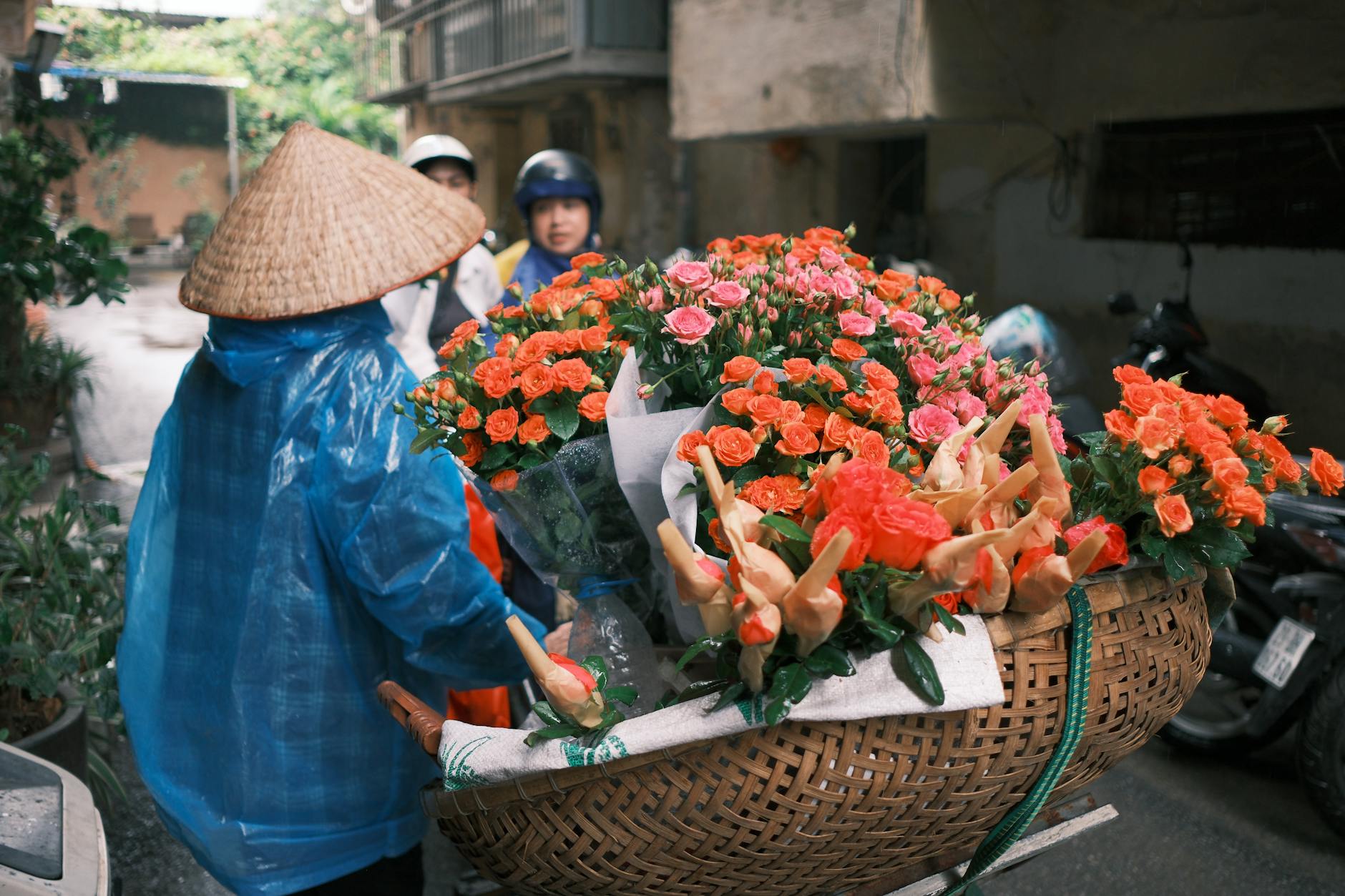
Overview of Hanoi's climate and rainy season
Hanoi is located in a tropical monsoon climate zone. The city is influenced by two main monsoon winds: the Northeast monsoon bringing cold, dry air in winter and the Southwest monsoon bringing moisture from the sea in summer. This alternation creates two distinct seasons.
Hanoi's climate characteristics: Two distinct seasons
The dry season lasts from November to April of the following year. The weather is dry, with low temperatures and little rain. The rainy season begins in May and ends in October. This is a hot, humid period with heavy rainfall, concentrated mainly in the middle months of the year.
The difference between the two seasons is not just about rainfall. The average temperature in the rainy season is 10-15°C higher than in the dry season. Air humidity also spikes, often exceeding 80%.
Why is Hanoi's rainy season important for travelers?
Understanding the rainy season helps you avoid costly mistakes. If you arrive in July without a backup plan, you could spend the whole day in your hotel waiting for the rain to stop. If you book a ground-floor homestay in the Old Quarter, you might face water flooding into your room.
The rainy season directly affects:
- Outdoor sightseeing itineraries
- Clothing and luggage choices
- Hotel bookings (need to avoid flood-prone areas)
- Expectations for your travel experience
When is the rainy season in Hanoi? Detailed monthly schedule
The short answer: Hanoi's rainy season lasts from May to October. But each month has its own characteristics. Here is the specific data.
| Month | Avg Temp (°C) | Rainfall (mm) | Rainy Days | Characteristics |
|---|---|---|---|---|
| May | 28-35 | 150-200 | 12-15 | Evening showers, hot sunny days |
| June | 30-38 | 200-250 | 14-17 | Hottest of the year, sudden heavy rain |
| July | 28-35 | 250-350 | 16-20 | Rain peaks, most humid |
| August | 27-33 | 250-300 | 15-18 | Prolonged rain, risk of storms |
| September | 25-30 | 150-200 | 10-13 | Rain decreases, transitioning to autumn |
| October | 22-28 | 80-100 | 7-10 | End of rainy season, pleasant weather |
May – June: Early rainy season, hot sun and showers
Daytime temperatures can reach 40°C. Rain often appears suddenly in the late afternoon, lasting 1-3 hours. Average rainfall is 150-200mm/month. The rain is fast and heavy but usually ends quickly.
Travelers need to drink enough water and avoid the harsh midday sun. Carrying a small umbrella in your backpack is sufficient.
July – August: Peak rainy season, most humid
This is the time of year with the highest rainfall, reaching 250-350mm/month. Rain can last for many hours, sometimes all day. Air humidity reaches 80-85%. The risk of localized flooding in some areas is very high.
If you come to Hanoi during this time, be mentally prepared for last-minute changes to your plans. Indoor attractions become the top choice.
Tip: Avoid booking accommodation in the Old Quarter near Hoan Kiem Lake in July-August. Streets like Hàng Buồm, Hàng Mã, and Hàng Đào often flood 20-40cm deep after heavy rain.
September – October: End of rainy season, transitioning to autumn
Rainfall gradually decreases from 150-200mm down to 80-100mm. The rain is light, drizzly instead of downpours. Temperatures are more pleasant, ranging from 25-30°C.
This is the transition period between the rainy season and the most beautiful autumn. The sky is bluer, the air is cool. Trees begin to change leaves. Many experienced travelers choose late September to early October to visit Hanoi.
Real impacts of the rainy season on your Hanoi trip
The rainy season isn't all bad. It offers opportunities that the dry season doesn't.
Negative impacts: Flooding, traffic, outdoor activities
Flooding is the biggest issue. Streets like Nguyễn Khuyến, Đê La Thành, Minh Khai, and Trường Chinh often flood 30-50cm deep after 30 minutes of heavy rain. Motorbikes cannot pass. Cars also face difficulties.
Traffic becomes chaotic. Taxis and ride-hailing services surge in price. Travel time between districts can double.
Outdoor attractions like the Ho Chi Minh Mausoleum, Temple of Literature, Thang Long Imperial Citadel, and Hoan Kiem Lake are all less appealing in the rain. You'll be huddled under shelters waiting for the rain to stop.
Positive impacts: Lower prices, fewer crowds, unique experiences
Flight and hotel prices drop 30-50% compared to the peak season (November-December and February-March). A 4-star hotel room in the Old Quarter costs 800,000-1,200,000 VND/night instead of 1,500,000-2,000,000 VND.
Attractions are less crowded. You won't have to queue for a long time to enter the Museum of Ethnology or Hoa Lo Prison.
Hanoi's landscape in the rain has its own romantic beauty. Hoan Kiem Lake in the drizzle, the wet roofs of the Old Quarter, the sound of rain on tin roofs – these are unforgettable experiences.
Tip: Second-floor cafes overlooking the Old Quarter are ideal spots to watch the rain. Café Giảng (39 Nguyễn Hữu Huân) or Café Đinh (13 Đinh Tiên Hoàng) are two familiar addresses.
Tips for traveling to Hanoi in the rainy season: A practical checklist
Clothing and items to bring
Don't just bring an umbrella. Summer winds in Hanoi are very strong, umbrellas flip easily. A raincoat is a better choice. Buy a plastic raincoat for 20,000-30,000 VND at any convenience store.
Waterproof shoes or sandals are mandatory. Fabric sneakers will be soaked after 5 minutes walking in the rain. If you only have fabric shoes, bring an extra pair of flip-flops.
Waterproof bags for your phone and camera. Sudden rain can damage electronics. Waterproof bags costing 10,000-20,000 VND are sold at shops in the Old Quarter.
Spare dry clothes. If you get wet, change immediately to avoid catching a cold.
Smart accommodation choices
Hotels in high-lying areas, close to indoor attractions. The Ba Đình and Tây Hồ areas are generally higher above sea level and flood less than the Old Quarter.
Avoid ground-floor homestays in flood-prone areas. Check Google Maps reviews about the flooding situation in the area before booking.
Suggested safe areas: Ba Đình (near Ho Chi Minh Mausoleum), Tây Hồ (near West Lake), Cầu Giấy (newly developed area). Avoid: Old Quarter (Hàng Buồm, Hàng Mã, Hàng Đào), areas near Tô Lịch River.
Create a flexible itinerary: Sunny morning – Rainy afternoon
Practical experience: mornings are usually clearer. This is the ideal time for outdoor activities. Afternoons often bring rain, best for indoor activities.
Sample flexible 3-day itinerary:
Day 1: Morning visit Temple of Literature – Thang Long Imperial Citadel. Afternoon visit the Museum of Ethnology (if raining) or walk the Old Quarter (if dry). Evening eat pho on Lý Quốc Sư street.
Day 2: Morning visit Ho Chi Minh Mausoleum – One Pillar Pagoda. Afternoon visit Hoa Lo Prison – Women's Museum. Evening have egg coffee at Café Giảng.
Day 3: Morning visit Đồng Xuân Market – Old Quarter. Afternoon visit Vincom Bà Triệu or Lotte Center. Evening eat bún chả on Hàng Mành street.
Alternative indoor activities when it rains
Top museums in Hanoi
Vietnam Museum of Ethnology (Nguyễn Văn Huyên Street, Cầu Giấy). Ticket price 40,000 VND ($1.60). Opening hours 8:30 AM – 5:30 PM, closed Mondays. Minimum visit time 2 hours.
Vietnamese Women's Museum (36 Lý Thường Kiệt, Hoàn Kiếm). Ticket price 30,000 VND ($1.20). Opening hours 8:00 AM – 5:00 PM, open daily. Minimum visit time 1.5 hours.
National Museum of History (1 Tràng Tiền, Hoàn Kiếm). Ticket price 40,000 VND ($1.60). Opening hours 8:00 AM – 5:00 PM, closed Mondays. Minimum visit time 2 hours.
Hoa Lo Prison (1 Hỏa Lò, Hoàn Kiếm). Ticket price 30,000 VND ($1.20). Opening hours 8:00 AM – 5:00 PM, open daily. Minimum visit time 1 hour.
Shopping malls and indoor entertainment centers
Vincom Bà Triệu (191 Bà Triệu, Hai Bà Trưng). Shopping area, cinema, food court. Free entry.
Tràng Tiền Plaza (24 Hai Bà Trưng, Hoàn Kiếm). High-end shopping center. Free entry.
Lotte Center Hanoi (54 Liễu Giai, Ba Đình). 65th floor has the Sky Walk observation deck. Ticket price 200,000 VND ($8.00). Panoramic view of Hanoi from above.
Food and coffee – Unique rainy experience
Cafes with great rain views: second-floor Old Quarter cafes (Hàng Buồm, Hàng Mã streets), cafes with Sword Lake views (Café Đinh, Café Giảng).
Covered street food: Tạ Hiện Street (Western Quarter), Đồng Xuân Market (indoor food court).
Food suitable for rainy weather: hot pho (Phở Thìn, Phở Lý Quốc Sư), bún chả (Bún chả Hàng Mành), cháo sườn (Hàng Điếu street).
Hanoi cuisine in the rainy season: Tastier when it's cold
The rainy season in Hanoi is not just a challenge. It's also an opportunity to enjoy characteristic dishes that the dry season doesn't offer.
"Comfort food" for rainy days
Beef pho: Phở Thìn (13 Lò Đúc) – 60,000-80,000 VND/bowl ($2.40-$3.20). Phở Lý Quốc Sư (10 Lý Quốc Sư) – 50,000-70,000 VND/bowl ($2.00-$2.80).
Hot snail noodle soup (bún ốc): Bún ốc cô Huệ (Hàng Chiếu street) – 30,000-50,000 VND/bowl ($1.20-$2.00). Sour and spicy broth, warms the stomach.
Clam rice porridge (cháo trai): Cháo trai on Hàng Điếu street – 20,000-30,000 VND/bowl ($0.80-$1.20). Thick porridge, fresh clam meat, a bit of Vietnamese coriander.
Hot steamed rice rolls (bánh cuốn): Bánh cuốn Bà Hoành (66 Tô Hiến Thành) – 40,000-60,000 VND/portion ($1.60-$2.40). Freshly steamed, piping hot rice rolls.
Hot pot (lẩu): Fish hot pot (Nguyễn Du street, Lương Ngọc Quyến street) – 200,000-400,000 VND/portion for 2 people ($8.00-$16.00). Chicken hot pot (Chùa Bộc street) – 150,000-300,000 VND/portion ($6.00-$12.00).
Warming drinks
Egg coffee: Café Giảng (39 Nguyễn Hữu Huân) – 35,000-45,000 VND/cup ($1.40-$1.80). Café Đinh (13 Đinh Tiên Hoàng) – 30,000-40,000 VND/cup ($1.20-$1.60).
Ginger tea: Street-side tea stalls – 5,000-10,000 VND/cup ($0.20-$0.40). Fresh crushed ginger brewed with hot water.
Apricot wine (rượu mơ): Drinking spots in the Old Quarter – 20,000-30,000 VND/shot ($0.80-$1.20). Soaked apricot wine, served warm.
Hot soy milk: Soy milk stalls on Hàng Bồ, Hàng Đường streets – 10,000-15,000 VND/cup ($0.40-$0.60).
Comparison of Hanoi's rainy season with other times of the year
| Category | Rainy Season (May-Oct) | Dry Season (Nov-Apr) | Difference |
|---|---|---|---|
| Avg Temperature | 25-38°C | 10-25°C | 10-15°C |
| Avg Rainfall | 80-350mm/month | 10-50mm/month | 5-10 times more |
| Hotel Prices | 500,000-1,200,000 VND/night ($20-$48) | 800,000-2,000,000 VND/night ($32-$80) | 30-50% lower |
| Flight Prices (HCMC-HN) | 500,000-1,000,000 VND ($20-$40) | 800,000-1,500,000 VND ($32-$60) | 30-40% lower |
| Tourist Numbers | Low | High | 40-60% fewer |
| Outdoor Activities | Limited | Favorable | - |
| Culinary Experience | Better with hot dishes | Good with cold dishes | - |
Rainy season vs Dry season: Pros and cons
Rainy season: cheap prices, less crowded, unique culinary experiences. Disadvantages: unpredictable weather, flooding, limited outdoor activities.
Dry season: beautiful weather, many outdoor activities. Disadvantages: high prices, crowded, difficult to book.
The "golden" time within the rainy season to travel
Late September – early October is the most ideal time. Rainfall decreases significantly. The weather turns to autumn, cool and pleasant. Service prices are still low. Tourist numbers haven't increased yet.
If you want maximum savings, July-August is the choice. But be thoroughly prepared for heavy rain and flooding.
Flood-prone areas in Hanoi and how to avoid them
List of streets that flood heavily during heavy rain
| Street Name | Area | Flood Depth (cm) | Drainage Time |
|---|---|---|---|
| Nguyễn Khuyến | Đống Đa | 30-50 | 1-2 hours |
| Đê La Thành | Đống Đa | 20-40 | 1-3 hours |
| Minh Khai | Hai Bà Trưng | 30-50 | 2-4 hours |
| Trường Chinh | Thanh Xuân | 20-40 | 1-2 hours |
| Hàng Buồm | Hoàn Kiếm | 20-30 | 30 min-1 hour |
| Hàng Mã | Hoàn Kiếm | 20-30 | 30 min-1 hour |
Causes: old drainage system, low terrain, high construction density. Flooding usually lasts from 30 minutes to 4 hours after heavy rain.
Apps and tools for tracking weather and flooding
Windy: detailed weather forecast app, updates hourly rainfall. Free on iOS and Android.
AccuWeather: 15-day weather forecast, heavy rain warnings. Free.
Hanoi city flood warning page: updates flooding status in real-time. Search "cảnh báo ngập Hà Nội" on Google.
Community Facebook groups: "Hội những người thích đi mưa Hà Nội" or "Cảnh báo ngập Hà Nội". Information updated by local residents.
Safety notes when traveling to Hanoi in the rainy season
Traffic safety
Avoid driving a motorbike in heavy rain. Limited visibility. Slippery roads. Especially dangerous in flooded areas because potholes are not visible.
Use taxis or ride-hailing services (Grab, Be) when it rains. Costs surge during peak rain hours (can be 2-3 times higher). Book a car 15-20 minutes in advance.
If you must ride a motorbike, reduce speed, turn on lights, maintain a safe distance from the vehicle ahead.
Health and hygiene
High risk of catching a cold when getting wet in the rain. Bring a dry towel and change of clothes. Drink ginger tea or warm water after getting wet.
The rainy season is the peak time for dengue fever. Mosquitoes breed strongly in humid environments. Use mosquito repellent, sleep under a mosquito net. Read more in the article Mosquitoes, Dengue and Malaria in Vietnam: The Realistic Risk Map for Travelers for details.
Bring basic medicine: cold and flu medicine, stomach medicine, allergy medicine. Drink bottled water. Avoid eating from street vendors with questionable hygiene when it rains. See the article Vietnamese Street Food Safety: How to Eat Everywhere Without Getting Sick.
Warning: Do not walk through floodwater deeper than your knees. Undercurrents can sweep you away. Do not touch power poles or lamp posts during flooding. Risk of electric shock is very high.
Frequently asked questions about Hanoi's rainy season
Q: When is the rainy season in Hanoi?
A: The rainy season in Hanoi lasts from May to October, peaking in July and August with average rainfall of 250-350mm/month. September and October are the end of the rainy season, with rainfall gradually decreasing and the weather transitioning to cool autumn.
Q: Which is the best month to visit Hanoi?
A: Autumn (September – November) is considered the most beautiful time with cool weather, blue skies, and yellow leaves. However, late September to early October still has light rain but service prices are lower and it's less crowded.
Q: Which is the coldest month in Hanoi?
A: Hanoi is coldest in December and January, with temperatures possibly dropping below 10°C during cold spells. This is not the rainy season but the dry season, with cold, dry weather.
Q: When does the hot weather end in Hanoi?
A: Hot weather in Hanoi usually lasts from May to August, peaking in June and July (35-40°C). From late August, temperatures begin to gradually decrease, ending completely around mid-September.
Q: Is it worth visiting Hanoi in the rainy season?
A: Yes, if you know how to prepare. The rainy season offers advantages of 30-50% lower flight and hotel prices, and fewer crowds at attractions. The key is to bring a raincoat, waterproof shoes, and create a flexible itinerary.
Q: Does it rain all day in Hanoi?
A: Usually not. Summer showers often arrive suddenly in the late afternoon and last 1-3 hours. All-day rain usually only occurs during tropical depressions or storms, typically in July-August.
Q: What should I bring when traveling to Hanoi in the rainy season?
A: A raincoat (better than an umbrella because of strong winds), waterproof shoes or sandals, a waterproof bag for your phone and camera, spare dry clothes, and cold and flu medicine. It's best to bring a waterproof backpack instead of a handbag.