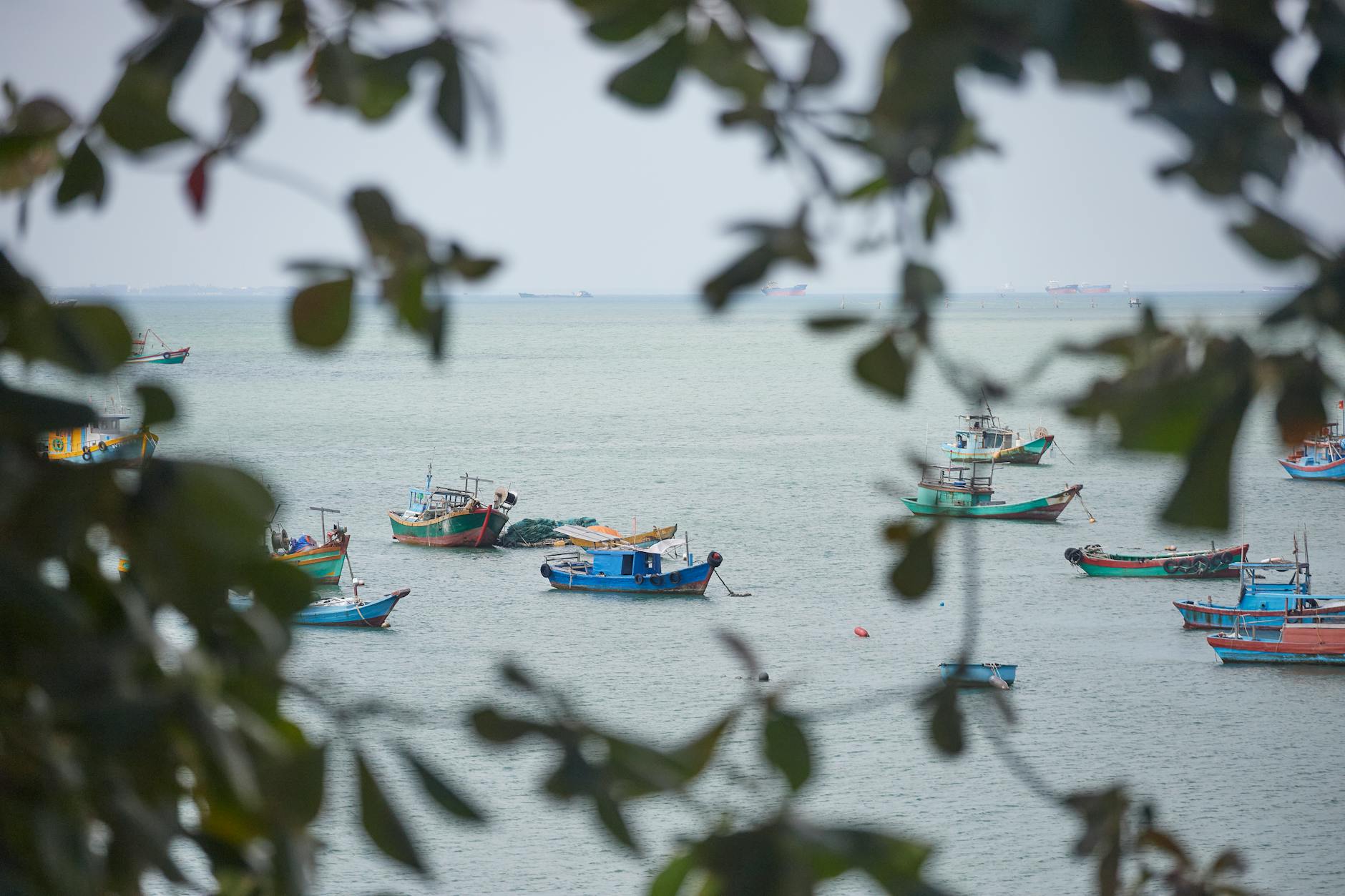
This article cuts through the conflicting advice to answer the question honestly: is Cat Ba touristy, and does it matter for your trip?
The short answer — yes, but it depends where you go
Cat Ba Town is undeniably touristy. The main strip fills with tour agencies, seafood restaurants, and souvenir shops. On weekends and Vietnamese holidays, the streets clog with tour buses and motorbikes. The three Cat Co beaches near town can feel packed by mid-morning.
But the island spans 354 square kilometers. Most visitors never leave the southern tip. The national park interior, Viet Hai Village, and the western coast see a fraction of the traffic. You can spend three days on Cat Ba without feeling crowded if you choose the right base.
The contradiction is real. "Cat Ba is touristy" and "Cat Ba is quiet" are both true statements. It depends entirely on where you stay and when you visit.
Understanding Cat Ba's two faces
The island has a split personality. The developed southern tip contains Cat Ba Town, the main port, and the three Cat Co beaches. This is where nearly all hotels, restaurants, and tour agencies cluster. This is also where the construction is happening.
The rest of the island remains rural. Viet Hai Village sits in a valley accessible only by a tunnel road. Xuan Dam on the western coast has a few homestays and empty beaches. The national park covers half the island with hiking trails that see few other trekkers.
The two faces rarely meet. Travelers who stay in Cat Ba Town experience the tourist version. Those who base themselves outside town experience something closer to the Cat Ba of ten years ago.
Cat Ba Town — the tourist hub
Cat Ba Town (also called Cat Ba City) has about 12,000 permanent residents. On a busy weekend, that number swells with day-trippers and overnight visitors. The main road along the waterfront is a continuous line of hotels, restaurants, and tour shops.
The atmosphere depends on timing. On a Tuesday afternoon in March, the town feels sleepy. You can walk the promenade without dodging crowds. On a Saturday in July or during a national holiday, the same street becomes a slow-moving river of tourists and motorbikes.
What the construction means for visitors in 2026
The Cat Ba Central Bay Tourism Project has transformed the waterfront. Reclaimed land extends into the bay. New buildings rise along the shoreline. An artificial beach has been created where fishing boats once docked.
As of 2026, construction is ongoing. Some sections are complete and operational. Others remain fenced off with heavy machinery. The project will continue through 2026 and beyond.
Pro tip: Check recent reviews of your hotel before booking. Some properties near the construction zone experience noise from 7 AM to 5 PM daily. Ask for a room facing away from the waterfront if you are sensitive to noise.
The waterfront promenade and artificial beach
The new promenade stretches along the reclaimed land. It is wide, clean, and popular for evening strolls. The artificial beach is small but maintained. On summer weekends, it fills with Vietnamese families.
The promenade has changed the town's character. What was once a working waterfront with fishing boats is now a leisure space. Some travelers appreciate the upgrade. Others miss the old, rougher Cat Ba.
Noise, crowds, and the backpacker strip
The backpacker area centers on the streets behind the waterfront. Guesthouses, budget hotels, and bars cluster here. Noise levels vary. Some streets stay quiet after 10 PM. Others, particularly those with live music venues, can be loud until midnight.
The main sources of noise in Cat Ba Town are:
- Construction equipment during the day
- Karaoke bars in the evening
- Motorbike traffic, especially on weekends
- Tour groups gathering early in the morning
Where to find quiet on Cat Ba Island
If you want to avoid crowds, do not base yourself in Cat Ba Town. These areas offer a different experience.
Viet Hai Village — the hidden valley
Viet Hai Village sits in a valley on the eastern side of the island. Access requires passing through a 300-meter tunnel carved through the mountain. The village has a few homestays, a basic restaurant, and no real tourist infrastructure.
The valley is surrounded by limestone karsts. Rice paddies and vegetable gardens fill the flat ground. The population is small and the pace is slow. You can hike to remote beaches or rent a bicycle to explore the valley.
Pro tip: Viet Hai has no ATMs and limited shops. Bring cash and any supplies you need. The homestays serve meals but do not expect a menu with options.
Xuan Dam and the western coast
Xuan Dam is a fishing village on the western side of Cat Ba. It has a few homestays and guesthouses. The beaches here are not developed. Tung Thu Beach is a long stretch of sand that rarely sees more than a dozen visitors.
The road to Xuan Dam passes through forest and over hills. It is a pleasant motorbike ride from Cat Ba Town, taking about 30 minutes. The western coast faces Lan Ha Bay and offers sunset views without the crowds.
The national park interior
Cat Ba National Park covers about half the island. The main trail to Ngu Lam Peak takes 30-45 minutes and offers views over the forest canopy. The longer trail to Viet Hai Village takes 4-5 hours and passes through ancient limestone forest.
On weekdays, you might see fewer than ten other hikers on the trails. Even on weekends, the park absorbs crowds well. The trails are wide enough that you can find solitude within minutes of the ranger station.
Remote beaches accessible only by boat
Some of Cat Ba's best beaches have no road access. Boat tours from Cat Ba Town or Lan Ha Bay can drop you at these spots. Chut Chit Beach and the beaches around Viet Hai Village are reliable quiet options.
Pro tip: Ask your boat tour operator to skip the crowded floating fishing villages and head directly to remote beaches. Most operators will accommodate if you book a private tour.
Peak vs. off-peak — when the crowds arrive
The perception of Cat Ba as "touristy" depends heavily on timing. Some travelers find the island empty. Others find it overwhelming. The difference is often a matter of days.
Vietnamese holidays to avoid
Domestic tourism drives Cat Ba's crowds more than international tourism. These holidays bring the heaviest traffic:
| Holiday | Dates | Crowd level | Impact on accommodation prices |
|---|---|---|---|
| Tet (Lunar New Year) | Late January or February | Extreme (5/5) | Prices double or triple |
| Hung Kings Festival | 10th day of 3rd lunar month (April) | High (4/5) | 50-100% increase |
| Reunification Day | April 30 | Extreme (5/5) | 100-200% increase |
| Labor Day | May 1 | Extreme (5/5) | Combined with April 30 |
| National Day | September 2 | Extreme (5/5) | 100-150% increase |
Warning: During these holidays, Cat Ba Town becomes a different place. Restaurants run out of ingredients. Beaches become packed. Traffic stalls. If you can avoid these dates, do so.
Shoulder season sweet spots
The best times to visit Cat Ba for lower crowds are:
- March to May (spring)
- September to November (autumn)
During these months, the weather is pleasant and the crowds are manageable. Weekdays are significantly quieter than weekends. You will find accommodation available without booking weeks in advance.
Winter trade-offs
December to February is low season for tourism. The weather is cooler and sometimes rainy. The water is too cold for comfortable swimming. But the crowds disappear. You can have entire beaches to yourself.
The trade-off is weather. Cat Ba in January can be gray and drizzly. Some boat tours do not run in rough conditions. If your priority is avoiding crowds and you do not mind cool weather, winter works well.
How Cat Ba compares to other destinations
Cat Ba sits in a crowded market. Ha Long Bay, Lan Ha Bay, and Bai Tu Long Bay all offer similar limestone karst scenery. The question is which experience you want.
Cat Ba vs. Ha Long Bay cruises
Ha Long Bay cruises are the classic Vietnam experience. They are also expensive and crowded. The bay gets more visitors than Cat Ba. The overnight cruises follow fixed routes. You share the experience with dozens of other passengers.
Cat Ba offers land-based accommodation at lower prices. You have more flexibility. You can eat at local restaurants instead of cruise ship buffets. The downside is that you need to arrange your own boat tours to see the karsts up close.
Cat Ba vs. Bai Tu Long Bay
Bai Tu Long Bay is Ha Long Bay's quieter neighbor. It has similar scenery with far fewer boats. The catch is that accommodation options are limited. Most visitors take overnight cruises from Ha Long City.
Cat Ba has better infrastructure for independent travelers. You can stay in a guesthouse, rent a motorbike, and explore on your own schedule. Bai Tu Long is better for those who want a cruise without the crowds.
Cat Ba vs. Lan Ha Bay
Lan Ha Bay is the body of water directly south of Cat Ba Island. Many boat tours from Cat Ba operate in Lan Ha Bay. The scenery is similar to Ha Long Bay but with fewer tourist boats.
For practical purposes, Cat Ba is the base and Lan Ha Bay is the attraction. You sleep on Cat Ba and explore Lan Ha by boat. This combination offers the best balance of independence and scenery.
Cat Ba vs. other Vietnamese islands
| Destination | Crowd level | Cost | Scenery quality | Best for |
|---|---|---|---|---|
| Cat Ba | Moderate to high | Moderate | Excellent (karsts) | Independent travelers, budget |
| Phu Quoc | High (resorts) | High | Good (beaches) | Resort vacationers |
| Con Dao | Low | Moderate | Excellent (beaches, history) | Nature lovers, history buffs |
| Cham Islands | Low | Low | Good (diving) | Snorkelers, day-trippers |
Cat Ba offers the best value for travelers who want limestone karst scenery without a cruise. It is more developed than Con Dao but less resort-oriented than Phu Quoc.
The development debate — what the construction means long-term
Cat Ba is changing fast. The construction visible today is part of a larger transformation. Understanding the trajectory helps you decide whether to visit now or wait.
The Cat Ba Amatina project explained
The Cat Ba Amatina project is a large-scale resort development on the southern coast. It includes hotels, villas, a golf course, and commercial areas. The project aims to attract higher-spending tourists and position Cat Ba as a luxury destination.
Construction has been ongoing for several years. Some sections are complete. Others remain under development. The full project is expected to take several more years.
Environmental impact on the UNESCO Biosphere Reserve
Cat Ba is part of a UNESCO Biosphere Reserve. The development has raised environmental concerns. Mangrove forests have been cleared. Coastlines have been reshaped. The long-term impact on the ecosystem is unclear.
Environmental groups have criticized the scale of development. Local authorities have promised environmental protections. The tension between tourism revenue and conservation continues.
What locals think about the changes
Opinions among Cat Ba residents vary. Some welcome the development for the jobs and economic growth it brings. Others miss the quieter, less commercialized island they grew up on.
Younger residents tend to support the changes. Older residents are more skeptical. The construction has displaced some fishing communities. The long-term winners and losers are still being determined.
How to visit Cat Ba without feeling the crowds
You can visit Cat Ba and avoid the tourist experience. These strategies work.
Choose accommodation outside town
Stay in Viet Hai Village, Xuan Dam, or a quiet homestay on the western coast. You will need a motorbike or pre-arranged transport. The trade-off is peace and quiet.
Visit beaches early or late
The Cat Co beaches near town get crowded between 10 AM and 4 PM. Visit at sunrise or late afternoon for a quieter experience. The water is still warm enough for swimming in the late afternoon.
Use a motorbike to escape the tourist zone
Renting a motorbike costs 150,000-200,000 VND ($6-8) per day. It gives you access to the entire island. You can reach empty beaches, hike in the national park, and eat at local restaurants far from the tourist strip.
Pro tip: Read our guide on renting a motorbike in Vietnam before you rent. The legal requirements and common scams apply on Cat Ba too.
Book boat tours that skip the crowded routes
Standard boat tours follow popular routes through Lan Ha Bay. Ask for a private tour or a smaller group tour that visits less crowded areas. The price is higher but the experience is better.
Eat where locals eat
Walk one street back from the waterfront. Look for restaurants with plastic stools and Vietnamese menus. These places serve better food at half the price. They are also less crowded.
Is Cat Ba worth visiting in 2026?
The answer depends on what you want.
For families: Yes, if you stay outside town. The island offers beaches, hiking, and boat tours that work well for children. The construction in town is a drawback.
For backpackers: Yes. Cat Ba remains cheaper than Ha Long Bay cruises. The budget accommodation is adequate. The nightlife is modest but present.
For luxury travelers: Not yet. The Amatina project is incomplete. The existing luxury hotels are limited. Wait a few years for the development to finish.
For nature lovers: Yes. The national park and remote beaches are excellent. Base yourself in Viet Hai or Xuan Dam.
For photographers: Yes, with caveats. The karst scenery is spectacular. But the construction in town is ugly. Focus on the national park and Lan Ha Bay.
For nightlife seekers: Maybe. Cat Ba has bars and some clubs. It is not a party destination like Nha Trang or Phuket. Manage your expectations.
Practical planning tips
Getting there without the tourist bottlenecks
Direct buses from Hanoi's Old Quarter to Cat Ba Town take 3.5 to 5 hours. They combine a road transfer with a ferry crossing. Book a morning departure to arrive before the afternoon crowds.
Pro tip: For a detailed breakdown of transport options, read our Cat Ba Island travel guide.
Where to stay based on your crowd tolerance
- Low tolerance: Viet Hai Village homestays or Xuan Dam guesthouses
- Medium tolerance: Quiet hotels on the edge of Cat Ba Town
- High tolerance: Central Cat Ba Town hotels near the waterfront
What to book in advance vs. what to arrange on arrival
Book accommodation in advance during Vietnamese holidays and summer weekends. For weekdays in shoulder season, you can find rooms on arrival.
Boat tours can be booked a day in advance through your hotel or a tour agency. Motorbike rentals are available everywhere and do not require advance booking.
FAQ
Q: Is Cat Ba very touristy?
A: Cat Ba Town is very touristy, especially on weekends and Vietnamese holidays. However, most of the island remains quiet. The key is where you stay and when you visit. The national park, Viet Hai Village, and remote beaches see far fewer visitors.
Q: What is the main town on Cat Ba Island?
A: Cat Ba Town (also called Cat Ba City) is the main settlement on the southern tip of the island. It has a population of about 12,000 and contains most of the island's hotels, restaurants, and tour agencies.
Q: How long is it from Hanoi to Cat Ba Island?
A: The journey takes 3.5 to 5 hours depending on the transport option. Direct buses from Hanoi's Old Quarter to Cat Ba Town are the most common, combining a road transfer with a ferry crossing.
Q: What is there to do in Cat Ba, Vietnam?
A: Activities include kayaking in Lan Ha Bay, hiking in Cat Ba National Park, visiting Hospital Cave and Cannon Fort, swimming at Cat Co beaches, rock climbing on limestone karsts, and taking boat tours through the archipelago. Many visitors also use Cat Ba as a base for exploring Ha Long Bay.
Q: Is Cat Ba worth visiting instead of Ha Long Bay?
A: Yes, for travelers who prefer land-based accommodation, lower prices, and fewer crowds. Cat Ba offers the same limestone karst scenery as Ha Long Bay but with more flexibility and independence. However, the overnight cruise experience is different from a day trip from the island.
Q: When is the worst time for crowds on Cat Ba?
A: Vietnamese public holidays, especially National Day (September 2), Reunification Day (April 30), and Lunar New Year (Tet), bring the heaviest crowds. Summer weekends (June-August) are also very busy with domestic tourists. Weekdays in spring (March-May) and autumn (September-November) are quietest.
Q: Is the construction in Cat Ba Town finished?
A: As of 2026, construction is ongoing. The Cat Ba Central Bay Tourism Project has transformed the waterfront with reclaimed land, new buildings, and an artificial beach. Some sections are complete and operational, while others remain under development. The project is expected to continue through 2026 and beyond.
Q: Can you find quiet beaches on Cat Ba?
A: Yes. The three Cat Co beaches near town can be crowded, but Tung Thu Beach, beaches on the western coast, and remote coves accessible only by boat or hiking are often nearly empty. Chut Chit Beach and beaches around Viet Hai Village are reliable quiet options.