This guide covers the practical side of visiting Da Nang in 2026: what to do, where to go, how to get around, and what it actually costs. No fluff, no "hidden gems" that are actually tourist traps. Just the stuff worth your time.
The beaches: My Khe, Non Nuoc and the Son Tra Peninsula
Da Nang's coastline runs for about 30 kilometers. Most of it is swimmable, but three stretches matter for visitors.
My Khe Beach is the main one. It runs from the Son Tra Peninsula down to the Marble Mountains, a continuous curve of fine white sand. The water is warm from April through September, and the waves are gentle enough for children. Locals call it "China Beach," a name left over from the American War when US troops used it as a rest and recreation spot. Today it is lined with resorts, seafood restaurants, and rental loungers. The beach is public, so nobody will charge you to sit on the sand. Loungers and umbrellas cost around 50,000 VND ($2) per day from the vendors who manage them.
Non Nuoc Beach sits at the southern end of the same stretch, closer to the Marble Mountains. It is quieter than My Khe, with fewer vendors and more space. The sand is slightly coarser here, but the swimming is just as good. Several five-star resorts, including the InterContinental Danang Sun Peninsula Resort, sit along this stretch, but the beach itself remains open to everyone.
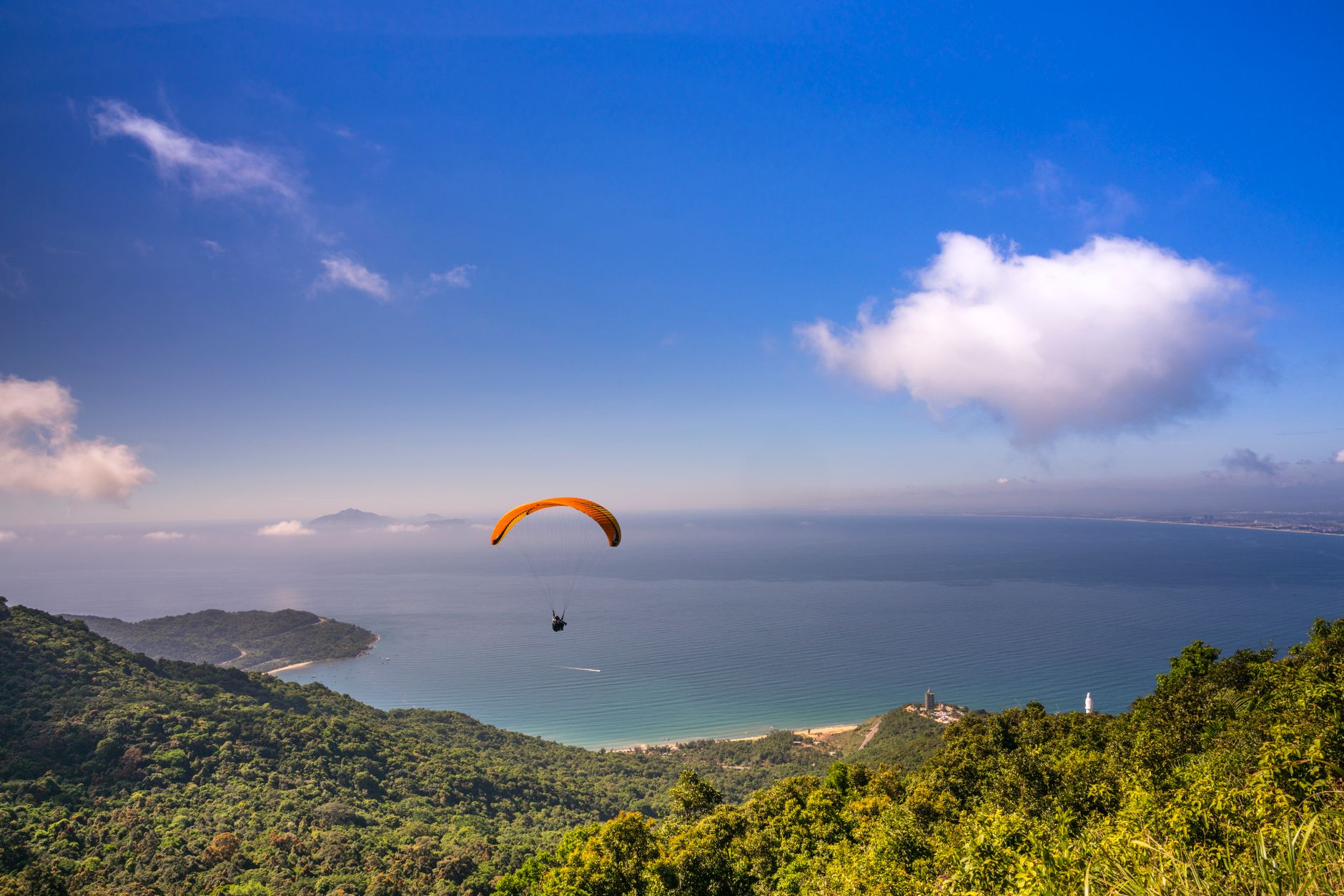
Son Tra Peninsula, also called Monkey Mountain, is a 4,000-hectare nature reserve that juts into the sea north of the city. The road up the mountain offers views over the entire bay. The summit, at 693 meters, is home to a giant white Lady Buddha statue at Linh Ung Pagoda. The statue is 67 meters tall and visible from most of the city. The road is paved and well-maintained, making it an easy motorbike or car ride. Watch for the resident macaque monkeys near the summit. They are accustomed to tourists and will grab food out of bags.
Pro tip: Go to Son Tra at sunrise. The light is soft, the air is cool, and the monkeys are still sleepy. By 9 AM the tour buses arrive and the summit gets crowded.
For swimming, the best time is early morning before the wind picks up. From October to December, the sea gets rough and rip currents are common. Pay attention to the red flags on the beach. They mean the water is dangerous, and locals will not swim when they are up.
The bridges: Dragon, Han River and the Golden Bridge
Da Nang is a city of bridges. Six span the Han River, and each one has a different character. The most famous is the Dragon Bridge, a 666-meter structure shaped like a golden dragon. On Saturday and Sunday nights at 9 PM, the dragon breathes fire and water in a 15-minute show. The spectacle draws crowds along both riverbanks, so arrive early to get a good spot. The bridge itself is pedestrian-friendly, and walking across it at night offers views of the illuminated city skyline.
The Han River Bridge is the oldest, built in 2000. It is a swing bridge, meaning it rotates 90 degrees to let ships pass. The rotation happens in the early hours, usually around 1 AM, and is worth seeing if you are awake.
The Golden Bridge is not in the city. It sits at Ba Na Hills, about 40 kilometers southwest, and is the famous "giant hands" bridge that appeared on every Instagram feed in 2018. The bridge itself is a 150-meter pedestrian walkway held up by two enormous stone hands. It is as impressive in person as in photos, but getting there requires a cable car ride and an entrance fee. The complex includes a theme park, a replica French village, and a massive indoor amusement area. For most visitors, half a day is enough.
Warning: Ba Na Hills is a major tourist attraction. On weekends and public holidays, queues for the cable car can exceed 90 minutes. Go on a weekday, and arrive before 8 AM to beat the tour groups.
The Marble Mountains and the caves
Five marble and limestone hills rise from the flat coastal plain south of Da Nang. They are named after the five elements: Kim (metal), Moc (wood), Thuy (water), Hoa (fire), and Tho (earth). The largest, Thuy Son, contains a network of caves, pagodas, and tunnels that have been used for centuries as both worship sites and wartime shelters.
The entrance to Thuy Son costs 40,000 VND ($1.60). A steep stone staircase leads to the top, where the view over Da Nang and the coastline is worth the climb. The caves themselves are cool and shaded, a relief from the heat. Huyen Khong Cave is the largest, with natural skylights that illuminate the Buddhist shrines inside. During the American War, the caves served as a field hospital for the Viet Cong.
The Marble Mountains are a short drive from the city center, about 20 minutes by motorbike or taxi. Combine the visit with Non Nuoc Beach, which sits right at the base of the hills. Half a day is enough for both.
My Son Sanctuary: the Cham temples
About 60 kilometers southwest of Da Nang lies My Son, the remnants of the Champa Kingdom's religious center. Between the 4th and 14th centuries, the Cham people built over 70 temples here, dedicated to Hindu gods, primarily Shiva. The site was heavily bombed during the American War, and only about 20 structures remain intact. What survives is still impressive: red brick towers, carved lintels, and a jungle setting that rivals Angkor in atmosphere, if not scale.
My Son is a UNESCO World Heritage Site. The entrance fee is 150,000 VND ($6), which includes an electric car ride from the parking area to the temple complex. A guided tour is worth the extra cost, as the history of the Cham civilization is complex and not immediately obvious from the ruins alone. Tours run from Da Nang daily, usually departing around 7 AM and returning by 2 PM.
Pro tip: Visit My Son early. The site opens at 6 AM, and the morning light on the red brick towers is spectacular. By 10 AM the tour groups arrive, and the quiet atmosphere disappears.
The food scene: what to eat and where
Da Nang's cuisine sits between the imperial flavors of Hue and the coastal freshness of Hoi An. It has its own distinct dishes, and the city's position as a port means excellent seafood at reasonable prices.
Mi Quang is the signature dish. Wide rice noodles, turmeric-tinted broth, pork, shrimp, peanuts, and fresh herbs, all served with a small amount of soup rather than a full bowl. The best versions come from street stalls in the city center. A bowl costs between 35,000 and 50,000 VND ($1.40 to $2).
Banh xeo is a crispy crepe filled with pork, shrimp, and bean sprouts, served with a mountain of fresh greens and a sweet-sour dipping sauce. Da Nang's version is larger and crispier than the Saigon style. Eat it with your hands, tearing off pieces and wrapping them in rice paper with herbs.
Seafood is the city's specialty. The streets along the east bank of the Han River, particularly around Tran Hung Dao, are lined with seafood restaurants. A meal of clams with lemongrass, grilled squid, and steamed crab costs around 300,000 to 500,000 VND ($12 to $20) per person. The quality is high, and the prices are lower than in Nha Trang or Phu Quoc.
For breakfast, try banh cuon, steamed rice rolls filled with minced pork and mushrooms, topped with fried shallots and served with fish sauce. Da Nang's version is thinner and more delicate than the northern style. Several stalls near the Han Market serve it from 6 AM until they sell out, usually around 10 AM.
The Han Market and Con Market are the two main markets in the city. Han Market is more tourist-oriented, with a good selection of dried seafood, coffee, and souvenirs. Con Market is where locals shop. The food stalls on the second floor of Con Market serve excellent bun cha and com tam at prices about 20 percent lower than the tourist restaurants.
Getting around: motorbikes, taxis and Grab
Da Nang is an easy city to navigate. The grid layout and wide streets make it less chaotic than Hanoi or Saigon. The best way to explore is by motorbike, which can be rented from hotels and rental shops for 120,000 to 200,000 VND ($5 to $8) per day. Traffic is lighter than in the north, and parking is available at most attractions for 5,000 to 10,000 VND ($0.20 to $0.40).
For those who do not want to ride, Grab operates throughout the city. A short ride within the center costs 25,000 to 40,000 VND ($1 to $1.60). The app works in English, and drivers are reliable. Traditional taxis, particularly Mai Linh and Vinasun, are also safe and metered. Avoid unmarked taxis at the airport and bus station.
The city has a public bus system, but it is not practical for most tourists. The routes are limited, and the buses are old and slow. Stick with motorbikes and ride-hailing apps.
Pro tip: If you plan to visit both Da Nang and Hoi An, consider renting a motorbike for the whole trip. The ride between the two cities takes 30 minutes along the coast road, and having your own wheels makes it easy to stop at the Marble Mountains or Non Nuoc Beach along the way.
Where to stay: neighborhoods and price ranges
Da Nang has three main areas for accommodation, each with a different character.
The city center (around Han River and the cathedral) is the most convenient base for first-time visitors. It puts you within walking distance of the markets, the riverfront, and the Dragon Bridge. Hotels here range from budget guesthouses at 300,000 VND ($12) per night to mid-range options at 800,000 to 1,500,000 VND ($32 to $60). The area is busy and can be noisy at night, but the location is unbeatable.
My An (also called Phuoc My) is the beach neighborhood. It sits between My Khe Beach and the city center, a 10-minute walk from the sand. This is where most of the mid-range and upper-mid-range hotels are concentrated, along with a growing number of cafes and restaurants catering to expats and digital nomads. Prices range from 500,000 to 2,000,000 VND ($20 to $80) per night.
Son Tra (the peninsula) is where the luxury resorts are. The InterContinental, the Pullman, and the TIA Wellness Resort all sit on the forested slopes above the sea. Prices start at 3,000,000 VND ($120) per night and go up from there. The trade-off is isolation: you are a 20-minute drive from the city center, and the resort restaurants are expensive. For a special occasion, the setting is hard to beat.
For a detailed comparison of the options, see the table below.
| Area | Vibe | Price range per night | Best for |
|---|---|---|---|
| City center | Urban, convenient, busy | 300,000 to 1,500,000 VND ($12 to $60) | First-time visitors, food lovers |
| My An | Beachside, relaxed, expat-friendly | 500,000 to 2,000,000 VND ($20 to $80) | Beach lovers, families, digital nomads |
| Son Tra | Exclusive, resort-style, quiet | 3,000,000 VND+ ($120+) | Honeymooners, luxury travelers |
Practical information: weather, money and planning
Da Nang has two distinct seasons. The dry season runs from February to August, with temperatures between 25 and 35 degrees Celsius. The rainy season runs from September to January, with the heaviest rainfall in October and November. Typhoons are possible during this period, and the city occasionally floods. The best time to visit is between February and May, when the weather is warm but not oppressive and the sea is calm.
For a detailed breakdown of the weather, read the guide on the best time to visit Da Nang.
Cash is still king in Da Nang. Most hotels, larger restaurants, and supermarkets accept credit cards, but street stalls, markets, and small shops are cash-only. ATMs are plentiful, with the best rates available at VP Bank and HSBC. Avoid the ATMs at the airport, which offer poor exchange rates and charge high fees. For more details on money matters, the guide on exchanging money in Vietnam covers the options.
The city's tap water is not drinkable. Buy bottled water, which costs 5,000 to 10,000 VND ($0.20 to $0.40) per liter, or carry a refillable bottle and use the filtered water stations found in most hotels.
The air quality in Da Nang is generally better than in Hanoi or Ho Chi Minh City, but during the dry season, the burning of agricultural waste can create hazy conditions. Check the air quality index before planning outdoor activities.
Day trips from Da Nang
Da Nang's location makes it an ideal base for exploring central Vietnam. The three most popular day trips are:
Hoi An is 30 minutes south by car or motorbike. The ancient town is a preserved trading port from the 15th to 19th centuries, with yellow-walled buildings, lantern-lit streets, and a riverside atmosphere that is unique in Vietnam. The old town is pedestrian-only in the evenings, which makes it pleasant to wander. The best time to visit is late afternoon, when the crowds thin out and the lanterns come on. For more detail, the guide on the best time to visit Hoi An covers the seasonal patterns.
Hue is 2 hours north by road or train. The imperial capital of the Nguyen Dynasty, Hue is home to the Citadel, the Forbidden Purple City, and a string of royal tombs along the Perfume River. It is a full day trip, best done by private car or the scenic train route. The train takes about 2.5 hours and runs along the coast, offering ocean views for much of the journey.
Ba Na Hills is the most popular day trip, but also the most commercialized. The Golden Bridge, the cable car system, and the French village replica draw enormous crowds. The complex is well-run and the cable car ride is genuinely impressive, but it is a theme park, not a cultural experience. Budget for a full day, including travel time.
FAQ
Q: How many days should I spend in Da Nang? Three days is the minimum. That allows one day for the city and beaches, one day for Son Tra and the Marble Mountains, and one day for a day trip to either Hoi An or Ba Na Hills. With five days, add a trip to Hue and more time on the beach.
Q: Is Da Nang safe for solo travelers? Yes. Da Nang is one of the safest cities in Vietnam. Violent crime is rare, and the main risks are petty theft and traffic. The city is well-lit at night, and the beach areas are patrolled. Solo female travelers should take the same precautions as anywhere, but the general atmosphere is relaxed.
Q: Do I need a visa to visit Da Nang? Most nationalities need a visa or an e-visa to enter Vietnam. The e-visa is valid for 90 days and costs 25 USD. It takes about 3 working days to process. Some nationalities are exempt for short stays. Check the visa exemption guide for the current rules.
Q: Can I use US dollars in Da Nang? No. The official currency is the Vietnamese dong, and you will need it for most transactions. Some hotels and luxury restaurants quote prices in dollars, but they will charge you in dong at their own exchange rate, which is rarely favorable. Use ATMs to withdraw dong directly.
Q: Is the Golden Bridge worth the trip? Yes, if you go on a weekday and arrive early. The bridge itself is impressive, and the cable car ride is one of the best in Vietnam. The rest of the Ba Na Hills complex is a mix of kitsch and carnival rides, which some visitors enjoy and others find tacky. Go for the bridge, not the theme park.
Q: What is the best way to get from Da Nang airport to the city center? The airport is only 3 kilometers from the city center. A Grab ride costs 40,000 to 60,000 VND ($1.60 to $2.40) and takes 10 minutes. The airport has a dedicated Grab pickup point outside the arrivals hall. Taxis are also available but cost about twice as much.
Q: Is Da Nang expensive compared to other Vietnamese cities? It is slightly more expensive than Hanoi or Nha Trang, but cheaper than Ho Chi Minh City. A meal at a local restaurant costs 40,000 to 80,000 VND ($1.60 to $3.20). A mid-range hotel room costs 800,000 to 1,500,000 VND ($32 to $60). The main extra cost is accommodation, which is higher than average due to the beachfront location.