The reality is more nuanced. Yes, the market is magnificent. Yes, it's a unique experience. But between the tourist buses that unload hundreds of visitors every Sunday, the inflated prices for foreigners, and the fatigue of a day trip from Sapa, it's better to arrive prepared.
This guide gives you all the keys to truly enjoy it. Without naivety. Without disappointment.
What you need to know before you go
Bac Ha is a town perched at 1,200 meters altitude, in Lao Cai province. The Sunday market is the largest ethnic market in Northern Vietnam. It attracts thousands of people from 14 different ethnic groups every week, mainly Flower H'mong (recognizable by their colorful clothing), Nung, Dao, Tay, and Giay.
Contrary to what some blogs say, this is not a "secret" or "preserved" market. It has been a major tourist event for over twenty years. The locals know it. Prices adapt. Buses arrive by the dozens.
That said, it's not a tourist trap either. The market remains a genuine place of exchange for the ethnic minorities of the surrounding mountains. Livestock, agricultural tools, medicinal herbs, clothing, and food are sold there. Families come from far away, sometimes on foot or by motorbike, to buy and sell.
The secret to enjoying it? Arrive early, stay long, and don't limit yourself to the souvenir area.
Does the Bac Ha Market take place on Sunday or Saturday?
The answer has changed several times in recent years. Here is the verified situation for 2026.
The main market takes place on Sunday, from 6:00 AM to approximately 2:00 PM. This is the big general market where all ethnic groups gather. It is also the busiest.
The buffalo market is now held on Saturday. It has been moved several times (first Sunday, then Saturday, then Sunday again). Since 2024, it is firmly established on Saturday. Don't make the mistake of coming on Sunday hoping to see buffaloes.
| Market Type | Day | Hours | Location |
|---|---|---|---|
| Main Market (General) | Sunday | 6:00 AM - 2:00 PM | Bac Ha Center |
| Buffalo Market | Saturday | 6:00 AM - 12:00 PM | 2 km from the center |
| Horse Market | Sunday | Early morning | Next to the buffalo market |
How to get to Bac Ha Market
Several options exist. Each has its advantages and disadvantages.
From Sapa (the most common option)
This is the starting point for most travelers. The road is 110 km and takes 2.5 hours by car or minibus. The roads are winding but in good condition.
- Shared minibus: 150,000 - 200,000 VND ($6 - $8) per person. Departs early morning (5:00 AM - 6:00 AM). Returns around 1:00 PM - 2:00 PM.
- Private car: 1,200,000 - 1,500,000 VND ($48 - $60) for the day. More flexible, but more expensive.
- Motorbike: Possible for experienced riders. The road is beautiful but has sharp bends.
From Hanoi
- Night train: Take the train to Lao Cai (departure 9:00 PM - 10:00 PM, arrival 5:00 AM - 6:00 AM). Then a local bus to Bac Ha (1.5 hours, 50,000 VND / $2). This is the recommended option for authenticity.
- Direct sleeper bus: Several companies offer night buses from Hanoi to Bac Ha. Count 250,000 - 350,000 VND ($10 - $14). Duration: 6 hours.
- Private car: 2,500,000 - 3,000,000 VND ($100 - $120). Depart early morning, arrival around 11:00 AM.
From Lao Cai
The border city with China is 70 km away. Local bus every hour. Count 1.5 hours and 50,000 VND ($2).
Warning: The round trip excursion from Sapa on the same day involves 5 to 6 hours of driving for only 2 to 3 hours at the market. It's exhausting and frustrating. If you can, stay overnight.
Should you stay overnight or do a round trip?
The answer depends on your priority: comfort or immersion.
Staying overnight (recommended)
Advantages:
- Arrive at the market from 6:00 AM, before the crowd
- See the market setting up, locals arriving on foot or by motorbike
- Discover the surrounding villages in the afternoon
- Avoid 5 hours of driving in one day
Disadvantages:
- Basic accommodations (no luxury)
- Limited restaurants in the evening
- Not much to do after 6:00 PM
Round trip from Sapa
Advantages:
- No need to book accommodation
- Return to Sapa for the evening
Disadvantages:
- Departure at 5:00 AM, return at 2:00 PM - 3:00 PM
- 5 to 6 hours of driving
- Arrival at the market around 8:00 AM - 9:00 AM, peak tourist time
- Stress and fatigue
Tip: If you can't stay overnight, leave Sapa no later than 5:00 AM. You'll arrive around 7:30 AM, before the influx of buses.
Where to stay in Bac Ha
Accommodations are rustic. Don't expect a 4-star hotel. Here are the best options by price range.
Budget: Homestays with locals
- Bac Ha Boutique Homestay: The best value for money. Clean rooms, breakfast included, mountain view. 300,000 - 500,000 VND ($12 - $20) per night.
- Ban Pho Homestay: In the village known for its corn alcohol. More authentic but more basic. 200,000 - 300,000 VND ($8 - $12).
Mid-range: Guesthouses
- Ngan Nga Bac Ha Hotel: Clean, central, hot water. 400,000 - 600,000 VND ($16 - $24).
- Hoang Yen Bac Ha Hotel: A bit more comfortable, restaurant on site. 500,000 - 700,000 VND ($20 - $28).
Comfort: Decent Hotels
- Bac Ha Legend Hotel: The most comfortable in town. Spacious rooms, air conditioning, restaurant. 700,000 - 1,000,000 VND ($28 - $40).
Note: Accommodations in Bac Ha are often poorly insulated. In winter (December-February), temperatures drop below 10°C (50°F). Bring warm clothes even for sleeping.
What time to arrive to avoid the crowd
The rule is simple: the earlier you arrive, the better.
6:00 AM - 7:00 AM: the ideal time. Locals arrive. Stalls are set up. The first purchases and exchanges begin. Tourists are still on their buses.
7:00 AM - 9:00 AM: the market comes alive. Organized groups start arriving. It's still manageable.
9:00 AM - 11:00 AM: peak hour. The market is crowded. Tourist buses unload hundreds of visitors. Prices go up.
11:00 AM - 2:00 PM: the market empties. Locals leave. Stalls close gradually. Some vendors lower their prices to clear their stock.
Tip: The morning light (6:00 AM - 8:00 AM) is the best for photography. The sun is low, colors are vibrant, shadows are soft.
The different areas of the market
The Bac Ha Market is not a uniform block. It is divided into several sections, each with its own atmosphere.
1. The animal market
This is the most impressive part. It is held away from the main market, about 2 km from the center. Buffaloes, horses, pigs, goats, chickens, and sometimes dogs are sold there. The atmosphere is raw, noisy, authentic. Buyers examine the animals, negotiate at length, and seal deals with a handshake.
2. The ethnic minority area
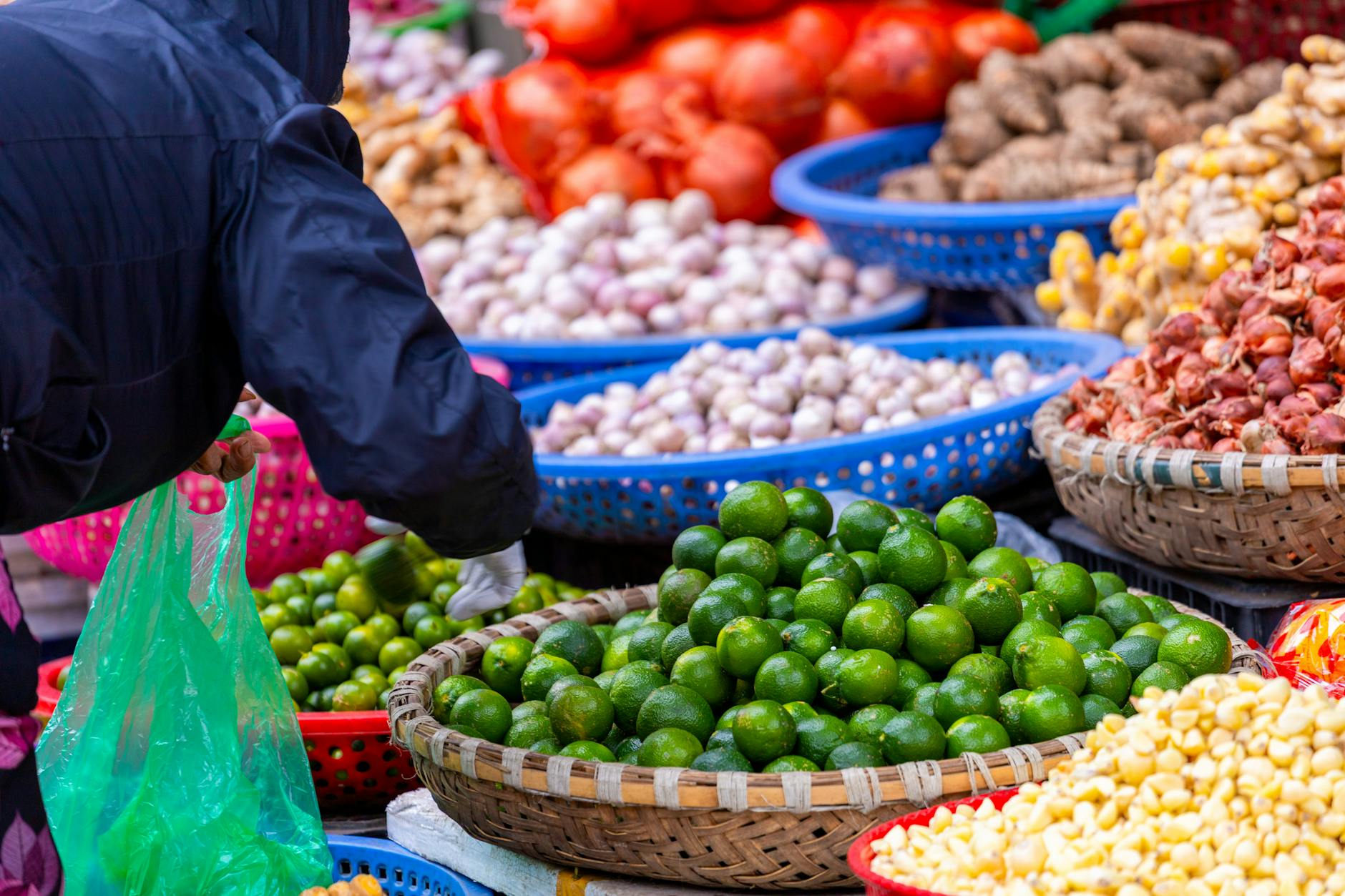
This is the heart of the market. The Flower H'mong, Nung, Dao, and Tay sell their agricultural products: vegetables, fruits, medicinal herbs, spices, rice, corn. The stalls are colorful, traditional costumes are worn. This is where you'll see the most beautiful scenes of daily life.
3. The "Vietnamese" area
Ethnic Vietnamese (Kinh) run stalls selling tools, clothing, household items, and electronic products. It's less picturesque but more useful for locals.
4. The food stalls and eateries
Several dozen stalls offer local food. This is the ideal place for lunch. Prices are reasonable (15,000 - 40,000 VND / $0.60 - $1.60 per dish).
5. The souvenir area for tourists
Embroidery, bags, jewelry, ethnic clothing, packaged spices. This is the most expensive and least authentic part. But you can find nice items if you negotiate.
What to eat at Bac Ha Market
Food is one of the best reasons to come. Here are the specialties not to be missed.
Thang Co
Horse or buffalo offal soup. Iconic H'mong dish. The taste is strong, spicy, slightly bitter. It's served hot in a bowl, with herbs and bread. Price: 20,000 - 30,000 VND ($0.80 - $1.20).
Pho chua
Sweet and sour cold noodles, a specialty of Lang Son. A refreshing dish, perfect for lunch. Served with herbs, peanuts, grilled pork, and a sweet and sour sauce. Price: 25,000 - 35,000 VND ($1 - $1.40).
Ban Pho Corn Alcohol
Artisanal corn alcohol, distilled in the neighboring village of Ban Pho. The taste is powerful (40-50% ABV), but fragrant. Enjoy in moderation. Price: 5,000 - 10,000 VND ($0.20 - $0.40) per glass.
Sticky rice and seven-color rice
The Nung Din prepare sticky rice dyed with natural colorants (leaves, roots, flowers). The seven colors symbolize the seven days of the week. Price: 10,000 - 15,000 VND ($0.40 - $0.60) per portion.
Coffee
Coffee is available, but be careful with prices. A filter coffee can cost 20,000 - 25,000 VND ($0.80 - $1), which is more expensive than in Hanoi. Ask the price before ordering.
| Dish | Main Ingredients | Price (VND) | Where to find it |
|---|---|---|---|
| Thang Co | Horse/buffalo offal, herbs, spices | 20,000 - 30,000 | Food stall area |
| Pho chua | Cold noodles, grilled pork, herbs | 25,000 - 35,000 | Several stalls |
| Seven-color rice | Sticky rice, natural colorants | 10,000 - 15,000 | Nung Din stalls |
| Corn alcohol | Fermented corn | 5,000 - 10,000/glass | Local stalls |
Tips for photographers
Bac Ha is a highly photographed market. Locals are used to tourists and their cameras. This has two consequences.
Advantages: People don't flee from the lens. They sometimes pose willingly, for a small fee (10,000 - 20,000 VND / $0.40 - $0.80).
Disadvantages: Portraits are less natural than elsewhere. Smiles are forced. Hands held out asking for money are common.
For successful photos:
- Arrive early (6:00 AM - 7:00 AM) to take advantage of the morning light and natural scenes
- Ask permission before photographing someone
- If asked for money, give a small amount or offer a piece of fruit
- Prioritize scenes of life (working hands, stalls, animals) over forced portraits
- Use a zoom to avoid disturbing people
Note: If you're looking for intimate and authentic portraits, Bac Ha is not the best place. The markets of Can Cau, Coc Ly, or Muong Khuong offer a more natural photographic experience.
How much does a visit to Bac Ha Market cost
Here is an estimated budget per person for a day on site (excluding accommodation).
| Item | Small Budget (VND/USD) | Mid Budget (VND/USD) | Comfort (VND/USD) |
|---|---|---|---|
| Transport from Sapa | 150,000 / $6 | 200,000 / $8 | 1,200,000 / $48 |
| Meals on site | 50,000 / $2 | 100,000 / $4 | 150,000 / $6 |
| Drinks | 20,000 / $0.80 | 40,000 / $1.60 | 60,000 / $2.40 |
| Souvenir purchases | 50,000 / $2 | 200,000 / $8 | 500,000 / $20 |
| Total | 270,000 / $11 | 540,000 / $22 | 1,910,000 / $76 |
Tips for negotiating:
- Prices are often inflated for tourists, especially in the souvenir area
- Negotiate with a smile, without aggression
- Offer 50 to 70% of the asking price
- Accept paying a bit more than locals: it's normal
Important: The market operates on cash only. Bring small denominations (10,000, 20,000, 50,000 VND). ATMs are rare in Bac Ha.
What to do after the market
The market closes around 2:00 PM. The afternoon is free to explore the surroundings.
Hoang A Tuong Palace
Former residence of the H'mong king, built in the 1920s. A blend of Chinese, French, and H'mong architecture. Entrance: 30,000 VND ($1.20). Visit duration: 30 minutes.
Hike to Ban Pho
Village known for its corn alcohol. 5 km from the center. Count 1.5 hours walk one way. You can taste the alcohol with the locals.
Hike to Na Thon
Village of rice vermicelli. 3 km away. Families still make vermicelli by hand.
Valley of Flowers (Thai Giang Pho)
A magnificent valley 10 km from Bac Ha. Flower fields, rice paddies, H'mong villages. Ideal for a motorbike or bicycle ride.
Fairy Cave (Hang Tien)
A limestone cave 15 km away. Entrance: 20,000 VND ($0.80). Visit: 1 hour. Bring a flashlight.
Other markets in the region
If you want to avoid the crowd or extend the experience, here are the best alternative markets.
| Market | Day | Distance from Bac Ha | Tourist Level | Specificity |
|---|---|---|---|---|
| Can Cau | Saturday | 20 km | Low | Superb mountain scenery, more authentic |
| Coc Ly | Tuesday | 30 km | Low | On the banks of the Chay River, combinable with a boat trip |
| Muong Khuong | Sunday | 40 km | Very low | Very high ethnic diversity |
| Lung Khau Nhin | Thursday | 50 km | Very low | Very local market, few tourists |
| Pha Long | Saturday | 60 km | Very low | Border market, unique atmosphere |
| Cao Son | Wednesday | 35 km | Very low | Small village market |
Tip: If you have time, combine Bac Ha (Sunday) with Can Cau (Saturday). You sleep in Bac Ha on Saturday night, visit the buffalo market on Saturday morning, then the main market on Sunday.
Pitfalls to avoid
1. The day trip from Sapa
6 hours of driving for 2 hours at the market. This is pitfall number one. You'll arrive tired, you'll leave frustrated. Stay overnight.
2. Tourist prices
Vendors inflate prices for foreigners. This is normal. Negotiate with a smile, but don't get angry. Accept paying 20 to 30% more than locals.
3. The buffalo market on Saturday
Many online articles still give the old day (Sunday). Check carefully before you go.
4. Basic accommodations
Don't expect comfort. Nights can be cold. Bring warm clothes and a flashlight.
5. The tourist crowd
The market is packed between 9:00 AM and 11:00 AM. Arrive early or accept the crowd.
6. Intrusive photography
Don't take photos of people without asking. Some will ask you for money. Give a small amount or move on.
When to visit Bac Ha Market
The market takes place every Sunday, regardless of the season. But the climate and landscapes change.
Spring (March - May)
The best period. Temperatures are mild (59-77°F / 15-25°C). Plum and peach blossoms are in bloom. Rice paddies are green.
Autumn (September - November)
Very beautiful period. Rice paddies are golden. Buckwheat flowers are in bloom. Temperatures are pleasant (64-82°F / 18-28°C).
Winter (December - February)
Cold (41-59°F / 5-15°C), foggy, sometimes rainy. Fewer tourists. Accommodation prices are lower.
Summer (June - August)
Hot (77-95°F / 25-35°C), humid, frequent rain. Storms can be violent. Roads can be slippery.
Tip: Avoid Vietnamese public holidays (Tet in January-February, April 30, May 1, September 2). The market is even more crowded and prices skyrocket.
Frequently asked questions about Bac Ha Market
What day is the Bac Ha Market?
The main market takes place on Sunday, from 6:00 AM to approximately 2:00 PM. The buffalo market is now held on Saturday (verified for 2025-2026).
Can you eat raw bac ha?
"Bac ha" is a vegetable (taro) that is generally eaten cooked. At Bac Ha Market, you mainly eat Thang Co (offal soup), pho chua, or sticky rice.
What is the most beautiful floating market in Vietnam?
Floating markets are found in the Mekong Delta (Cai Rang, Phong Dien), not in the North. Bac Ha Market is a mountainous ethnic market. To learn more, see our complete guide on Can Tho and the Floating Markets.
What to see and do in Bac Ha?
The Sunday market, Hoang A Tuong Palace, hikes to Ban Pho or Ta Van Chu, the Valley of Flowers, Fairy Cave, and alternative markets (Can Cau, Coc Ly).
Do you need a guide to visit Bac Ha Market?
No, the market is easily visited alone. A guide can be useful for hikes in the surrounding villages.
Can you pay by card at Bac Ha Market?
No, the market operates on cash only. Bring small denominations in VND.
Is Bac Ha Market accessible for people with reduced mobility?
Partially. The site is largely outdoors with dirt paths and slopes. Some areas are difficult to access.
How much time should I plan to visit the market?
Allow 2 to 3 hours for a complete visit. Including travel from Sapa or Lao Cai, plan for at least half a day.