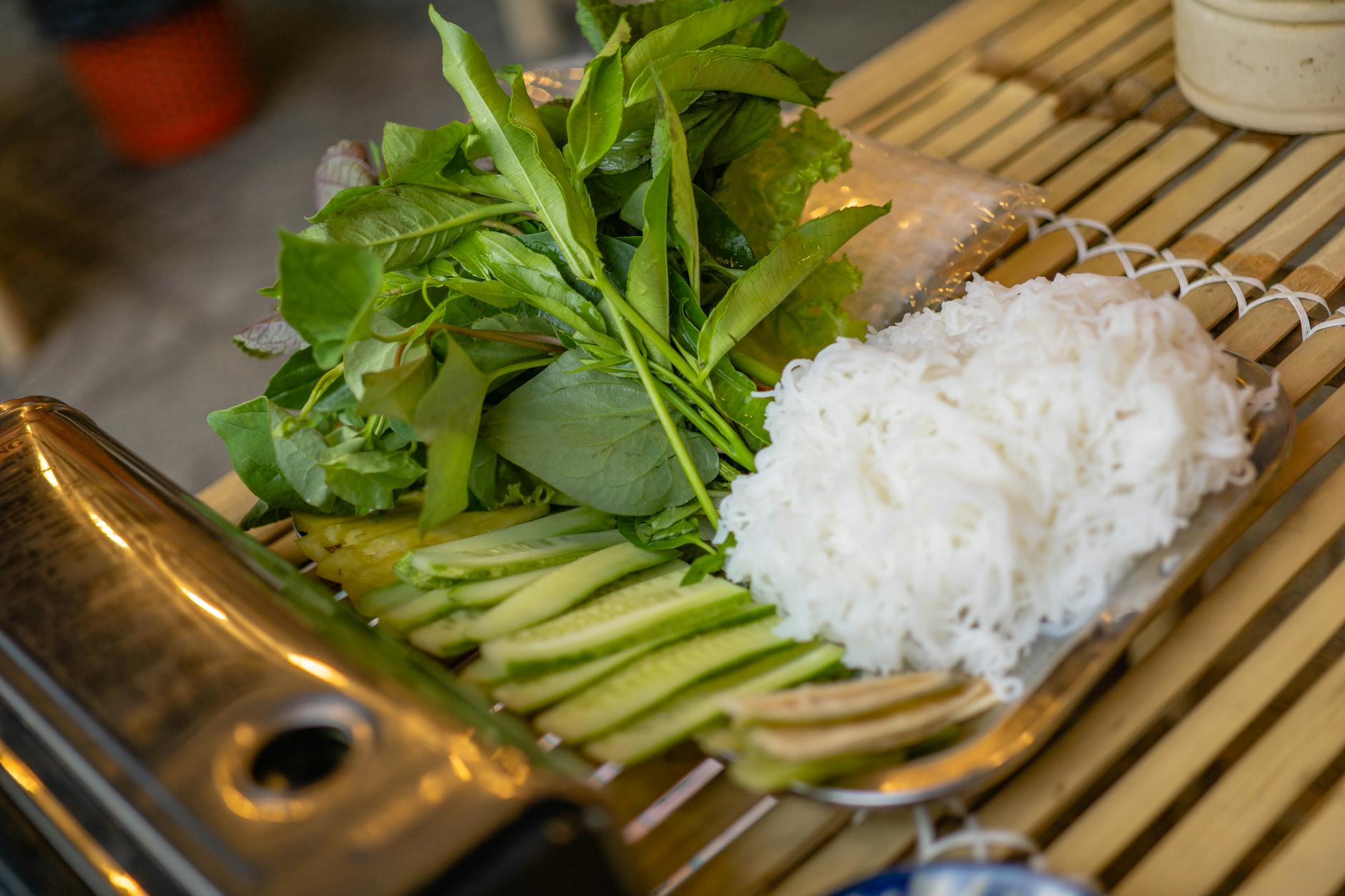
What Does "Eating Chay" Really Mean in Vietnam?
To understand the vegan offerings in Vietnam, you have to start with the local concept of "ăn chay". This expression literally translates to "eating vegetarian", but in practice it means vegan. The Mahayana Buddhist tradition, predominant in Vietnam, promotes a diet without meat, fish, eggs, or dairy. It is not a Western fad. It is a religious practice with centuries of history.
Twice a month, during the full moon and new moon (1st and 15th days of the lunar calendar), practicing Buddhists consume only "chay" food. On these dates, even the most carnivorous street stalls offer vegan options. The 2026 lunar calendar marks these dates precisely, and it is worth checking before traveling.
The distinction between "ăn chay" and "ăn mặn" (food with meat) is clear to Vietnamese people. However, the Western concept of "vegan" as the exclusion of all animal products is not always understood. Some "chay" dishes may contain egg or milk. Therefore, asking "Có trứng không?" (does it have egg?) and "Có sữa không?" (does it have milk?) is a necessary precaution.
Criteria for Determining the "Most Vegan City"
To answer the central question, this analysis uses five objective criteria. The mere number of restaurants is not enough. Density, variety, accessibility, and price must also be considered.
1. Number of 100% vegan restaurants: How many establishments dedicated exclusively to vegan cuisine exist in each city.
2. Density of vegan options per km²: It's not the same to have 50 restaurants in 10 km² as in 100 km². Density affects traveler convenience.
3. Cuisine variety: From traditional Vietnamese dishes to international options (vegan pizza, burgers, Indian food, etc.).
4. Ease of finding vegan options in non-specialized restaurants: How easy it is to order a vegan dish at a regular restaurant without having to seek out a "chay" place.
5. Average price of a vegan meal: From street stalls to gourmet restaurants, the price range determines accessibility.
Ho Chi Minh City (Saigon): The Undisputed Queen
Saigon clearly leads Vietnam's vegan ranking. The city is home to over 50 exclusively vegan restaurants, a number unmatched by any other city in the country. The concentration is especially high in District 1, with Pham Ngu Lao as the epicenter of Western offerings, and in District 2 (Thao Dien), where the expatriate community has driven gourmet options.
Prices range from 30,000 VND ($1.20 USD) at street stalls in Ben Thanh market to 250,000 VND ($10.00 USD) at restaurants like Hum Vegetarian or Ngoc Tho. The variety is impressive: pho chay, banh mi chay, vegan Thai curry, vegetable pizza, and dairy-free desserts.
The Happy Cow app shows 48 registered vegan restaurants in Saigon in 2026, with a density of 1.2 establishments per km² in the urban center. Google Maps, with the "quán chay" filter, reveals even more uncatalogued options.
Key advantage: The city offers the highest probability of finding vegan food anytime, anywhere, without needing prior planning.
Hanoi: The Traditional Capital with Vegan Surprises
Hanoi doesn't match Saigon in absolute quantity, but its vegan offering is solid and concentrated. The Old Quarter houses iconic restaurants like Uu Dam (gourmet vegan), Veggie Castle (vegan buffet), and the KOMBO chain (vegan fast food). The Tay Ho district, by the lake, concentrates international offerings for expatriates.
Prices in Hanoi are slightly higher than in Saigon: from 40,000 VND ($1.60 USD) at street stalls in Dong Xuan market to 300,000 VND ($12.00 USD) at fine dining restaurants. The main difficulty is outside the Old Quarter, where finding vegan options at traditional stalls requires more searching.
The vegan density in Hanoi is 0.8 restaurants per km² in the historic center, lower than Saigon. However, the quality of the offering is high, with dishes like pho chay and bun cha chay that maintain the essence of Northern cuisine.
Practical tip: In Hanoi, on full moon and new moon days, restaurants in the Old Quarter multiply their vegan options. Check the lunar calendar before planning your meals.
Hoi An: The Vegan Jewel of Central Vietnam
Hoi An deserves a special mention. Although it has fewer restaurants than Saigon, its ratio of vegan restaurants per visitor is the highest in the country. In the Old Town, Minh Hien, Am Vegetarian, and Quan Chay offer complete vegan menus at moderate prices: from 35,000 to 200,000 VND ($1.40 to $8.00 USD).
The local Buddhist tradition is strong. Many family-run restaurants offer vegan options without being exclusively vegan. The density in the Old Town is 2.5 vegan restaurants per km², the highest in Vietnam. For a vegan traveler, Hoi An means walking two minutes and finding three different options.
The vegan experience in Hoi An is especially authentic. Dishes like cao lầu chay and mì quảng chay are prepared with recipes passed down through generations. The city also hosts vegan cooking workshops, a recommended activity for learning to replicate the dishes at home.
Da Nang: The Modern and Affordable Alternative
Da Nang has experienced vegan growth driven by digital nomads and expats. Roots Plant Based Cafe, Jalus Vegan Kitchen, and the My An area concentrate the offerings. Prices are competitive: from 30,000 to 180,000 VND ($1.20 to $7.20 USD).
The city offers the best value for money for long stays. My Khe beach has several vegan stalls, and the favorable climate allows for outdoor dining almost year-round. Da Nang is also an excellent starting point for exploring Hoi An and Hue, making it a strategic base for vegan travelers.
The vegan density in Da Nang is 0.6 restaurants per km², lower than Hoi An but with greater variety of international cuisine. The city is especially recommended for vegans looking to combine beach life, remote work, and affordable food.
Hue: The Capital of Buddhist Veganism
Hue, being a smaller city, has a surprisingly rich vegan offering. Its Buddhist tradition and the influence of imperial cuisine explain this abundance. Lien Hoa, Bo De, and numerous street stalls offer vegan dishes at low prices: from 20,000 to 120,000 VND ($0.80 to $4.80 USD).
Hue offers the most authentic and traditional vegan experience in Vietnam. Dishes like bún bò Huế chay (vegan version of the city's most famous beef soup) and bánh khoái chay (vegan crepes) are hard to find with the same quality in other cities.
The vegan density in Hue is 1.0 restaurant per km², higher than Hanoi and Da Nang. The city is ideal for budget-conscious vegan travelers looking to immerse themselves in Vietnamese culture without giving up traditional food.
Final Comparison: Which City Has the Biggest Vegan Scene?
| City | Vegan Restaurants | Density (per km²) | Average Meal Price | Variety | Total Score |
|---|---|---|---|---|---|
| Saigon | 50+ | 1.2 | 40,000-250,000 VND ($1.60-$10.00) | High | 9.5/10 |
| Hanoi | 30+ | 0.8 | 40,000-300,000 VND ($1.60-$12.00) | Medium-High | 8.0/10 |
| Hoi An | 20+ | 2.5 | 35,000-200,000 VND ($1.40-$8.00) | Medium | 8.5/10 |
| Da Nang | 25+ | 0.6 | 30,000-180,000 VND ($1.20-$7.20) | Medium-High | 7.5/10 |
| Hue | 15+ | 1.0 | 20,000-120,000 VND ($0.80-$4.80) | Traditional | 7.0/10 |
Conclusion: Ho Chi Minh City wins in absolute quantity and variety. It is the city with the biggest vegan scene in Vietnam if measured by the number of options and ease of finding vegan food anytime. Hoi An wins in density and experience. Hue wins in authenticity and price. Da Nang wins in value for money for long stays. Hanoi falls in the middle, with a good offering but lower density.
For the vegan traveler visiting Vietnam for the first time, the recommended route includes Saigon as the main base, Hoi An as a mandatory stop, and Hue as a destination to try traditional vegan cuisine. Da Nang is ideal for those planning an extended stay.
Practical Tips for Vegan Travelers in Vietnam
Useful phrases in Vietnamese:
- "Tôi ăn chay" (pronounced "toy an chay"): I am vegan/vegetarian.
- "Không nước mắm" (pronounced "kong nuoc mam"): No fish sauce.
- "Có món chay không?" (pronounced "co mon chay khong"): Do you have a vegan dish?
- "Có trứng không?" (pronounced "co chung khong"): Does it have egg?
- "Có sữa không?" (pronounced "co sua khong"): Does it have milk?
How to identify vegan restaurants: Look for signs that say "Quán Chay" or "Ăn Chay". On Google Maps, use these same terms as a filter. Happy Cow remains the most reliable app, with reviews updated by the vegan community.
Important warning: Fish sauce (nước mắm) is ubiquitous in Vietnamese cuisine. Even dishes that seem vegan may contain this ingredient. Always ask "Không nước mắm" before ordering.
What to always carry: Snacks like nuts, cereal bars, and dried fruit are useful for emergencies. A stainless steel spoon allows you to eat fruit from the market without worry. Also bring a couple of reusable bags to buy vegetables and tofu at local markets.
Recommended apps:
- Happy Cow: Global database of vegan restaurants, with reviews in Spanish.
- Google Maps: Filter "quán chay" to find uncatalogued options.
- Lunar calendar: To identify full moon and new moon days, when vegan offerings multiply.
Must-Try Vegan Dishes in Each City
Saigon:
- Bánh Mì Chay: 25,000-40,000 VND ($1.00-$1.60 USD). Vegan version of the classic Vietnamese sandwich, with tofu, pickled vegetables, and soy sauce.
- Cơm Tấm Chay: 35,000-50,000 VND ($1.40-$2.00 USD). Vegan broken rice with tofu, mushrooms, and vegetables.
Hanoi:
- Phở Chay: 40,000-60,000 VND ($1.60-$2.40 USD). Vegan noodle soup with mushroom and vegetable broth.
- Bún Chả Chay: 45,000-70,000 VND ($1.80-$2.80 USD). Vegan version of Hanoi's dish, with tofu meatballs.
Hoi An:
- Cao Lầu Chay: 35,000-50,000 VND ($1.40-$2.00 USD). Vegan thick noodles with vegetables and tofu.
- Mì Quảng Chay: 40,000-55,000 VND ($1.60-$2.20 USD). Vegan noodle soup with coconut curry.
Hue:
- Bún Bò Huế Chay: 25,000-40,000 VND ($1.00-$1.60 USD). Vegan version of Hue's most famous beef soup.
- Bánh Khoái Chay: 20,000-35,000 VND ($0.80-$1.40 USD). Vegan crepes filled with vegetables and tofu.
Da Nang:
- Bánh Xèo Chay: 30,000-45,000 VND ($1.20-$1.80 USD). Crispy vegan crepes with bean sprouts.
- Mỳ Quảng Chay: 35,000-50,000 VND ($1.40-$2.00 USD). Vegan version of the region's typical dish.
Frequently Asked Questions about Veganism in Vietnam
Q: Can you be vegan in Vietnam?
Yes, Vietnam is one of the easiest destinations in Asia for vegans thanks to the Buddhist tradition. The word "chay" identifies vegan/vegetarian food, and there are specialized restaurants in all medium and large cities. The biggest challenge is hidden fish sauce in dishes that appear vegan.
Q: Which city has the biggest vegan scene in Vietnam?
Ho Chi Minh City (Saigon) has the highest absolute number of vegan restaurants (over 50 exclusive ones) and the greatest variety, from street stalls to high-end cuisine. However, Hoi An has the highest density of vegan restaurants per visitor, and Hue offers the most authentic and affordable experience.
Q: How is the vegetarian food in Vietnam?
Excellent and varied. Vietnamese vegetarian cuisine uses ingredients like tofu, mushrooms, lotus, coconut, and wheat gluten to recreate traditional dishes. "Chay" dishes are usually cheaper than their meat counterparts, and the quality is high, especially in Buddhist restaurants.
Q: Is it easy to find vegan options in non-specialized restaurants?
It depends on the city. In Saigon and Hanoi, many restaurants offer vegan menus or can adapt dishes. In smaller cities or rural areas, it is more difficult and it's better to look for "chay" restaurants. On full moon and new moon days, even meat restaurants offer vegan options.
Q: How much does it cost to eat vegan in Vietnam?
From 20,000 VND ($0.80 USD) at street stalls in Hue to 300,000 VND ($12.00 USD) at gourmet restaurants in Saigon. The average price of a complete vegan meal is between 40,000 and 120,000 VND ($1.60-$4.80 USD), significantly cheaper than in the West.
Q: Do restaurants understand "vegan" or just "vegetarian"?
In Vietnam, "chay" traditionally means vegan (no meat, fish, eggs, or dairy). However, some restaurants may use eggs or milk. It is always best to ask "Có trứng không?" (does it have egg?) and "Có sữa không?" (does it have milk?) to confirm.
Q: Are there vegan options at street markets?
Yes, especially during Buddhist holidays. Local markets often have temporary "chay" food stalls. In permanent markets like Ben Thanh (Saigon) or Dong Xuan (Hanoi), there are fixed stalls selling tofu, vegetables, and prepared vegan dishes.
Q: Which city is best for a vegan traveler wanting to try traditional cuisine?
Hue is the best option for traditional Vietnamese vegan cuisine, thanks to its strong Buddhist tradition and the influence of imperial cuisine. Hoi An also offers an excellent experience with adapted local dishes. Saigon is better for international variety.