This guide does the opposite. Pick one region — North, Centre, or South — and let it unfold. The rewards of slowness in Vietnam are substantial: the unhurried bowl of bun bo eaten at a plastic stool, the second visit to a temple after the day-trippers leave, the conversation with a homestay host that only happens once trust has been built over breakfast.
Why Cramming Vietnam End-to-End Ruins the Trip
The numbers are unforgiving. Hanoi to Ho Chi Minh City is a two-hour-and-ten-minute flight, but factor in airport transfers, security, and the inevitable Vietnamese aviation delay, and a single internal flight eats five to six hours. Three flights in a week strips nearly a full day from the itinerary. Add three hotel check-ins, three packings, three new sets of unfamiliar streets — and exhaustion compounds.
There is also the matter of cuisine and culture. Northern Vietnamese food is subtle, herbal, and salt-driven. Central cuisine leans spicy and royal. Southern cooking is sweeter and tropical. Bouncing between regions in five days does each tradition a disservice. The traveller eats a watered-down version of everything and a memorable version of nothing.
Tip: The single best predictor of a satisfying Vietnam trip is the number of nights spent in one place. Aim for at least three nights in any base city before considering it worth the unpacking.
Choosing Your Region: A Quick Comparison
| Region | Best For | Weather (2026 sweet spot) | Pace | Average Daily Budget (mid-range) |
|---|---|---|---|---|
| North | Mountains, ethnic cultures, Hanoi street food, Halong Bay | Oct–Nov 2026, Mar–Apr 2026 | Slower; transfers are long | 1,800,000–2,500,000 VND (USD 70–98) |
| Centre | Ancient towns, beaches, imperial history, walkable cities | Feb–Apr 2026, late Aug 2026 | Easiest; everything is close | 1,600,000–2,300,000 VND (USD 63–90) |
| South | Mekong life, urban energy, islands, French colonial heritage | Dec 2025–Apr 2026 | Variable; sprawling | 1,700,000–2,400,000 VND (USD 67–94) |
Exchange rate used: 1 USD ≈ 25,500 VND (mid-2026 projection).
Itinerary One: The Northern Route (Hanoi, Ninh Binh, Halong Bay)
This is the right pick for travellers who want layered scenery — limestone karst on water, limestone karst on rice paddy, and a 1,000-year-old capital tying it together.
Day 1: Hanoi — Old Quarter Orientation
Arrive at Noi Bai International. Take the official airport taxi or Grab to the Old Quarter (around 400,000 VND / USD 16). Spend the afternoon walking Hoan Kiem Lake, then dinner at a bun cha joint on Hang Manh.
Day 2: Hanoi — Deep Dive
Morning at the Temple of Literature (70,000 VND / USD 2.75 entry) and the Vietnamese Women's Museum. Afternoon coffee at an egg-coffee house on Nguyen Huu Huan. Evening: a water puppet show at Thang Long Theatre (200,000 VND / USD 7.85).
Day 3: Train to Ninh Binh
The 9:20 train from Hanoi to Ninh Binh costs 120,000 VND (USD 4.70) and takes just over two hours. Check into a homestay in Tam Coc. Afternoon: cycle to Bich Dong Pagoda. Watch sunset from Hang Mua's 500 stone steps.
Day 4: Ninh Binh — Rowboat and Ruins
Trang An rowboat tour (250,000 VND / USD 9.80) in the morning, before the crowds. Afternoon at Hoa Lu, the 10th-century capital of the Dinh dynasty.
Tip: Tip the Trang An rower 50,000–100,000 VND. They row backwards with their feet for three hours, and the official wage is modest.
Day 5: Transfer to Halong / Lan Ha Bay
Shuttle from Ninh Binh to the Halong piers (around 350,000 VND / USD 13.70, four hours). Board an overnight cruise. Lan Ha Bay is quieter than Halong proper — prioritise cruise operators that depart from Got pier on Cat Ba Island.
Day 6: Cruise Day, Return to Hanoi
Morning kayaking, swimming, and a cooking class on board. Disembark around noon. Shuttle back to Hanoi arrives by 17:00. Final dinner: cha ca la vong on Cha Ca Street.
Day 7: Hanoi Slow Morning, Departure
Coffee, a final wander through the French Quarter, lunch of pho at Pho Thin (60,000 VND / USD 2.35). Airport transfer.
Estimated total (mid-range, excluding international flights): 14,500,000–18,000,000 VND (USD 570–705) per person.
Itinerary Two: The Central Route (Hue, Hoi An, Da Nang)
The central region is the easiest to navigate. Three anchor cities sit within a 150-kilometer corridor, connected by the spectacular Hai Van Pass.
Day 1: Arrive Da Nang, Transfer to Hue
Fly into Da Nang International. Pre-arrange a private car over the Hai Van Pass to Hue (around 1,500,000 VND / USD 59, three to four hours with photo stops). Check in near the Perfume River.
Day 2: Hue — Imperial Citadel
A full morning at the Imperial Citadel (200,000 VND / USD 7.85). Lunch at a bun bo Hue specialist on Ly Thuong Kiet street. Afternoon dragon boat on the Perfume River to Thien Mu Pagoda.
Day 3: Hue Tombs, Transfer to Hoi An
Morning visiting the tombs of Tu Duc and Minh Mang (combined ticket 420,000 VND / USD 16.50). Afternoon car transfer to Hoi An (around 1,300,000 VND / USD 51, two and a half hours, stopping at Lang Co beach).
Day 4: Hoi An — Old Town
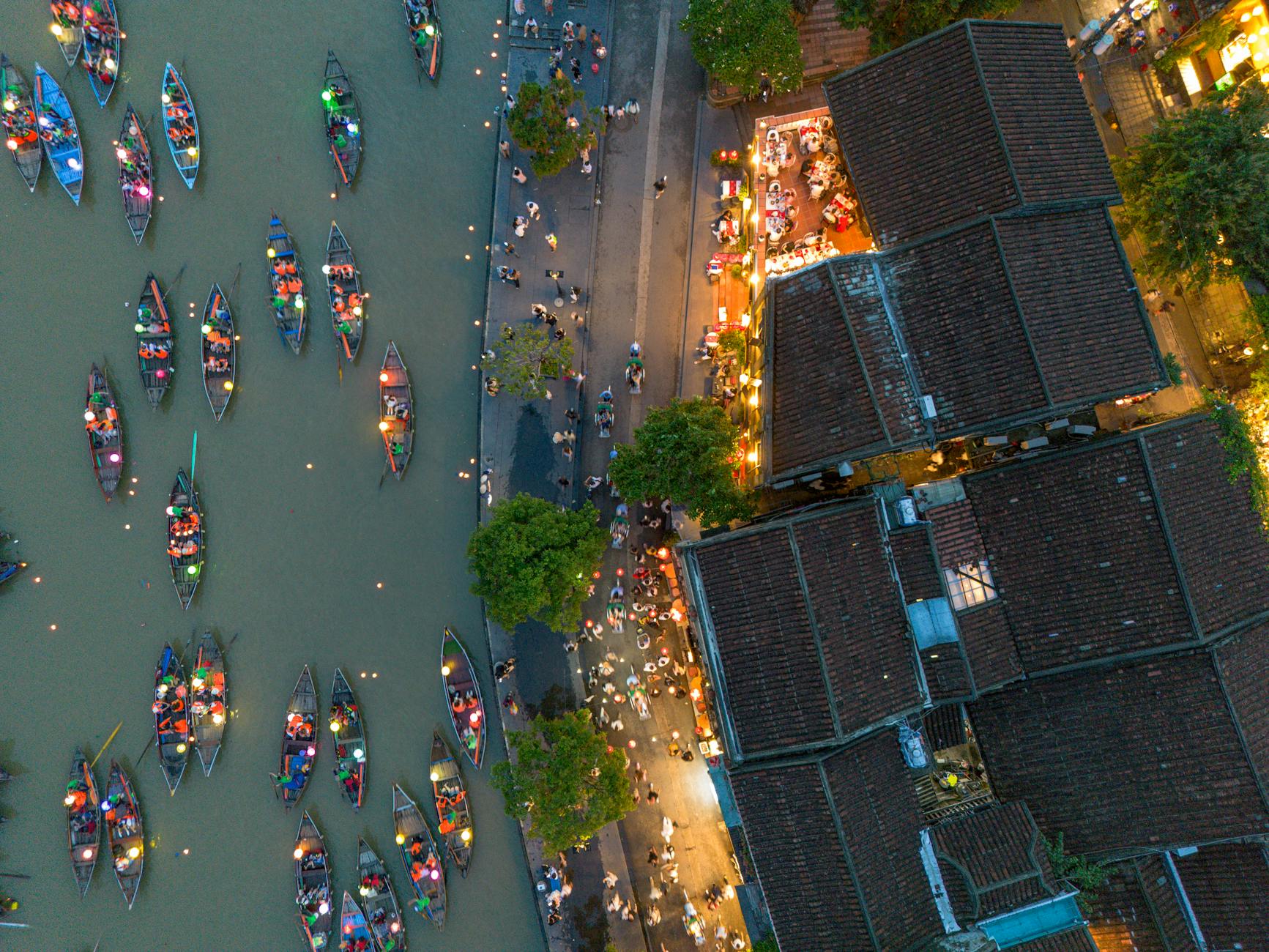
The Old Town entry ticket is 120,000 VND (USD 4.70) and covers five heritage sites. Walk the Japanese Covered Bridge, the Tan Ky house, and the assembly halls. Lanterns light up after dusk. Dinner: cao lau at Morning Glory.
Day 5: Hoi An — Bicycles and Beach
Rent a bicycle (50,000 VND / USD 2) and ride to An Bang Beach. Afternoon cooking class (around 850,000 VND / USD 33) starting with a market tour.
Tip: Tailors in Hoi An need at least 48 hours for a quality job. If a custom shirt or dress is on the list, place the order on Day 4, not Day 6.
Day 6: Da Nang — Marble Mountains and My Khe
Transfer to Da Nang (around 500,000 VND / USD 19.60). Climb the Marble Mountains caves and pagodas (40,000 VND / USD 1.55 entry). Afternoon at My Khe Beach. Evening: the Dragon Bridge breathes fire at 21:00 on Saturdays and Sundays.
Day 7: Ba Na Hills or Slow Departure
Optional Ba Na Hills and Golden Bridge day trip (cable car ticket 950,000 VND / USD 37.25). The honest verdict: it is a French-themed amusement park at altitude. Skip it if architecture and crowds are not the goal, and instead spend the morning at Son Tra Peninsula's pagoda before the airport.
Estimated total (mid-range): 13,500,000–17,000,000 VND (USD 530–667) per person.
Itinerary Three: The Southern Route (Ho Chi Minh City, Mekong Delta, Con Dao)
The South pairs frenetic urban Vietnam with two contrasting natural escapes — the agrarian Mekong and the remote, beach-fringed Con Dao archipelago.
Day 1: Arrive Ho Chi Minh City
Land at Tan Son Nhat. Grab to District 1 (around 200,000 VND / USD 7.85). Evening walking Nguyen Hue, dinner at a com tam stall in District 3.
Day 2: Saigon History
Morning at the War Remnants Museum (40,000 VND / USD 1.55) — emotionally demanding, allow three hours. Afternoon: Notre Dame Cathedral exterior (interior restoration is ongoing through 2026), the Central Post Office, and the Reunification Palace (65,000 VND / USD 2.55).
Day 3: Cu Chi Tunnels and Ben Thanh
Half-day tour to Cu Chi Tunnels (around 650,000 VND / USD 25.50 including transport and entry). Afternoon at Ben Thanh Market, then a rooftop cocktail on Bui Vien for those who can tolerate the noise.
Day 4: Transfer to Ben Tre (Mekong)
Skip My Tho — it has become a coach-tour trap. Hire a car to Ben Tre instead (around 1,400,000 VND / USD 55, two hours). Check into a homestay among the coconut palms. Late afternoon rowboat through narrow channels.
Day 5: Mekong Slow Day
Sunrise bike ride through villages. Visit a coconut candy workshop and a brick kiln. Lunch of elephant-ear fish at a riverside restaurant. Return to Ho Chi Minh City by late afternoon.
Tip: The Mekong rewards staying overnight. Day-trippers see floating markets at 10:00 when the real commerce wrapped up at 6:00. Sleep in Ben Tre or Can Tho to see the delta wake up.
Day 6: Fly to Con Dao
Vietnam Airlines and Bamboo run daily flights from Ho Chi Minh City to Con Dao (around 1,800,000 VND / USD 70 one-way in 2026). The flight is 45 minutes. Afternoon at Dam Trau Beach.
Day 7: Con Dao — History and Sea
Morning visit to the Con Dao Prison museum complex (40,000 VND / USD 1.55) and Hang Duong Cemetery — sobering colonial-era history. Late afternoon snorkelling trip before the flight back to Ho Chi Minh City for international connections.
Estimated total (mid-range): 16,000,000–21,000,000 VND (USD 627–823) per person — the Con Dao flights add cost.
Daily Cost Breakdown Across All Three Itineraries
| Expense | North | Centre | South |
|---|---|---|---|
| Accommodation (3★, per night) | 950,000 VND (USD 37) | 850,000 VND (USD 33) | 1,050,000 VND (USD 41) |
| Meals (3 per day, local) | 350,000 VND (USD 13.70) | 300,000 VND (USD 11.75) | 380,000 VND (USD 14.90) |
| Transport (daily average) | 450,000 VND (USD 17.65) | 350,000 VND (USD 13.70) | 600,000 VND (USD 23.50) |
| Entries and activities | 250,000 VND (USD 9.80) | 280,000 VND (USD 11) | 220,000 VND (USD 8.60) |
Practical Notes for 2026
E-visas now cover 90 days with multiple entry for most nationalities and cost USD 25 (single entry) or USD 50 (multiple entry) via the official Immigration Department portal. Processing takes three working days; rushed services through third parties are unnecessary and overpriced.
Cash remains useful outside major cities. ATMs in Tam Coc, Ben Tre, and Con Dao charge withdrawal fees of 55,000–80,000 VND (USD 2.15–3.15). Withdraw in Hanoi, Hue, or Ho Chi Minh City when possible.
Grab works in all major cities including Da Nang and Hue. In Hoi An's Old Town, cars are banned during pedestrian hours (15:00–22:00), so plan transfers accordingly.
Frequently Asked Questions
Is seven days really enough for one region? Yes, with the proviso that "enough" means a satisfying introduction, not exhaustive coverage. Travellers who attempt all three regions in seven days end up seeing less of each than the itineraries above offer for one.
Which region is best for first-time visitors? The Centre. Distances are short, the cities are walkable, the food is celebrated, and the mix of beach, history, and culture is balanced. North-bound or South-bound trips suit returning visitors with stronger preferences.
Can the rainy season ruin these itineraries? The Centre's wet season (October–December 2026) brings genuine flooding risk in Hoi An. The North is best avoided in July–August due to typhoons that disrupt Halong cruises. The South sees afternoon downpours from May to October but mornings remain workable.
Are private drivers worth the cost? For the Hai Van Pass, Ninh Binh-to-Halong, and Saigon-to-Ben Tre legs, yes. The cost difference versus a tourist bus is 400,000–700,000 VND (USD 16–27) per car, and the time saved plus flexibility on photo stops justifies it for groups of two or more.
How much should be tipped? Tipping is not obligatory but increasingly appreciated in tourism. Suggested: 50,000–100,000 VND per day for guides, 20,000–50,000 VND for porters, and rounding up restaurant bills in tourist areas.
Is the overnight train still worth it in 2026? The Hanoi–Hue and Hanoi–Da Nang overnight services remain atmospheric and practical. Soft sleeper berths cost 1,150,000–1,400,000 VND (USD 45–55). The new high-speed rail project is still under construction and will not be operational in 2026.
What about Sapa and Phong Nha? Both are excellent but require their own dedicated time. Sapa adds two nights to a Northern itinerary; Phong Nha adds two to a Central one. Try to slot them in only by removing something else — typically the Halong cruise or Hue, respectively.
The Argument for Less
Vietnam is not a country to be conquered in a week. The traveller who spends seven days in Hoi An's alleys, on Ben Tre's canals, or in Ninh Binh's paddies leaves with sharper memories than the one who collects six cities in the same time. The next visit can cover a different region. Vietnam will still be here.