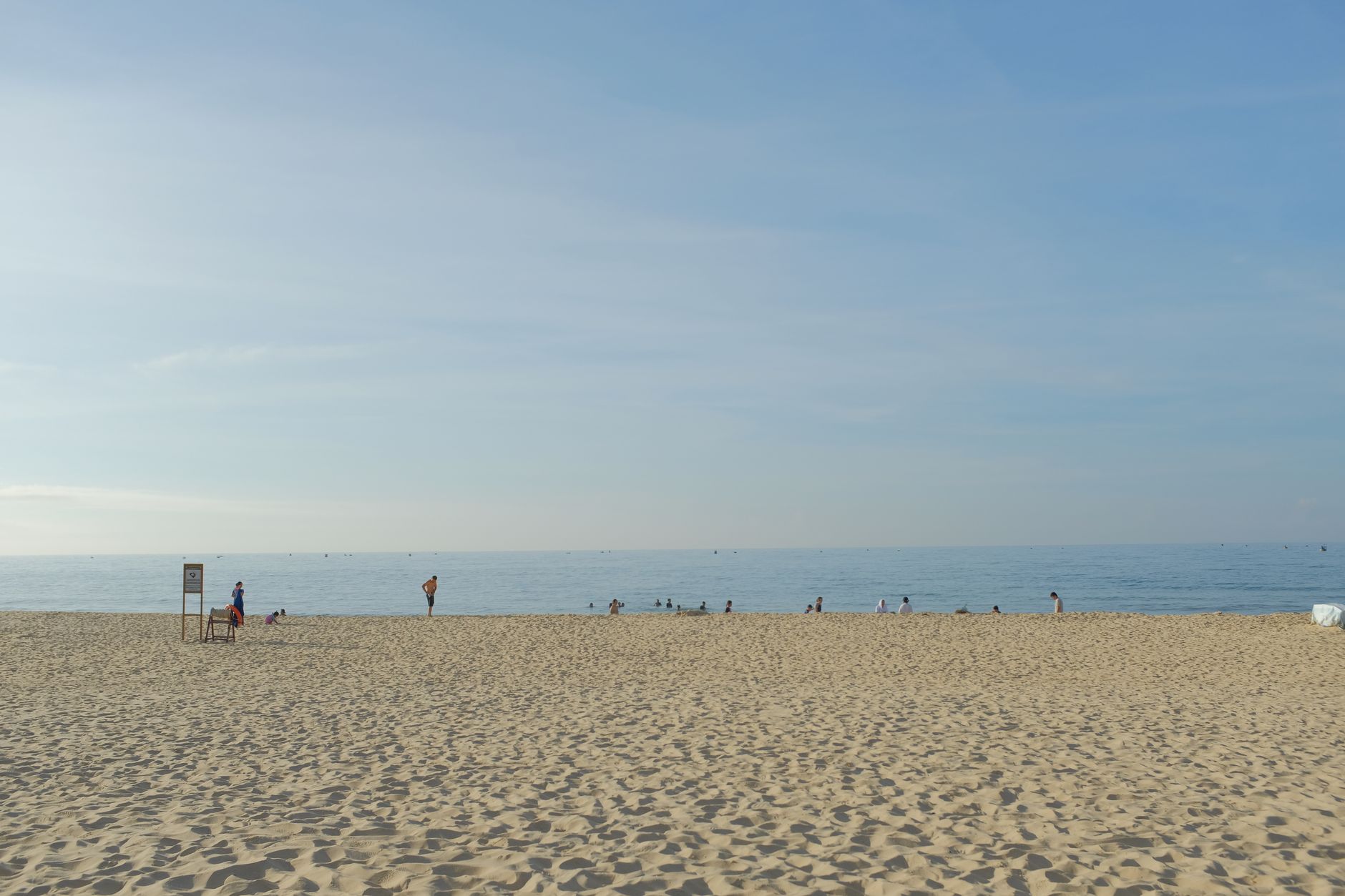
An Bang Beach at a glance
An Bang Beach runs for roughly 4 km along the coast north of Cua Dai, in the area that formed part of Cam An ward before the July 2025 administrative merger folded Quang Nam province into Da Nang city. Any source still calling this "Quang Nam Province" is out of date, and even the ward name should be checked before relying on it for directions or paperwork.
There is no entrance fee and no gate. The beach is public, open at all hours, and the old town ticket of 120,000 VND (about $4.60) has nothing to do with it. The distance from Hoi An old town is about 4 to 5 km, which translates to 10 to 15 minutes by taxi or Grab, or roughly 25 minutes by bicycle.
The beach suits couples, families, remote workers and anyone combining beach time with the old town. It does not suit snorkellers (the water is murky and shallow), surfers looking for real waves, or travellers who want empty resort sand. The southern end near the main road is the busiest, with beach clubs and umbrellas. The central lanes are quieter. The northern stretch is the calmest of all.
Where An Bang is and how it differs from Cua Dai, Non Nuoc and My Khe
An Bang sits just north of Cua Dai, the beach that once carried Hoi An's tourism before severe erosion ate into the shoreline. As Cua Dai lost sand, visitors and businesses shifted north to An Bang, which is why the two beaches now feel so different despite being minutes apart.
Cua Dai today is quieter, partly eroded, and lined with resort properties that keep to themselves. It is worth a look if you want space, but the swimming is less reliable and the infrastructure thinner.
Non Nuoc, on the Da Nang side near the Marble Mountains, is about 15 to 20 km away. It has a more developed feel and pairs well with a visit to the mountains. My Khe is Da Nang's main city beach, roughly 25 to 30 km from Hoi An, with a high-rise skyline, bigger waves and far more infrastructure.
For the common question of whether to choose Da Nang or Hoi An for a beach, the answer depends on what you want from the trip. Da Nang gives you a city beach with restaurants and nightlife on the doorstep. Hoi An gives you a village beach with a UNESCO old town 15 minutes away.
| Beach | Distance from old town | Vibe | Swimming | Facilities | Best for |
|---|---|---|---|---|---|
| An Bang | 4 to 5 km | Village beach, relaxed | Calm in summer, risky in autumn | Beach clubs, local stalls, bars | Atmosphere and ease |
| Cua Dai | 4 to 5 km | Quiet, eroded | Less reliable | Resort-focused | Space and solitude |
| Non Nuoc | 15 to 20 km | Developed, near Marble Mountains | Moderate | Restaurants, vendors | Combining with sightseeing |
| My Khe | 25 to 30 km | City beach, high-rise | Bigger waves | Full city infrastructure | City convenience |
Hanoi, for anyone wondering, has no city beach. The nearest options are Do Son, Sam Son and the Cat Ba and Ha Long area, each a few hours away. Central Vietnam is the practical choice for a beach stop.
How to get to An Bang Beach
From Hoi An old town
Grab or a metered taxi is the default. The ride takes 10 to 15 minutes and usually costs 60,000 to 100,000 VND ($2.30 to $3.80) each way. Older guides citing 80,000 VND are working from 2019 figures, so treat any price you see online as a starting point and check the app before you leave.
A bicycle is the cheapest and most scenic option, about 25 minutes through rice fields and lanes. A motorbike cuts that to under 10 minutes. Hotel shuttles exist at some properties but are rarely worth the schedule constraint.
If you rent a motorbike, you need a valid licence plus an International Driving Permit recognised in Vietnam. Insurance frequently will not cover unlicensed riders, and police do check. No helmet means a fine.
The shared road into An Bang carries real traffic at the junctions. Returning at night by bicycle without lights is genuinely dangerous, so plan to be back before dark or take a taxi.
From Da Nang airport and Da Nang city
The distance is about 28 to 30 km, or 40 to 50 minutes depending on traffic. Grab and metered taxis both work, and a private transfer can be arranged through most hotels. There is no useful public bus that drops you at An Bang itself.
If you take a taxi, use a reputable company and confirm the meter is running before you move. Apps are the safer default because the price is fixed in advance.
Parking and bike storage
There is a covered lot at the beach entrance, historically around 10,000 VND ($0.40), though this should be verified on arrival. Many beach clubs let you park free if you buy a drink, which is often the better deal.
Touts sometimes wave visitors into private lots with inflated fees. If the price is not posted and the lot looks improvised, ride on to the next one.
Entrance fee and what a day really costs
The beach itself is free. The old town ticket of 120,000 VND (about $4.60) applies to the heritage area in Hoi An and is not required for An Bang. Your costs come from parking, food, drinks, sunbeds and activities.
Sunbeds follow a simple model at most places: free with a food or drink purchase. Premium clubs may set a minimum spend or charge for a cabana. Ask before you sit down, because "free" sunbeds that turn into a per-person charge are a common complaint.
| Style | Food | Sunbed | Activities | Total per person |
|---|---|---|---|---|
| Budget | Fried rice 60,000 VND ($2.30), beer 20,000 to 35,000 VND ($0.80 to $1.35) | Free with meal | None | 100,000 to 150,000 VND ($3.80 to $5.80) |
| Mid-range | Beach club lunch and a cocktail | Free with spend | Massage | 400,000 to 700,000 VND ($15 to $27) |
| Premium | Seafood dinner | Cabana fee | Parasailing | 1,500,000 VND+ ($58+) |
Water activity prices shift constantly. Parasailing was quoted at 600,000 VND (about $23) in older sources, so confirm the current rate and agree it before you go up.
Watch for seafood priced by weight without a quote, menus with no printed prices, and per-person sunbed charges that appear after you have ordered. Ask first, every time.
Best time to visit An Bang
Competitor guides contradict each other on the season, which is unhelpful. The reality is straightforward. February to May is the most comfortable window, with calm sea and temperatures around 24 to 32 °C. June to August is hot, sunny and busy with domestic holiday crowds. September starts to turn. October and November are the wet, storm-prone months.
| Month | Weather | Sea state | Crowds | Swim advice |
|---|---|---|---|---|
| Feb to May | Warm, dry, comfortable | Calm | Moderate | Best swimming window |
| Jun to Aug | Hot, sunny | Calm, warm | Heavy domestic crowds | Good, watch the sun |
| Sep | Transitional, wetter | Building swell | Light | Caution |
| Oct to Nov | Rain, typhoon risk | Rough, red flags common | Light | Avoid swimming |
| Dec to Jan | Cooler, occasional rain | Variable | Moderate | Check daily conditions |
As of mid-October 2026, the coast is in the highest-risk period for storms and old town flooding. Check the Vietnamese national forecast before booking anything non-refundable.
Tet falls in early February in most years, with 2027 landing on 6 February. Many beach businesses close or reprice around it. Other busy dates are 30 April to 1 May and the 2 September national holiday. The Hoi An full moon lantern evenings follow the 14th day of each lunar month, so check the specific dates close to your trip.
Early morning is the best time of day for yoga, running and watching fishing boats. From about 4pm the local crowd arrives and the beach fills up.
The beach faces east. Sunrise happens over the water. Sunset happens behind the village, with the glow landing on the sky rather than the sea. Any guide selling "sunset over the water" at An Bang has not been there.
Can you swim at An Bang?
Yes, mainly from about March to August, when the sea is calm and shallow. Autumn and winter bring swell, shore dump and rip currents, and red-flag days when swimming is banned outright.
Lifeguard coverage is patchy. A volunteer surf lifesaving programme operates seasonally and is not a guarantee. The flag system is the thing to trust: swim between the flags, and stay out when red flags are up or the surf is heavy.
Drowning accidents involving tourists occur on this coast. Swim near the flags, never alone, and keep children within arm's reach at all times.
Other risks matter too. The UV index hits 10 or higher in summer. Jellyfish appear in some months. Bag and sunbed theft happens. Water quality drops after heavy rain because of runoff. And the night bars create a real hazard of drunk swimming after dark.
What to do at An Bang beyond lying on a sunbed
Daytime
The morning market wraps up around 9am and serves cheap breakfasts, with mi quang at roughly 25,000 VND ($1). Yoga sessions run at several spots along the beach. Stand-up paddleboarding, parasailing and jet ski are all available.
Be honest with yourself about the water sports. Surfing here is for learners only. Snorkelling at An Bang is poor because the water is shallow and murky. The Cham Islands are the real snorkelling destination.
For children, the shallow entry is a genuine advantage. Some beach clubs have play areas, and a Sunday kids' lifesaving class has run in past years, though its current status should be checked.
Evening
Live music bars, quieter local seafood spots, and a late-night stretch give the beach a relaxed evening scene. This is not a party island. Expect conversation, not chaos.
Combining An Bang with Hoi An
The old town is best seen at dusk and in the early morning, when the crowds thin and the lanterns come on. That leaves the middle of the day free for the beach. A half-day at An Bang and a half-day in the old town fits together neatly, and it answers the question of whether the old town is worth visiting: yes, but not at noon.
Eating at An Bang: local stalls vs beach clubs
There are three tiers. Local stalls and the market are the cheapest, with dishes like hen xuc historically around 20,000 VND ($0.80). Mid-range family seafood restaurants sit in the middle. International beach clubs anchor the top end.
Ask for the price or the weight before ordering seafood. Check for a menu printed outside. Choose busy places, because turnover means freshness.
Vegetarian and vegan options exist but are not universal. Shellfish allergies need clear communication, ideally written in Vietnamese. Typical costs run from 60,000 VND ($2.30) at a stall to several hundred thousand at a club.
Regional dishes worth trying include cao lau, banh xeo, white rose dumplings and grilled fish. All of them appear on menus along the beach road.
Tours vs independent visit
An Bang needs no tour. The beach is free, the ride from the old town is short and cheap, and a self-guided half-day is simple to organise.
A tour adds value in specific cases. The Cham Islands require a boat, and sea conditions can cancel trips at short notice. Bicycle trips through the rice fields to the beach work well with a guide. Cooking classes and basket-boat trips at Cam Thanh are worth booking. Day trips to My Son are another case where an operator helps.
| Activity | Independent option | Tour option | Verdict |
|---|---|---|---|
| Beach day at An Bang | Grab, sunbed, lunch | Not offered | DIY |
| Cham Islands snorkelling | Not practical | Boat trip required | Tour |
| Rice field bicycle ride | Possible but navigation is tricky | Guided route | Either |
| Cooking class | Not practical | Standard format | Tour |
| My Son day trip | Motorbike, early start | Organised transport | Either |
If you do book, check that the operator is licensed, that life jackets are provided, what the cancellation policy is, and how large the group will be. Hard-sell vendors on the beach and unlicensed boat operators are the two things to avoid.
Where to sleep near An Bang
An Bang vs old town
An Bang suits beach-first travellers, long stays and families. The old town suits first-timers focused on sights and evening atmosphere. Beach-side stays cost more than central homestays, and you will depend on taxis in the evening if you want old town dining. Mosquitoes and noise near the bars are real considerations.
Accommodation types and price bands
Homestays and small hotels run about 500,000 to 900,000 VND ($19 to $35). Mid-range boutique hotels with pools sit around 1.2 to 2.5 million VND ($46 to $96). Villas and resorts start above 3 million VND ($115). All bands should be verified at the time of booking.
| Area | Typical price band | Pros | Cons | Best for |
|---|---|---|---|---|
| An Bang beachfront | 1.2 to 2.5 million VND | Walk to sand, quiet nights | Taxi needed for old town | Beach-first travellers |
| An Bang village lanes | 500,000 to 900,000 VND | Cheap, local feel | Basic facilities | Budget and long stays |
| Hoi An old town | 500,000 to 2 million VND | Walk to sights, evening atmosphere | No beach | First-time visitors |
When choosing a property, check for a beach access lane, a pool, bike rental, the walking distance to the market and bars, and noise from late-night venues. A hotel that looks close to the beach on a map may still require a 10-minute walk down a lane.
Responsible visit and practical tips
Plastic waste on the beach is a persistent problem, and cleaning crews do what they can. Seasonal erosion after storms leaves sandbags in places, which is worth knowing before you expect a pristine shoreline.
Swimwear belongs on the beach, not in the village. Tipping is appreciated but not expected. ATMs and pharmacies exist in the village, and mobile data coverage is good.
For a short trip, one day covers the beach and the old town. Two days adds the Cham Islands or a cooking class. Three days lets you slow down, take a bicycle into the rice fields, and see My Son without rushing.
FAQ
Q: Can you swim at the beach in Hoi An? Yes, mainly from about March to August when the sea is calmer. In autumn and winter, swell, rip currents and red-flag days make swimming risky. Swim near lifeguard flags, avoid it when red flags are up, and watch children closely.
Q: Is there an entrance fee for An Bang Beach? No, the beach is public and free. Costs come from parking, food and drinks, and activities. Sunbeds are usually free with a purchase, while premium clubs may set a minimum spend. The old town ticket is a separate item.
Q: When should you avoid Hoi An? The riskiest window is roughly October to November, when typhoons and river flooding peak. Crowds and prices rise around Tet and national holidays. Summer is hot but dry, and February to May is the most comfortable overall.
Q: How far is An Bang Beach from Hoi An, and how do you get there? It is about 4 to 5 km from the old town, a 10 to 15 minute ride by taxi, Grab or motorbike, or roughly 25 minutes by bicycle. Grab usually costs about 60,000 to 100,000 VND ($2.30 to $3.80) each way.
Q: What are the best beaches near Hoi An and Da Nang? An Bang is the best all-round choice for atmosphere and ease from Hoi An. Cua Dai is quieter but eroded, Non Nuoc is near the Marble Mountains, and My Khe is the main Da Nang city beach with big-city infrastructure.
Q: Should you stay at An Bang or in Hoi An old town? Stay in An Bang for beach time, family trips and quieter nights. Stay in the old town for sightseeing and evening atmosphere, then visit An Bang by bike or taxi. First-time visitors often split their stay.
Q: Do you need a tour for An Bang Beach? No. A self-guided visit is simple and cheap. A tour only adds value for the Cham Islands, rural bicycle trips and cooking classes, and operators should be licensed and provide life jackets.